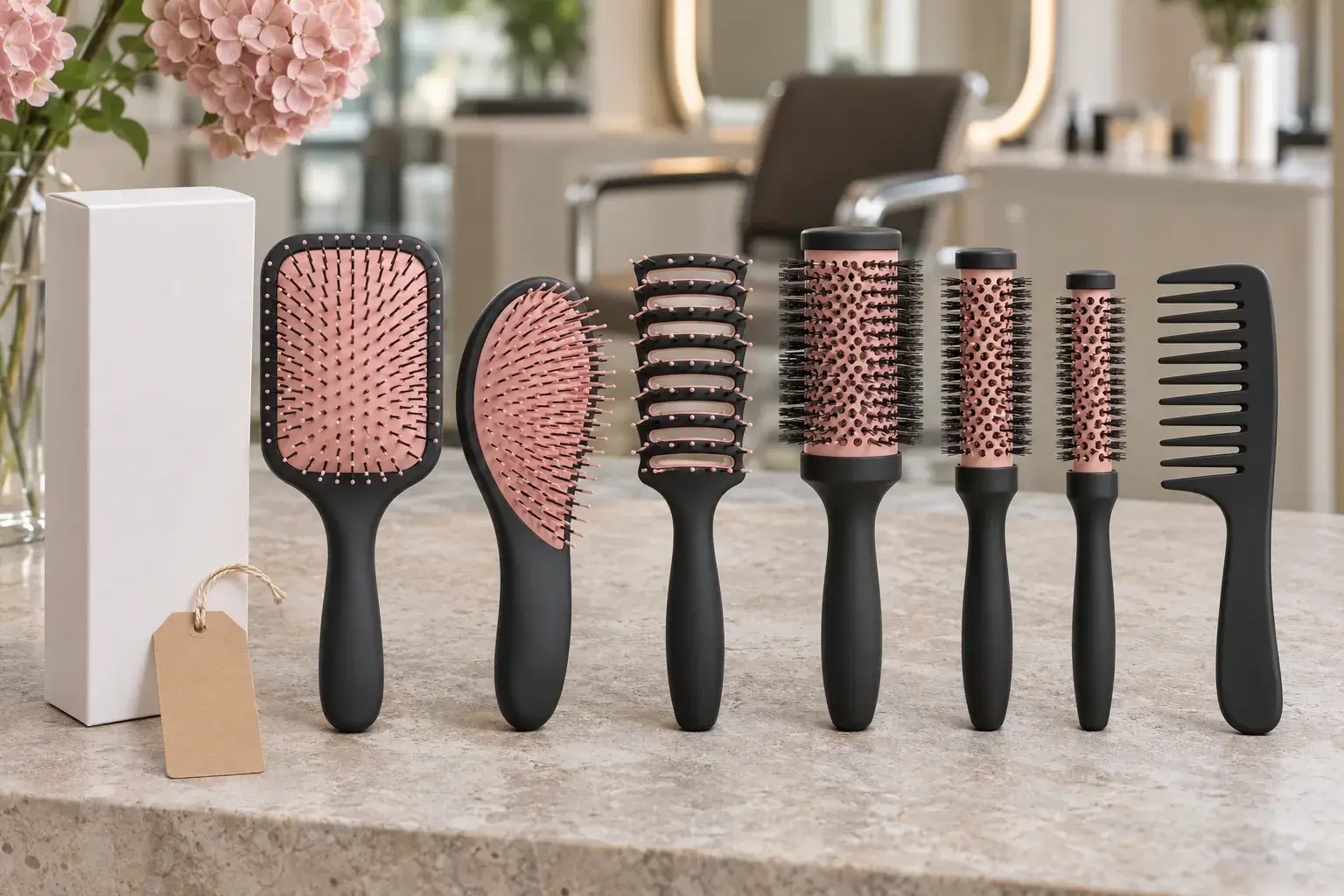
Yes, a factory can make a hair brush from your own design, but an original shape is a different project from a branded version of an existing brush. For a new plastic shape, plan on a steel mould from about US$6,000 that takes 45 days or more, a first trial sample 25–35 days after the mould is finished, and a minimum of 5,000 pieces per design and per colour. From mould order to goods ready usually takes about four to five months, plus freight.
This guide is for brand owners, salon founders and start-ups who have a concept, a sketch or a 3D file and want to know what happens between that idea and a carton of finished brushes. It covers when you really need a new shape, what to send, each development stage with typical times and costs, who owns the design, and how to launch sooner. The figures were confirmed by our sales team in October and November 2026. They are planning ranges, not a quotation.
What brands with an original design ask us
Requests to develop an original brush or comb are one of the most common enquiries we receive. In 2026 they have included self-cleaning brushes (from several different brands), a double-sided brush with a detangling side and a slick-back side, a curved palm wave brush, an afro pick with a shaped handle, a wide-tooth comb for curly and coily hair, and brushes with a new handle on a familiar head. Almost all of them ask the same three questions:
| Question | Short answer | Where it is explained |
|---|---|---|
| Can you make it from my design? | Usually yes, after a feasibility review of the 3D design, especially for moving parts | Development stages |
| What does development cost? | Design work if needed (quoted), steel tooling from about US$6,000 per mould, trial samples, then the order | What it costs |
| What is the minimum order? | 5,000 pieces per design and colour for a new plastic mould; 1,000 for acetate, wood or bamboo | Minimums |
First decide: do you need a new shape?
Many products that feel original to the customer are built on an existing mould. Colour, finish, pins, cushion, logo and packaging can all change without new tooling, and there are more than 2,000 existing brush and comb moulds to start from. A new mould is only needed when the shape itself is the point of the product.
| Your idea | Usually possible on an existing mould? | Typical route |
|---|---|---|
| Your colours, soft-touch or metallic finish, logo and box | Yes | Existing mould; minimum 1,000 per style, size and colour |
| Different pins or bristles (nylon, steel, boar or mixed) and cushion softness | Yes | Existing mould; settled at the sample stage |
| A handle or head outline that does not exist in our range | No | New steel mould for the plastic part |
| Moving parts: a lift-up cleaning plate, folding or two-sided design | No | Feasibility review, then a new mould for each separate plastic part |
| A new outline in acetate, wood or bamboo | No injection mould needed | Cut to shape; a cutting die is free for regular shapes, quoted for special ones |
If one of the first two rows covers your idea, read Private Label Hair Brushes for Salon Brands instead: you will launch faster and with a lower minimum.
What to send before development starts
A feasibility answer comes back faster when the first message covers:
- The design: a 3D CAD file if you have one; otherwise sketches with the main dimensions, and photos of any reference products.
- How it works: for moving parts, a short video or a hand-made model showing the movement.
- Who it is for: hair type (fine, thick, curly, extensions), wet or dry use, salon or retail.
- Material and feel: plastic, acetate, wood or bamboo; pin or bristle type; finish and colours (Pantone numbers if you have them).
- Logo and packaging: vector logo file, position, and the type of box.
- Quantity and timing: first-order quantity per colour, target price, sales market and launch date.
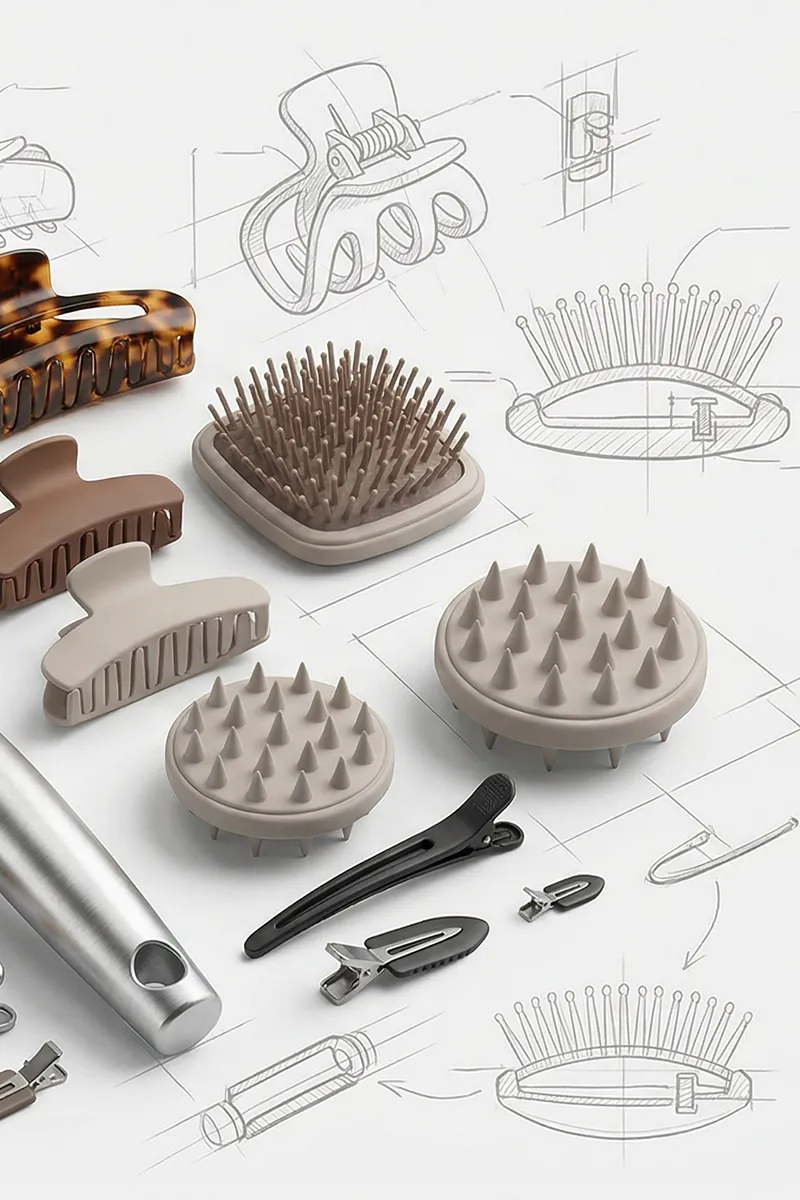
If you only have a sketch or reference photos, 3D renders and full product design are a separate service, quoted by project. Simple logo placement is free. The Hair Accessories RFQ Checklist has a fuller template.
The development stages, step by step
For a new plastic brush shape, the work runs in this order:
| Stage | What happens | Typical time |
|---|---|---|
| 1. Feasibility review | We check the 3D design against moulding, tufting and assembly: wall thickness, how parts release from the mould, pin layout, and how moving parts fit together. You get a list of suggested changes and which parts need new tooling | Depends on the design and on whether design work is needed |
| 2. Freeze the design | You approve the final 3D design, materials, colours, logo and packaging | Your approval time |
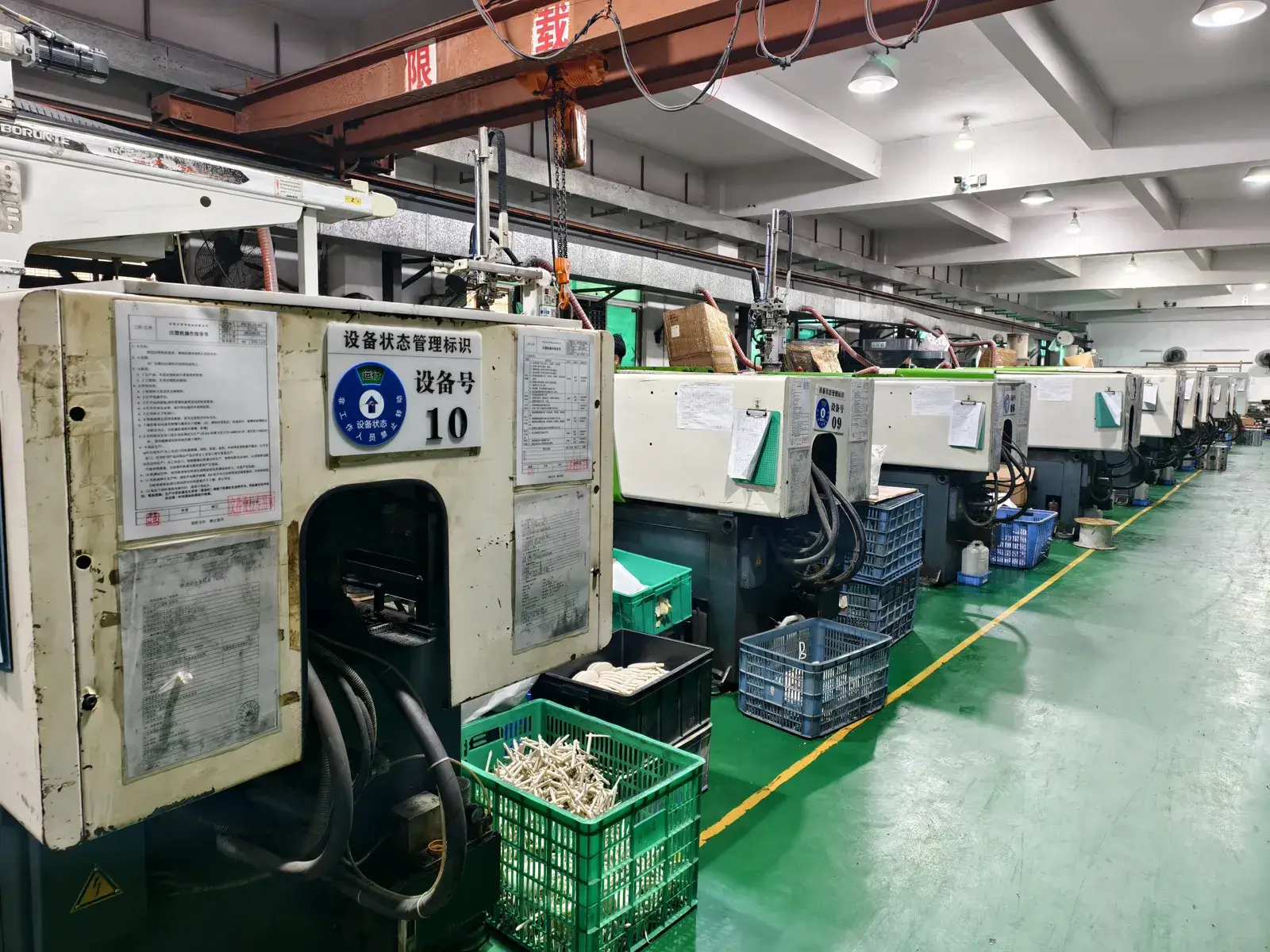
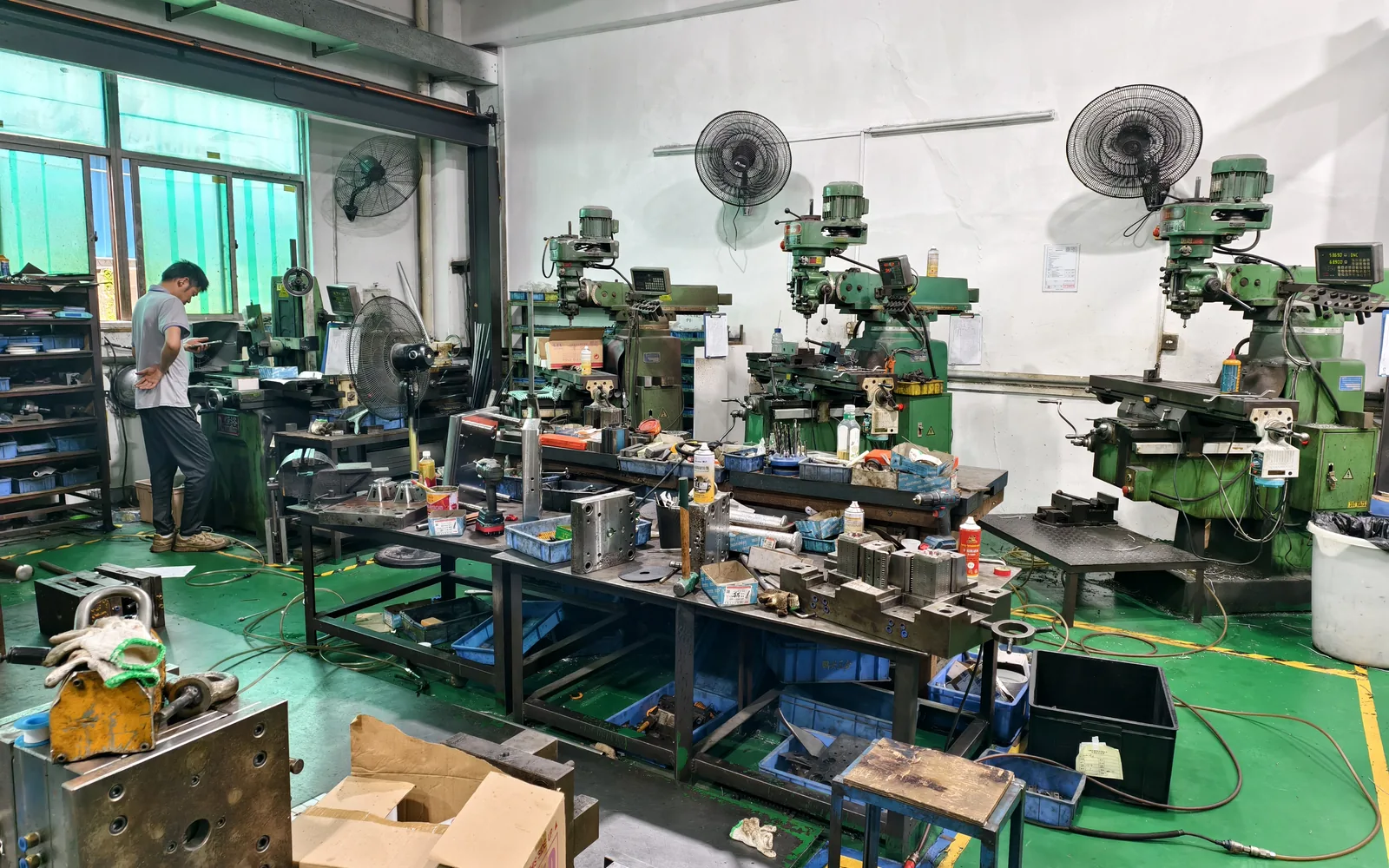
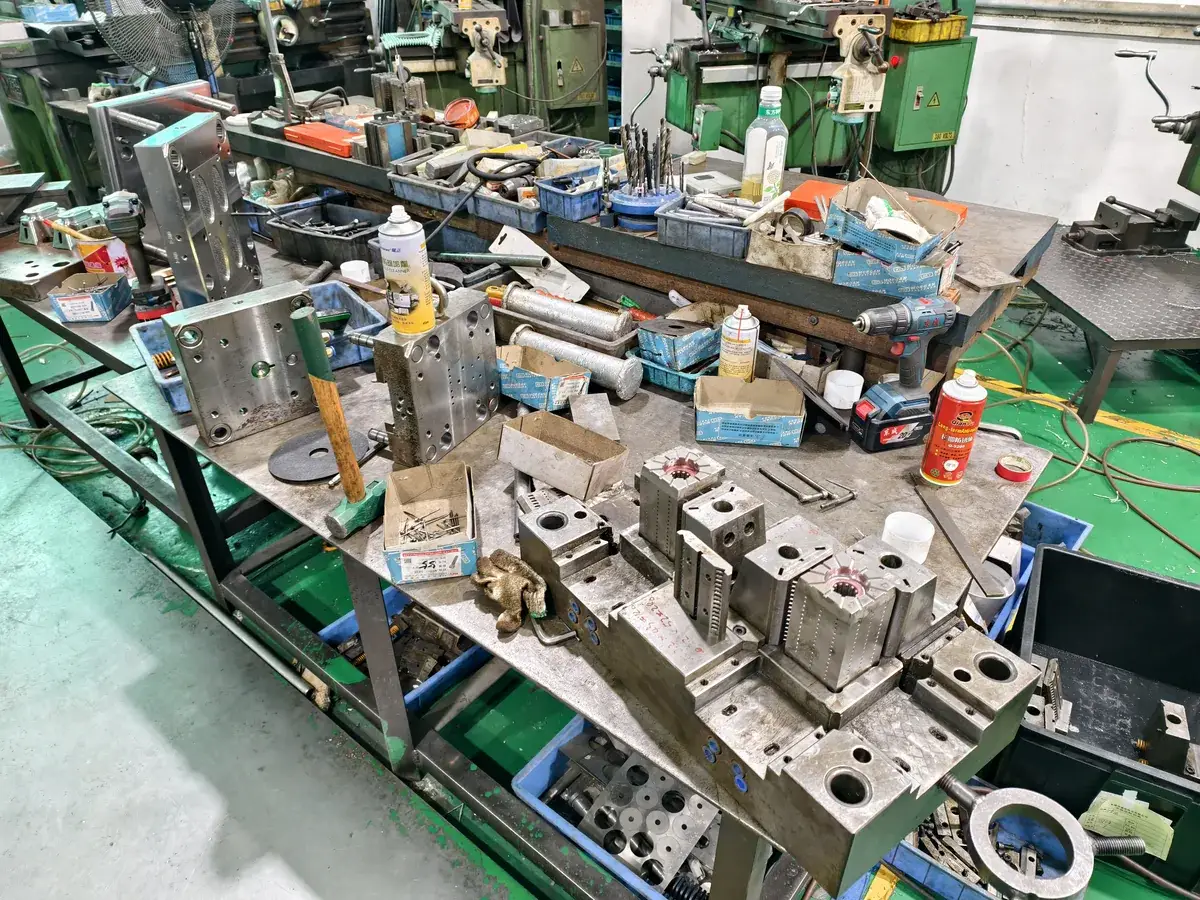
| 3. Steel mould | The mould is machined and fitted in our mould room | 45 days or more |
| 4. Trial sample | First parts are moulded, tufted and assembled, then sent to you | 25–35 days after the mould is finished |
| 5. Approval | You test the sample. The approved sample becomes the production standard | Your testing time |
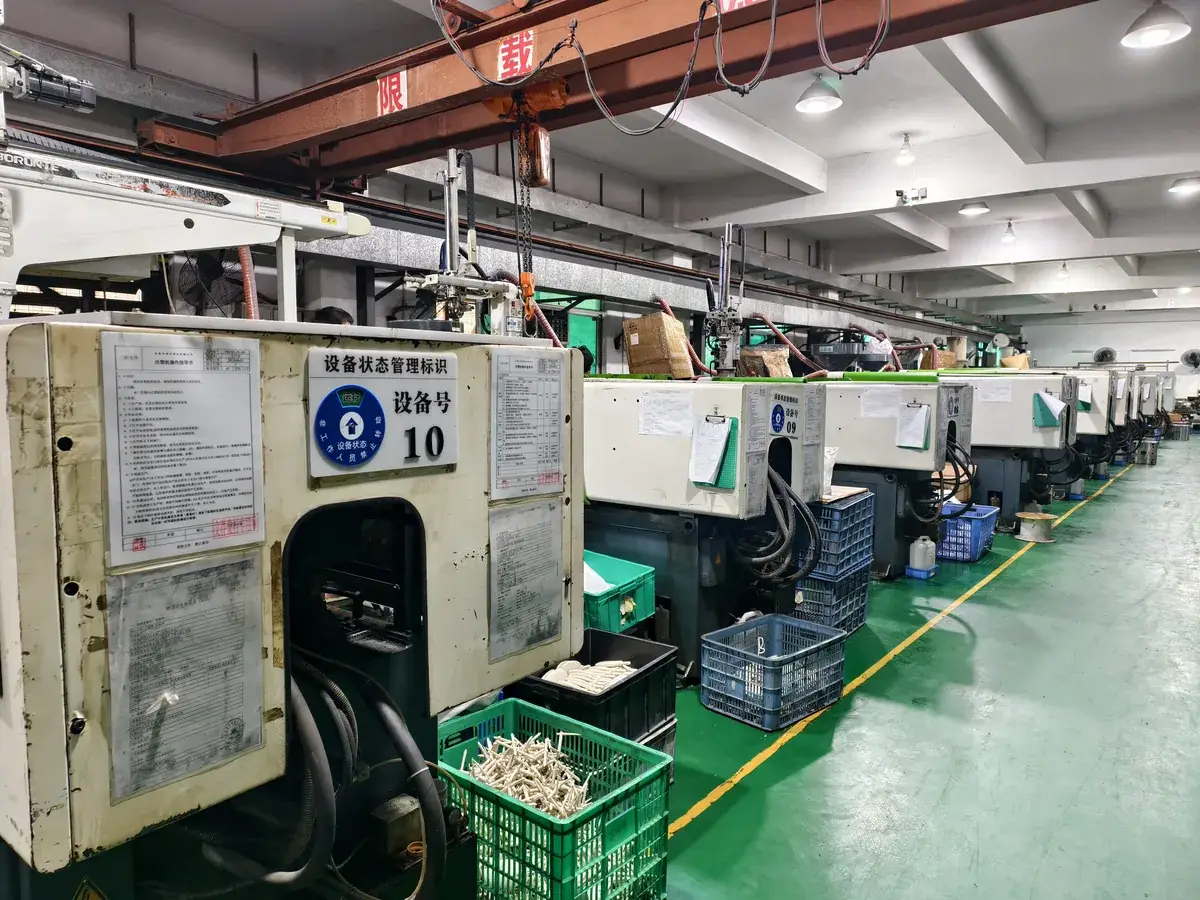
| 6. Production | Moulding, spraying, tufting, trimming, ball tipping, logo printing and packing | About 45 days; about 60 days for complex styles or orders above 20,000 pieces |
| 7. Freight | Express, air or sea | 5–7 days express · 12–15 days air · 25–50 days sea |
Freeze the design before the steel is cut. Every detail you can settle at stage 2, from the material and colour to the logo position and the box, is one less reason to change the sample later. A change after a sample has been made means a new sample, charged again. Changing the shape once the mould has been cut is the most expensive change of all.
What it costs
| Item | Planning figure | Notes |
|---|---|---|
| Product design and 3D renders | Quoted by project | Only if you do not already have a 3D design |
| Steel mould for a plastic part | From about US$6,000 per mould | Designs with several separate parts need more tooling |
| Cutting die for acetate, wood or bamboo | Free for regular shapes; quoted for special shapes | No injection mould is needed for these materials |
| Custom sample on an existing mould | RMB 300–800 for ABS or wood; RMB 800–1,800 for acetate cushion brushes | Check the exact fee with sales first. Sample fees can be refunded once the bulk order reaches 5,000 pieces |
| Payment for the order | 30% deposit, balance before shipment | Unit price falls with quantity: 5,000 pieces of one item is usually about 10% cheaper per unit than 1,000 |
How tooling cost spreads over the first order is worked through in Existing Mould or New Mould?, and the wider cost picture is in What It Costs to Manufacture Custom Hair Brushes and Combs.
Minimums for an original design
| Route | Minimum | How it counts |
|---|---|---|
| New plastic mould (ABS, PP) | 5,000 pieces | Per design and per colour |
| Existing plastic mould | 1,000 pieces | Per style, per size and per colour |
| Acetate, wood or bamboo brushes and combs | 1,000 pieces | Per style and per colour |
Sizes and colours cannot be combined to reach the minimum: an original brush in two colours on a new mould needs 10,000 pieces. Full rules by material are in the Hair Accessories MOQ Guide.
How to launch sooner and spend less up front
A new mould is a large first commitment for a new brand. Brands with an original idea often use one of these routes to test the market first:
- Launch on an existing mould, then tool: start with the closest existing shape in your colours and logo (1,000 pieces, about 20–30 days for a custom sample), and invest in your own mould once sales justify 5,000 pieces.
- Choose a material that needs no injection mould: a new outline in acetate, wood or bamboo is cut to shape, so there is no steel tooling cost. Custom samples take about 25–45 days in acetate and 15–25 days in wood or bamboo; production takes about 30–45 days and 30–40 days.
- Keep the mechanism simple for version one: a single-piece handle with your signature outline is far cheaper to tool and test than a brush with moving parts. The mechanism can come in a second version.
Who owns the design and the mould
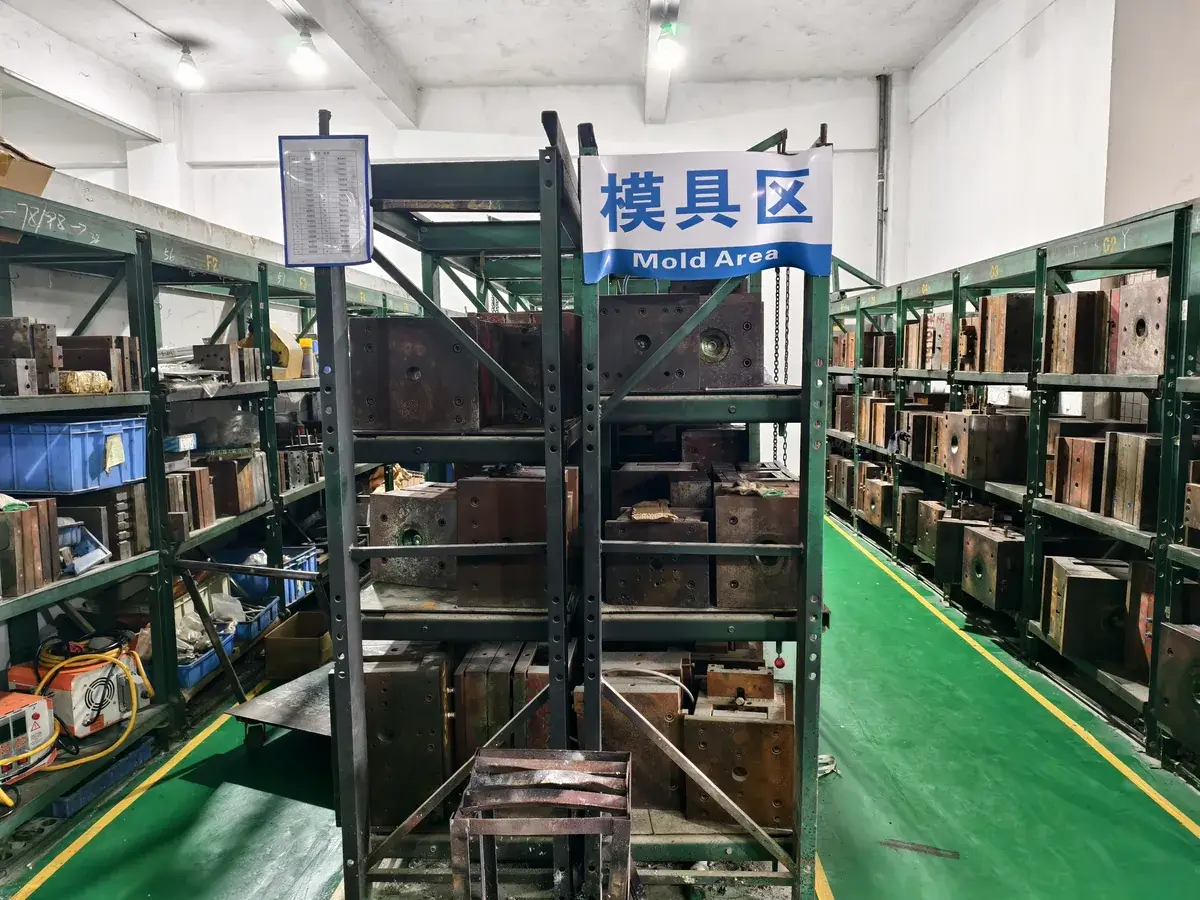
Your original design, drawings and product concept belong to you, and so do the custom moulds made for your product. Custom improvements made for your product also belong to you. General process improvements we develop ourselves stay with us and may be used for products that do not compete with yours. Put these terms, and where the mould is kept, into the contract before tooling starts. The Purchase Order Checklist lists the other terms to agree.
How the approved sample protects your design in production
- The approved trial sample is the standard every order is inspected against.
- Every piece gets a visual check, and each order is inspected to AQL 2.5 (General Inspection Level II).
- Printed logos are checked piece by piece by a dedicated inspector, and nylon ball tips are checked and touched up where needed.
- Third-party inspection is welcome.
Write down how the product should perform during the sample stage, for example how the cleaning plate should move or how the pins should feel on thick hair, so the standard covers function as well as appearance. See the Hair Brush Quality Control Checklist for what to check on arrival.
When your design is ready, send it through our custom hair brush page or the contact page; we reply within 24 hours on working days.