OEM and ODM are two terms that appear in nearly every sourcing conversation about hair accessories, yet many first-time buyers use them interchangeably. That confusion can lead to misaligned expectations around design ownership, tooling costs, and product exclusivity — all of which directly affect a brand's competitive positioning.
OEM (Original Equipment Manufacturing) and ODM (Original Design Manufacturing) describe two fundamentally different relationships between a buyer and a factory. The distinction is not about quality or price tier — it is about who creates the product design and who retains the intellectual property. For buyers sourcing custom hair clips, hair brushes, combs, and related accessories, understanding this distinction is the first step toward choosing the right manufacturing partnership.
1. What Does OEM Mean in Hair Accessories?
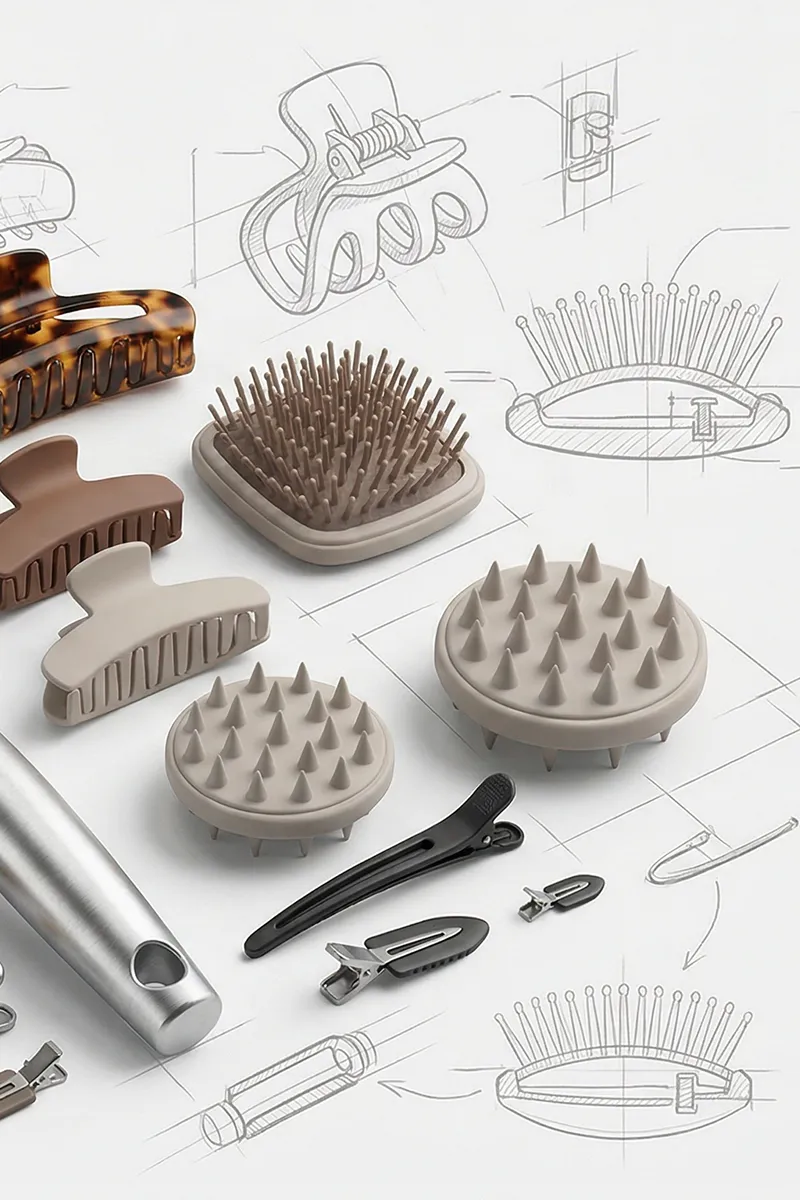
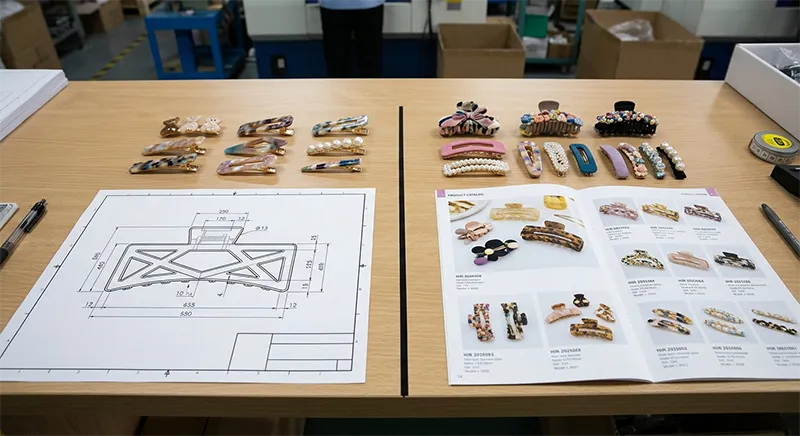
In an OEM arrangement, the buyer provides the complete product design. This includes dimensional specifications, material selections, construction method, surface finish, spring mechanism type (for clips), bristle configuration (for brushes), and all branding elements. The factory's role is strictly manufacturing: it produces the product to the buyer's exact specifications without contributing to the design itself.
How OEM Works in Practice
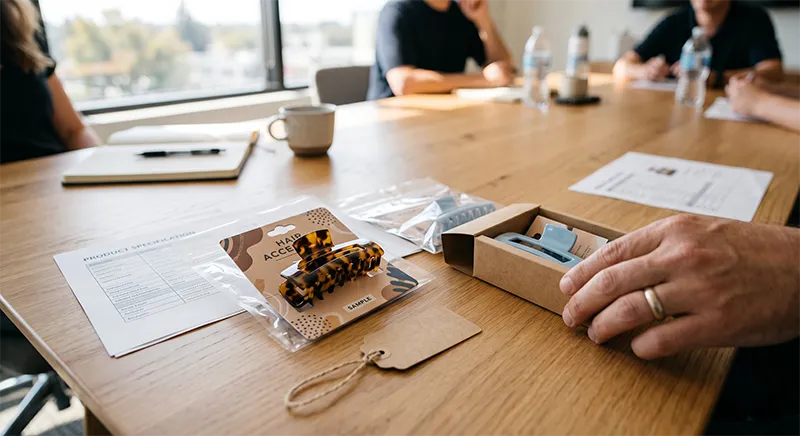
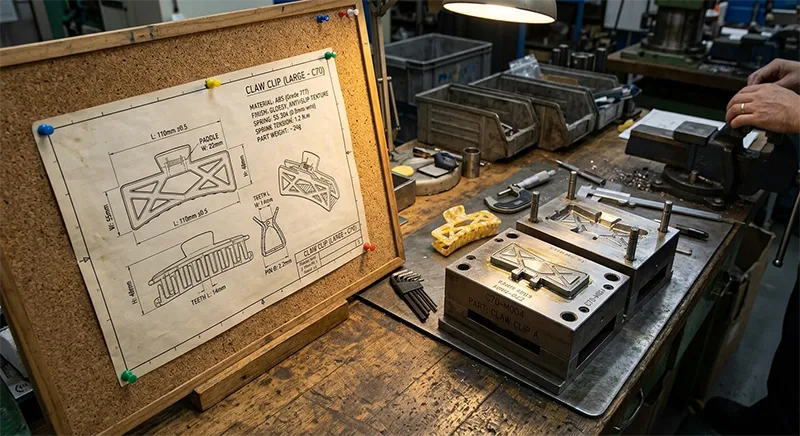
For hair accessories specifically, OEM production typically involves the following scenario. A brand has designed a new claw clip shape — perhaps a unique curved jaw profile with a specific hinge geometry. The brand provides CAD drawings or physical prototypes with full dimensional specifications. The factory reviews the design for manufacturability, develops new moulds to match the specifications, produces pre-production samples for approval, and then runs bulk production once the samples are confirmed.
Design Ownership and Exclusivity
The defining characteristic of OEM is design ownership. Because the buyer created and funded the product design — and typically paid for the mould development — the buyer owns the intellectual property. The factory cannot produce that same product for another client without explicit written authorisation. This exclusivity is what makes OEM the preferred model for brands seeking genuine product differentiation in the market.
2. What Does ODM Mean in Hair Accessories?
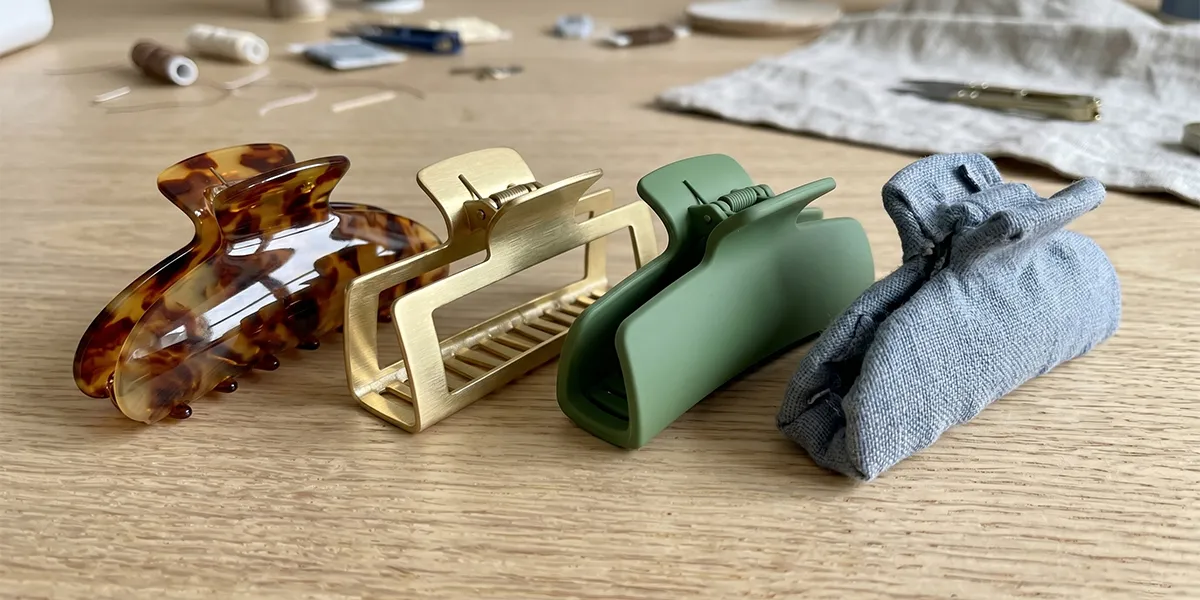
In an ODM arrangement, the factory provides existing, ready-to-produce designs from its own product catalogue or mould library. The buyer selects a product form that fits their market positioning and then customises it with branding elements — logo embossing, hot stamping, colour selection, surface texture, and custom packaging. The underlying product shape and construction remain the factory's proprietary design.
The Mould Library Advantage
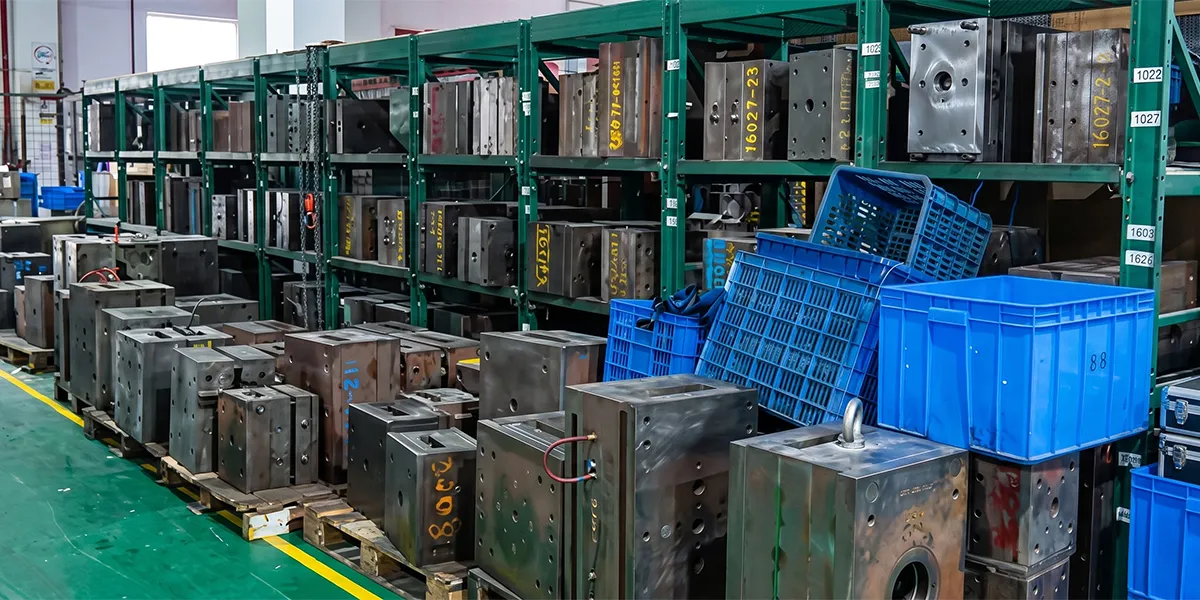
ODM is common in the hair accessories industry because established factories accumulate large libraries of production moulds over decades of operation. A manufacturer with 2,000 or more active moulds can offer buyers hundreds of clip shapes, brush forms, and comb profiles that are already tooled, tested, and proven in production. The buyer does not need to invest in mould development, which eliminates both the cost (typically $1,500 to $5,000 per mould) and the time (30 to 45 days for tooling) associated with new product development.
The Exclusivity Trade-Off
The trade-off is exclusivity. Because the factory owns the mould and the base design, the same product form may be available to other buyers. Two brands could sell visually similar claw clips with different logos and colour finishes, sourced from the same ODM mould. For categories where brand differentiation comes primarily from marketing, packaging, and colour curation rather than unique product geometry, this trade-off is acceptable.
3. OEM vs ODM: Key Differences at a Glance
The practical differences between OEM and ODM extend beyond the question of who designs the product. The following table summarises how each model affects the major decision points in a hair accessories sourcing project.
| Factor | OEM | ODM |
|---|---|---|
| Product design | Buyer provides complete design and specifications | Factory provides existing designs from mould library |
| Mould / tooling ownership | Buyer owns moulds (buyer-funded) | Factory owns moulds |
| Design IP ownership | Buyer retains full IP rights | Factory retains design IP; buyer licences the form |
| Product exclusivity | Fully exclusive — factory cannot replicate for others | Non-exclusive — same base design available to other buyers |
| Upfront tooling cost | $1,500–$5,000 per mould | $0 (existing moulds used) |
| Lead time to first shipment | 10–16 weeks (includes tooling) | 6–8 weeks (no tooling needed) |
| Customisation depth | Unlimited — shape, mechanism, material, finish | Limited — colour, logo, surface finish, packaging |
| Minimum order quantity | Higher (to justify tooling investment) | Lower (shared tooling amortisation) |
| Best for | Established brands with design teams | New brands, market testing, fast launches |
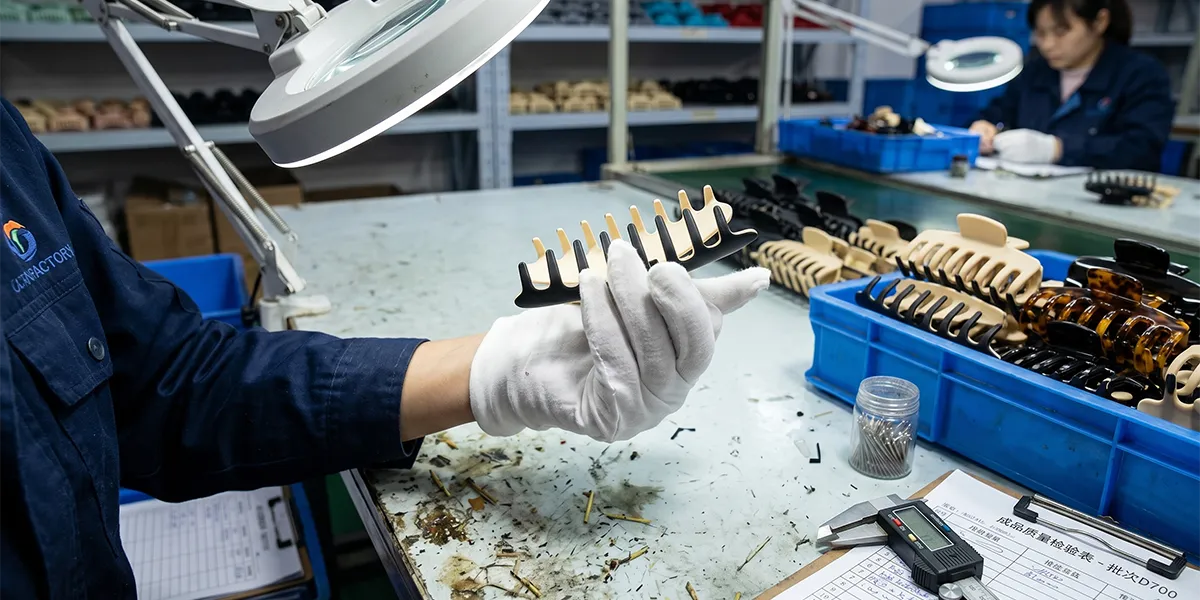
Both models produce the same quality of finished product. The difference is in design control and commercial flexibility, not in manufacturing standards or material grade. A well-equipped factory applies the same injection moulding, polishing, assembly, and quality inspection processes regardless of whether the mould was designed by the buyer or drawn from the factory's existing library.
4. When OEM Is the Right Choice
OEM manufacturing suits buyers who have already completed the product design phase and need a production partner to execute at scale. The typical OEM buyer is an established brand with an in-house design team, an industrial designer on retainer, or a product specification developed through consumer research and prototype testing.
Several scenarios make OEM the clearly better choice. First, if the product shape itself is the brand's differentiator — a patented clip mechanism, a proprietary brush head geometry, or a comb tooth profile that no other product on the market replicates — OEM is the only way to protect that design. Second, if the buyer needs to prevent competitors from accessing the same product form, OEM's mould ownership clause provides that protection. Third, if the buyer intends to file design patents or utility patents, OEM ensures clean IP ownership from the manufacturing side.
The investment required for OEM is higher upfront. Beyond mould development costs, the buyer typically absorbs design consultation fees, multiple sample revision rounds, and higher initial MOQs to justify the tooling expenditure. For a five-SKU claw clip line with new moulds, the tooling investment alone can range from $7,500 to $25,000 before a single production unit ships.
5. When ODM Is the Right Choice
ODM manufacturing is designed for speed and capital efficiency. It is the practical choice for buyers who want to launch a hair accessories line without investing in product design or mould development from scratch.
New brands entering the market for the first time benefit most from ODM. Instead of spending months on design iteration and tooling, a new brand can select proven clip shapes and brush forms from a factory's catalogue, apply custom branding, and ship a launch collection within 6 to 8 weeks. This compressed lead time allows faster market entry and earlier revenue generation.
ODM is also the right model for market testing. Before committing $15,000 to $25,000 in OEM tooling for a new product line, a brand can use ODM to test which clip styles, brush sizes, and colour palettes resonate with its target customers. If a particular product form sells well as an ODM item, the data justifies investing in a custom OEM version with unique geometry for the second production run.
Amazon sellers, boutique retailers, and salon owners building branded accessory collections frequently choose ODM because the business model prioritises curation and branding over product engineering. The value proposition is in the brand's colour story, packaging presentation, and market positioning — not in a proprietary clip jaw angle.
6. Where Private Label Fits In
Private label is a third term that frequently appears alongside OEM and ODM, and the boundaries between them are not always rigid in practice. In the hair accessories industry, private label most commonly refers to a specific subset of ODM: the buyer selects an existing product from the factory's catalogue and applies their own brand name, logo, packaging, and labelling without modifying the product form itself.
The relationship between the three models is best understood as a spectrum of design involvement. At one end, private label requires the least buyer input — logo placement and packaging design on an existing product. In the middle, ODM allows moderate customisation — colour selection, surface finish options, and branding elements applied to an existing mould. At the other end, OEM gives the buyer complete design control over every aspect of the product.
| Model | Buyer's Design Input | Example in Hair Accessories | Typical Startup Cost (5 SKUs) |
|---|---|---|---|
| Private Label | Logo and packaging only | Buyer picks a claw clip from the catalogue, adds logo via hot stamp, ships in custom packaging | $2,000–$5,000 |
| ODM | Colour, finish, branding, minor modifications | Buyer selects an existing brush form, specifies custom bristle colour, rubber grip texture, and Pantone colour matching | $3,000–$8,000 |
| OEM | Complete product design and specification | Buyer provides CAD drawings for a new paddle brush shape with proprietary cushion geometry and new mould | $10,000–$25,000+ |
Many buyers start with private label or ODM for their first order and graduate to OEM once they have validated market demand and identified which product categories justify custom tooling investment. This progression — from catalogue selection to custom design — is a natural brand development path in the hair accessories industry.
7. How to Choose: Hybrid Strategies and Decision Framework
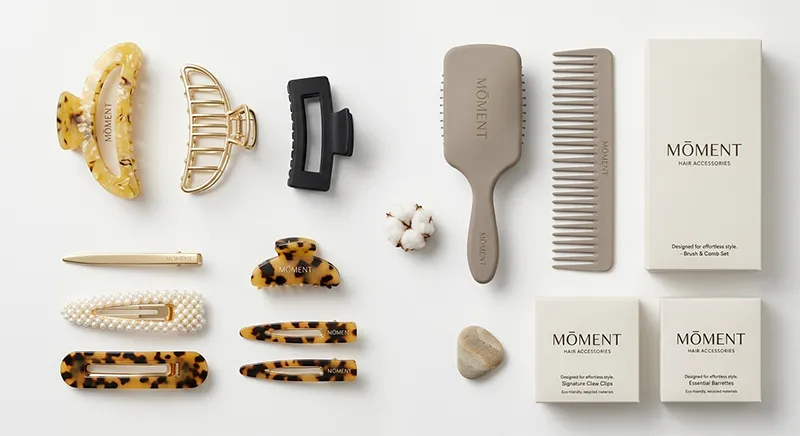
In practice, the distinction between OEM and ODM is rarely binary. Most experienced buyers use both models simultaneously within the same supplier relationship. A common hybrid strategy involves developing one or two signature products via OEM — perhaps a uniquely shaped claw clip and a custom-designed paddle brush — while filling out the rest of the line with ODM selections from the factory's existing catalogue.
This hybrid model works particularly well with factories that maintain both large mould libraries and full OEM development capability. For buyers evaluating such factories, a comprehensive guide to vetting hair accessories manufacturers can help assess whether a potential partner has the infrastructure and production capacity to handle both models at commercial scale.
The decision between OEM and ODM depends on four variables: budget, timeline, differentiation needs, and order volume. If startup capital is under $5,000, ODM is the practical path — OEM tooling costs alone can exceed that figure. If 12 to 16 weeks are available before the target ship date, OEM is feasible; under 8 weeks, ODM is the only option.
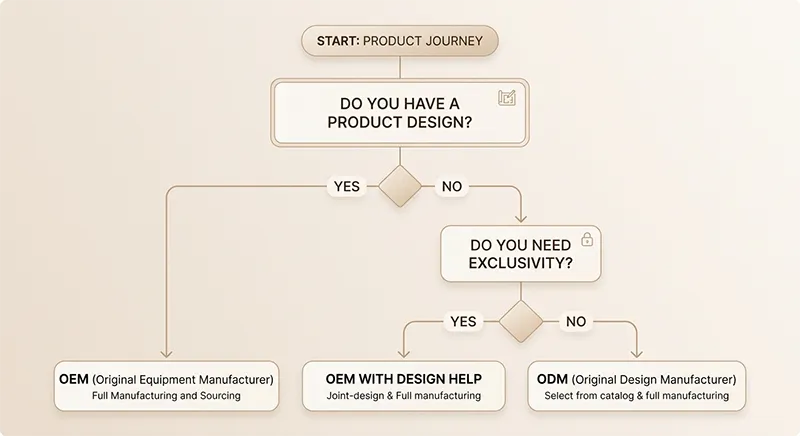
Differentiation needs depend on the competitive landscape. In a crowded segment where dozens of brands sell similar-looking acetate claw clips, a unique product shape (OEM) provides a structural advantage that branding alone cannot replicate. Order volume also matters: for a first order of 500 to 1,000 pieces per SKU, ODM provides better unit economics, while OEM's per-unit cost advantage materialises at 3,000+ pieces per SKU as the tooling investment is amortised.
8. Conclusion
OEM and ODM are not competing models — they are complementary tools for different stages of brand development and different product strategy goals. OEM delivers design ownership, product exclusivity, and long-term competitive differentiation. ODM delivers speed, capital efficiency, and a lower barrier to market entry. The most effective sourcing strategies combine both models within a single supplier relationship.
Manufacturers such as JunYi Beauty, operated by Dongguan JunYi Beauty Technology Co., Ltd., maintain integrated OEM and ODM capabilities across three production facilities with 15 million units of annual capacity and a library of over 2,000 active production moulds. With certifications including ISO 9001, amfori BSCI, BRCGS, GRS 4.0, and FSC, the company provides factory-direct production for custom hair clips, hair brushes, and combs across premium retail, private label, and wholesale channels. Documented case studies from established buyer partnerships demonstrate how the ODM-to-OEM progression works in practice.