A custom hair-accessory sample should not be approved with a casual message such as “looks good.” Approval should freeze a version-controlled specification, a physical reference sample, colour and logo references, packaging, functional checks, and the defects that are not acceptable. The approved physical unit becomes the golden sample: the comparison standard for pre-production and final inspection.
The most important rule is simple: approve what can be measured or compared, and record every change. A reference photo starts the discussion; it does not define width, material, tooth layout, spring force, cushion response, colour tolerance, logo visibility or packaging.
The four samples buyers often confuse
| Sample type | What it proves | What it does not prove | Approval outcome |
|---|---|---|---|
| Existing-model sample | General size, material feel and current construction | A new colour, logo, component or package | Select, reject or request a custom development sample |
| Development sample | Whether the requested design and construction can be made | Repeatability of a final production setup | Issue a numbered revision list |
| Pre-production / golden sample | Final material, dimensions, colour, components, decoration and packaging | Every unit in the bulk order | Formal buyer sign-off before mass production |
| Retention sample | The approved reference kept by buyer and factory | A replacement for in-line and final inspection | Use during production, claims and reorders |
1. Convert the reference photo into a measurable brief
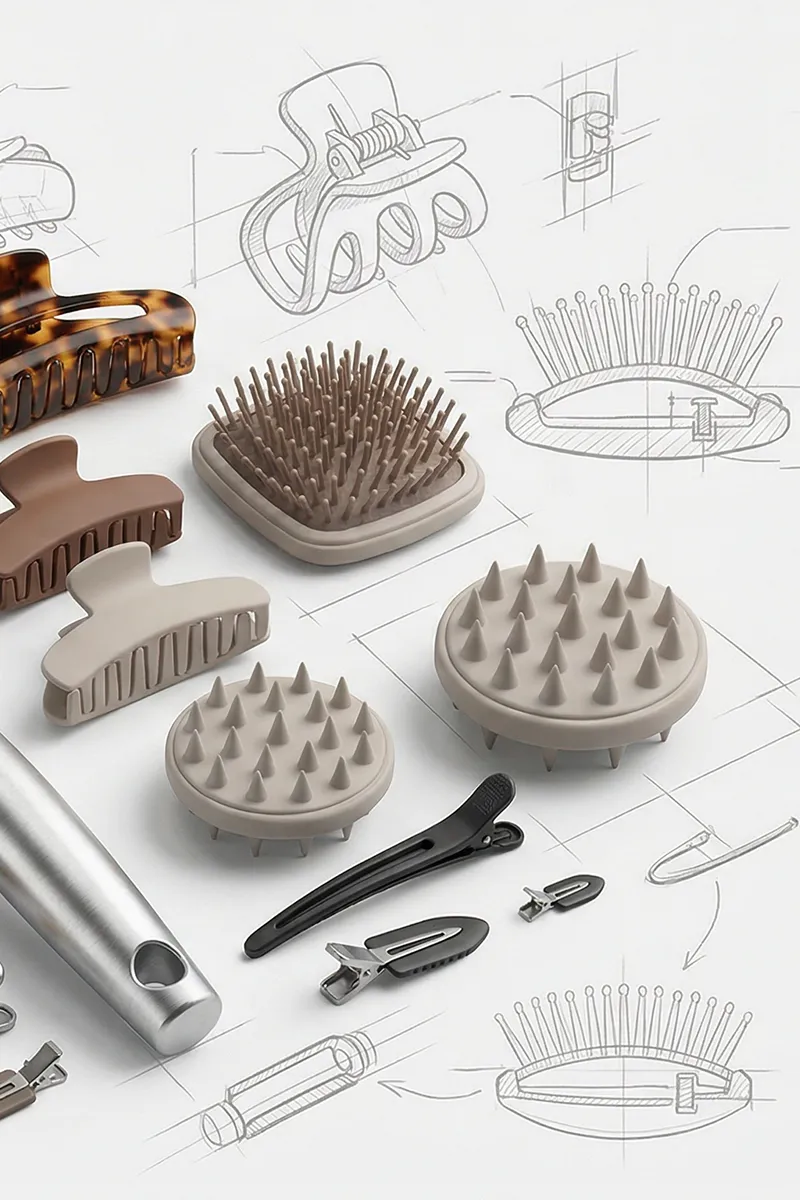
Begin by separating appearance from function. For a clip or headband, record overall dimensions, body thickness, tooth layout, opening or fit, hardware, edge condition and logo position. For a brush, record head size, handle geometry, cushion material and response, pin or bristle type, density, tip treatment, row pattern and the joint between components.
Mark unknowns as “to be confirmed” instead of allowing the factory to guess. A useful first review produces two lists: decisions the buyer has already made, and decisions that need a physical sample. This prevents a supplier’s convenient assumption from becoming an accidental specification.
- Attach front, side and use-position images; include a ruler or known dimension when no drawing exists.
- State the target user and hair type because comfort, holding force and pin choice depend on use.
- Separate non-negotiable requirements from preferences that can change after sampling.
- Identify the selling market and packaging route before artwork is finalised.
2. Give every revision a number
A sample can pass through several rounds. Name them V1, V2 and V3, and keep one change log that both sides use. Each entry should state the old condition, requested change, reason, responsible person and approval date. Do not approve colour in one chat, logo in another and size by voice call without consolidating the decisions into a final record.
| Field | Example of a usable record |
|---|---|
| Revision | V2 — 16 October 2026 |
| Change | Reduce headband width from 1.5 cm to 1.0 cm |
| Reason | V1 felt too wide during wear trial |
| Evidence | Caliper measurement + side-view photo + marked drawing |
| Approval | Buyer product owner approved V2 for the next sample |
| Open point | Confirm logo size after checking visibility in hair |
3. Use the sample to answer performance questions
Appearance approval is only half of the job. A sample should also answer how the product behaves in real use. The test can be simple, but it must match the risk. A headband needs a wear check for pressure, stability and tooth comfort. A claw clip needs repeated opening, hinge alignment and a hold test on the intended hair volume. A cushion brush needs pin retention, cushion rebound, snagging and handle-joint checks.
Avoid invented universal thresholds. A ten-minute wear check can reveal obvious pressure or slipping, but it is not a claim that every headband is proven comfortable after ten minutes. The buyer should define the intended user panel and acceptance rule for the actual project.
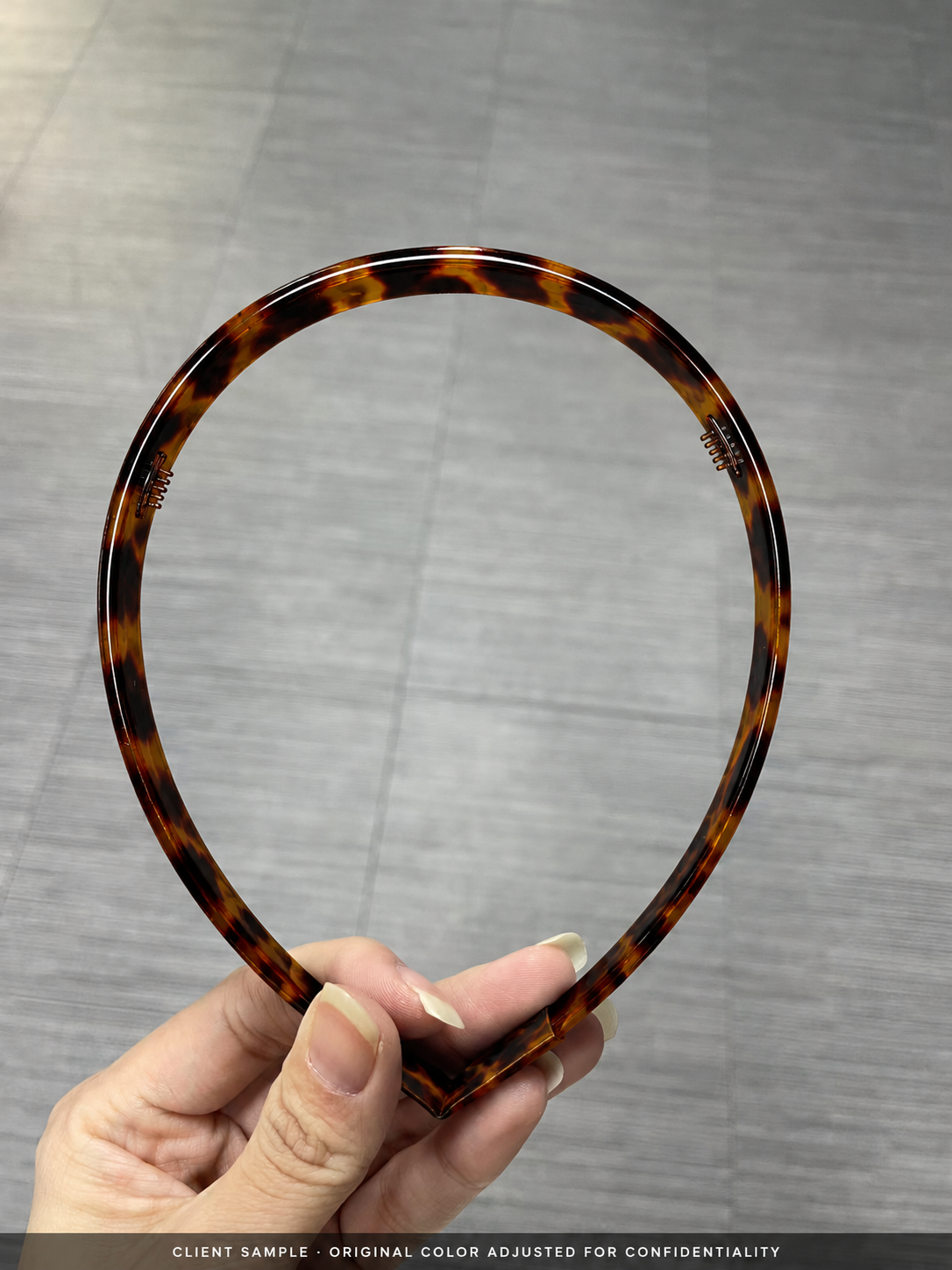
Factory case note: a headband changed after the first wear trial
This case shows why a photograph alone cannot define approval. Width, logo visibility and tooth layout were all reasonable on screen; the fit decision only became clear when the physical sample was worn. It also shows why a design change can alter the MOQ: the revised construction was no longer the same production route.
4. Approve the visible finish under defined conditions
Review colour and finish under consistent lighting and against the agreed reference. Patterned acetate, translucent material, natural wood and sprayed finishes can vary in ways a screen cannot reproduce. Record whether approval is against a Pantone reference, material swatch, signed sample or range board. State which variations are acceptable and which require rework.
For decoration, inspect the logo on the actual curve and material. Check size, position, contrast, edge sharpness, adhesion and wear risk. Two common reasons for rework in the headband case were surface scratches and poor logo printing. Those risks should be named in the inspection brief rather than left under a generic phrase such as “good quality.”
5. Treat brush pins and cushions as a system
Factory case note: thick hair changed the pin decision
For this factory’s current sampling route, an existing finished brush sample may be around RMB 200, a custom flat-brush sample around RMB 500, and a custom cushion-brush sample around RMB 1,000–1,500. A flat-brush sample can sometimes be ready in about 15 days, while a cushion-brush development may take about 20–30 days. These are planning examples from current factory discussions, not fixed prices or guaranteed lead times; the actual quote depends on construction, tooling, materials and revisions.
6. Freeze the golden sample and approval pack
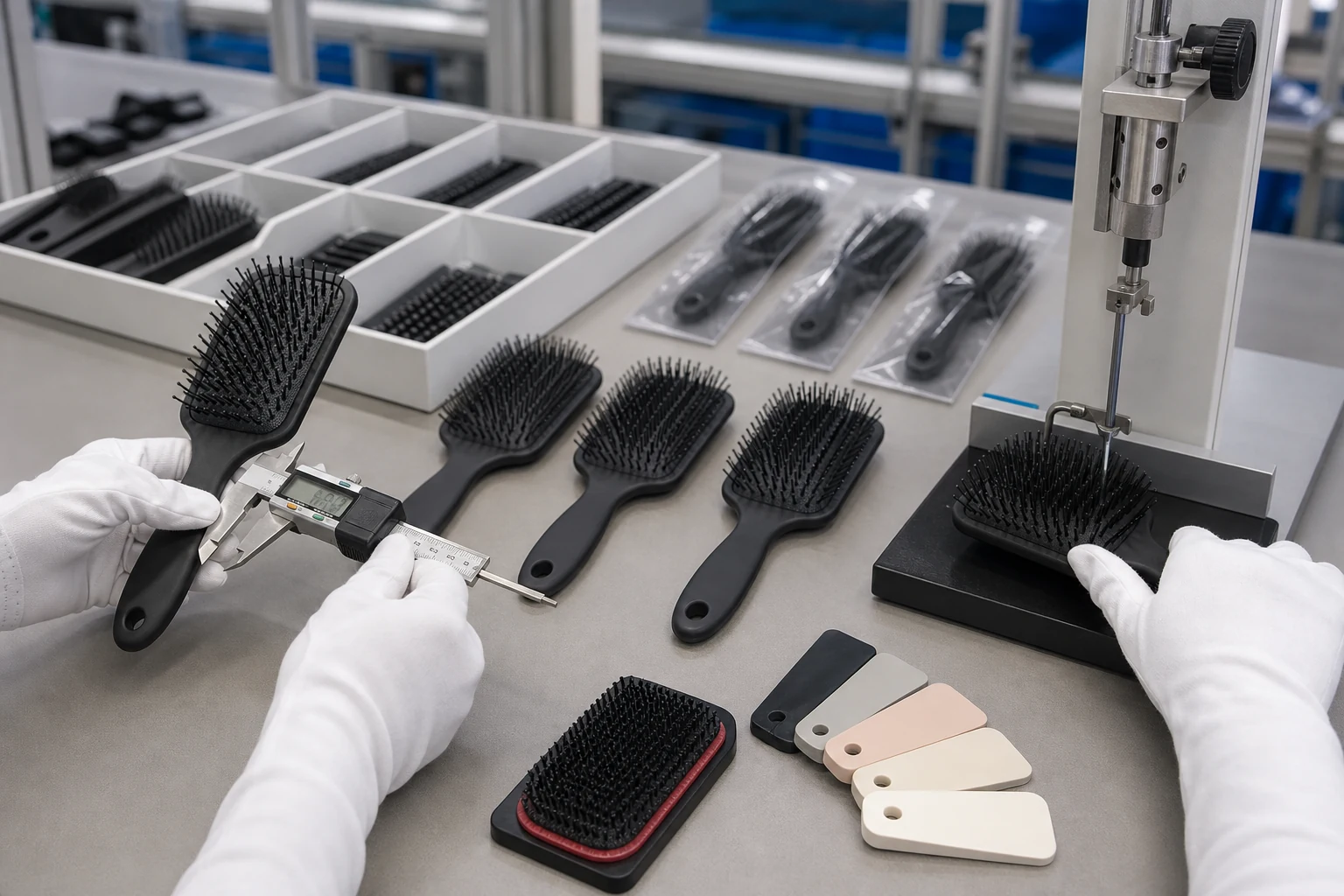
When the final sample is accepted, the buyer and factory should hold matching references. Seal or label the physical samples, photograph them from agreed angles and attach the final specification. The approval pack should include the revision number, bill of materials or component list, dimensions, colour reference, decoration artwork and position, packaging artwork, barcode or label files, functional checks and named approver.
| Approval item | Minimum evidence | Common failure if omitted |
|---|---|---|
| Dimensions | Drawing or measurement sheet | Vague “same as sample” disputes |
| Material/components | Named material and component list | Substitution that changes feel or function |
| Colour/pattern | Physical swatch, signed sample or defined range | Screen-to-production colour disagreement |
| Logo | Final artwork, method, size and position | Logo too large, hidden, uneven or poorly adhered |
| Function | Use test and pass/fail notes | Product looks right but slips, snags or feels uncomfortable |
| Packaging | Approved dieline, labels and pack-out | Product damage, wrong barcode or retailer rejection |
| Change control | No change without written approval | Silent component or process change after sign-off |
7. Connect approval to production inspection
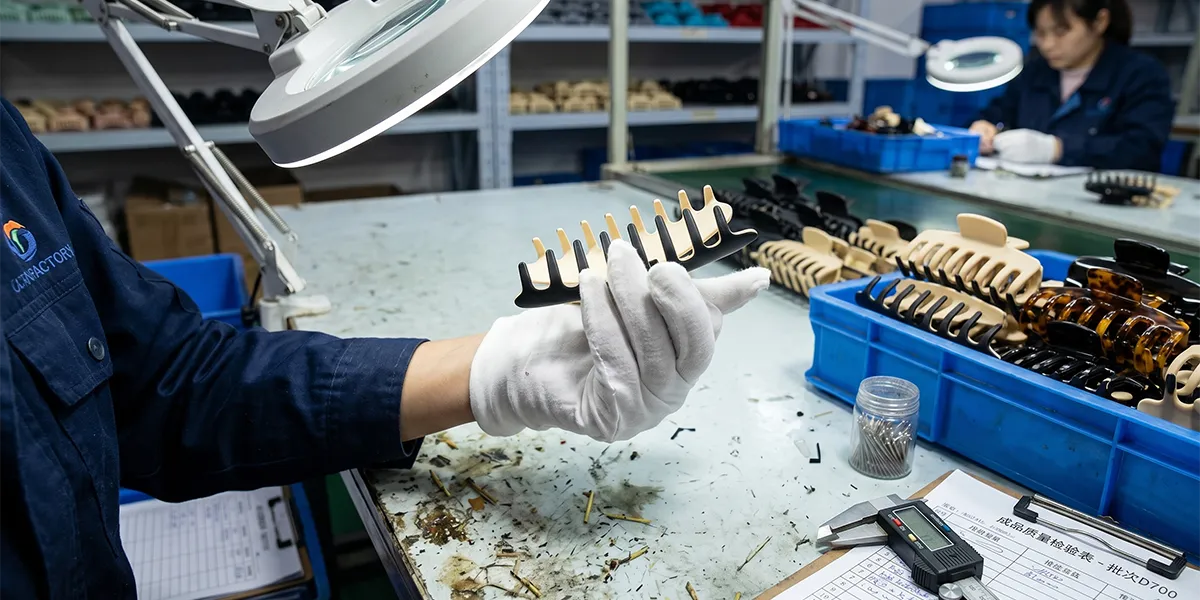
A golden sample does not eliminate inspection. It gives inspection a reference. Production teams should compare in-line and finished units against the approved sample and recorded requirements, especially for edges, scratches, printed decoration, moving hardware, bristle or pin retention and packaging protection.
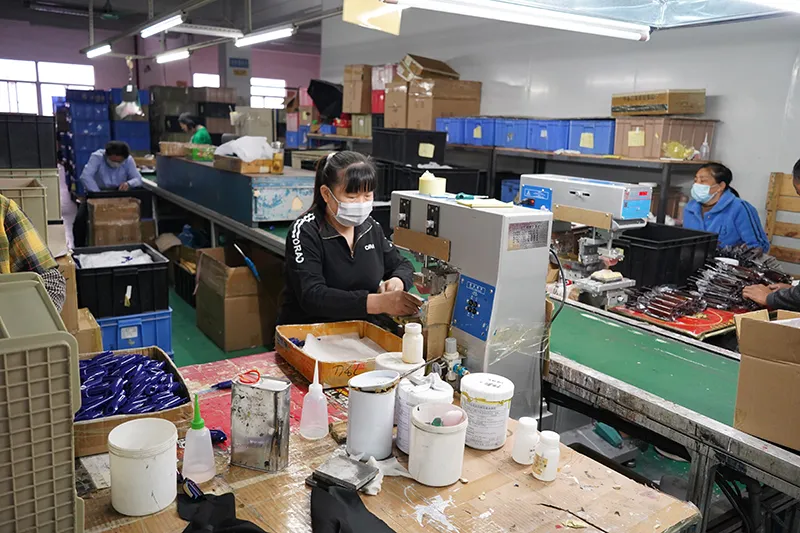
JunYi Beauty’s published factory information describes incoming material checks, in-process QA/QC and final checks. For a particular order, the buyer should still agree the inspection plan, sample size, defect categories and remedy before mass production. Spare units and internal QC reduce risk, but they do not replace a written acceptance standard.
A practical approval sequence
- Send the reference, intended user, dimensions, material direction, quantity by SKU, logo and packaging requirements.
- Ask the factory to identify assumptions, existing options, new tooling and points that require a physical sample.
- Receive V1 and record every requested change in one numbered revision list.
- Test fit and function on the intended use case; photograph and measure the result.
- Approve colour, finish and logo against the real material, not only a screen proof.
- Confirm the final package and the records that will travel with the order.
- Sign the golden sample and specification; keep matching retention samples.
- Release mass production only after responsibilities, inspection and change control are written down.
What to send when you request sample approval support
To review a custom clip, headband, comb or brush project, send the product reference, intended hair type or user, required dimensions, target material, quantity per SKU, artwork, packaging idea and selling market. The factory can then separate what an existing sample can prove from what requires a development sample, tooling or a pre-production approval.
When the brief is ready, contact JunYi Beauty for a project-specific sample and production review.