A useful quotation starts before a factory calculates a price. A product photo alone leaves the supplier to guess material, size, finish, quantity, packaging, logo method and target market. Two factories can then quote different products while appearing to answer the same request.
A better approach is to send a short RFQ—request for quotation—that makes those assumptions visible. For custom hair clips, combs and brushes, the brief does not need to be a formal engineering drawing on day one. It does need enough detail for the manufacturer to identify what can use an existing option, what needs a sample, and what will change the quotation. This checklist gives you the 12 details to send before you request a quote.
Buyer’s note: An AI assistant can help turn a broad sourcing question into a better checklist, but it cannot confirm a factory’s current capacity, a physical sample, a material batch or a contract term. Use the answer as a starting point, then ask the supplier to confirm the details for your actual project.
Why an RFQ matters in AI-assisted sourcing
Buyers increasingly begin with a broad question: “Who can make a custom acetate claw clip?” or “What should I ask a private-label brush supplier?” That can be a helpful first step, whether the question is asked in an AI assistant, a search engine or directly to a purchasing colleague. The commercial decision still depends on the evidence behind the answer.
For a supplier, the same principle is practical rather than technical: describe the product precisely, show which information is confirmed, and label what still depends on a sample or quotation. For a buyer, a complete RFQ creates a cleaner comparison. It helps reveal when a low price excludes packaging, uses a different material, assumes another order quantity or omits a process that matters to the launch.
There is no special AI format that proves a factory is right for your order. A clear brief is valuable because it gives both sides something concrete to verify before sample approval and quotation comparison.
The 12 details to include before asking for a quote
| Include in your RFQ | What to state or attach | Why the factory needs it |
|---|---|---|
| 1. Product type | Claw clip, barrette, comb, paddle brush, detangling brush or another format; include the intended user or use case. | Products that look similar can use different construction and components. |
| 2. Reference images or file | Front, side and open-position images where relevant; sketch, drawing or product link if available. | A photo establishes direction, but not the complete specification. |
| 3. Material | Preferred material and acceptable alternatives: for example acetate, ABS, wood, bamboo, metal, nylon or mixed construction. | Material affects appearance, tooling, process, price and evidence requirements. |
| 4. Dimensions | Overall length, width, thickness, jaw opening, brush-head size or a physical reference to measure. | Dimensions determine fit, component choice, packaging and mould suitability. |
| 5. Colour and finish | Colour reference, pattern direction, gloss/matte finish and permitted variation. | Digital images do not fully define a production colour or material finish. |
| 6. Functional components | Spring, hinge, teeth, bristle type, cushion, pins, handle or other performance-critical parts. | These parts often decide whether a sample can be repeated in bulk. |
| 7. Logo and decoration | Artwork file, location and preferred method such as print, engraving, foil or metal plate. | Decoration suitability depends on the real material, shape and surface. |
| 8. Packaging | Individual pack, backing card, box, bag, labels, barcode and master-carton expectations. | Packaging is part of the quotation and protects the finished product. |
| 9. Quantity and SKU split | Units per design, colourway and pack configuration—not only the total order quantity. | MOQ and unit economics can change by material, colour and packaging format. |
| 10. Target market | Country or region, intended user and any retailer or product requirements already known. | The market shapes the questions about labelling, testing and documentation. |
| 11. Sample and tooling needs | Whether you need an existing-model sample, modification or new mould; state what you want the sample to prove. | The factory can separate a feasible existing option from a new-development route. |
| 12. Delivery assumptions | Target launch date, destination, Incoterm if known, and whether freight is needed in the quotation. | Timing and delivery assumptions should be visible instead of hidden in the final price. |
1. Name the product and show the intended result
Start with the product category and the job it needs to do. “Hair clip” is too broad if you mean a large claw clip for thick hair; “hair brush” is too broad if you need a paddle brush with a specific bristle layout. State the product type, intended user and non-negotiable feature.
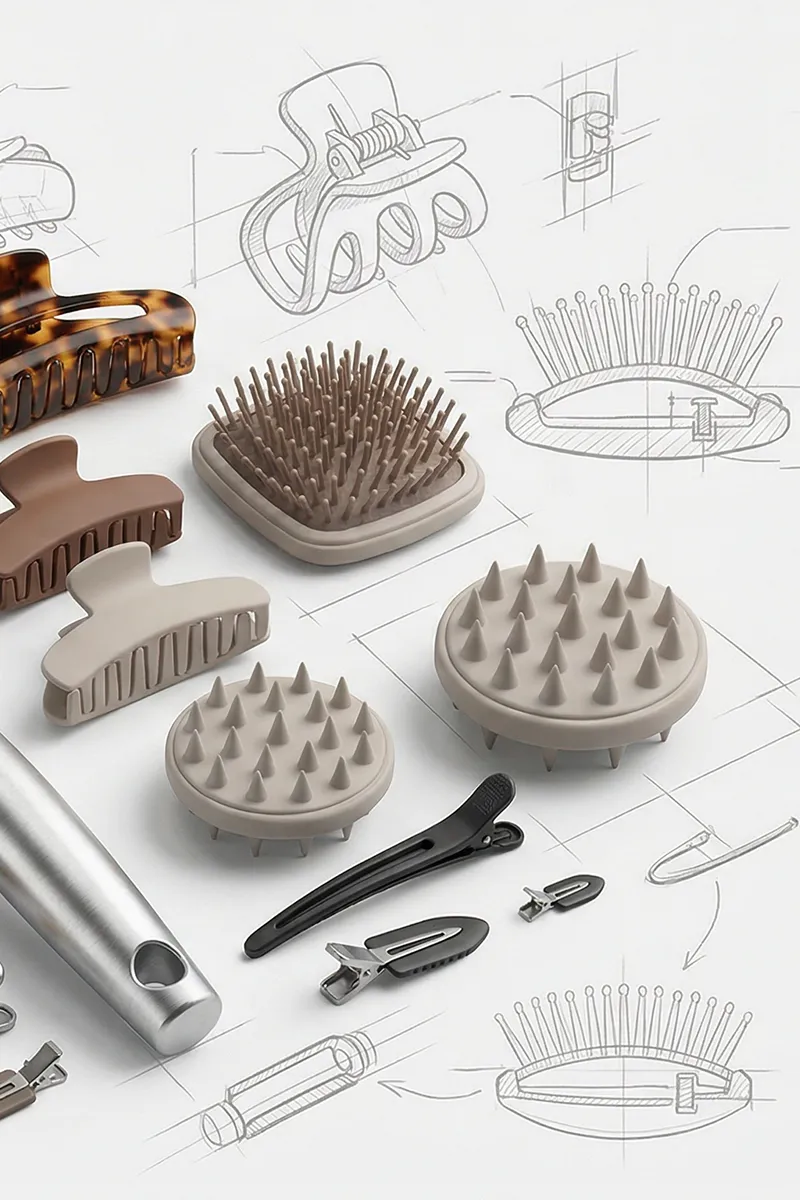
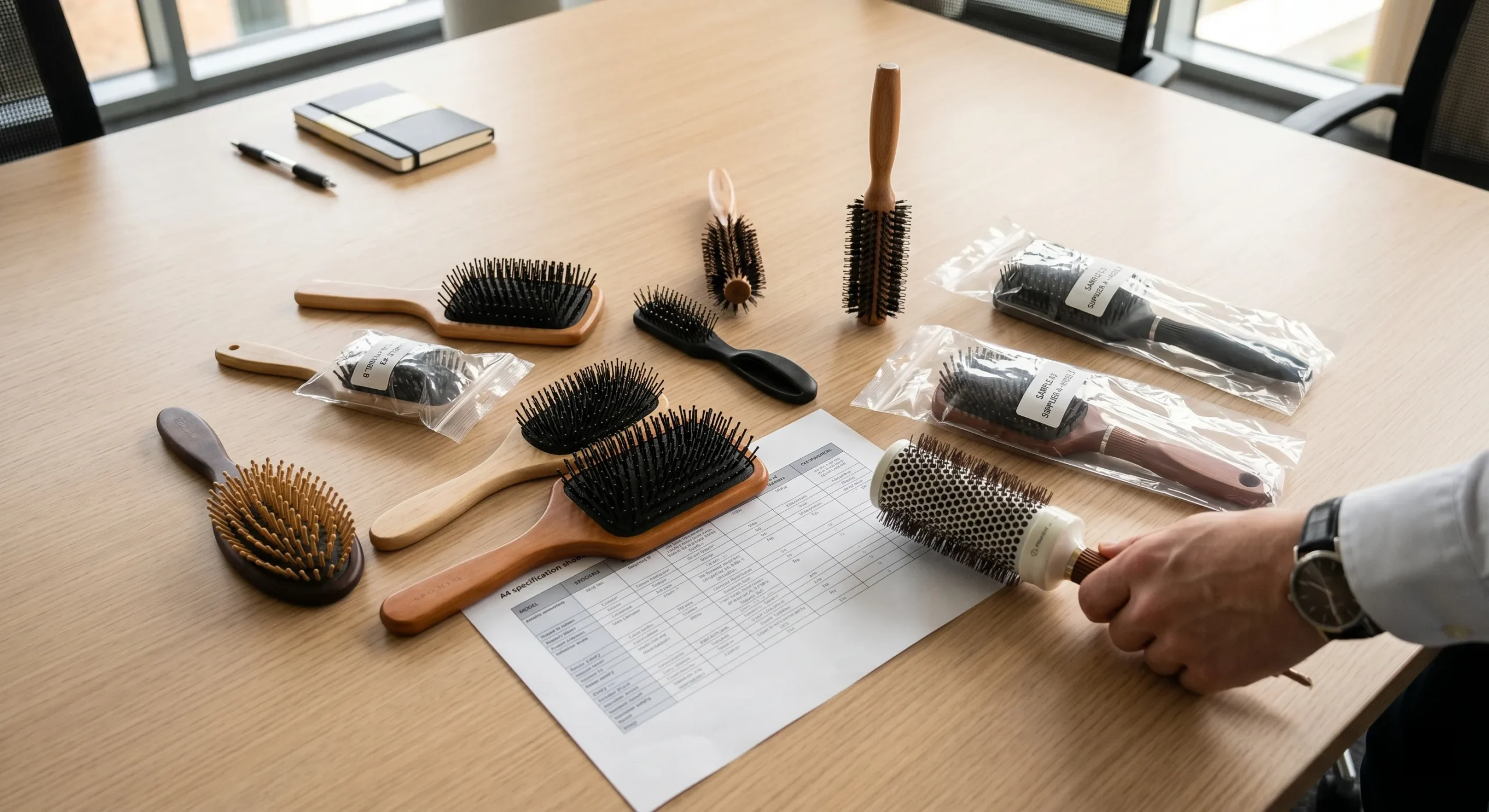
Attach the best reference you have: a sketch, marked-up images or a physical sample. For a clip, include front, side and open-position views; for a brush, show handle, head, bristle face and logo area. This shows whether a design is standard, adapted or needs new development.
Do not treat another brand’s product page as a complete specification. Use it as a visual reference, then list the details that matter to your own brief.
2. Turn appearance into material, size and function
Material is more than a colour choice. Acetate, resin, ABS, metal, wood and bamboo have different finishing routes, component compatibility and packaging needs. State your preferred material and whether an alternative is acceptable.
Give dimensions whenever you can: length and width, jaw opening, brush-head size or a measured sample. If they are not final, identify the range or fit point that matters.
List the functional components separately from the visible body. On a claw clip, that includes the spring, hinge, teeth and closing behaviour. On a brush, it can include bristle type, pin tips, cushion response, handle construction and the joint between head and handle. The purpose is not to prescribe a process you do not understand. It is to make sure the quote answers the performance you expect, not only the silhouette in the photo.
3. Specify colour, logo and packaging before comparing prices
Colour should be described with a reference, the surface finish and an acceptable range of variation. This matters especially for patterned acetate, translucent resin, stained wood and glossy or matte plastics. A screen image can begin the conversation, but a final production reference is normally physical: an approved swatch, an approved sample or a defined colour standard applied to the intended material.
For a private-label project, include the logo artwork and its preferred position. If you do not know whether print, engraving, foil or a metal plate is feasible, ask the supplier to propose options on the actual material.
Packaging should appear in the first RFQ, not after the product price is agreed. State whether you need a polybag, backing card, sleeve, tray, gift box, label, barcode, carton mark or retailer-ready pack. Packaging protects the product and can affect the unit price, packing quantity and freight. For further product-development context, see our custom hair clips guide and the private-label hair accessories guide.
4. Make quantity, sample and delivery assumptions explicit
Write quantity by SKU and colourway. “5,000 pieces” can mean one design in one colour or five designs across several colours, and those are not the same quotation. State whether your quantity is a test order, a launch order or an expected repeat program. You do not need to promise future volume; simply make the current assumption visible.
Say what the sample must answer. An existing-model sample can confirm general form; a prototype can test a new silhouette; a pre-production sample is the approval point for final material, hardware, decoration and packaging. The samples and prototypes process explains why this physical step belongs before bulk production.
Include your target launch date, destination and Incoterm if known. If you need freight, say so. A realistic quotation should show which dates or charges depend on sample approval, quantity, packaging and shipping method.
5. Put market and compliance questions into the brief
Tell the supplier where you intend to sell the product and whether it is for adults, children or a retailer with its own requirement list. That information changes the questions a supplier needs to ask about materials, labelling, packaging and documentation. It is much harder to add the right evidence at the end of production than to identify the requirement while the material and design are still being selected.
Request evidence that relates to your actual product and market. A factory certificate, material declaration, product test report and inspection record answer different questions. A certificate logo alone does not prove that a particular material, colourway or finished SKU meets every requirement. Our REACH, CPSIA and Prop 65 guide explains the difference.
This article is a sourcing framework, not legal or testing advice. Where a retailer, importer or regulation requires independent assessment, involve the appropriate qualified laboratory or adviser before you finalise the production plan.
6. Compare quotations on the same assumptions
Once quotations arrive, compare them line by line rather than starting with unit price. Check whether each supplier has quoted the same material, dimensions, quantity per SKU, colour count, logo method, individual packaging, carton arrangement, sample route, tooling treatment, test assumptions and delivery basis. If one quote is lower, ask which specification or commercial assumption differs before treating it as a saving.
A useful supplier response makes unknowns visible: an existing mould needs confirmation, a logo method needs a sample trial, or a colour needs physical approval. Those are decisions to resolve before an order is released.
Keep your RFQ, quotation and approved-sample records together. They become the foundation for final inspection. If you are comparing custom clips, our manufacturing-cost guide explains variables that often change a project budget.
A copyable RFQ outline for hair accessories
Use the following outline in an email or enquiry form. Complete what you know and mark the rest as “to be confirmed.” A supplier can then respond with targeted questions instead of guessing.
- Product: product type, intended user and reference images or file.
- Material and construction: preferred material, dimensions, finish and required functional components.
- Customisation: colourways, pattern reference, logo artwork/method and logo location.
- Packaging: individual pack, labels, barcode, carton and retailer requirements.
- Quantity: units per SKU and colourway, plus whether this is a test or launch order.
- Market: destination, intended user and known documentation/testing requirements.
- Sample/tooling: existing option, modification or new development; what the sample must confirm.
- Delivery: target date, destination, Incoterm if known and whether freight should be quoted.
Send a complete brief, then confirm the production route
The purpose of an RFQ is not to make a project look more complicated. It is to make the important choices visible early enough to compare them. A clear brief helps a buyer ask better questions and helps a manufacturer identify the suitable material, sampling route and quotation inputs before production starts.
If you are developing custom clips, combs or brushes, send your product references, target quantity, logo requirements, packaging idea and delivery market through our contact page. We can review which details are ready for quotation, which existing option may be suitable, and which points need a sample or further confirmation first.