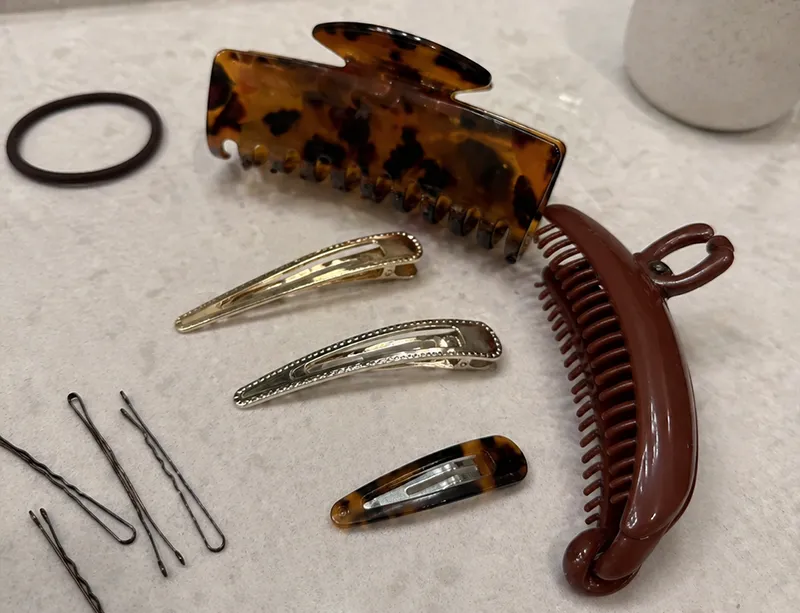
Why Thick Hair Needs a Different Kind of Clip
Thick hair presents a specific mechanical challenge for hair clips. Each strand of thick hair has a larger cross-sectional diameter than fine or medium hair, and thick hair types typically have a higher strand density per square centimetre of scalp. The combined result is significantly more weight and volume per styling section. A clip that works perfectly on medium-density hair often lacks the jaw opening, spring tension, or tooth length to handle a comparable section of thick hair.
The most common complaint from people with thick hair is that clips slide out within minutes of being secured. This happens when the clip's clamping force cannot overcome the outward pressure created by the compressed hair bundle. As the hair gradually pushes against the teeth and springs, the clip loosens and eventually falls. The solution is not simply choosing a bigger clip — it requires matching the clip type, material, and mechanism to the specific demands of thick hair. Clips that apply excessive concentrated force can contribute to traction alopecia, a form of hair loss caused by sustained pulling on the hair roots.
Three factors determine whether a clip will hold thick hair reliably: grip mechanism (how the clip generates and maintains clamping force), material rigidity (whether the clip body resists flexing under load), and tooth design (whether the teeth are long enough and textured enough to interlock through dense hair). The following sections evaluate five major clip types against these three criteria.
Claw Clips: The Most Versatile Option for Thick Hair
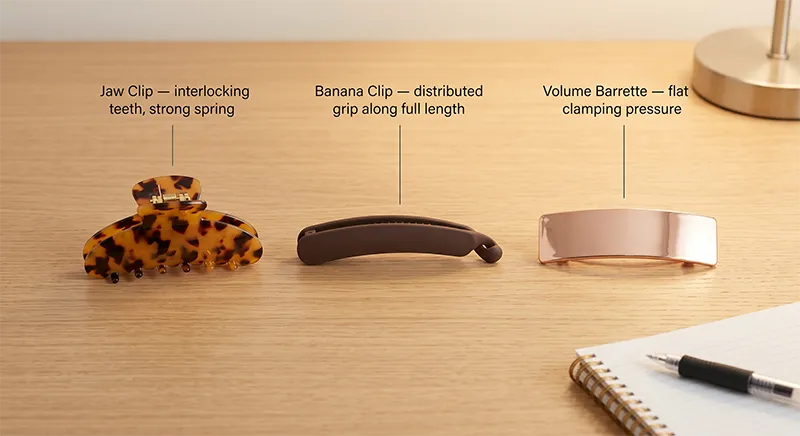
Claw clips (also called jaw clips) use a spring-loaded hinge to drive two sets of interlocking teeth together, creating a strong clamping force that holds hair in place. For thick hair, claw clips are the most popular choice because they can accommodate large volumes of hair in a single motion — twist, clip, and go.
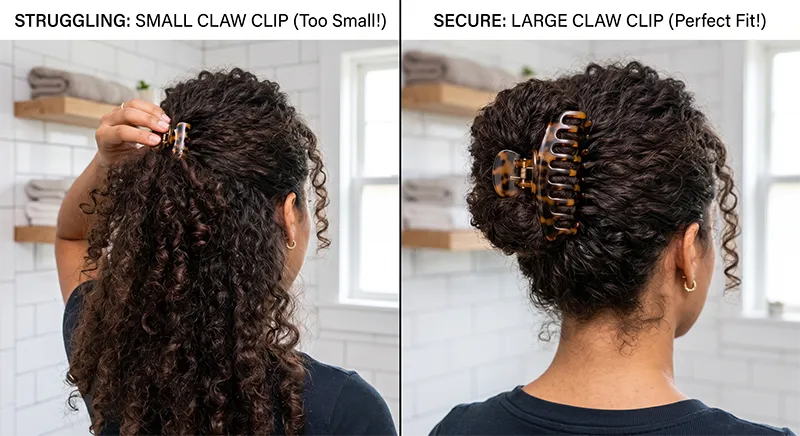
The key specifications to evaluate when selecting a claw clip for thick hair include size (measured from hinge to tip when closed), jaw depth (the interior opening when fully open), tooth count and length, and spring gauge. Clips in the 10–14 cm range with jaw depths exceeding 5 cm are generally required for thick hair. Shorter teeth — anything under 2.5 cm — tend to lose grip on dense hair bundles because they cannot interlock deeply enough through the strands.
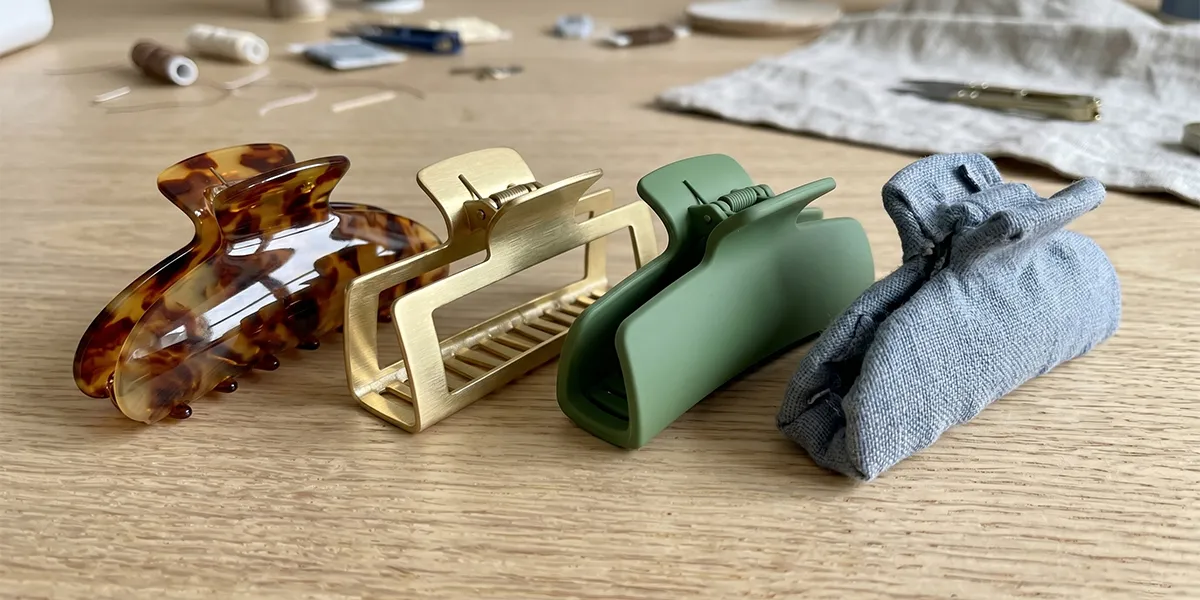
Material choice matters as much as size. Cellulose acetate claw clips maintain their structural rigidity under load better than standard ABS plastic clips. When a thick hair bundle presses outward against a clip, ABS plastic can flex slightly, reducing clamping force and causing gradual slippage. Acetate resists this flexing, which is why premium claw clips intended for thick hair are almost always made from acetate or a reinforced acrylic compound.
How to Choose the Right Claw Clip Size
| Hair Thickness | Recommended Clip Size | Jaw Depth Minimum | Best Styles |
|---|---|---|---|
| Medium-thick | 8–10 cm | 3.5 cm | Half-up styles, partial updos |
| Thick | 10–12 cm | 5 cm | Full buns, French twists, ponytail wraps |
| Very thick or long | 12–14 cm | 6 cm+ | Full updos, high buns, large twisted styles |
One practical test before purchasing: open the clip fully and try to fit a bundled section of hair inside the jaw. If the teeth do not overlap by at least 1 cm when closed around the hair, the clip is too small. The teeth need to interlock firmly to create the friction that prevents slippage.
Banana Clips: Best for Distributing Weight Across Thick Hair
Banana clips use a completely different holding mechanism than claw clips. Instead of concentrating clamping force at a single hinge point, banana clips distribute grip across their entire length through two rows of interlocking teeth connected by a flexible clasp at each end. This distributed grip makes banana clips exceptionally well-suited for thick, heavy hair that overwhelms single-point clips.
A banana clip measuring 12–15 cm can comfortably hold a full ponytail of thick hair. The curved shape naturally follows the contour at the back of the head, creating a secure hold that feels less like clamping and more like cradling. This design also reduces the concentrated tension that can cause headaches during extended wear — a common issue with tight claw clips on thick hair.
The main limitation of banana clips is styling versatility. They excel at ponytails, cascading styles, and low gathered looks, but they are not suited for tight buns or half-up twists. For those styles, a claw clip or barrette remains the better choice. The material guide on selecting clips that minimise hair damage applies equally to banana clips — smooth tooth edges and quality materials reduce snagging during insertion and removal.
Barrettes and Snap Clips: Targeted Hold for Sections of Thick Hair
Barrettes and snap clips serve a different function than claw or banana clips. Rather than holding a full head of thick hair in one piece, they are designed to secure specific sections — pinning back side sections, holding a half-up layer, or fastening braids and twists.
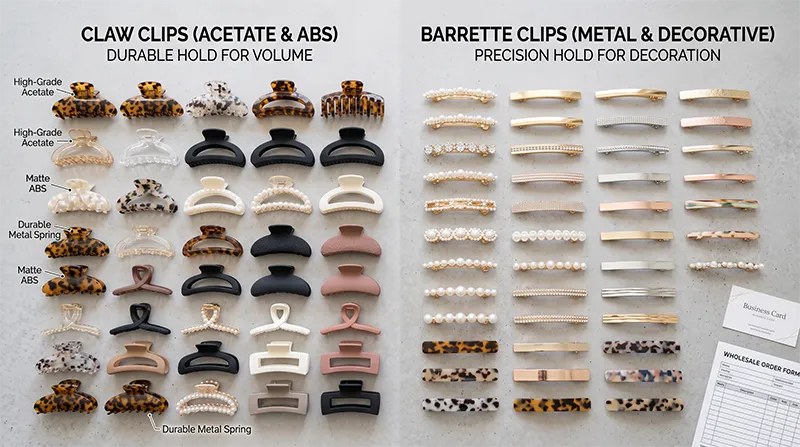
For thick hair, the standard French barrette often fails because its clasp was originally designed for fine to medium hair density. Volume barrettes solve this problem with a deeper channel and a stronger clasp spring that accommodates thicker hair bundles. When shopping for barrettes for thick hair, look for the term "volume" or "XL" in the product description — these indicate a wider opening and reinforced clasp mechanism.
Snap clips (also called tic-tac clips) are the simplest option for thick hair but work best in multiples. A single snap clip rarely has enough clamping force to hold a thick section, but two or three placed strategically can secure a style effectively. Metal snap clips with a powder-coated or rubberised finish provide better grip than plain metal, which can slide on smooth, thick strands.
Material Comparison: What Holds Thick Hair Best
The material a hair clip is made from directly affects its holding performance on thick hair. Two clips of identical size and design will perform differently if one is made from cellulose acetate and the other from standard ABS plastic. The differences become especially noticeable with thick hair, where the sustained outward pressure of dense hair strands tests the clip's structural integrity over hours of wear.
| Material | Rigidity | Surface Grip | Weight | Durability | Best for Thick Hair? |
|---|---|---|---|---|---|
| Cellulose Acetate | High — resists flexing under load | Slightly textured, grips well | Medium | Excellent — resists cracking for years | Yes — top choice for all-day hold |
| ABS Plastic | Moderate — can flex under heavy hair | Smooth, can slip on silky hair | Light | Good — may become brittle over time | Adequate for short-term wear |
| Acrylic (Reinforced) | Moderate-high | Smooth to slightly matte | Light-medium | Good — scratch-resistant surface | Good — check spring strength separately |
| Metal (Steel/Alloy) | Very high — no flex | Low unless coated or textured | Heavy | Excellent — bends before breaking | Yes for barrettes; caution with jaw clips |
| Resin | Moderate | Varies by finish | Medium | Moderate — can chip on impact | Decorative use; not ideal for heavy-duty hold |
For everyday use on thick hair, cellulose acetate is the most reliable material. It combines the rigidity needed to resist flexing, a natural surface texture that improves grip, and long-term durability that justifies a higher price point. The manufacturing process behind acetate hair accessories is covered in detail in the guide to acetate combs and clips, which explains why acetate performs differently from moulded plastics.
Clip Selection Chart by Hairstyle
Different hairstyles place different demands on hair clips. A full updo requires maximum grip strength and jaw depth, while a decorative half-up style needs moderate hold with a lower profile. The following chart maps common thick-hair styles to the clip types and sizes that work best for each one.
Full buns and high updos demand a jumbo claw clip (12–14 cm) or a strong banana clip (13–15 cm) because these styles concentrate the entire hair mass into a single point. Half-up twists work well with medium claw clips (8–10 cm) since only the top section needs securing. Low ponytails are where banana clips shine — their length distributes grip evenly. French twists require bobby pins combined with a medium claw clip or a French barrette. Side-pinned sections are best held with volume barrettes or two to three snap clips in a row.
A practical approach for people with thick hair is to keep at least two clip types on hand: a large claw or banana clip for full-volume styles, and a set of volume barrettes or snap clips for sectional styling. This two-clip strategy covers the majority of everyday styling needs without requiring a large collection. For more on how different clip types compare mechanically, the claw clip vs jaw clip vs barrette comparison breaks down the structural differences in detail.
Mistakes to Avoid and Tips to Maximise Clip Hold
Several purchasing and styling mistakes consistently lead to poor clip performance on thick hair. Recognising these patterns can save both money and frustration.
The most frequent mistake is buying clips that are too small. Many people select clips based on aesthetics rather than jaw capacity, then wonder why the clip cannot hold their hair. A clip that looks proportionally right on the shelf may be far too small once loaded with thick hair. Always check the measurements — not just the overall length, but the jaw opening depth when fully extended.
A second common mistake is ignoring spring quality. The spring is the engine of any claw or snap clip, and cheap springs lose tension quickly. A clip that feels strong in the store may weaken after two weeks of daily use if the spring is made from low-gauge wire. Premium clips use thicker spring wire (0.8–1.2 mm gauge) that maintains consistent tension over months of use. The article on whether hair clips cause damage discusses how spring tension relates to both grip strength and hair health.
A third mistake is forcing too much hair into a single clip. Even a jumbo claw clip has a practical capacity limit. If the teeth cannot interlock by at least 1 cm when closed, the clip is overloaded and will eventually slide out or snap open. In these cases, splitting the hair into two sections and using two clips — or switching to a banana clip that distributes grip across a wider area — produces much better results.
Styling Techniques for Better Hold
Beyond selecting the right clip, a few styling techniques significantly improve hold duration on thick hair.
Adding texture before clipping is the single most effective technique. According to the American Academy of Dermatology, choosing accessories that do not pull or tug is essential for maintaining healthy hair. Freshly washed, smooth hair is harder for clip teeth to grip because the cuticle lies flat and the strands slide against each other. Applying a light dry shampoo or texturising spray at the roots before clipping creates micro-friction that helps the teeth maintain their grip. Second-day hair naturally has more texture and oils, which is why many people notice their clips hold better the day after washing.
Twisting the hair before clipping also improves hold. A loose twist compresses the hair bundle into a tighter, more uniform shape that fits better inside the clip's jaw. The twist also creates internal friction between strands, reducing the outward pressure that pushes clips open. For styles that avoid leaving creases, a looser twist with a clip positioned further from the scalp minimises pressure marks.
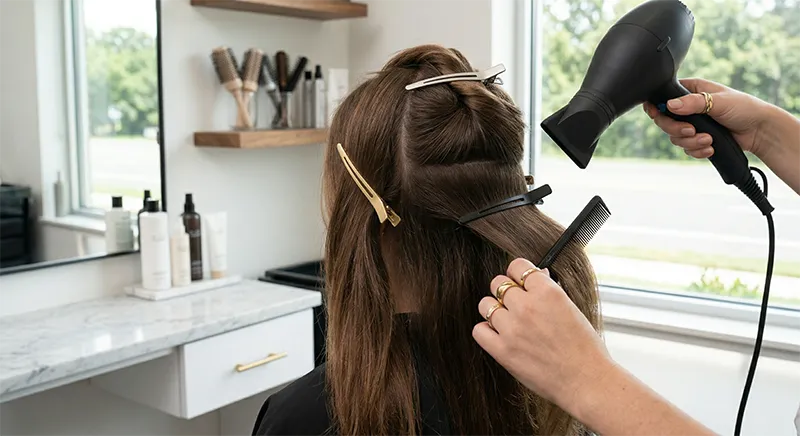
Positioning the clip at the right angle is another often-overlooked factor. Placing a claw clip horizontally (parallel to the floor) creates a weaker hold than positioning it at a slight downward angle (tilted about 30 degrees toward the nape). The angled position allows gravity to work with the clip rather than against it, keeping the teeth engaged as the day progresses.
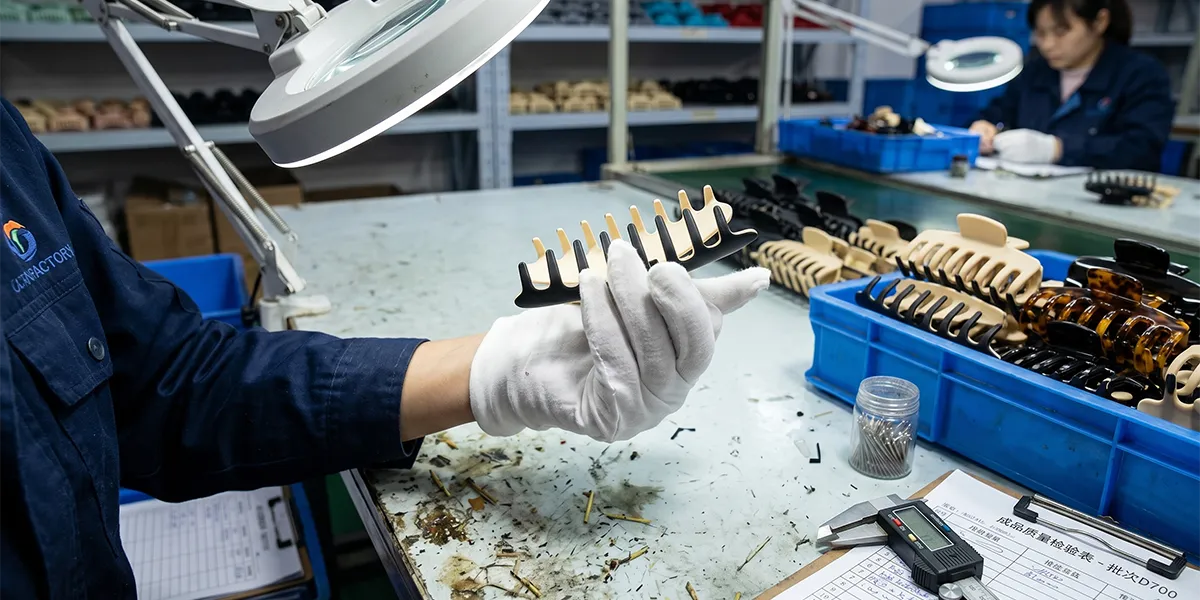
See how hair clip production works from raw material to finished product:
Choosing the Right Clip for Thick Hair
Selecting hair clips for thick hair comes down to matching the clip's mechanical capacity to the hair's volume and weight. Claw clips offer the most versatile option for full-volume styles when chosen in the right size (10 cm or larger) and material (acetate or reinforced acrylic). Banana clips excel at distributing weight across thick ponytails and cascading styles. Volume barrettes and snap clips handle sectional styling where a full-jaw clip is not needed.
Material rigidity, spring quality, and tooth design matter more than brand name or aesthetic appearance. A well-constructed acetate claw clip from a factory like JunYi Beauty — with properly gauged spring wire and precision-moulded interlocking teeth — will outperform a decorative clip made from thinner materials, regardless of price point. Prioritising function over appearance leads to clips that stay in place all day, every day.