A beard comb looks like the simplest product a grooming brand can put its name on. It has no moving parts, no electronics and no formulation. That simplicity is exactly why it is easy to get wrong: with so few variables, every one of them shows. Tooth spacing that is 1 mm too tight will pull on a long beard. A moulding seam left on the tooth edge will catch skin. A wood species chosen for its colour rather than its grain will lose teeth in transit.
This guide covers the decisions that actually determine whether a beard comb performs: format, material, tooth finishing, spacing, decoration and packaging — and what each choice does to tooling cost, minimum order quantity and lead time. It is written for brand owners and buyers specifying a product rather than for end consumers. If you are choosing a comb for your own beard rather than for a product line, our guide to which comb is best for a beard covers that side.
1. Beard Comb Formats and What Each One Is For
Beard grooming tools divide into a small number of formats. Most brands carry two or three, not all five.
Flat Comb
The default format: a rectangular body, usually 80–120 mm long, with a single row of teeth. It is the cheapest to produce, the easiest to decorate and the most forgiving on tooling. If a brand launches with one beard SKU, this is almost always it.
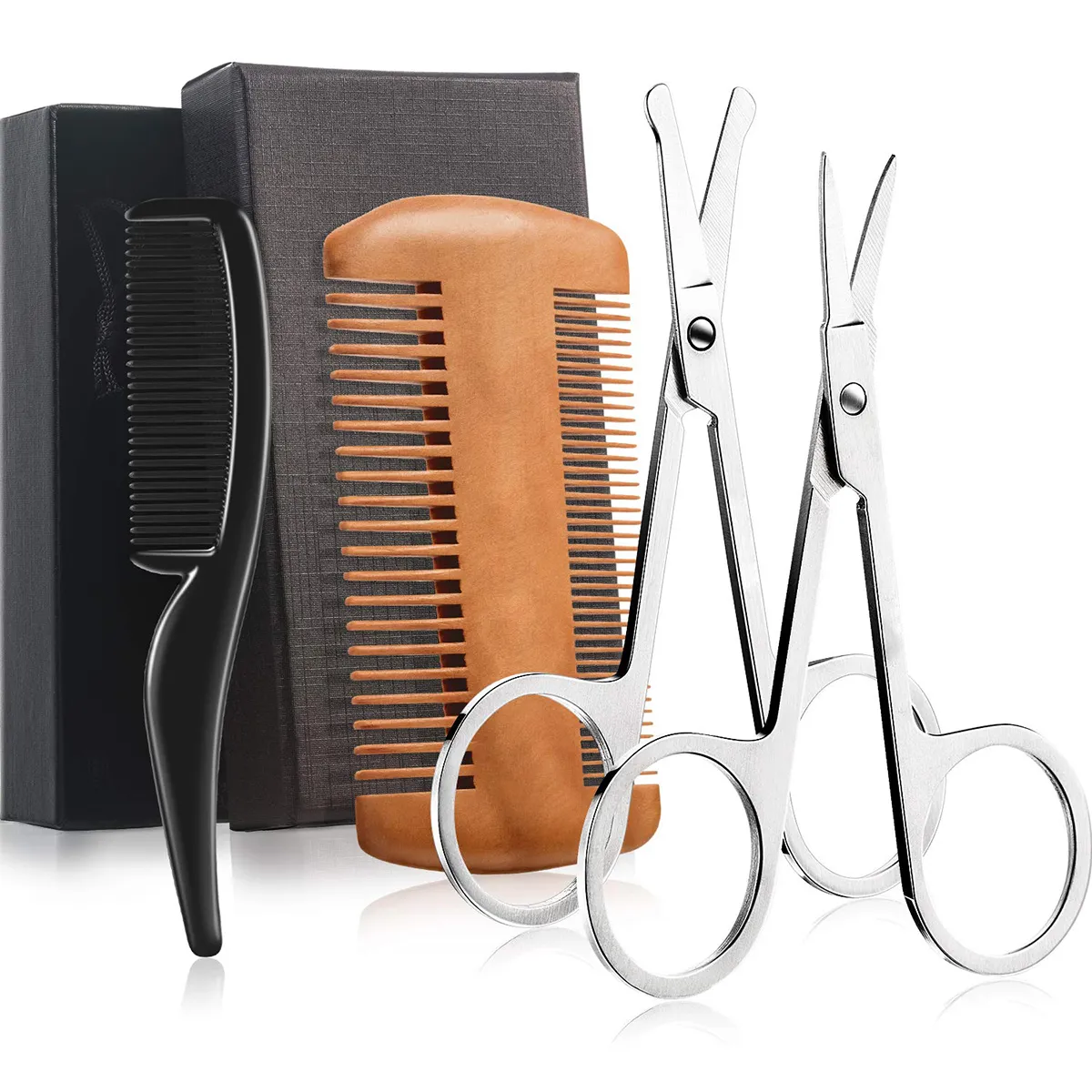
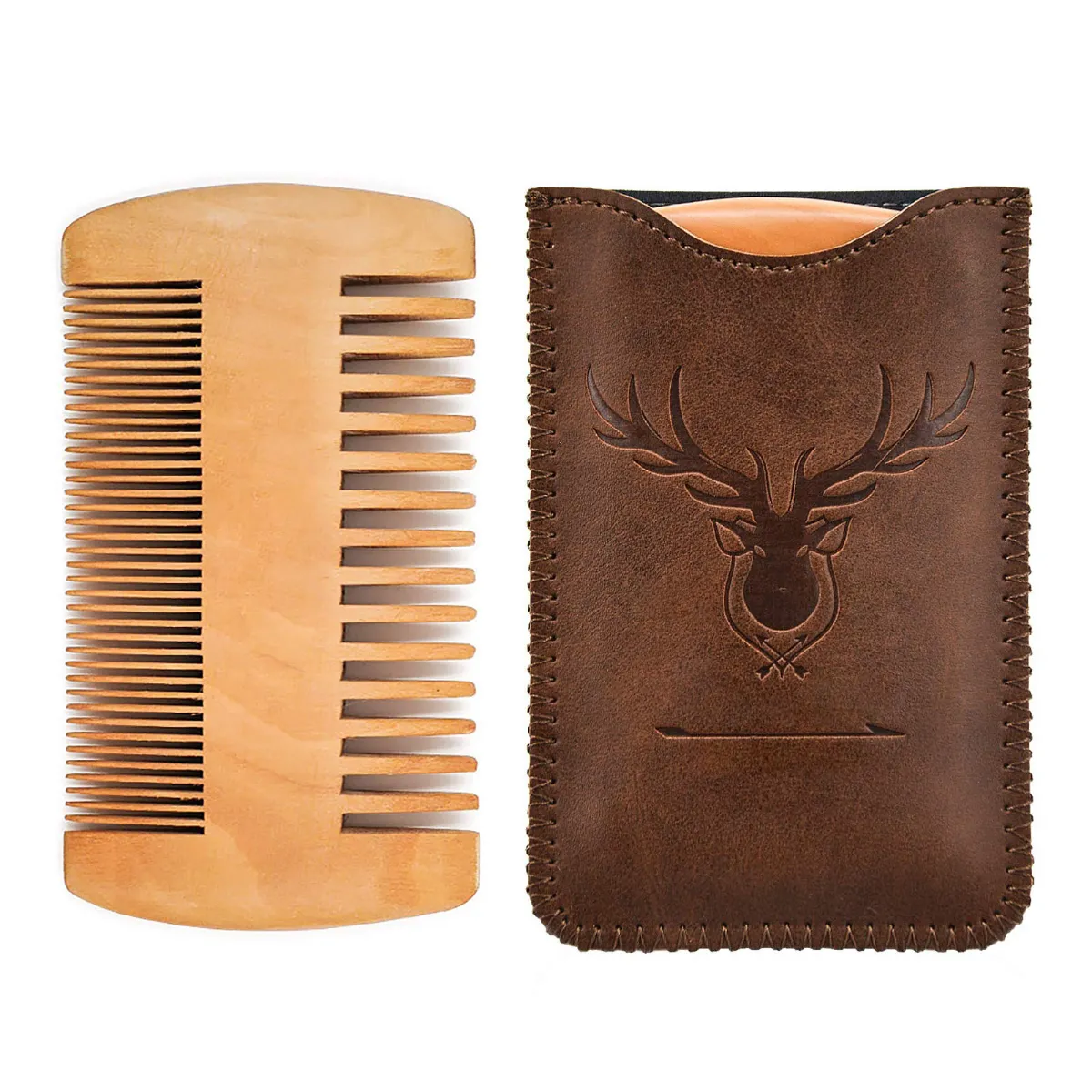
Dual-Sided Comb
Two tooth spacings on one body — typically fine on one half and coarse on the other. This is the most efficient way to serve a customer base with mixed beard lengths from a single SKU, which is why it is disproportionately common in gift sets. The trade-off is a longer body and slightly more material per piece.
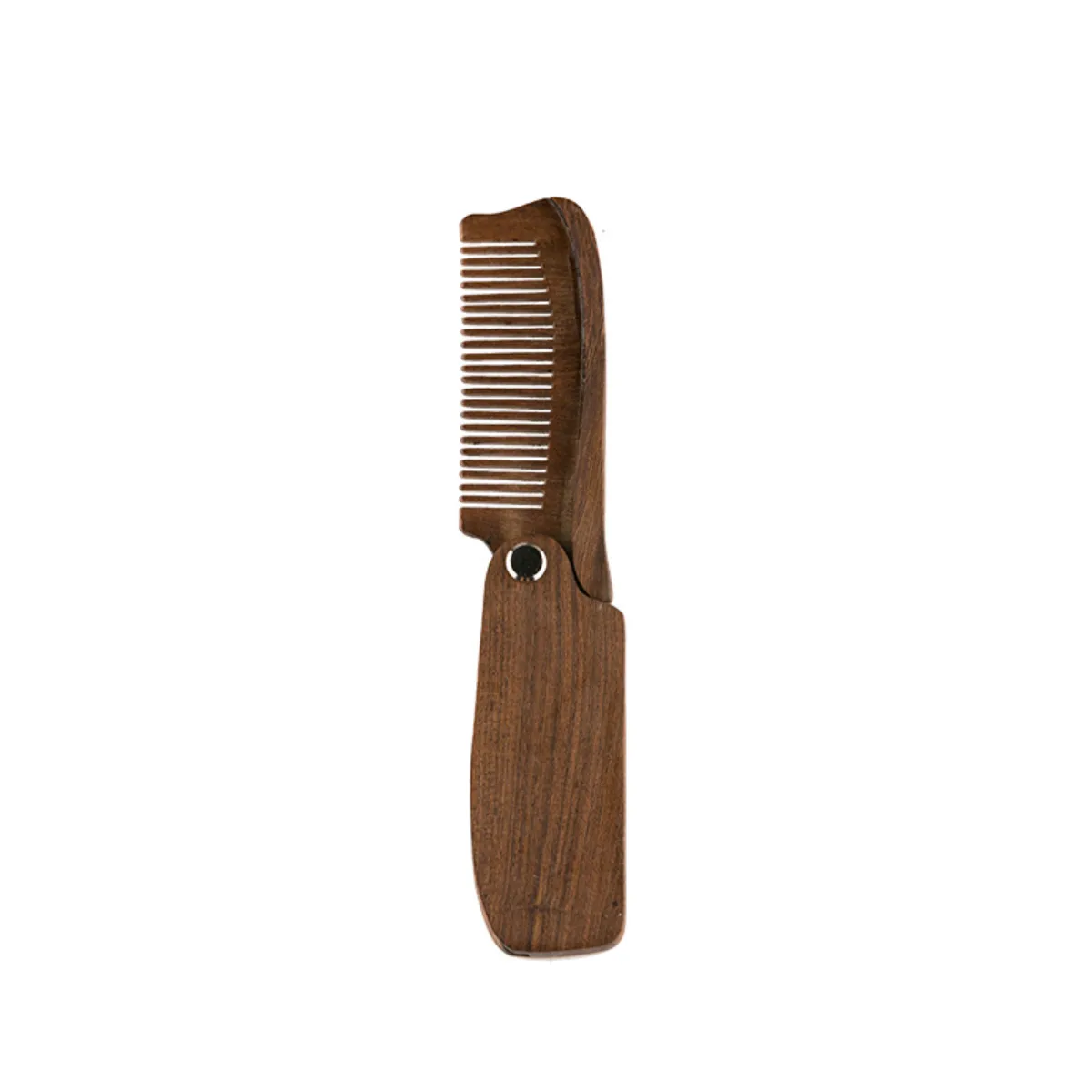
Folding / Pocket Comb
A hinged comb that closes into its own handle. It carries a genuine everyday-carry benefit, and it is the format most often bought as a gift, which supports a higher retail price. It also has the highest assembly cost of the comb formats because of the pivot. The same construction logic applies to hair combs — see how to customise a pocket comb for the tooling detail.
Long-Handled Comb
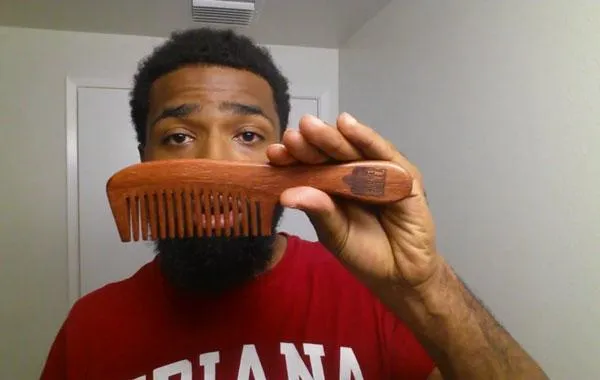
A comb with an extended handle for reach and grip, used mainly for longer beards and for applying product through the full length. Lower volume than the flat comb, but it rounds out a premium set.
Beard Brush
Strictly an adjacent SKU rather than a comb, but it belongs in the same assortment conversation. Brushes distribute oil and control shape in a way combs cannot, and boar bristle is the standard fill. Bristle selection is its own subject — our analysis of comb and brush bristle materials covers grades and setting methods.
2. Material Comparison
Material is the decision that drives everything downstream: unit cost, tooling route, decoration method, MOQ and the retail price the product can support.
Hardwood
Sandalwood, walnut, beech, rosewood, pearwood and bamboo are all in regular use. Wood distributes beard oil well, feels warm in the hand and carries a natural, premium look that photographs well. The engineering constraint is grain direction: teeth cut across the grain snap easily, so tooth length and fineness are limited compared with acetate. Wood also needs sealing or oiling, and it moves with humidity. For brands with sustainability claims, chain-of-custody certification such as FSC is worth specifying up front rather than retrofitting. Note that on many wooden combs the teeth and the handle are produced separately and then joined — the reason why is structural, not cosmetic.
Cellulose Acetate
Cellulose acetate is a plant-derived thermoplastic made from wood pulp or cotton fibre. It sawcuts and polishes to a glass-smooth edge, holds deep tortoiseshell and marble patterns that no other material reproduces, and is anti-static. It is the premium choice and it is priced accordingly — sheet stock is expensive and the polishing stage is labour-intensive. See what acetate combs are for the material in more depth.
Horn
Natural buffalo or ox horn. Anti-static, gentle on skin, and every piece is visually unique — which is both the selling point and the quality-control problem, since colour consistency across a batch cannot be guaranteed. Horn requires hand polishing and carries import restrictions in some markets, so confirm destination-country rules before committing.
Metal
Usually stainless steel or aluminium. The most durable option and the easiest to clean, but rigid teeth are unforgiving on skin and on the beard itself, and metal is heavier in the pocket. It works best as a fine-tooth detailing comb rather than a daily driver. The wider trade-offs are covered in our metal vs plastic vs wooden comb comparison.
Bio-Based and Conventional Plastics
PLA, wheat straw and coconut shell fibre give a sustainability story at a fraction of acetate cost, with the caveat of lower heat resistance and a more limited colour range. PP, PS and TPE remain the volume options for price-driven retail and for promotional inserts. All are injection-moulded, which brings the tooth-seam issue discussed in the next section. Our plastic vs wooden comb comparison covers the same trade-off on the hair side.
| Material | Tooth Finish | Static | Oil Distribution | Durability | Relative Unit Cost | Typical Positioning |
|---|---|---|---|---|---|---|
| Cellulose acetate | Sawcut, hand-polished | Very low | Good | High | High | Premium / fashion colourways |
| Horn | Sawcut, hand-polished | Very low | Excellent | Medium | High | Luxury / artisanal |
| Hardwood | Cut and sanded | Low | Excellent | Medium | Medium | Natural / gift sets |
| Bamboo | Cut and sanded | Low | Good | Medium | Low–Medium | Eco-positioned volume |
| Metal | Stamped, deburred | Medium | Minimal | Very high | Medium | Detailing / barber tools |
| PLA / wheat straw / coconut | Moulded | Medium | Minimal | Medium | Low | Sustainability claim, value tier |
| PP / PS / TPE | Moulded | High | Minimal | Medium | Very low | Promotional / mass retail |
3. The Detail That Decides Quality: Sawcut vs Moulded Teeth
If you take one specification away from this guide, make it this one. It is the difference customers feel immediately and reviewers write about, and it is invisible in a product photo.
An injection-moulded comb is formed in a two-part mould. Where the two halves meet, a parting line runs along the length of every tooth. Unless it is removed, that ridge catches beard hair and drags on skin. On a cheap comb it is left in place, because deflashing is a manual operation and it costs money.
A sawcut comb starts as a solid sheet. The profile is cut, then each tooth is filed and polished by hand until the edges are fully rounded. There is no seam because there was never a mould. This is why acetate and horn combs feel different in the hand from moulded ones at the same tooth spacing — the material matters less than the finishing route.
Sawcutting adds meaningful cost per piece and it cannot be automated away. The decision is a positioning decision, not a technical one: if the product is going to sit at a premium price point or carry a barber-grade claim, moulded teeth will undermine it no matter how good the packaging is.
OEM production note: When you request a sample, ask specifically whether the teeth are sawcut or moulded and deflashed — the two look near-identical in photographs. A reliable physical test is to run a fingernail down the flat face of a tooth from base to tip; a moulding seam is detectable even when it has been lightly polished. Specify the finishing route in writing on the purchase order, not just the material, or a factory quoting to price will substitute the cheaper route.
4. Tooth Spacing and Sizing
Tooth spacing is the single most common cause of a beard comb underperforming in the hands of the customer it was designed for. The relationship is straightforward: the longer and coarser the beard, the wider the teeth need to be.
| Beard Length | Recommended Tooth Spacing | Primary Use | Best Format |
|---|---|---|---|
| Stubble to 15 mm | Fine (approx. 1–2 mm) | Edging, moustache detail, line-up | Small flat comb or metal detailing comb |
| 15–50 mm (short–medium) | Medium (approx. 2–3 mm) | Daily shaping, product distribution | Flat comb, folding comb |
| 50–100 mm (long) | Wide (approx. 3–5 mm) | Detangling without breakage | Long-handled comb, wide-tooth flat comb |
| Mixed customer base | Fine + wide on one body | Covers the range in one SKU | Dual-sided comb |
Two secondary dimensions matter almost as much. Tooth thickness governs whether teeth flex or snap — on wood this is constrained by grain, on acetate it is a free choice. Tooth tip profile should be rounded rather than pointed for anything touching the skin under the beard; pointed tips are a styling-comb convention that does not transfer well to beard use.

5. Branding and Decoration Options
Decoration method is constrained by material, not chosen freely. Ink-based methods need a smooth, sealed surface; wood and horn generally do better with methods that remove or deform material instead of adding ink to it.
| Method | Best For | Colours | Setup Cost | Notes |
|---|---|---|---|---|
| Laser engraving | Wood, horn, bamboo, metal | Tonal only | Low | No ink, no wear-off; the default for natural materials |
| Hot stamping | Wood, acetate, plastics | Metallic foil | Low–Medium | Gold or silver foil; strong premium cue |
| Pad printing | Plastics, acetate | 1–4 spot colours | Low | Handles slightly curved surfaces |
| Screen printing | Flat plastics, acetate | Spot colours | Low | Dense, opaque coverage; one screen per colour |
| Heat transfer | Plastics | Full colour | Medium | Good for gradients and complex artwork |
| UV digital printing | Most flat surfaces | Full colour | Very low | No screen or plate; economical for short runs and variants |
Two practical points. First, logo placement on a comb is limited to the spine — the teeth area is unusable — so artwork needs to work in a long, narrow aspect ratio; a square logo will be reduced until it is illegible. Second, if the product will be handled with beard oil daily, prefer laser or hot stamping over surface inks, which abrade over time on a product that lives in a pocket.
6. Packaging Formats
For a low-unit-cost product sold largely as a gift, packaging often carries more of the perceived value than the comb itself. The standard options each imply a different retail channel:
- Blister card — hanging retail display, lowest cost, highest shelf visibility. Best for value-tier and impulse placement.
- Window box — shows the product while allowing full-surface branding. The most common choice for mid-tier grooming brands.
- Kraft box — unbleached board, supports natural and sustainability positioning, and pairs well with wood and bamboo combs.
- PVC tube — protects teeth in transit, well suited to e-commerce where the comb ships alone and tooth damage is the main return cause.
- Drawer box — rigid, premium presentation for gift sets combining a comb, a brush and oil.
Retail-ready packaging handled in-house at the same factory avoids a second supplier, a second lead time and a second inspection point. It is worth confirming whether packaging is produced internally or subcontracted before you assume the quoted lead time covers both.
7. Specifying an Order: MOQ, Sampling and Lead Time
Once format, material, tooth spacing, decoration and packaging are settled, the commercial variables follow from them.
- Order tiers. Quantities step through 300–500, 500–1,000, 1,000–5,000 and 5,000+ pieces. The lowest tier is realistic when an existing mould or stock sheet colour is used; bespoke tooling or a custom acetate sheet raises the practical minimum.
- Mould library. A factory holding a large existing mould library lets a brand launch without tooling investment. With 2,000+ moulds in stock, most standard comb profiles can be produced without new tooling at all — which is usually the difference between a 300-piece first order and a 3,000-piece one.
- Sampling. Pre-production samples typically take 5–7 days on existing tooling. Free samples are available on request; bespoke samples normally carry a fee that is credited against the bulk order.
- Production lead time. Roughly one month from approved sample and confirmed artwork. New tooling sits before this window, not inside it — a scheduling mistake that catches first-time buyers regularly. See our lead time breakdown for custom hair accessories for the stage-by-stage view.
- Supply model. Whether you supply the design or adapt an existing one changes cost, timeline and who owns the tooling. Our comparison of OEM and ODM supply models sets out which route fits which situation.
OEM production note: Ask for the mould list before you ask for a quote. If an existing profile is within a few millimetres of what you want, adopting it removes the tooling cost and several weeks from the schedule entirely — and on a first order that is usually a better use of budget than a bespoke silhouette no customer will consciously notice. Save the custom tooling for the second order, once the SKU has sold.
8. Common Sourcing Mistakes
- Specifying material but not finishing route. An order that says only “acetate comb” tells a factory nothing about whether the teeth are sawcut. This is the most expensive omission on the list.
- Choosing tooth spacing from a photo. Spacing has to be matched to the target beard length, not to what looks balanced on screen.
- Designing the logo before the comb. A comb spine is a narrow strip. Artwork designed for a bottle or a box will not scale into it.
- Treating tooling time as part of production time. They are sequential, not concurrent.
- Ordering wood without specifying moisture content or finish. Unsealed wood moves in transit and in humid markets; a sealed or oiled finish belongs on the specification.
- Skipping the packaging drop test. Teeth are the fragile part. A comb that survives the factory can still arrive broken from an e-commerce warehouse.
Most of these reduce to the same root cause: specifying the product by its appearance rather than by its production parameters. The five elements that decide a bulk comb order covers the same discipline for wooden combs specifically.
9. Conclusion
A beard comb is a low-complexity product with a small number of decisions that carry disproportionate weight. Material sets the price ceiling. Finishing route — sawcut or moulded — sets whether the product feels premium in the hand. Tooth spacing decides whether it works for the customer who bought it. Decoration and packaging determine whether it survives the shelf and the shipping box.
Get those four right and the rest is scheduling. Get the finishing route wrong and no amount of packaging will recover the review score.
Our custom beard comb page sets out the available formats, materials, decoration methods and packaging options in specification form, and the wider hair comb product series covers adjacent SKUs for brands building a full grooming assortment.