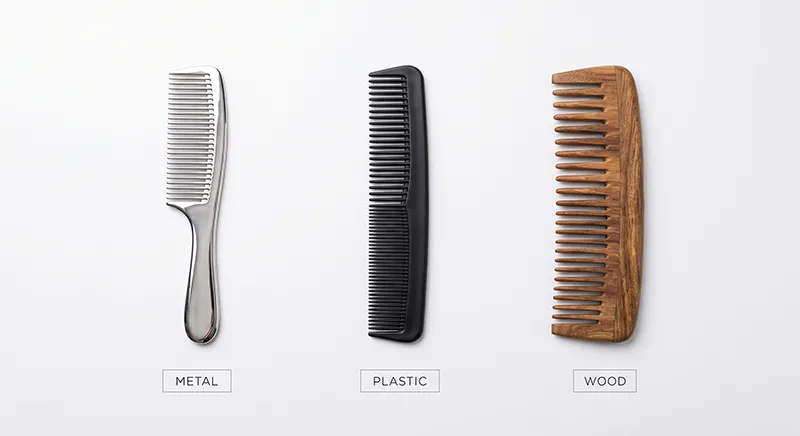
A metal comb is a rigid grooming tool made from stainless steel or aluminium alloy, designed for precision parting, styling, and detangling across a range of hair types. Plastic combs and wooden combs serve similar functions but differ significantly in material composition, static behaviour, durability, and suitability for different end-use applications. For brand owners, salon procurement teams, and sourcing professionals evaluating comb lines, understanding how these three materials compare at a technical level is essential to making informed product and purchasing decisions.
Hair combs remain one of the highest-volume segments in the global hair accessories market. While the product form itself is simple, the choice of material directly influences manufacturing cost, retail positioning, consumer perception, and long-term product performance. Each of the three major comb materials — metal, plastic, and wood — occupies a distinct position in terms of production process, price point, and target market. The sections below break down each material individually before comparing them side by side.
What Is a Metal Comb?
Metal combs are typically manufactured from stainless steel, aluminium alloy, or occasionally titanium. The production process involves precision stamping or CNC machining, followed by deburring, polishing, and sometimes coating with anti-corrosion finishes or electroplating.
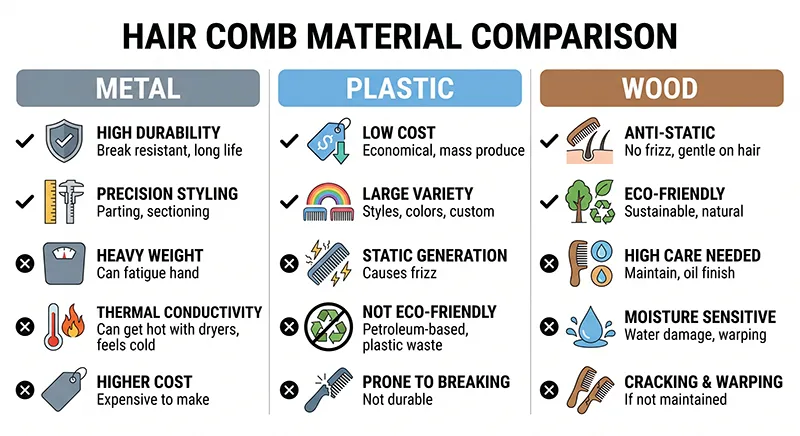
Metal combs are valued for their rigidity, uniform tooth spacing, and longevity. They do not flex under pressure, which makes them effective for precise sectioning and parting — a key requirement in professional salon environments. However, metal is a thermal conductor, meaning it can feel cold to the touch and may transfer heat during blow-dry styling.
One important consideration is static. Metal combs are generally low-static compared to standard plastic, though not entirely static-free. They are also heavier than plastic or wooden alternatives, which affects both user comfort and shipping weight for bulk orders.
Sourcing professionals comparing materials across hair comb collections will find that metal options are typically positioned in the mid-to-premium price tier.
What Is a Plastic Comb?
Plastic combs are the most widely produced comb type globally. Common materials include ABS (acrylonitrile butadiene styrene), polycarbonate, nylon, and cellulose acetate. The primary manufacturing method is injection moulding, which allows for high-volume output, complex tooth profiles, and low per-unit cost.
ABS and polycarbonate combs dominate the mass-market segment. They are lightweight, available in virtually any colour or finish, and resistant to breakage under normal use. However, standard plastic combs are prone to generating static electricity, particularly in dry conditions, which can cause flyaway hair and frizz.
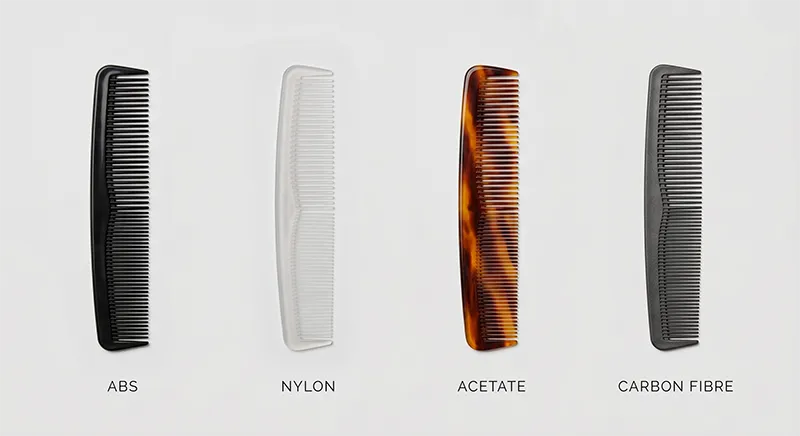
Carbon-fibre-infused combs — technically a plastic composite — have gained popularity in the professional segment. These combs offer improved heat resistance and reduced static, making them suitable for use during chemical treatments and thermal styling. Acetate combs, derived from plant-based cellulose, sit at the premium end of the plastic category and are valued for their low static, smooth finish, and visual depth.
The main advantage of plastic from a sourcing perspective is cost efficiency. Injection moulding supports low MOQs relative to metal or wood, and tooling costs are generally lower, especially when using existing mould libraries.
What Is a Wooden Comb?
Wooden combs are made from natural hardwoods such as sandalwood, neem, peach wood, or bamboo. The manufacturing process involves CNC cutting or hand carving, followed by sanding, polishing, and sometimes oil finishing or lacquer application.
Wood is naturally anti-static. Unlike plastic, it does not generate a charge when pulled through hair, which makes wooden combs a preferred choice for consumers concerned with frizz and static-related damage. Wood also distributes natural scalp oils along the hair shaft more evenly than plastic or metal, a property frequently highlighted in natural and organic haircare positioning. as noted in Healthline's guide to static hair prevention and comb material selection
From a durability standpoint, wooden combs require more care than metal or plastic alternatives. They are susceptible to cracking if exposed to prolonged moisture or extreme temperature changes. They should not be left submerged in water or stored in humid environments without proper treatment.
For sourcing, wooden combs present higher per-unit costs due to material variability, longer production cycles, and the need for quality grading of raw timber. MOQs may also be higher for custom-shaped or laser-engraved designs.
Key Differences: Metal vs Plastic vs Wooden Combs
The comparison below summarises the primary differences across material, performance, and sourcing dimensions.
| Feature | Metal Comb | Plastic Comb | Wooden Comb |
|---|---|---|---|
| Primary materials | Stainless steel, aluminium | ABS, nylon, acetate, polycarbonate | Sandalwood, neem, bamboo, peach wood |
| Manufacturing method | Stamping, CNC machining | Injection moulding | CNC cutting, hand carving |
| Static level | Low | High (standard); low (acetate/carbon) | Very low (naturally anti-static) |
| Heat resistance | High | Moderate (varies by resin) | Low to moderate |
| Weight | Heavy | Light | Medium |
| Durability | Very high | High (ABS); moderate (acetate) | Moderate (moisture-sensitive) |
| Typical MOQ | Medium–high | Low–medium | Medium–high |
| Per-unit cost | Medium–high | Low–medium | Medium–high |
| Best suited for | Salon styling, precision parting | Mass retail, private label, e-commerce | Natural/organic brands, premium retail |
Pros and Cons for Each Material
Metal combs:
- Highly durable with a long service life, resistant to breakage and deformation
- Ideal for precision work such as sectioning and parting
- Heavier than alternatives, which may affect user comfort during extended use
- Can conduct heat and feel cold, less suited for consumer retail without coating
Plastic combs:
- Most cost-effective to produce at scale with flexible design options
- Lightweight, colour-customisable, and suitable for large private label runs
- Standard grades generate static; premium options (acetate, carbon) address this but at higher cost
- Environmental concerns around petroleum-based plastics are increasing among retail buyers
Wooden combs:
- Naturally anti-static and gentle on hair and scalp
- Strong positioning in eco-friendly, organic, and wellness-oriented brand lines
- Requires proper care and storage; not suitable for wet-use salon environments
- Material variability and longer production timelines can complicate large-scale sourcing
Use Case Scenarios and Market Positioning
Each material aligns with a different market segment and end-use application.
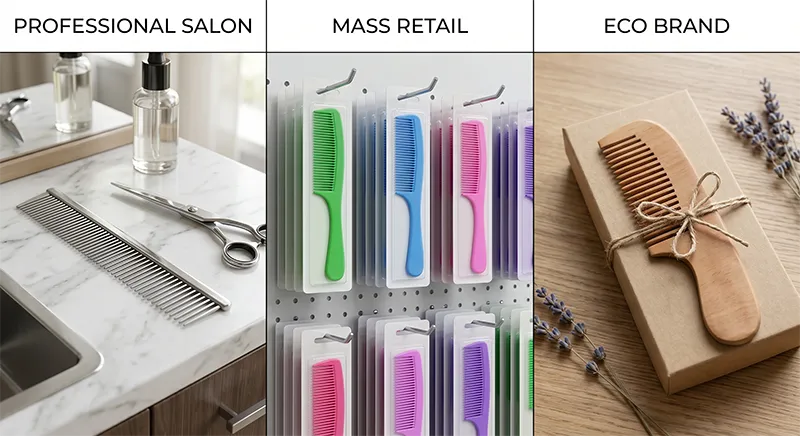
Metal combs are most commonly found in professional salon tool kits and barbershop supply lines. Their durability and precision make them standard tools for stylists who require consistent tooth spacing for cutting and parting. In the retail space, metal combs are occasionally positioned as premium grooming accessories for men's personal care brands.
Plastic combs cover the broadest market range. Standard ABS and nylon combs are the default for mass-market retail, hotel amenity kits, promotional giveaways, and budget-friendly private label lines. Higher-grade plastic combs — particularly acetate and carbon fibre composites — are positioned alongside professional-grade products and premium retail offerings. For e-commerce brand operators, plastic combs offer the best balance of customisation options, low entry cost, and fast turnaround.
Brands developing custom comb lines through OEM and ODM hair accessory services can typically access existing mould libraries to reduce tooling lead time for plastic comb production.
Wooden combs fit naturally within wellness, organic beauty, and sustainability-focused brand portfolios. They are often sold as part of gift sets, eco-conscious grooming kits, or Ayurvedic haircare lines. The perceived craftsmanship and natural material appeal supports higher retail price points, though production scalability can be a limiting factor for high-volume orders.
How to Choose the Right Comb Material for Sourcing
The selection of comb material depends on several factors that vary by business model and target consumer.
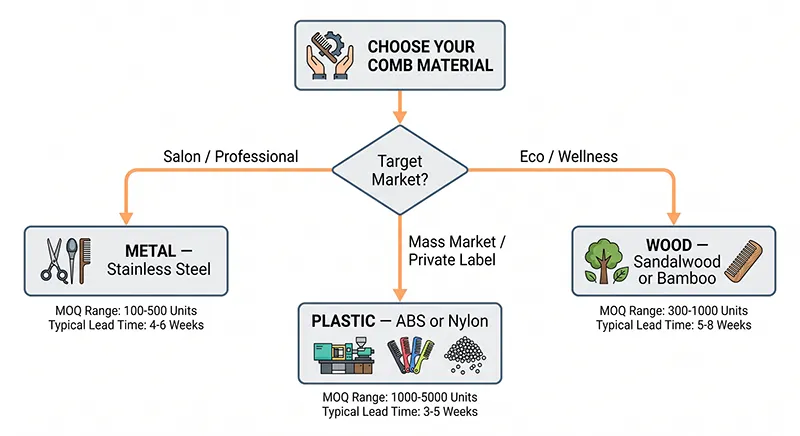
- Target market positioning: Budget and mass-market lines favour plastic. Premium and eco-conscious brands lean toward wood or acetate. Salon and professional lines often require metal.
- Volume and MOQ requirements: Plastic offers the lowest barriers to entry for large orders. Metal and wood typically require higher commitments per SKU.
- Customisation needs: Plastic supports the widest range of custom shapes, colours, logos, and packaging. Wood supports laser engraving and oil finishes. Metal supports electroplating and etching.
- Certification and compliance: Brands targeting European or North American retail may need to verify material safety standards. Plastic combs should comply with relevant REACH regulation for consumer products. Wooden combs sourced from certain timber species may require FSC certification for wood-based products documentation.
The following table provides a simplified decision reference based on common buyer profiles.
| Buyer Profile | Recommended Material | Key Reason |
|---|---|---|
| Mass-market private label | ABS / Nylon plastic | Low cost, high customisation, fast production |
| Eco / wellness brand | Sandalwood / Bamboo | Natural, anti-static, strong brand narrative |
| Professional salon supply | Stainless steel / Carbon fibre | Durability, precision, heat resistance |
| Premium retail brand | Cellulose acetate | Low static, refined finish, mid-premium price |
| Hotel / amenity supplier | Standard plastic | Ultra-low cost, disposable or semi-disposable use |
Sourcing teams working across multiple accessory categories may also find it useful to review types of hair clips and materials to understand how material selection principles apply beyond combs.
Conclusion
Metal, plastic, and wooden combs each serve distinct segments of the hair accessories market. Metal delivers durability and precision for professional use. Plastic provides the widest range of design flexibility and cost efficiency for volume-driven brands. Wood offers natural anti-static properties and strong positioning for eco-conscious product lines. The right material depends on the target consumer, brand positioning, volume requirements, and compliance landscape.
Manufacturers such as JunYi Beauty, which operates integrated production facilities and a library of over 2,000 existing moulds in Dongguan, represent the type of factory-direct OEM partner suited for brands looking to develop custom comb lines across multiple material categories efficiently.