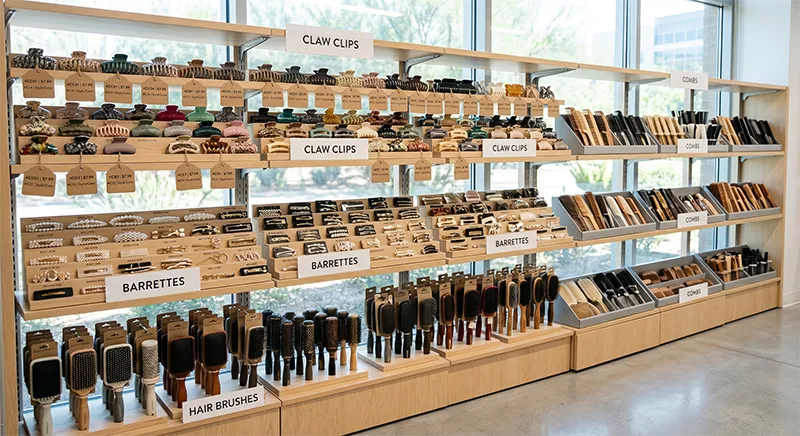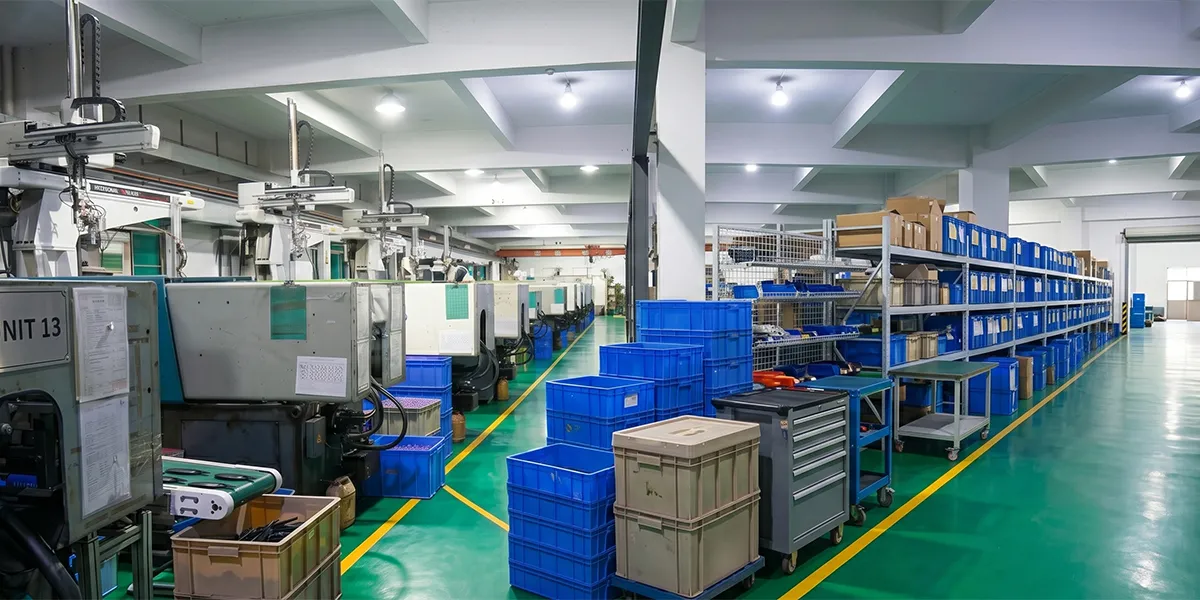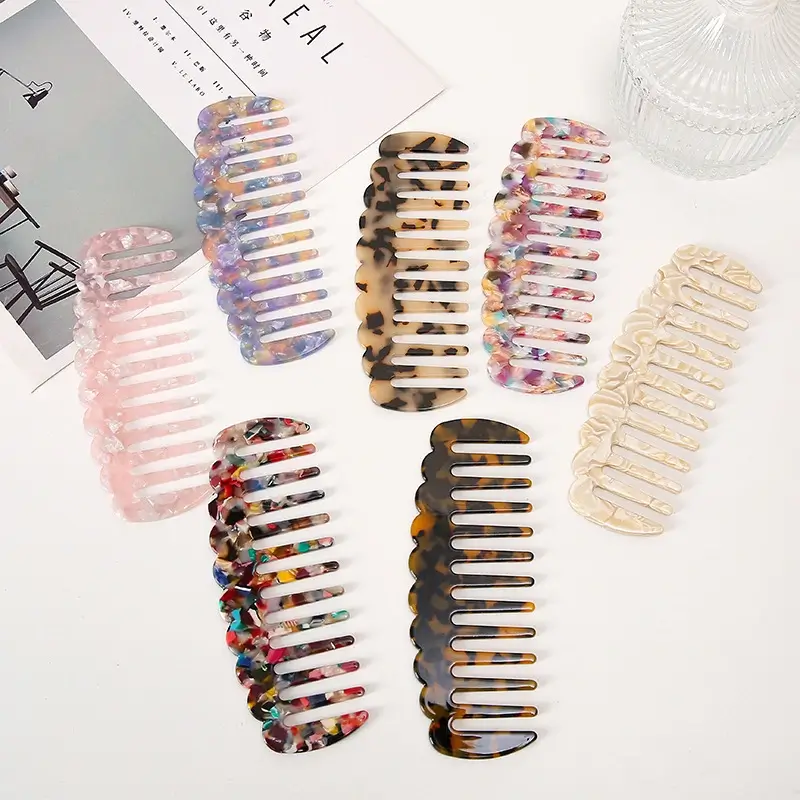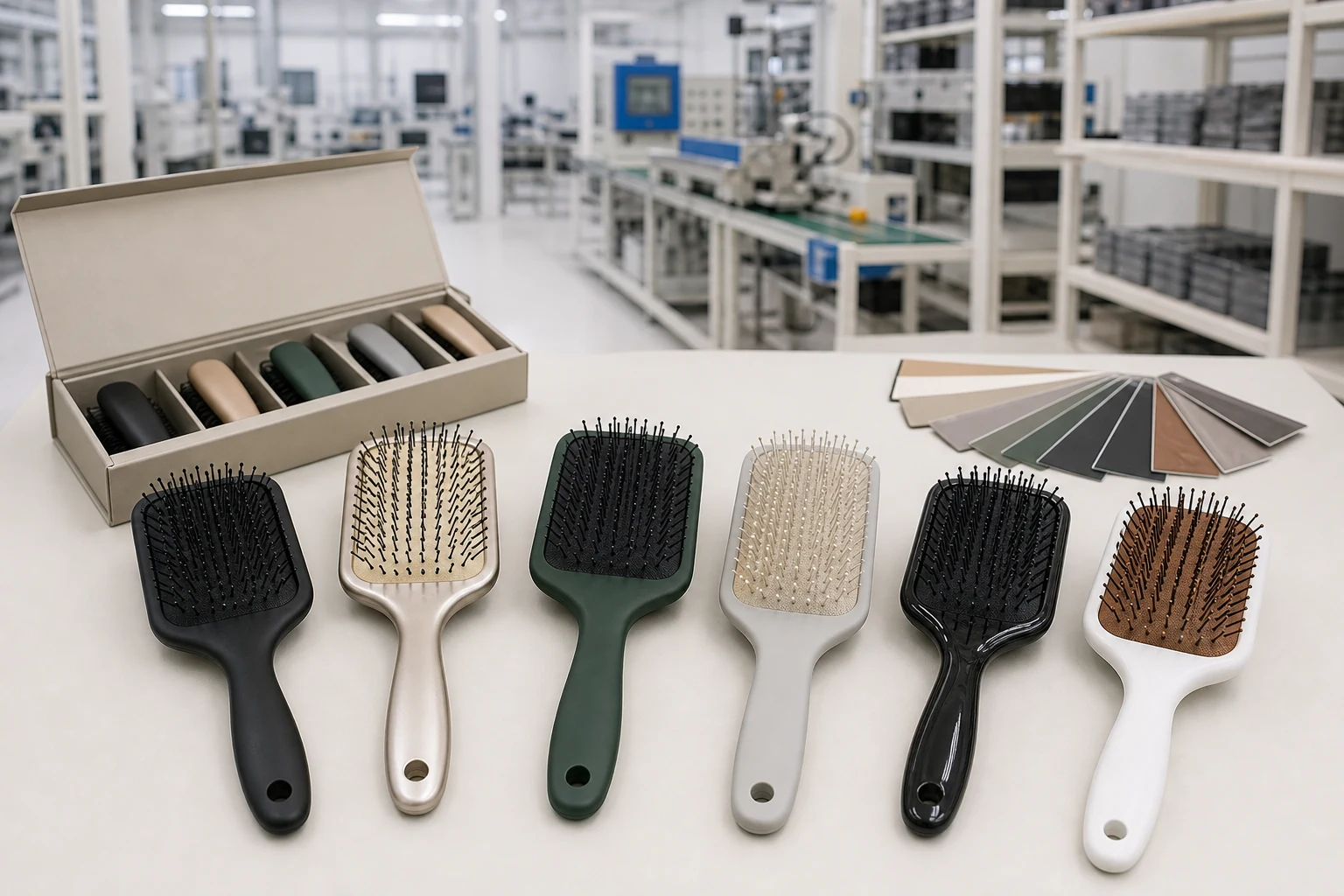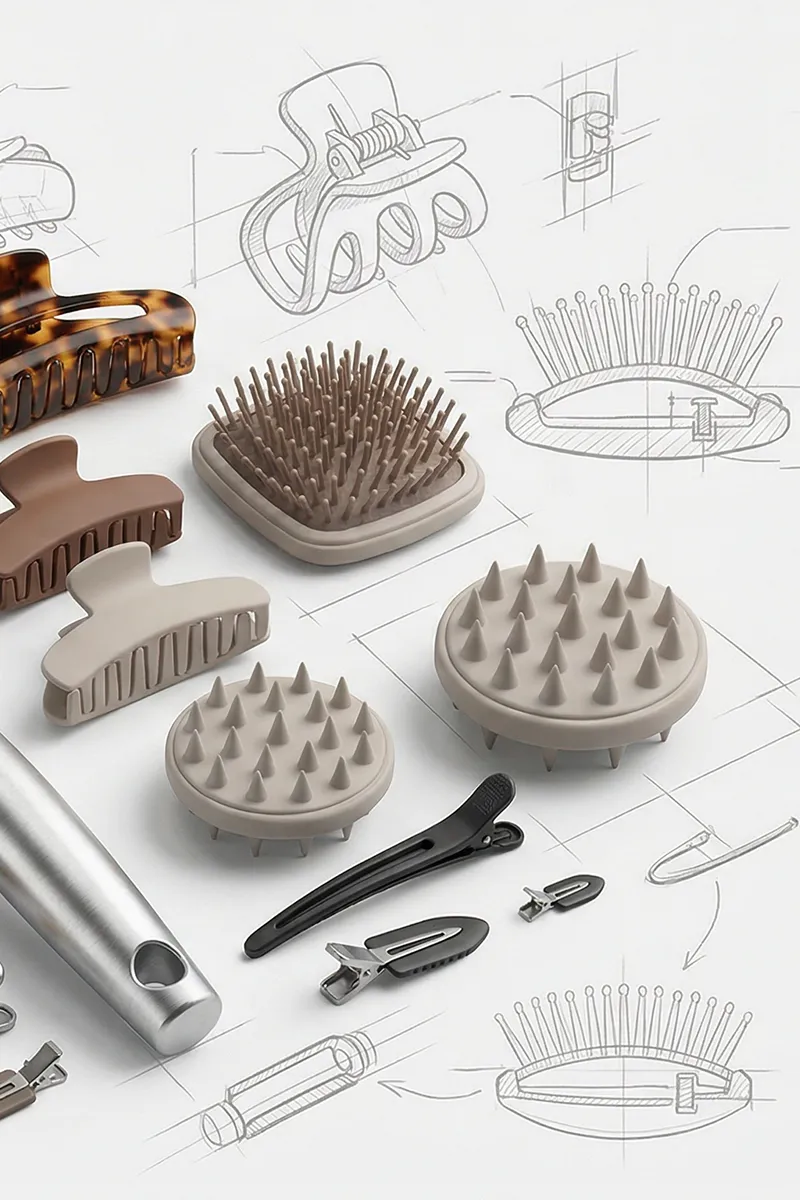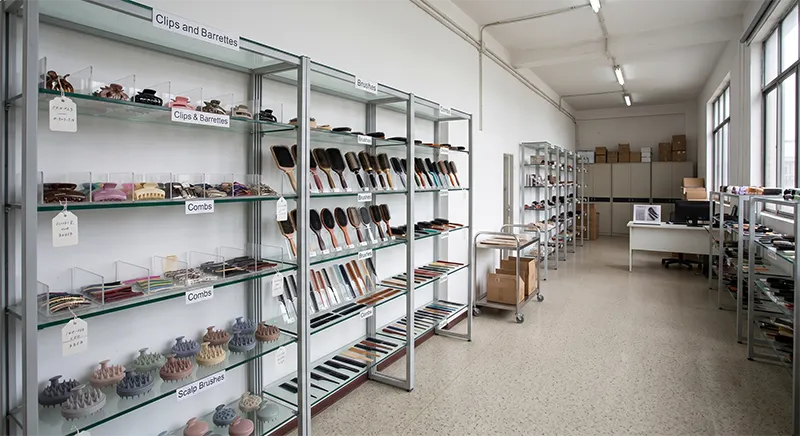
A hair accessories manufacturer in China is a factory that produces hair clips, hair brushes, combs, scalp brushes, hair ties, headbands, and related grooming tools for wholesale, OEM (original equipment manufacturer), and private label distribution to global markets. China dominates global hair accessories production, with manufacturing clusters in Guangdong Province (particularly Dongguan) and Zhejiang Province (particularly Yiwu) supplying the majority of the world's retail and professional hair accessory inventory.
For B2B buyers — brand owners, wholesalers, distributors, Amazon sellers, and salon supply companies — finding the right hair accessories manufacturer is straightforward. Vetting them properly, establishing a productive working relationship, and maintaining quality across repeat orders is where most sourcing relationships either succeed or fail. This guide covers the complete process: what to look for in a hair accessories supplier, how to verify capabilities, what to specify during the ordering process, and how to structure the ongoing relationship for consistent results.
1. What to Look for in a Hair Accessories Manufacturer
Not all hair accessories factories in China offer the same depth of capability. The following criteria separate manufacturers that can support sustained brand partnerships from those that are limited to one-off transactional orders.
Product Range and Material Capability
A full-range hair accessories manufacturer produces across multiple product categories — custom hair clips (claw clips, snap clips, barrettes, bobby pins), custom hair brushes (paddle, cushion, round, detangling, vented), combs (wide-tooth, rat-tail, styling, acetate), scalp brushes, and related accessories. Multi-category capability enables single-supplier consolidation, which simplifies logistics, reduces coordination overhead, and often unlocks volume-based pricing advantages. Material capability is equally important: manufacturers that process cellulose acetate, ABS plastic, nylon, metal (zinc alloy and steel), wood, bamboo, and silicone under one facility provide the broadest product development flexibility.
Production Scale
Production capacity should match the buyer's current and projected order volumes. Key indicators of scale include annual output (measured in millions of units), number of injection moulding machines, number of production workers, and total factory floor area. Manufacturers producing 10 to 15 million units or more per year are typically equipped to support large retail brand supply chains, while smaller factories (1 to 5 million units annually) may be better suited for emerging brands requiring more flexible MOQ and closer design collaboration.
Mould Library Depth
Manufacturers with extensive mould libraries — ranging from 200 to 3,000 active designs — enable faster market entry because buyers can select from proven shapes without incurring new tooling costs. This is particularly valuable for brands launching new product lines, where the priority is validating market demand before investing in proprietary designs. A deep mould library also indicates production maturity and accumulated manufacturing experience.
Certifications
Certification status is not optional for manufacturers serving international retail channels. The baseline certifications that B2B buyers should verify include:
| Certification | What It Verifies | Required By |
|---|---|---|
| ISO 9001:2015 | Quality management system covering production processes, documentation, and continuous improvement | Most international retail buyers |
| amfori BSCI | Social compliance — labour conditions, working hours, workplace safety (audited by TUV Rheinland, SGS, Bureau Veritas) | European and UK retailers |
| BRCGS Consumer Products | Retail supply chain safety standard (audited by SGS, Intertek) | UK retail chains (Primark, Tesco, etc.) |
| GRS 4.0 | Recycled material content verification (audited by Intertek, Control Union) | Brands making recycled-content claims |
| FSC | Sustainably sourced wood materials (for wooden brush handles, bamboo accessories) | Eco-positioned brands |
Always request certificate copies during initial evaluation — not just a manufacturer's claim of certification. Verify certificate validity dates and the auditing body listed on the certificate.
2. How to Vet a Hair Accessories Manufacturer: Step by Step
The vetting process should follow a structured sequence that progressively increases commitment as confidence in the manufacturer grows.
Step 1: Initial Screening
Identify potential hair accessories suppliers through B2B platforms (Alibaba, Global Sources, Made-in-China), Google search, trade shows (Canton Fair, Hong Kong Mega Show), and industry referrals. At this stage, evaluate the manufacturer's website, product portfolio, stated certifications, and response quality. Manufacturers that provide detailed product specifications, clear MOQ and lead time information, and professional communication in English are more likely to support a structured sourcing relationship.
Step 2: Request Certification Copies and Factory Information
Before requesting samples, ask for ISO 9001, BSCI, and other relevant certification copies, a factory profile document (location, production capacity, number of workers, equipment list), and a product catalogue or mould library overview. This information is free to provide and any established manufacturer will have it readily available. Reluctance to share documentation at this stage is a red flag.
Step 3: Order and Evaluate Samples
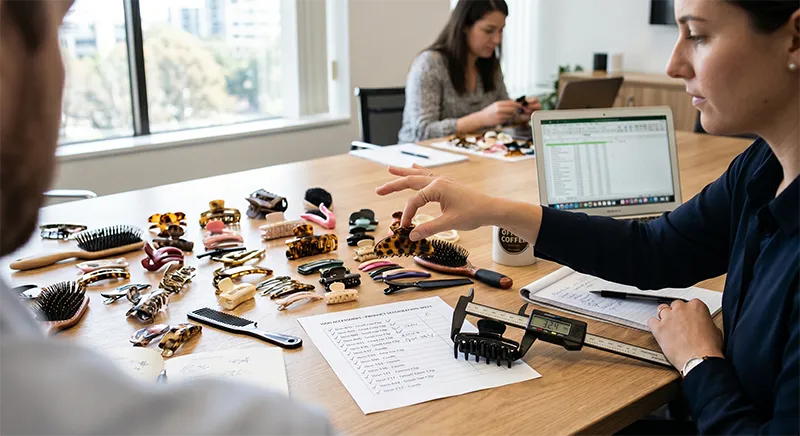
Request pre-production samples of the specific products under consideration. Sample evaluation should cover material quality (weight, surface finish, colour accuracy), mechanism function (spring tension for clips, bristle retention and flex for brushes), logo application quality (adhesion, position, sharpness), and dimensional accuracy against the specification. Sample turnaround of 5 to 7 days is standard; significantly longer timelines may indicate production capacity constraints.
Step 4: Place a Trial Order
Before committing to full-scale production, place a smaller trial order at or near the manufacturer's MOQ to validate bulk production consistency. Compare the trial order output against the approved samples across all quality parameters. This step identifies any gap between sample quality and production quality — a common issue with manufacturers that produce exceptional samples but lack the process discipline to maintain that standard at volume.
Step 5: Establish Ongoing Quality Standards
After successful trial order evaluation, define formal quality standards for ongoing production: approved master samples as reference, acceptable tolerance ranges for colour and dimensions, inspection criteria and sampling rates, and defect classification (critical, major, minor). These standards should be documented in writing and agreed upon by both parties before scaling to larger orders.
3. Product Categories Available from Chinese Hair Accessories Manufacturers
The breadth of China's hair accessories manufacturing base means that virtually every product type in the category is available for wholesale and custom production. The following table summarises the main product categories, their primary materials, and typical MOQ ranges.
| Product Category | Primary Materials | Typical MOQ | Key Customisation Options |
|---|---|---|---|
| Claw clips / jaw clips | Cellulose acetate, ABS, metal | 300-1,000 pcs/SKU | Size, colour, pattern, spring tension, logo |
| Snap clips / alligator clips | Steel, ABS, coated metal | 500-1,000 pcs/SKU | Size, coating, logo |
| Barrettes | Acetate, ABS, metal, resin | 300-1,000 pcs/SKU | Shape, colour, decorative elements, logo |
| Bobby pins | Steel, brass, coated metal | 5,000-10,000 pcs/SKU | Length, finish colour, tip coating |
| Paddle brushes | ABS, wood, bamboo | 1,000-3,000 pcs/SKU | Handle material, bristle type, logo method |
| Round brushes | ABS, ceramic barrel, wood | 1,000-3,000 pcs/SKU | Barrel size, bristle type, handle design |
| Detangling brushes | TPE, PP, nylon | 2,000-5,000 pcs/SKU | Bristle flex, handle design, colour |
| Scalp / shampoo brushes | Silicone | 1,000-2,000 pcs/SKU | Bristle pattern, firmness, colour, logo |
| Combs (injection moulded) | ABS, carbon fibre, nylon | 1,000-3,000 pcs/SKU | Tooth spacing, handle shape, colour, logo |
| Acetate combs | Cellulose acetate | 300-500 pcs/SKU | Colour, pattern, tooth spacing, size |
For detailed material comparisons that affect product selection, see the technical guide on cellulose acetate versus ABS plastic for hair clips.
4. How to Work Effectively with a Chinese Hair Accessories Factory
The difference between a productive manufacturing relationship and a frustrating one is almost always determined by communication clarity and process structure — not by the factory's technical capability.
Provide Complete Specifications Upfront
The single most impactful thing a buyer can do is provide a complete, finalised product specification before requesting a quotation. This includes exact material type (not just "plastic" — specify ABS, PP, or acetate), Pantone colour codes, logo vector files (AI or EPS format), technical drawings with dimensions in millimetres, surface treatment requirements, packaging design layout, and target order quantity. Incomplete specifications are the most common cause of delays, revision loops, and quality mismatches in custom hair accessories production.
Consolidate Sample Feedback
When reviewing samples, compile all feedback into a single comprehensive document rather than sending changes incrementally. Each revision round adds 3 to 5 working days to the timeline. A single, thorough revision request is faster and more effective than three rounds of partial feedback.
Understand the Payment Structure
Standard payment terms for wholesale hair accessories orders from China are: sample fee paid upfront ($40 to $100 per design, typically deducted from the first bulk order), 30 percent deposit upon order confirmation to initiate production scheduling, and 70 percent balance before shipment (T/T) or against bill of lading (for established relationships). Production does not begin until the deposit is received — late payment directly delays the timeline.
Plan for Seasonal Capacity Constraints
Chinese hair accessories factories experience peak demand periods that affect lead times: pre-Chinese New Year (January to February, factories close for 2 to 3 weeks), Canton Fair months (April and October, some capacity diverted to show preparation), and Q3 rush for holiday retail season production. Orders placed during these windows may experience 1 to 2 week extensions. For a complete production timeline breakdown, see the guide on lead time for custom hair accessories.
5. Red Flags and Common Sourcing Mistakes
Several recurring patterns indicate a manufacturer that is unlikely to support a reliable long-term supply relationship. Recognising these early prevents costly mid-stream supplier switches.
- No verifiable certifications: A manufacturer that claims ISO 9001 or BSCI compliance but cannot produce certificate copies is either uncertified or trading under another company's certification. Both scenarios present risk.
- Sample quality that cannot be replicated at volume: Some factories invest heavily in sample quality to win orders, then cut costs during bulk production. The trial order stage specifically tests whether production quality matches sample quality.
- Vague MOQ and pricing: Established manufacturers provide clear, itemised quotations with specific MOQ, unit price, tooling cost, and lead time. Responses like "price depends on quantity — how much do you want to order?" indicate a lack of structured pricing, which makes margin planning unreliable.
- No in-house production — trading company posing as factory: Trading companies source from multiple factories and add a margin. While trading companies serve a legitimate function for buyers who need sourcing intermediaries, they should not misrepresent themselves as manufacturers. Ask for factory photos, equipment lists, and a virtual or physical factory tour to verify.
- Unwillingness to share client references or case studies: Manufacturers with established brand supply relationships will reference them (with permission). A factory that claims to supply major brands but provides no verifiable evidence may be overstating its track record.
- Material substitution without disclosure: Some factories substitute cheaper materials mid-production to improve margins — for example, using acrylic labelled as cellulose acetate, or downgrading spring steel grade. Specify materials explicitly in the purchase order and include material verification in the QC checklist. For cost structure context that helps identify unrealistically low quotes, see the guide on manufacturing costs for custom hair clips in China.
6. Quality Control: What to Specify and How to Verify
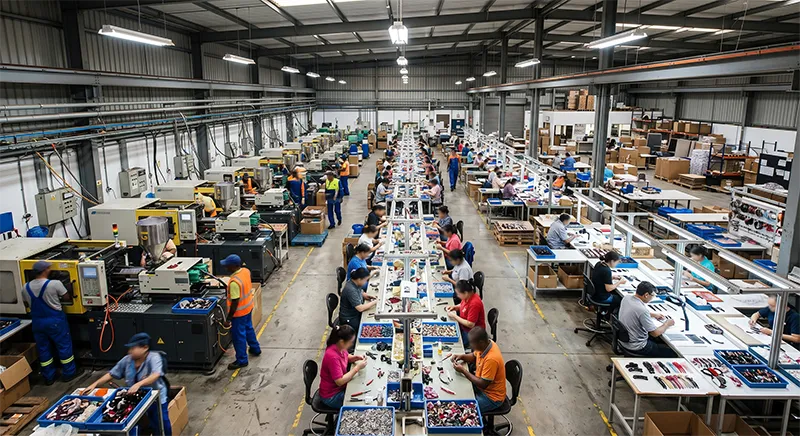
Quality control in hair accessories manufacturing operates at three levels: incoming material inspection, in-process production checks, and pre-shipment final inspection. Buyers should understand what each level covers and specify which parameters are critical for their products.
Incoming Material Inspection
Raw material quality determines the ceiling of finished product quality. Incoming inspection covers: ABS pellet grade and colour masterbatch consistency, acetate sheet colour matching against approved master chips, spring steel grade verification, bristle material specification (TPE hardness, nylon diameter), and packaging material print quality. Manufacturers holding ISO 9001 certification maintain documented incoming inspection procedures as part of their quality management system.
In-Process Production Checks
During production, critical checkpoints vary by product type. For custom hair clips: spring tension measurement, jaw alignment verification, tooth interlocking precision, and surface finish inspection at each stage. For custom hair brushes: bristle retention pull testing, cushion pad adhesion check, handle-to-head joint strength, and bristle tip smoothness under magnification. For branded hair accessories with logo application: position accuracy, colour match, adhesion durability (scratch and rub testing), and print sharpness.
Pre-Shipment Final Inspection
Final inspection is conducted on finished, packed goods before shipment. It uses statistical sampling (typically AQL 2.5 for major defects, AQL 4.0 for minor defects) to evaluate a representative batch from the total order. Inspection covers all parameters checked during in-process stages plus packaging integrity, barcode accuracy, and carton weight and dimensions. Buyers may conduct this inspection through their own QC team, the manufacturer's internal QC department, or third-party inspection agencies (SGS, Bureau Veritas, TUV, Intertek).
7. Conclusion
China's hair accessories manufacturing base offers B2B buyers an unmatched combination of product range, production scale, material capability, and cost efficiency. The opportunity is not in finding manufacturers — there are thousands. The opportunity is in vetting them properly, establishing clear specifications, and structuring the relationship for consistent quality over time.
The most effective approach is structured and progressive: screen initially on certifications and product range, validate through physical samples, test through a trial order, and then scale with defined quality standards. This sequence reduces risk at each stage and builds confidence before committing to large volumes of wholesale hair accessories or bulk hair brushes.
Manufacturers such as JunYi Beauty, operated by Dongguan JunYi Beauty Technology Co., Ltd. and established in 1999, represent the type of integrated hair accessories factory suited for brands requiring both product breadth and supply chain reliability. With three production facilities producing over 15 million units annually across custom hair clips, personalized hair brushes, combs, and hair accessories, a mould library exceeding 2,000 active designs, and certifications including ISO 9001, amfori BSCI, BRCGS, GRS 4.0, and FSC, the company provides a factory-direct OEM and ODM pathway from initial sampling through bulk production. Documented supply partnerships with brands including MINISO, KKV, and OCE are available through published case studies. For category-specific manufacturer comparisons, see the guides on top hair clip manufacturers in China and top custom hair brush manufacturers.
Ordering samples is one of the most reliable vetting steps covered above. You can see how we handle it, including stock samples, custom prototypes and timelines, on our samples and prototypes page.