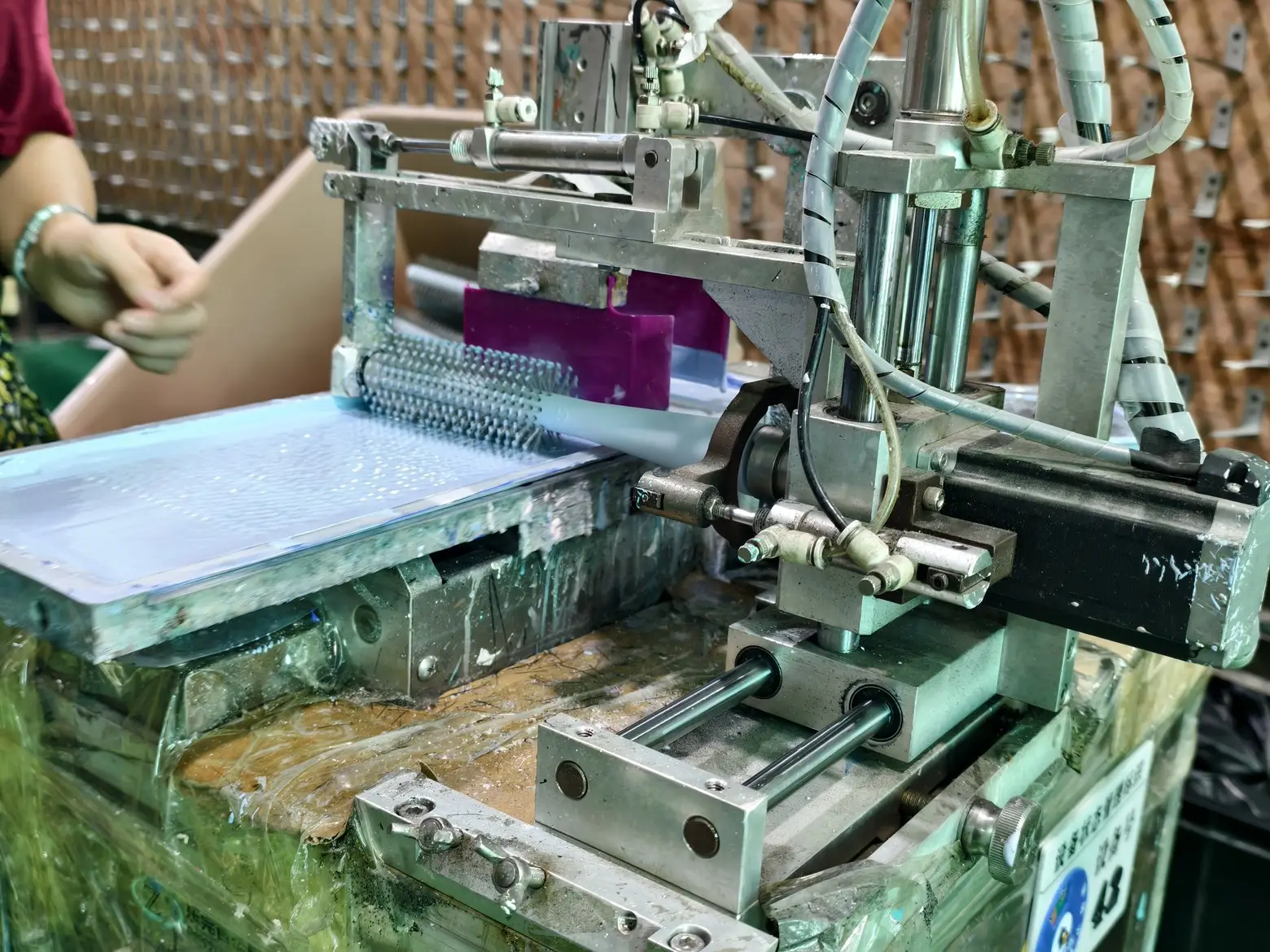
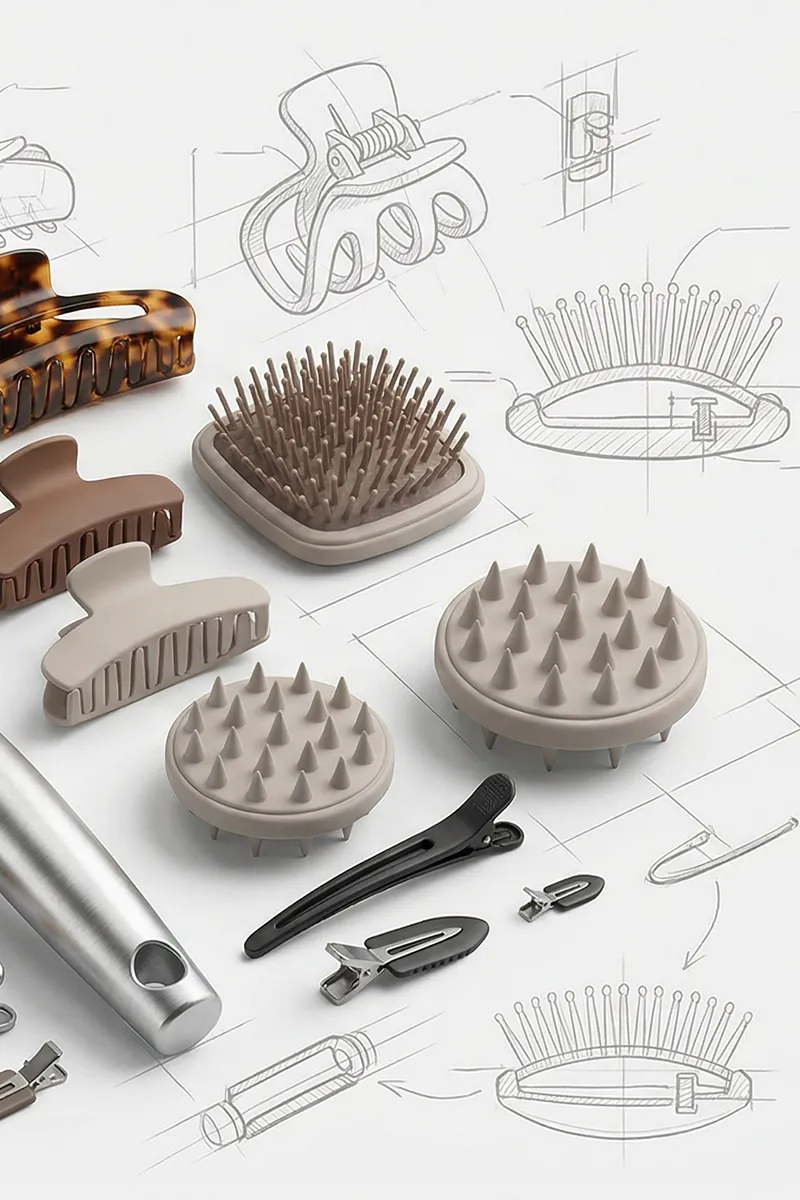
Approve a finished wooden brush and agree the lightest and darkest finishes you will accept. Use those references to check colour, grain and logo contrast on the bulk handles.
What four photographed wood samples show
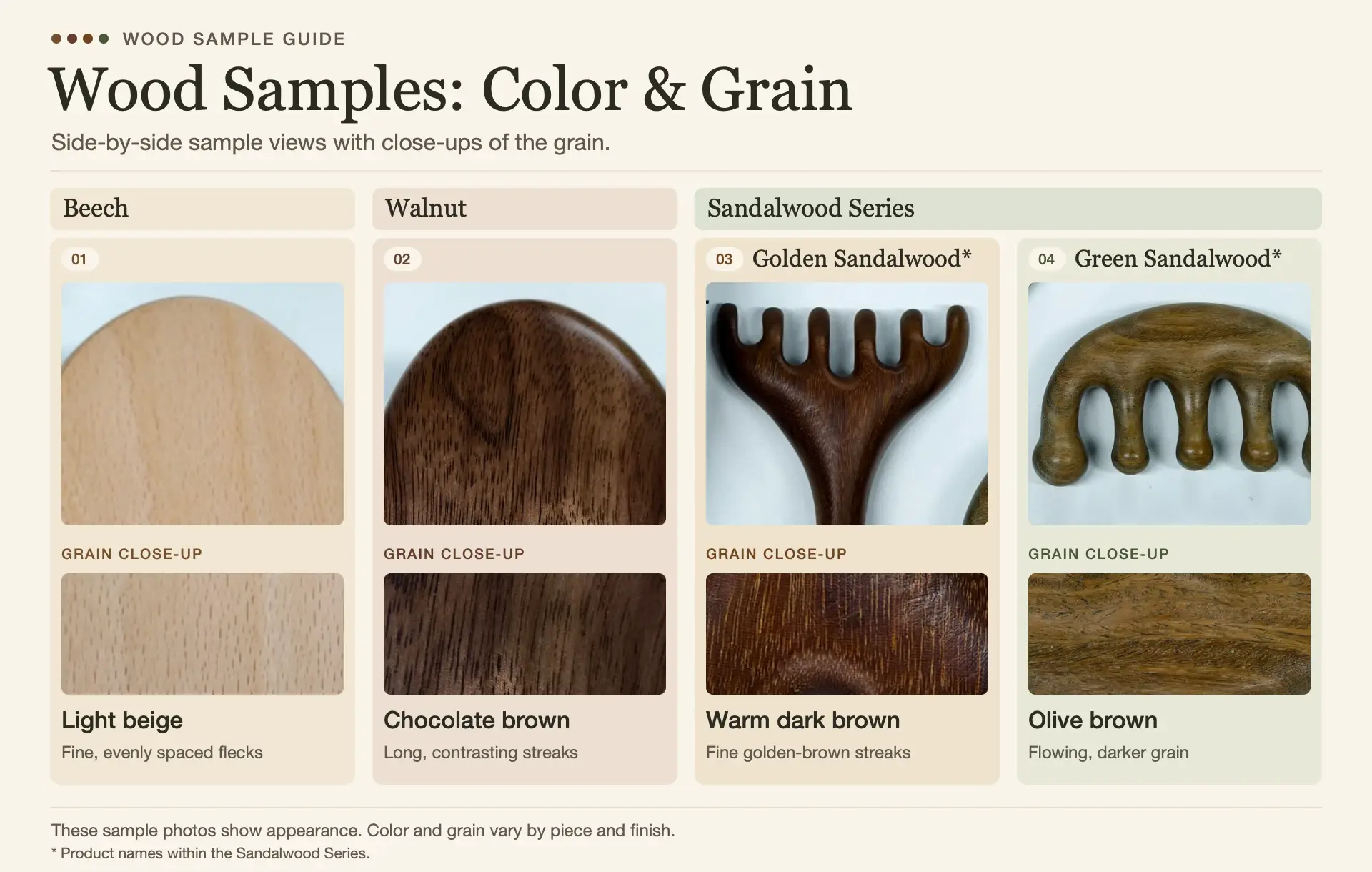
Use these photographs to discuss the base tone and visible grain when you choose a material. Each panel shows one piece. Set limits for your order using finished handles from the same wood and finish you have selected.
| Photographed sample | Visible colour | Visible grain |
|---|---|---|
| Beech | Light beige-brown | Fine flecks |
| Walnut | Chocolate brown | Lengthwise grain |
| Golden Sandalwood | Warm dark brown | Fine golden-brown streaks |
| Green Sandalwood | Olive brown | Wavy grain |
Golden Sandalwood and Green Sandalwood are sample product names. Confirm the material identification separately if the buyer specification requires an exact species or origin.
Sign off the light and dark limits
Start with the finished handle. Sign off the wood, surface finish and logo together. Keep labelled appearance references for the person who will inspect the order.
Approve a finished reference brush in the chosen wood and surface finish, with the actual logo in place. The sample approval guide explains how to label and retain the golden sample. Ask if extra finished handles are available for the light and dark limits. Compare them at the same angle and distance, under the light the inspector will use.
Sign the actual pieces as the standard for your order. Add an example of acceptable streaking if it matters. Where logo contrast is important, inspect the actual mark on both limit samples.
What to record on the approval sheet Model and finish · reference brush ID · light and dark limit IDs · grain reference if used · light, distance and viewing angle · reviewer and date.
Make a decision on each finished handle
Inspect the grip, head edges and any holes or seams by sight and touch. Record surface faults separately from variations in tone or grain. The full brush QC checklist covers the other checks for pins, cushions and packaging.
The finish meets the signed limits. The handle feels smooth and the logo is readable.
A tone is close to the limit, or a streak makes logo contrast hard to judge. Compare it beside the nearest reference and record the named reviewer’s decision.
The piece is clearly outside the range or has a defect such as a splinter, crack or chipped edge. Record the location and separate the affected pieces for the agreed disposition.
When you hold a piece, record the model, lot, reference ID and what needs judging. For example, “dark streak across the logo on the back of the handle” gives the reviewer a specific area to compare.
Apply the references during bulk inspection
HaircareCN uses 100% visual checks alongside sampling at AQL 2.5, General Inspection Level II. Use the signed references to judge the handle’s appearance. Follow the applicable inspection plan for sampling, defect classification and lot acceptance. Third-party inspection is welcome.
See how the handle changes what you inspect
These two existing brush styles show different surfaces to check on your own sample. Open the product page to see the handle shape and construction.

Compare the finish on the broad back and grip.
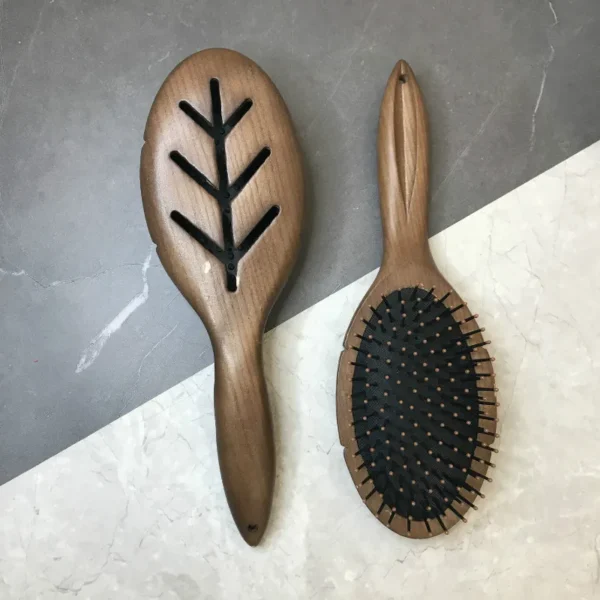
Check the carved edges and recessed areas after finishing.
Frequently asked questions
Can I approve wood colour from a photo?
Use photos to discuss the visual direction. Approve the finished physical sample and the accepted range under agreed viewing conditions before bulk production.
When is a difference in wood grain a defect?
Grain within the approved range can be accepted when the piece meets the agreed finish and logo criteria. Hold borderline pieces for review and record surface faults or clear deviations against the approved sample.
What should I send to request a wooden brush sample?
Send the brush model or shape, wood and finish preference, logo artwork and placement, and quantity by size and colour. Include a photo or physical reference for the tone you want.