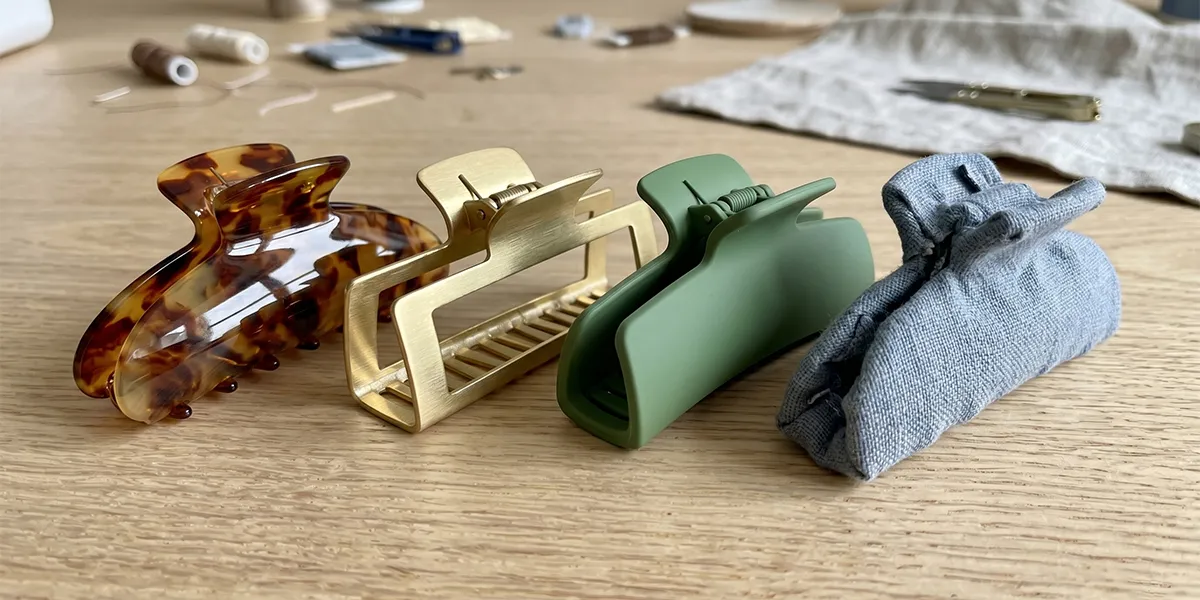
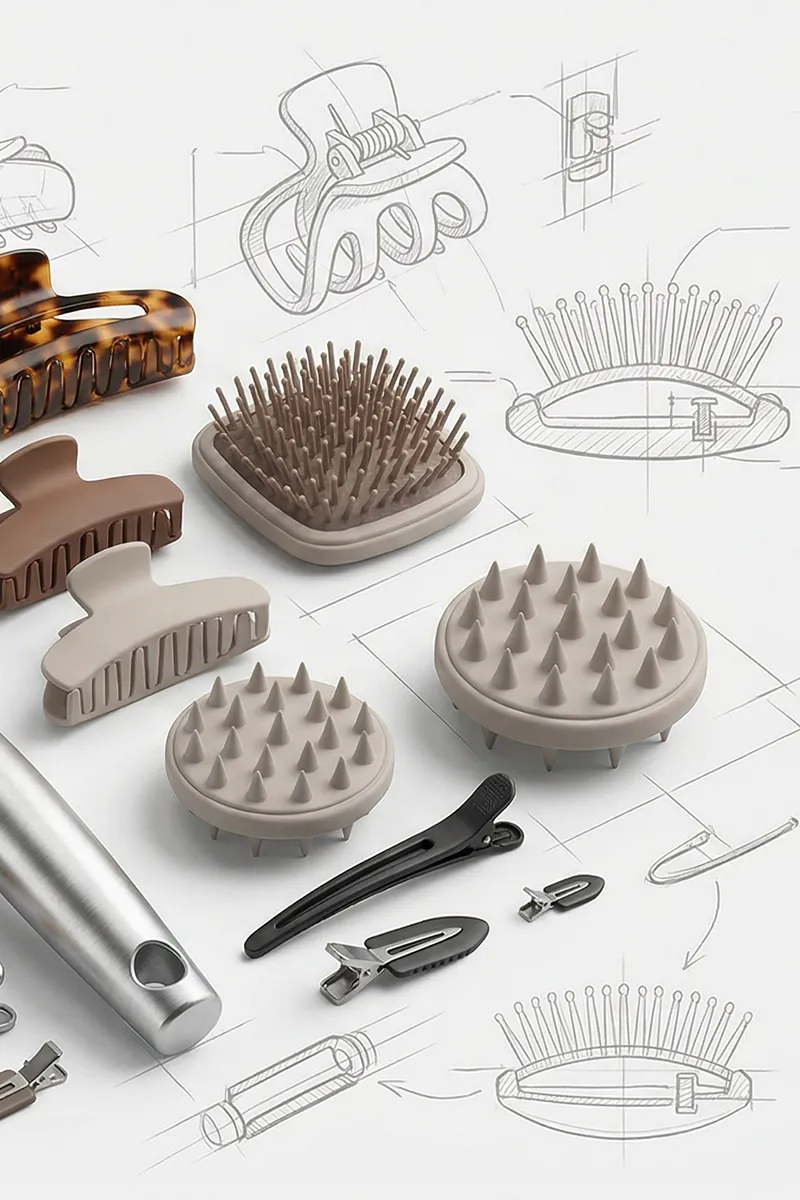
A purchase order for custom hair accessories should do one job: describe exactly what the factory will make, ship and be paid for, so that nobody has to rely on memory or chat history once production starts. For clips, claws, brushes and combs, that means naming the approved specification and golden sample, the quantity for every SKU and colour, the logo and packaging files, the unit-price basis, tooling terms, payment, production milestones, inspection standard, remedy for defects and the shipping terms.
Most production disputes are not caused by bad faith. They come from a quotation, a sample and a purchase order that each describe a slightly different product. The checklist below closes those gaps before the deposit is paid. It follows the buying sequence we use with brand partners: requirement confirmation, sample confirmation, order confirmation, production, inspection and packaging, then shipping.
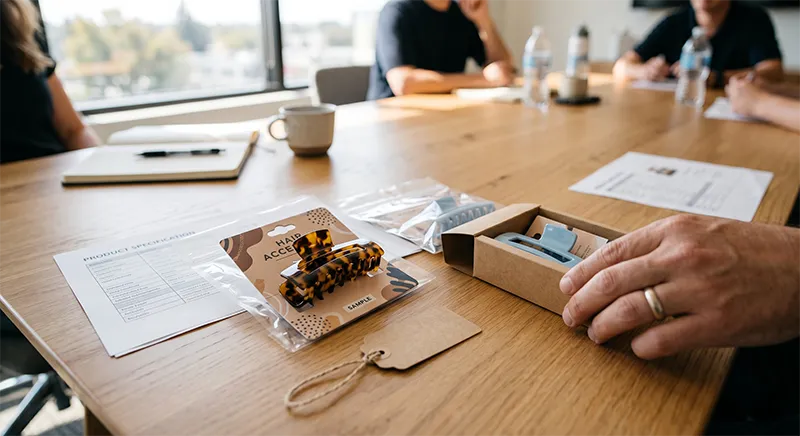
Where the purchase order sits in a custom project
Each document in a custom project answers a different question. Problems start when one document is asked to do another document’s job—for example, when a chat message is treated as the specification or a quotation is treated as the order.
| Document | Question it answers | What it should not replace |
|---|---|---|
| RFQ | What does the buyer want quoted? | A specification—RFQs often contain open questions |
| Quotation | At what price, MOQ and lead time can the factory make it? | The purchase order—quotes may list options |
| Approved sample and specification | What exactly is the product? | Commercial terms such as payment or delivery |
| Purchase order | What is being ordered, when, at what price and under which conditions? | The specification—it should reference it, not rewrite it |
| Inspection report | Does the finished batch match the approved standard? | The acceptance criteria, which must be agreed before production |
The purchase order does not need to be long. It needs to reference the right versions and fill the gaps the other documents leave open. The twelve terms below are grouped by the decisions they protect.
What is being made: terms 1–3
1. Product specification with a revision number. Reference the final specification by name and revision—for example “Claw clip CC-08, spec rev. C, dated 12 October”. The specification should cover material, dimensions and tolerances, colour standard, finish, hardware or spring type for clips, pin, bristle and cushion construction for brushes, and tooth finishing for combs. If a detail was changed during sampling, the change belongs in the revised specification, not only in a message thread.
2. Golden sample reference. Name the approved physical sample that production and inspection will be measured against, how it is labelled and who holds the matching retention samples. A golden sample without a linked specification is ambiguous; a specification without a physical reference leaves colour, feel and finish open to interpretation. Our sample approval guide explains how to seal and record it.
3. Quantity per SKU, colour split and shipment tolerance. State quantities per finished SKU—product, colour, logo and pack—rather than one order total. The factory confirms MOQ per SKU or per production setup, so a 3,000-piece order split across six colours is a different job from 3,000 pieces in one colour. Agree whether a small over- or under-shipment is acceptable, and if so, how it is invoiced.
| Term | Write it as | Avoid |
|---|---|---|
| Specification | Product code + spec revision + date | “As per sample” or “same as last time” |
| Golden sample | Sample ID, label, who holds retention units | An unlabelled sample in a drawer |
| Quantity | Pieces per SKU and colour, plus tolerance | A single total for several colours |
Branding and packaging: terms 4–5
4. Logo method and artwork sign-off. Name the logo process (for example laser engraving, pad printing, silk-screen, hot stamping, a metal plate, or engraving with colour fill), the position, size and colour, and the approved artwork file name. Logo methods have different setup and rework risks; engraving with colour fill, for instance, needs clear criteria for edge cleanliness and fill level. Attach the artwork version you approved on the sample.
5. Packaging and labelling specification. Describe the retail pack (OPP bag, header card, box, pouch), what is printed on it, any barcode or warning text, how many units go into each inner pack and carton, and the carton marks. Also state who supplies the packaging. JunYi Beauty can source custom packaging through a partner packaging factory, or assemble packaging the buyer supplies for a handling fee based on the packaging complexity. Packaging often has its own minimum and lead time, so it must be scheduled with the product, not after it.
Price and money: terms 6–8
6. Unit-price basis. The unit price should say what it includes: product, logo, retail packaging, inner and master cartons, and the delivery point. If the quotation listed options—two packaging types or two logo methods—the purchase order must name the one chosen. A price that does not state its delivery term cannot be compared with another supplier’s.
7. Tooling fee, refund condition and mould ownership. For new shapes, record the mould or tooling fee, what it covers and the condition under which it is refunded. At JunYi Beauty the buyer initially covers the mould cost, and the fee can be refunded once a specified order quantity is reached; that quantity varies by product, so write the number into the order. Also record who owns the mould and whether the factory may use the shape for other customers. Projects that start from one of the factory’s 2,000+ existing moulds may avoid new tooling entirely—note that too, so nobody expects a refund that does not apply.
8. Payment terms. State the deposit, the balance and the event that triggers each payment—for example balance due after the inspection report is accepted, or before shipment. Many China-sourced orders use a deposit before production and the balance before shipment, but the actual split and method should come from the confirmed quotation for your order. Tie the balance to an objective event rather than to a date that may move.
Timing and changes: terms 9–10
9. Production timeline with milestones. A single “ship date” hides the steps that can slip. List the dates that matter: deposit received, packaging files approved, pre-production sample (if any), production start, inspection, cargo ready. For planning, our current approved information uses about 45 days for mass production of a new-mould project, excluding freight; projects on existing moulds and materials can be shorter. Reconfirm the timeline for each order, especially before peak season.
10. Change control. Decide how changes are requested and approved after the order is placed, who can approve them, and how they affect price and timing. One named approver on each side and a revised specification number for every change prevents the classic problem of a verbal change on the production floor that the inspector does not know about.
| Milestone | Owner | Why it belongs in the PO |
|---|---|---|
| Deposit received | Buyer | Production slots are usually reserved on receipt |
| Artwork and packaging files approved | Buyer | Print and packaging have their own lead time |
| Pre-production sample approved (if required) | Both | Confirms the production setup before volume |
| Production start | Factory | Lets both sides see early delays |
| Inspection date | Both / third party | Fixes when acceptance happens |
| Cargo ready date | Factory | Drives freight booking |
Quality and acceptance: term 11
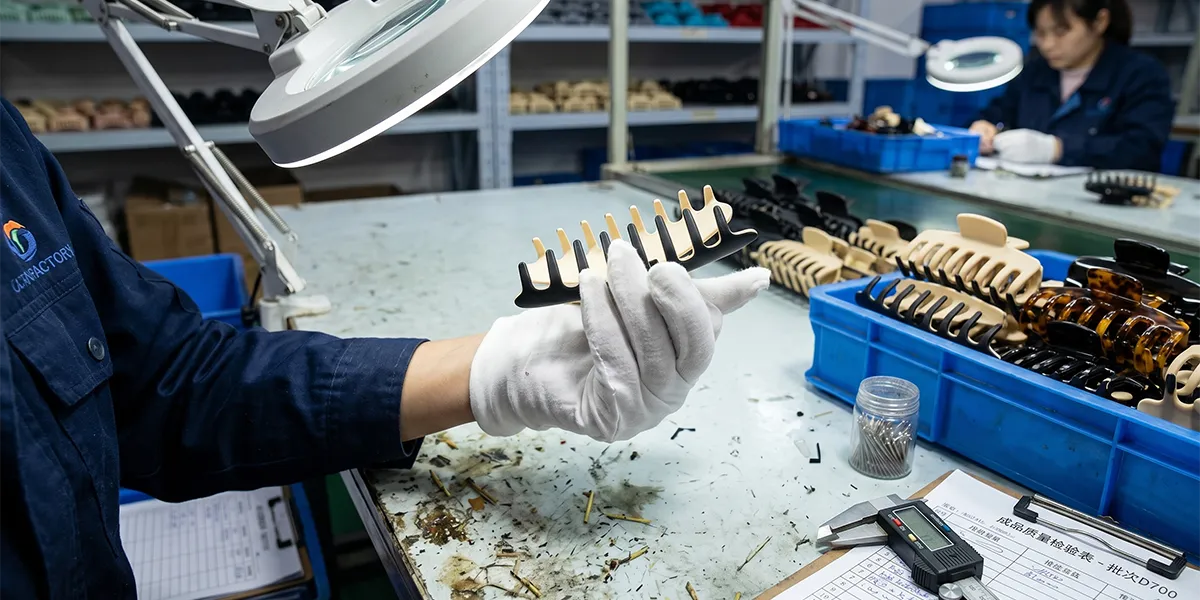
11. Inspection standard and remedy. Agree how the finished batch will be accepted before production starts: who inspects (factory QC, the buyer, or a third-party inspection company), the sampling plan and acceptance levels, how defects are classified, and what happens when a lot fails—rework, replacement, re-inspection, and who pays for the re-inspection. JunYi Beauty runs incoming material checks, in-process QA/QC and final checks, and supports customer and third-party inspections; the purchase order should still record the standard your inspector will use.
List the product-specific risks rather than writing “good quality”: spring tension and jaw alignment for claw clips, edge smoothness and polish for acetate, pin or bristle retention for brushes, tooth finishing for combs, logo position and print durability, and packaging protection. Our clip quality checklist and brush quality checklist give product-level criteria you can attach.
Shipping and documents: term 12
12. Delivery term, shipping method and documents. Name the Incoterm (for example EXW, FOB or a delivered term), the shipping method and who books freight. Sea freight typically takes about 30–45 days to deliver after production, air freight about 10–15 days and express about 7–10 days, depending on destination. Freight is calculated on the packed carton dimensions, weight and quantity, so the carton specification in term 5 affects cost. You can use the factory’s shipping service or your own forwarder—write down which, and list the documents you need, such as the commercial invoice and packing list.
A one-page purchase order summary
The table below shows the minimum fields we recommend for a custom hair accessory order. The example values are illustrative only; your quotation and approved sample decide the real ones.
| Field | Example entry | Checks |
|---|---|---|
| Product and spec | Acetate claw clip, spec rev. C (12 Oct) | Matches approved sample label |
| SKU quantities | Tortoise 1,000 / Black 1,000 / Cream 500 | Each meets the confirmed per-SKU minimum |
| Logo | Laser engraving, inside jaw, artwork v3 | Same file as approved sample |
| Packaging | Printed header card + OPP bag, 12 pcs per inner, 240 per carton | Files and supplier confirmed |
| Price basis | Unit price incl. logo and packaging, FOB | Matches chosen quote option |
| Tooling | Mould fee, refund condition, ownership | Quantity for refund written as a number |
| Payment | Deposit / balance and trigger events | Matches confirmed quotation |
| Milestones | Files, PP sample, production, inspection, cargo ready | Owners named |
| Inspection | Third-party final inspection, agreed sampling plan | Defect list attached |
| Shipping | Sea freight, buyer’s forwarder, documents listed | Carton specification attached |
Common purchase order mistakes
- Writing one total quantity for several colours, then discovering each colour has its own minimum.
- Referencing “the sample” when several sample rounds exist.
- Leaving packaging as “to follow” without a file deadline, then losing a week on print.
- Tying the balance payment to a calendar date instead of an inspection result.
- Assuming the mould fee is refundable without writing down the order quantity that triggers it.
- Approving a change by chat without updating the specification revision.
Before you send the order, ask the factory to confirm in writing that the purchase order, quotation and approved sample describe the same product. That single confirmation removes most of the risk the checklist is designed to catch.