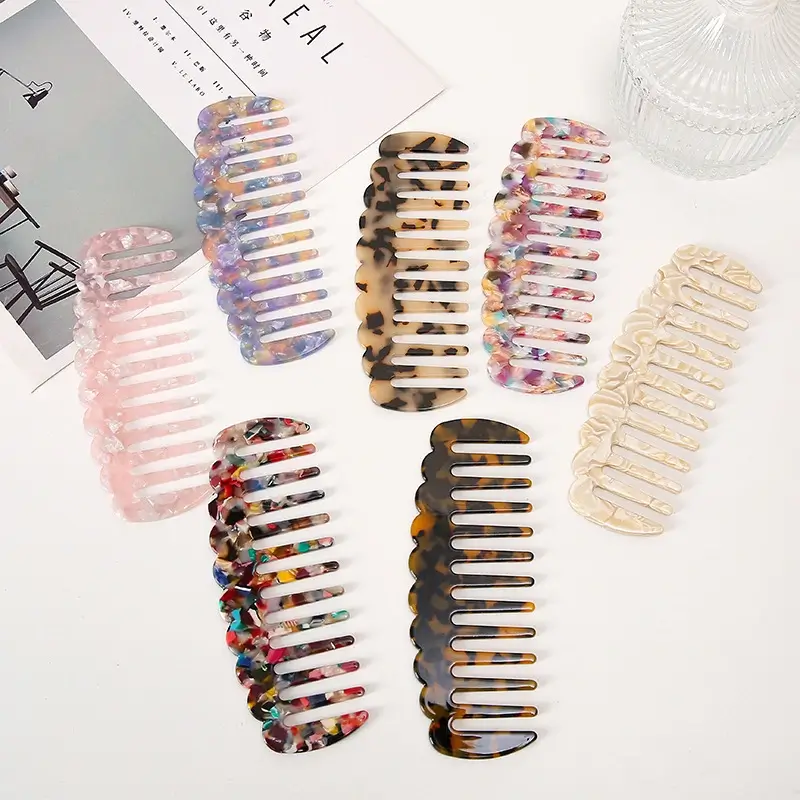
A hair comb manufacturer is a factory that produces combs — wide-tooth, fine-tooth, tail, barber, teasing, folding and beard combs — for wholesale, private label and OEM supply. China produces the majority of the world's combs at commercial volume, with production concentrated in Guangdong, Zhejiang, Ningbo and Hebei. Each cluster developed around a different material, which is why the right supplier depends less on who is largest and more on what your comb is made of.
This guide profiles ten established comb manufacturers, compares what each is actually equipped to make, and sets out the MOQ, tooling and lead-time parameters a buyer needs before sending a brief. It is written for procurement managers, brand owners and distributors specifying a product, not for consumers choosing a comb for personal use.
How this list was compiled: Company details come from each manufacturer's own published material. Where a figure is not publicly disclosed, the table below says so rather than estimating. Ranking reflects breadth of in-house comb capability, verifiable certification, and suitability for international B2B buyers — not advertising spend. Treat any MOQ or lead time as indicative until confirmed in writing for your specific specification.
1. Top 10 Hair Comb Manufacturers in China (2026)
1. JunYi Beauty (Dongguan JunYi Beauty Technology Co., Ltd.)
Established in 1999 and based in Dongguan, Guangdong, JunYi Beauty is a dedicated hair tool manufacturer covering combs, brushes and hair accessories across an 8,000 m² facility. The company works with more than 500 partner brands worldwide and holds one of the deeper mould libraries in the category, with over 2,000 active designs.
Key strengths: Full material range in one facility — cellulose acetate, ABS, PP, carbon fibre, wood and bamboo — which matters when a range mixes materials and a buyer would otherwise split it across suppliers. In-house surface treatment and decoration including pad printing, hot stamping, laser engraving, UV coating and electroplating. Certifications include ISO 9001, amfori BSCI (TÜV Rheinland), BRCGS Consumer Products (SGS), GRS 4.0 (Intertek) and FSC. MOQ is 1,000 pieces per SKU for combs. Bulk production runs 25–40 days for moulded combs and 35–50 days for wooden and acetate. See the custom comb range for available shapes and finishes.
2. Dongguan QiLin Hairdressing Products Co., Ltd.
Founded in 1997 and located in Dongguan, Guangdong, QiLin is a long-established manufacturer of hairbrushes, combs and hairdressing accessories. Its published range covers fine combs, wooden combs, teasing combs and carbon fibre combs, which places it squarely in the salon and professional segment rather than mass retail.
Best suited to: Brands building a professional or barber-focused comb line where heat resistance and anti-static performance matter more than decorative finish. MOQ and certification status are not publicly disclosed.
3. Ningbo Eureka Commodity Co., Ltd.
Based in Ningbo's Hi-Tech Park, Eureka states 25 years of brush manufacturing experience and produces a full salon comb catalogue: hairdressing combs, carbon fibre combs, barber combs, teasing combs, cutting combs, tail combs, tinting combs and shampoo combs. Materials cover PP, ABS, nylon, carbon fibre and eco-friendly compounds.
Best suited to: Distributors supplying salons and barbershops who need a wide functional range from one source. The company states it produces OEM for major-brand customers and offers private label. MOQ and lead time are not publicly disclosed.
4. HuZhou Cheer-Daybreak Imp. & Exp. Co., Ltd. (Vickkybeauty)
Located in Huzhou, Zhejiang, and reporting over 19 years in the industry, Cheer-Daybreak carries one of the broadest published comb catalogues of any supplier on this list: plastic, bamboo, tortoise, pik, highlighting, rat-tail, cricket, part, fishtail and hair-razor combs, plus wooden and folding beard combs.
Best suited to: Buyers assembling a wide assortment quickly from existing designs, or testing several comb types before committing to custom tooling. Certifications and MOQ are not publicly disclosed on the comb pages.

5. Yaeshii Group
Based in Nanchang, Jiangxi, Yaeshii focuses specifically on wooden combs in peach wood, walnut and sandalwood, including wide-tooth, fine-tooth, pocket and beard formats. Decoration options published by the company include bronzing, embossing and laser engraving — the three methods that work on wood without ink.
Best suited to: Natural and wellness-positioned brands where wood species is part of the product story. Jiangxi sits outside the main coastal clusters, which can mean lower labour cost but a longer inland leg before export. MOQ, certifications and factory scale are not publicly disclosed.
6. Guangzhou Yuntesi Hairdressing Products Co., Ltd.
A Guangzhou-based manufacturer and supplier whose range spans hair brushes, combs, colouring tools, capes and aprons, salon tools and beard brushes. The company is listed as an audited supplier on Made-in-China and publishes a lead time of one month in off-season and one to three months at peak.
Best suited to: Salon-channel buyers sourcing combs alongside colouring and styling accessories in one shipment. The published peak-season lead time is long by category standards and should be confirmed before planning a seasonal launch.
7. Guangzhou Mackay Hair Tools Products Co., Ltd.
A Guangzhou supplier of professional hair tools including combs, oriented to the salon channel. Publicly available detail is limited to product range and location.
Best suited to: Buyers already sourcing salon tools from Guangzhou who want to consolidate a comb line into an existing supplier relationship. Establishment year, MOQ, capacity and certifications are not publicly disclosed.
8. Shijiazhuang Dongmei Brush Co., Ltd.
Established in 1986 in Hebei, Dongmei is one of the older brush manufacturers in China, integrating design, production and sales, with a wooden comb line alongside its core brush business.
Best suited to: Buyers whose main order is brushes and who want combs added from the same facility. Because the core competence is brush making rather than comb cutting, confirm the tooth-finishing method in writing before ordering premium wooden combs.
9. Yiwu Dowell Accessories
Part of the Yiwu, Zhejiang acetate cluster, supplying cellulose acetate hair accessories and combs. Yiwu's advantage is the density of the local supply chain: acetate sheet, hardware and packaging are all sourced within a short radius, which shortens lead times on stock designs.
Best suited to: Fast-turn acetate orders built on existing sheet patterns. Yiwu suppliers frequently quote low entry quantities per colour, but those figures usually apply to stock shapes rather than custom tooling. Certifications and capacity are not publicly disclosed.
10. Dongguan Sunkiss Technology Co., Ltd.
A Dongguan manufacturer listed in the fashion hair comb category. Publicly available detail is limited to location and product category.
Best suited to: Buyers sourcing decorative fashion combs at retail volume. As with any supplier whose published information is thin, ask for a video factory walkthrough before sampling.
2. Manufacturer Comparison Table
| Manufacturer | Location | Est. | Material Focus | MOQ | Certifications |
|---|---|---|---|---|---|
| JunYi Beauty | Dongguan, Guangdong | 1999 | Acetate, ABS, PP, carbon fibre, wood, bamboo | 1,000 pcs/SKU | ISO 9001, BSCI, BRCGS, GRS 4.0, FSC |
| Dongguan QiLin | Dongguan, Guangdong | 1997 | Carbon fibre, wood, plastic | Not disclosed | Not disclosed |
| Ningbo Eureka | Ningbo | Not disclosed | PP, ABS, nylon, carbon fibre | Not disclosed | Not disclosed |
| Cheer-Daybreak (Vickkybeauty) | Huzhou, Zhejiang | Not disclosed | Plastic, bamboo, wood, acetate | Not disclosed | Not disclosed |
| Yaeshii Group | Nanchang, Jiangxi | Not disclosed | Peach wood, walnut, sandalwood | Not disclosed | Not disclosed |
| Guangzhou Yuntesi | Guangzhou, Guangdong | Not disclosed | Mixed salon tools | Not disclosed | Audited supplier listing |
| Guangzhou Mackay | Guangzhou, Guangdong | Not disclosed | Mixed salon tools | Not disclosed | Not disclosed |
| Shijiazhuang Dongmei | Shijiazhuang, Hebei | 1986 | Brush-led, wooden combs | Not disclosed | Not disclosed |
| Yiwu Dowell | Yiwu, Zhejiang | Not disclosed | Cellulose acetate | Not disclosed | Not disclosed |
| Dongguan Sunkiss | Dongguan, Guangdong | Not disclosed | Fashion combs | Not disclosed | Not disclosed |
The pattern worth noticing is how little most comb suppliers publish. Establishment year, MOQ and certification status are disclosed by a minority. That is not necessarily a warning sign — many capable factories sell entirely through agents and never maintain an English site — but it does mean the burden of verification sits with the buyer, and it makes the audit questions in section 3 more important than the list itself.
3. How to Choose a Comb Manufacturer for Your Product Line
Match the supplier to the material, not to the size of the factory. Comb production splits into three genuinely different processes, and few factories are equally good at all three.
If your range is moulded plastic or carbon fibre
Prioritise injection-moulding capacity and mould library depth. The cost driver is tooling, and a supplier with a proven shape close to your brief removes it entirely. Ask how many cavities the mould runs; multi-cavity tooling costs more upfront and lowers the unit price at volume.
If your range is wood or bamboo
Prioritise CNC capability and hand-finishing quality. No steel mould is required, so origination is fast and cheap, but sanding and polishing stay manual — which means the defect risk sits in labour, not tooling. Ask to see teeth from the middle of a production run, not a hand-picked sample.
If your range is cellulose acetate
Prioritise sheet sourcing and polishing. Acetate combs are sawn from sheet, then filed and hand-polished, which is why premium acetate combs have no seam along the tooth. Ask which sheet patterns are held in stock; developing a custom colourway adds 7 to 14 days before sampling can start.
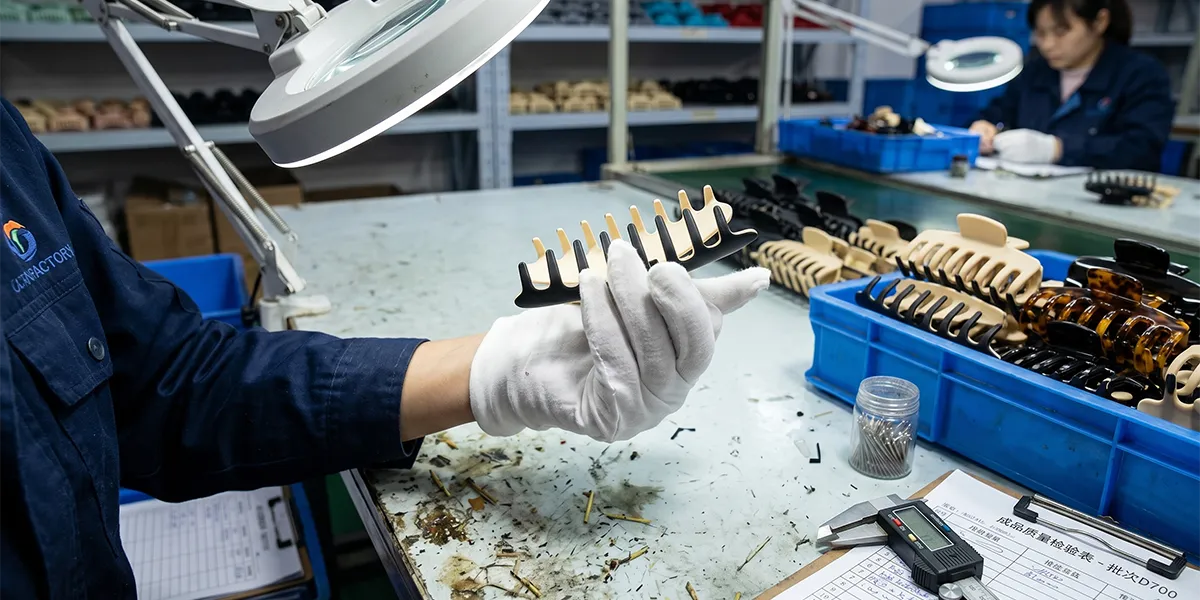
OEM production note: Three questions separate a factory from a trading company faster than any certificate. Which machines cut the teeth? What is in the mould library for this shape? What is the defect rate on tooth finishing? A factory answers all three immediately and can send unedited line video on request. A trading company answers in general terms, quotes quickly on anything you ask for, and offers a range wider than any single facility could produce.
4. Comb Materials and What Each One Costs You
| Material | Process | Tooth Finish | Relative Unit Cost | Typical Positioning |
|---|---|---|---|---|
| ABS / PP | Injection moulding | Moulded, deburred | Lowest | Mass retail, promotional |
| Carbon fibre composite | Injection moulding | Moulded, deburred | Low–medium | Salon, barber, heat styling |
| Bamboo | CNC cut, sanded | Cut and sanded | Low–medium | Eco-positioned volume |
| Hardwood (beech, walnut, peach) | CNC cut, hand sanded | Cut and sanded | Medium | Natural, gift sets |
| Sandalwood | CNC cut, hand finished | Cut and polished | Medium–high | Premium natural |
| Cellulose acetate | Sawn from sheet, hand polished | Sawcut, seamless | Highest | Premium, fashion colourways |
The single most common specification mistake is treating a moulded comb and a sawcut comb as interchangeable because they look identical in photographs. An injection-moulded comb is formed in a two-part mould, which leaves a parting line running along each tooth. That seam is the most frequent cause of snagging and scalp irritation in low-cost combs. Sawcutting removes the defect entirely but costs more per piece. Specify the finishing route on the purchase order, not just the material, or a supplier quoting to price will substitute the cheaper one.
Material comparisons for end users are covered in our guides to metal, plastic and wooden combs and what acetate combs are and why the material matters.
5. Beard Combs: The Sub-Category Most Buyers Underestimate
Beard combs carry the same tooling as hair combs but a stricter finishing standard. A comb used against facial skin exposes a moulding seam that the same seam would not expose on a scalp comb, which is why sawcut and hand-polished teeth are the norm at the premium end of this category and moulded teeth are confined to the value tier.
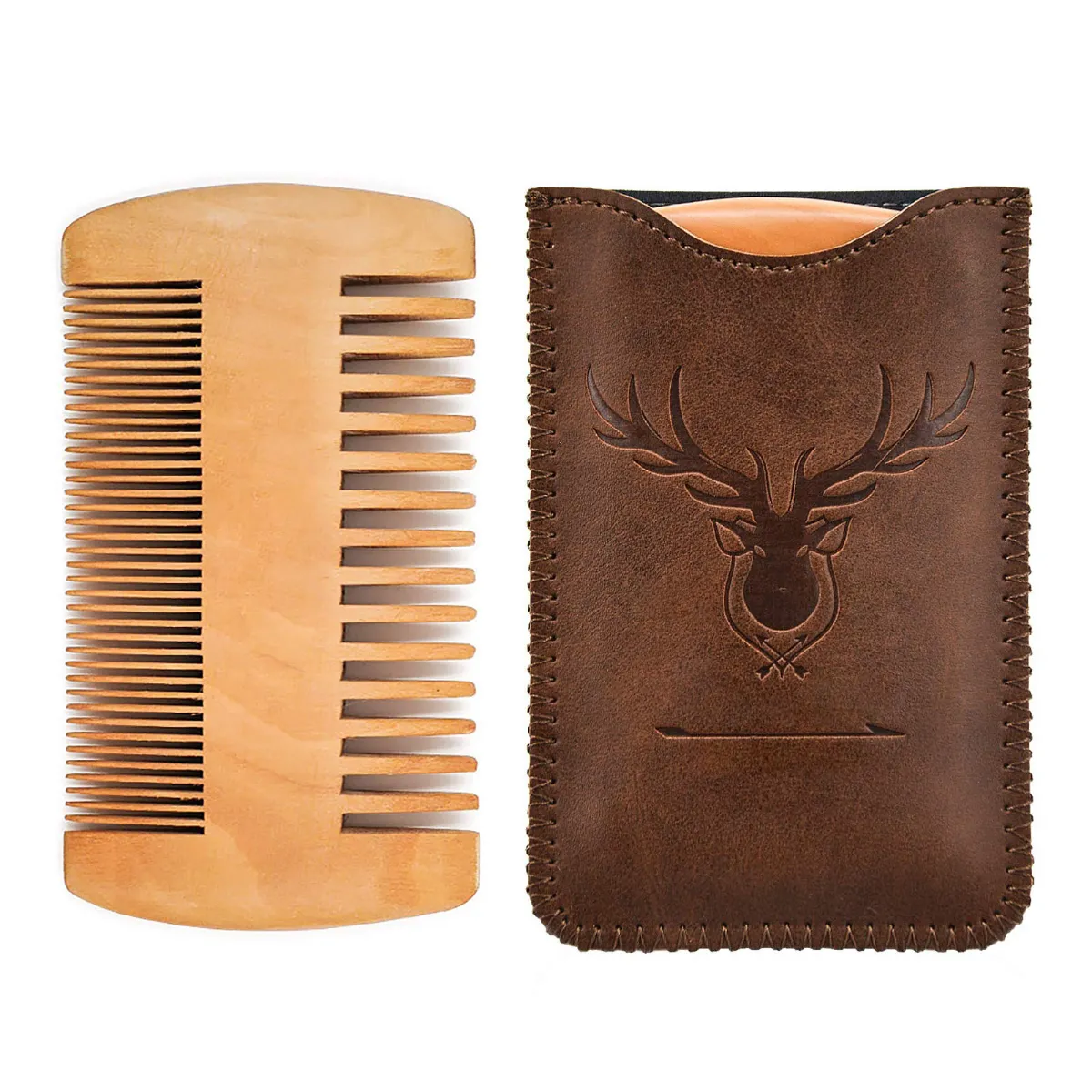
Tooth spacing is specified more tightly than for hair combs: roughly 1–2 mm for stubble and detail work, 2–3 mm for medium beards, and 3–5 mm for long or coarse beards. Dual-sided combs carry two spacings on one body and are the most common single-SKU answer for a mixed customer base. Folding combs command the strongest gift-market price but carry the highest assembly cost of the beard comb formats.
For the full specification breakdown — formats, wood species, tooth finishing routes, decoration and packaging — see our beard comb manufacturing guide, and the custom beard comb range for available formats.
6. MOQ, Tooling and Lead Time for Custom Combs
| Comb Type | Material | Entry MOQ (pcs/SKU) | Production Lead Time |
|---|---|---|---|
| Injection-moulded comb | ABS, PP, carbon fibre | 1,000 | 25–40 days |
| Wooden comb | Beech, walnut, sandalwood, bamboo | 1,000 | 35–50 days |
| Acetate comb | Cellulose acetate sheet | 1,000 | 35–50 days |
| Beard comb | Wood, acetate, metal | 1,000 | 35–50 days |
"Per SKU" means per finished variant. A comb produced in three colours is three SKUs, not one, because each colour requires its own material batch and machine changeover. Buyers routinely brief "1,000 pieces" while specifying four colourways, which is a 4,000-piece order at MOQ. Confirming the colour count at enquiry stage avoids a re-quote that costs a week.
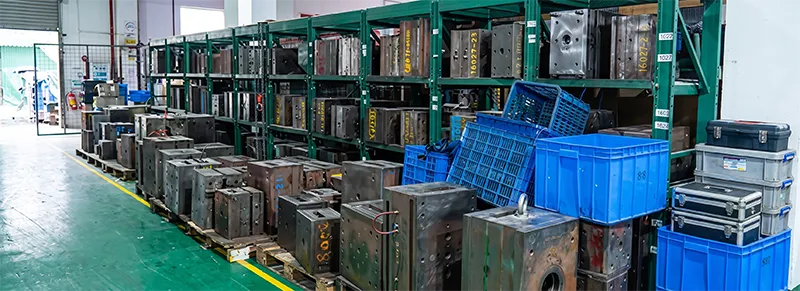
Tooling is charged only when a design cannot be produced from an existing mould. A basic single-piece comb mould starts at approximately US$4,200, and new mould development takes 30 to 45 days before sampling can begin. Wooden combs avoid steel tooling entirely: they are CNC-cut from a programme that takes 7 to 14 days to originate, which makes wood the cheapest route to a genuinely custom shape on a short first run. The full cost structure — tooling, volume price breaks and the charges that sit outside the unit price — is set out in our guide to custom hair brush and comb manufacturing costs, and the stage-by-stage schedule in our lead time breakdown.
7. Where China's Comb Factories Are Clustered
Guangdong (Dongguan, Guangzhou). The largest export-oriented cluster and the one with the deepest in-house capability. Factories here typically run injection moulding, surface treatment and decoration under one roof, which suits mixed-material ranges and buyers who need certification for retail compliance.
Zhejiang (Yiwu, Huzhou). The acetate and mixed-accessory cluster. Sheet, hardware and packaging are all sourced locally, so lead times on stock designs are short and entry quantities per colour are often low. Best for fast-turn orders built on existing patterns rather than custom tooling.
Ningbo and Hebei. Long-established brush manufacturing bases with comb lines attached. Strong on functional salon combs and on volume, but confirm the tooth-finishing route in writing if you are buying premium wooden or acetate combs from a brush-led facility.
Jiangxi and inland provinces. Wood-focused and typically lower labour cost, with the trade-off of a longer inland leg before the goods reach a port. Worth the freight arithmetic on heavy wooden orders.
8. Conclusion
Choosing a comb manufacturer comes down to three decisions made in order. Pick the material first, because it determines which process you need and therefore which factories are genuinely qualified. Then decide whether the shape justifies new tooling, or whether an existing mould gets you to market faster and cheaper on a first run. Only then negotiate the unit price — which, on a comb, moves far less than the tooling and finishing decisions ahead of it.
The lowest-risk structure for a first custom comb order is an existing mould, MOQ quantity, one or two colourways and a logo method chosen before the mould is cut. Design freedom is cheaper to add on the reorder, once the SKU has sold through.
Our custom hair comb range sets out available shapes, materials, tooth spacings, finishes and packaging in specification form, and the beard comb range covers the grooming side. To get an itemised quotation rather than a single number, send us your specification: comb type, material, size, tooth spacing, surface treatment, logo method, packaging, quantity per SKU and number of SKUs.
Whichever factories make your shortlist, compare physical samples before placing an order. If JunYi Beauty is on your list, our samples and prototypes page explains how to request comb samples.