A paddle brush and a round brush are the two most commonly used hair brush types, yet they serve fundamentally different purposes. A paddle brush is designed for detangling, smoothing, and distributing natural oils across large sections of hair. A round brush is designed for creating volume, curl, and directional movement during blow-drying. Choosing the wrong one for a given task does not just produce a suboptimal result — it can cause unnecessary breakage, frizz, or styling frustration.
Despite their differences, these two brushes are frequently confused by consumers who assume any brush will work for any job. Understanding the structural design, intended use case, and hair type suitability of each brush eliminates guesswork and leads to better outcomes with less effort.
What Is a Paddle Brush
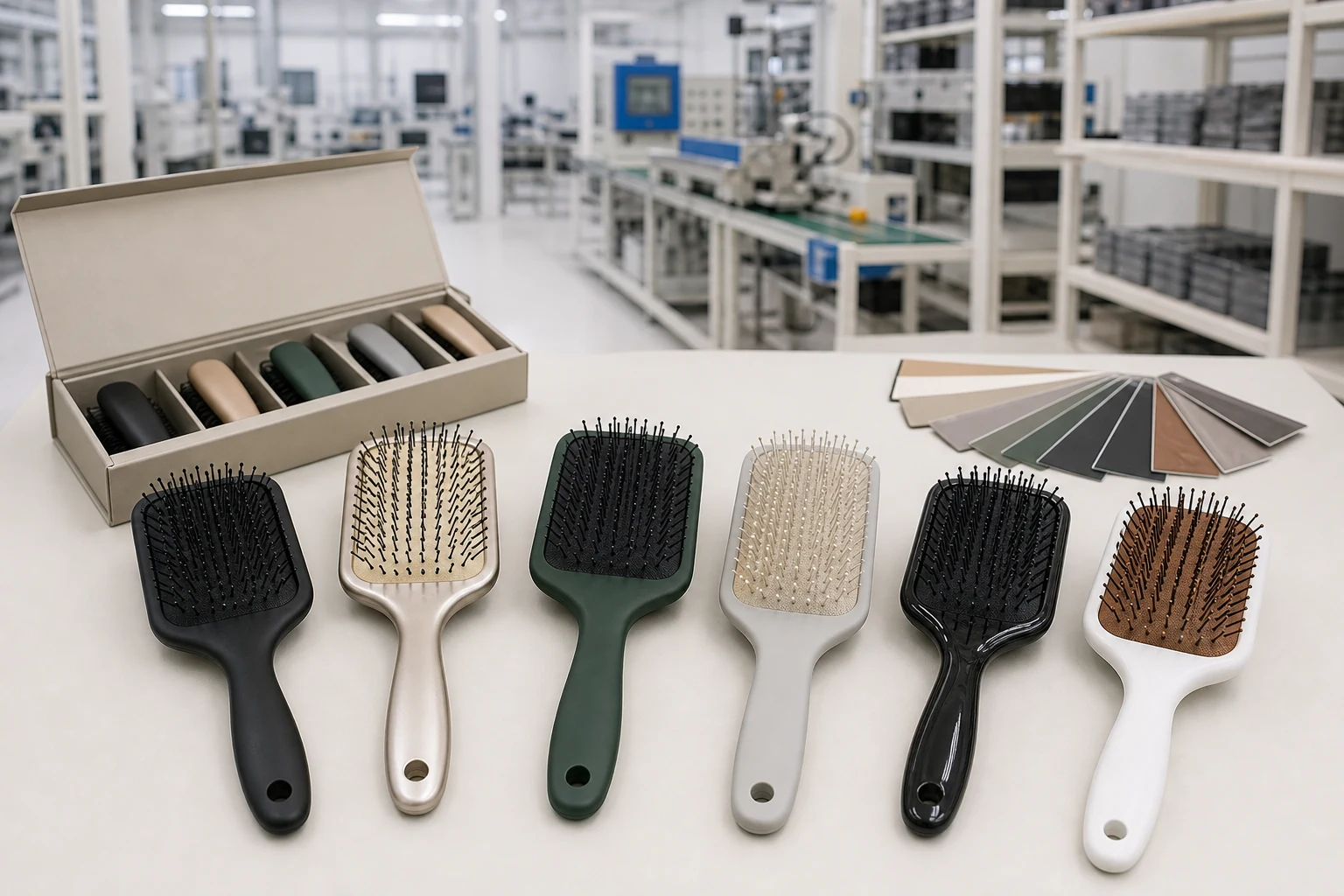
A paddle brush is defined by its broad, flat or slightly curved rectangular or oval head — typically 200 to 250 mm in length — mounted on a cushioned base. The wide surface area allows it to cover a large section of hair in a single stroke, making it the most efficient tool for detangling long or thick hair without excessive pulling.
The cushioned base is a critical design element. It flexes inward with each stroke, absorbing pressure and reducing the mechanical force transferred to the hair shaft and scalp. Most paddle brushes use nylon, plastic, or mixed boar-and-nylon bristles, with ball-tipped ends to prevent scalp irritation. For a detailed breakdown of how bristle material affects performance, the bristle types and materials guide covers each option in depth.
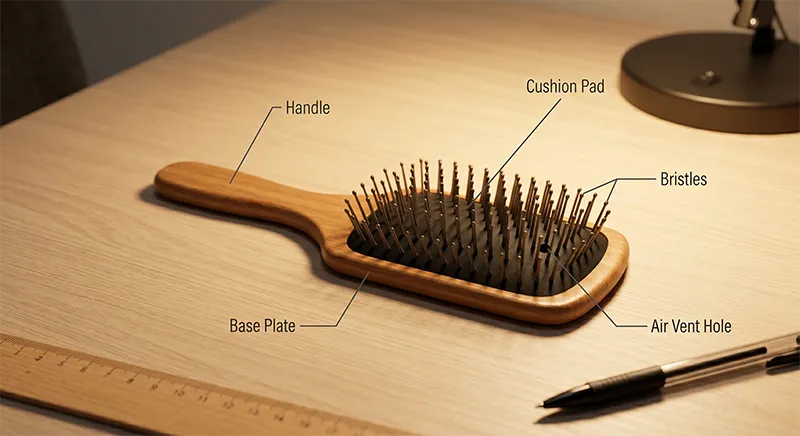
Paddle brushes are the default choice for everyday hair maintenance — morning detangling, smoothing before braiding or tying back, and distributing conditioner or oils from roots to ends. For a deeper look at the full range of paddle brush functions, the guide on what a paddle brush does for hair covers benefits, bristle options, and usage tips. Paddle brushes are also effective for creating a sleek, straight finish when used with a blow-dryer, though they do not produce root lift or curl.
What Is a Round Brush
A round brush is a cylindrical styling tool with bristles arranged radially around a barrel, available in diameters typically ranging from 15 mm to 55 mm. Unlike a paddle brush, it is not primarily a detangling tool — it is a styling instrument designed to work in conjunction with a blow-dryer to shape hair while heat sets the style.
When hair is wrapped around a round brush barrel and exposed to directional airflow, the combination of tension and heat causes the hair's hydrogen bonds to temporarily reform in the shape dictated by the barrel's curve. Smaller barrels create tighter curls, while larger barrels produce loose waves, body, and bend. This principle is why barrel diameter is the single most important selection factor for round brushes. The round brush size guide provides a detailed diameter-to-hairstyle matching chart.
Barrel materials also vary. Ceramic and tourmaline barrels distribute heat evenly and reduce hot spots, making them the standard choice in professional salon tools. Aluminium barrels heat up faster but can create uneven temperature distribution. Wooden barrels do not conduct heat and rely entirely on the dryer's airflow, producing a slower but gentler styling effect.
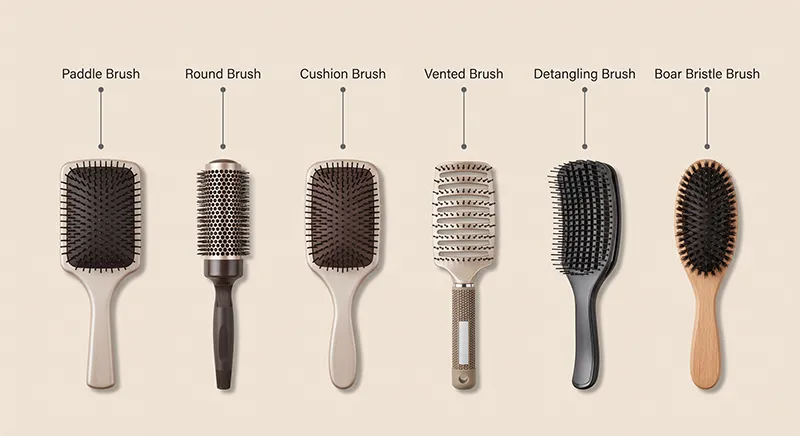
Paddle Brush vs Round Brush: Side-by-Side Comparison
The differences between paddle and round brushes extend far beyond shape. Each design reflects a different set of priorities — detangling and daily maintenance versus active heat styling and shape creation. The following comparison summarises the most relevant differences.
| Feature | Paddle Brush | Round Brush |
|---|---|---|
| Head shape | Flat or slightly curved, rectangular/oval | Cylindrical barrel |
| Primary function | Detangling, smoothing, oil distribution | Volume, curl, directional styling |
| Requires blow-dryer | No (optional for straightening) | Yes (essential for intended styling effect) |
| Creates volume at roots | No | Yes — lifts hair at the root when rolled upward |
| Creates curls or waves | No | Yes — barrel diameter determines curl size |
| Best hair length | Medium to long | Short to long (barrel size must match length) |
| Skill level needed | Low — intuitive single-stroke motion | Moderate — requires rolling, sectioning, and coordination with dryer |
| Risk of hair tangling in brush | Very low | Moderate — improper wrapping can tangle hair around barrel |
| Common bristle materials | Nylon, mixed boar-nylon, plastic pins | Nylon, boar bristle, ceramic-tipped metal pins |
Which Brush Works Best for Each Hair Type
Hair type — including texture, density, and natural curl pattern — is one of the most reliable indicators of which brush will perform best in a given routine. Neither brush is universally superior; the right choice depends on what the hair needs.
Fine or Thin Hair
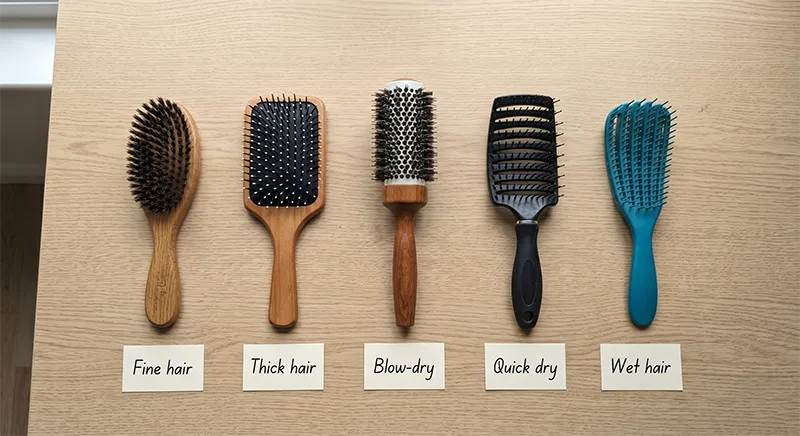
Fine hair benefits from a paddle brush with soft, flexible bristles for daily detangling, as stiff bristles can pull and break delicate strands. For styling, a small to medium round brush (25–35 mm) creates visible volume and lift that fine hair typically lacks. Boar bristle options work well on fine hair for both brush types, as the natural fibres grip lightweight strands effectively without excessive tension.
Thick or Coarse Hair
Thick hair requires a paddle brush with firm nylon or mixed bristles that can penetrate dense sections without bending or skipping over tangles. A large round brush (43–55 mm) works best for blow-drying thick hair, as the wider barrel covers more surface area and speeds up styling. Using a barrel that is too small on thick hair increases the risk of tangling and extends drying time unnecessarily.
Curly or Wavy Hair
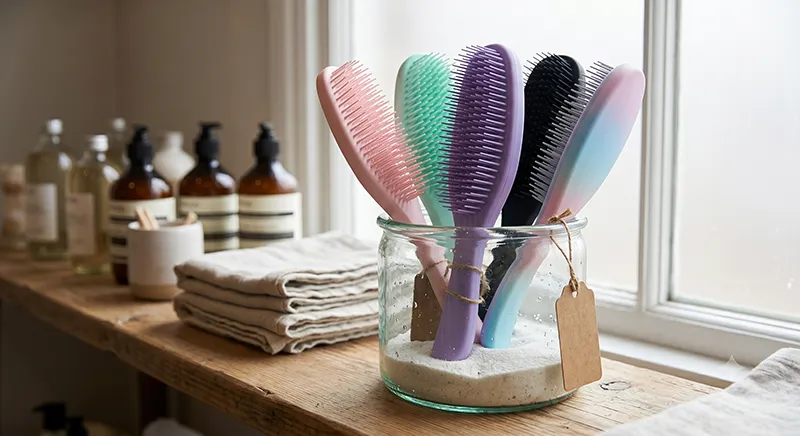
Curly hair should generally be brushed only when wet and conditioned — dry brushing disrupts the curl pattern and creates frizz. A paddle brush is useful for distributing conditioner through curly hair in the shower. Round brushes can be used on curly hair to create a smoother, stretched blowout effect, but this requires careful sectioning and moderate heat to avoid over-straightening. The Healthline hair brush guide notes that flexible-bristle detangling brushes may be more appropriate than either paddle or round brushes for highly textured hair.
Straight Hair
Straight hair is the most adaptable type for both brushes. A paddle brush maintains smoothness and distributes oils for a polished, low-maintenance look. A round brush adds body and movement during blow-drying — useful for straight hair that tends to lie flat without heat styling intervention. For a comprehensive overview of brush-to-hair-type pairing, the complete guide to hair brush types maps each brush category to its ideal use case.
When to Use Each Brush in a Styling Routine
Paddle and round brushes are not competing tools — they occupy different stages of the hair care and styling process. Understanding when each brush enters the routine prevents misuse and improves results.
Pre-Styling: Paddle Brush
Before any heat styling begins, a paddle brush should be used to detangle hair completely. Starting a blow-dry with tangled hair increases drying time, creates uneven results, and raises the risk of heat damage to knotted sections. The paddle brush prepares the hair by aligning strands in the same direction and removing knots that would otherwise catch on a round brush barrel.
Blow-Dry Phase: Round Brush
Once the hair is detangled and sectioned, the round brush takes over. Working in small sections, each portion of hair is wrapped around the barrel, and the blow-dryer is directed along the length of the brush from root to tip. The combination of tension, heat, and the barrel's cylindrical shape sets the hair into the desired form — lift at the roots, smooth mid-lengths, and curled or flipped ends.
Finishing: Paddle Brush (Optional)
After a round-brush blowout, a paddle brush can be used for a final smoothing pass to blend sections together and eliminate any visible separation lines between sections. This step is optional and depends on the desired finish — a paddle brush pass after round-brush styling produces a sleeker, more polished look, while skipping it preserves more visible body and movement.
Common Mistakes When Choosing Between Paddle and Round Brushes
Several recurring errors lead to frustration, poor results, or unnecessary hair damage when selecting between these two brush types.
Using a round brush to detangle is the most common mistake. Round brushes are not designed for this purpose, and pulling a round brush through tangled hair wraps knots tighter around the barrel rather than releasing them. This creates tangles that are difficult to remove without cutting hair or causing breakage. Always detangle with a paddle brush or wide-tooth comb first.
Choosing the wrong round brush barrel size is the second most frequent error. A barrel that is too small for the hair length creates overly tight curls that look unnatural, while a barrel that is too large for short hair cannot grip enough hair to create any meaningful shape. The general rule: the barrel diameter should be proportional to the length of hair being styled.
Expecting a paddle brush to add volume is another misconception. The flat head and downward brushing motion of a paddle brush does the opposite — it smooths, flattens, and aligns strands. If root lift and body are the goal, a round brush is the only option between these two. According to the American Academy of Dermatology, matching the tool to the intended outcome is a basic principle of healthy hair styling.
See how paddle brush bristles are implanted during production:
Brush Material and Quality Considerations
Beyond shape and function, the materials used in brush construction significantly affect both performance and longevity. This applies to the body, cushion, and bristles of both paddle and round brushes.
Bristle Material Differences
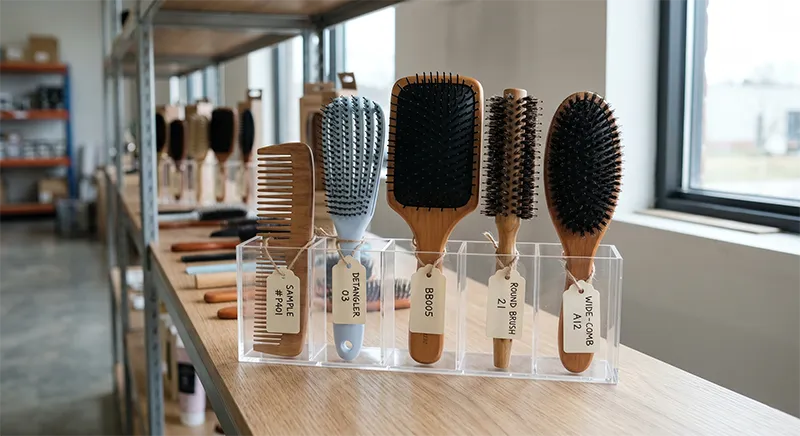
Nylon bristles are the most common in both brush types. They are heat-resistant, flexible, and suitable for all hair textures. Boar bristles — made from natural animal fibre — excel at distributing oils and creating a polished, high-shine finish, but they lack the stiffness needed for heavy detangling on thick hair. Many professional brushes use a mixed combination that pairs boar bristles for smoothing with nylon bristles for grip and detangling power.
Handle and Body Materials
Brush bodies are typically made from ABS plastic, wood, or bamboo. ABS is lightweight, durable, and cost-effective for mass-market production. Wooden and bamboo handles offer a premium feel and are preferred in eco-conscious product lines. The handle length and grip design also matter for round brushes in particular, since the brush must be rotated continuously during blow-drying — a slippery or poorly balanced handle makes the styling process significantly more difficult.
| Hair Type / Goal | Recommended Brush | Suggested Specifications |
|---|---|---|
| Daily detangling (all types) | Paddle brush | Flexible nylon bristles, cushioned base |
| Straight, sleek blowout | Paddle brush with dryer | Mixed boar-nylon bristles, wide head |
| Root volume and body | Round brush (large barrel) | 43–55 mm ceramic barrel, nylon bristles |
| Defined curls and waves | Round brush (small barrel) | 25–35 mm barrel, boar or mixed bristles |
| Fine hair — daily care | Paddle brush | Soft bristles, gentle cushion tension |
| Fine hair — volume styling | Round brush (small–medium) | 25–35 mm barrel for visible lift |
| Thick hair — daily care | Paddle brush | Firm nylon bristles, wide head |
| Thick hair — blowout styling | Round brush (large) | 43–55 mm barrel, nylon or metal pins |
| Short hair — directional styling | Round brush (small) | 15–25 mm barrel for control and lift |
For consumers who also use combs as part of their routine, the brushing vs. combing comparison guide explains when each tool type is the more appropriate choice. Keeping brushes clean is also essential for maintaining performance — the step-by-step brush cleaning guide covers material-specific cleaning methods for all brush types.
Whether the goal is simple daily maintenance or a professional-level blowout, selecting the right brush — and using it at the correct stage of the routine — produces consistently better results with less effort and less risk of hair damage. Dongguan JunYi Beauty Technology Co., Ltd. manufactures both paddle and round brushes across multiple bristle types, barrel materials, and size configurations, supporting brands in building complete brush assortments from a single production source.