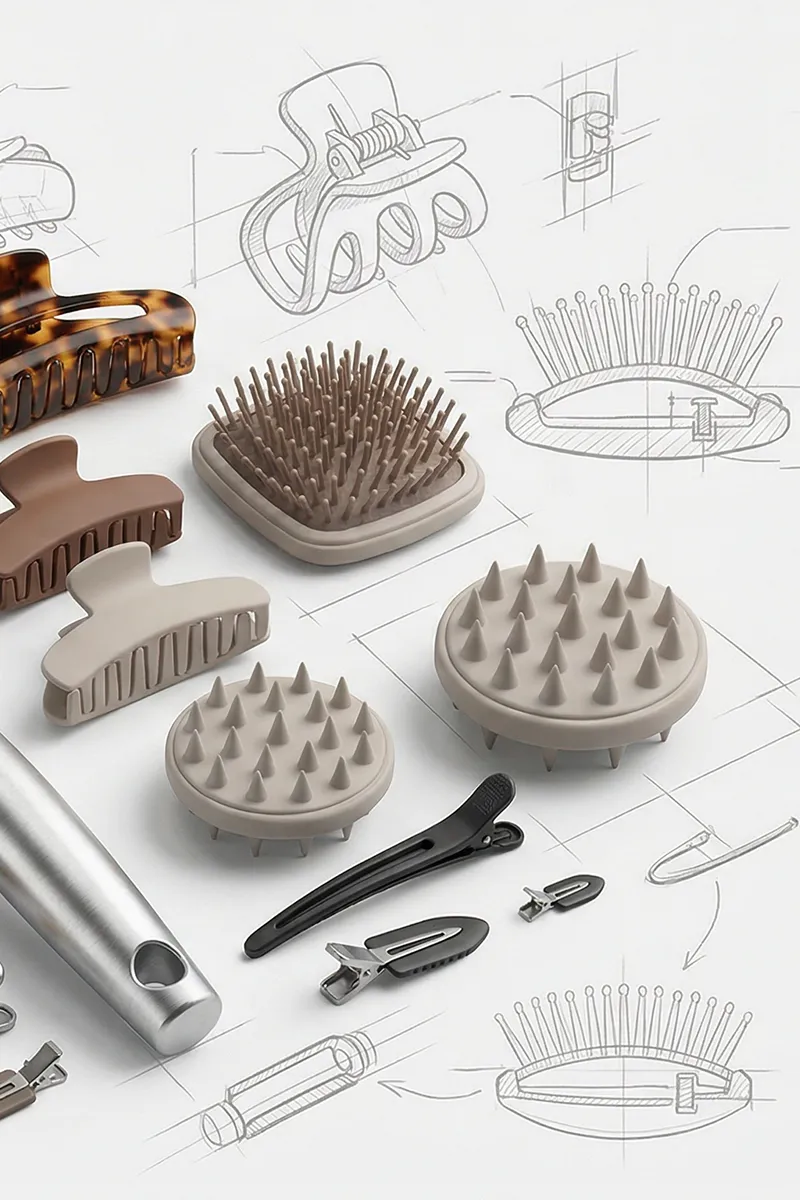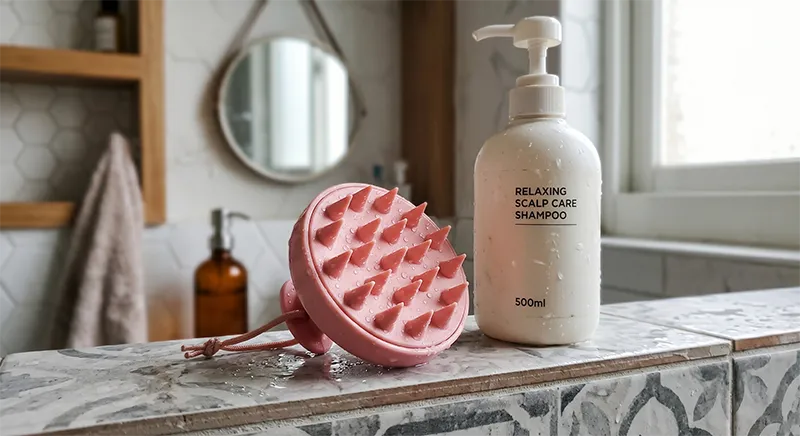
Scalp massage is the application of manual pressure and circular motion to the scalp surface using fingertips, a handheld massager, or a silicone scalp brush, with the goal of stimulating blood circulation, loosening tension, and promoting a healthier environment for hair follicle function. The practice has been used in traditional hair care for centuries, but its potential to influence hair growth has only recently been examined through controlled research.
The central question — does scalp massage actually make hair grow faster or thicker? — has a more nuanced answer than most online sources suggest. A small but frequently cited body of clinical research indicates that consistent daily massage can increase hair thickness over time, though the evidence for increased growth rate or total hair count is limited. This guide examines what the science actually shows, separates established findings from speculation, and covers the practical tools and techniques that maximise the benefits of scalp massage.
1. What the Science Actually Shows
The most widely referenced research on scalp massage and hair growth comes from two studies that established the foundation for current understanding.
The 2016 Eplasty Study (Koyama et al.)
A 2016 study published in Eplasty examined nine healthy Japanese men who received four minutes of standardised scalp massage daily for 24 weeks using a massage device. The study found a statistically significant increase in hair thickness — from an average of 0.085 mm to 0.092 mm — on the massaged areas. Total hair count remained stable, and hair growth rate did not change significantly.
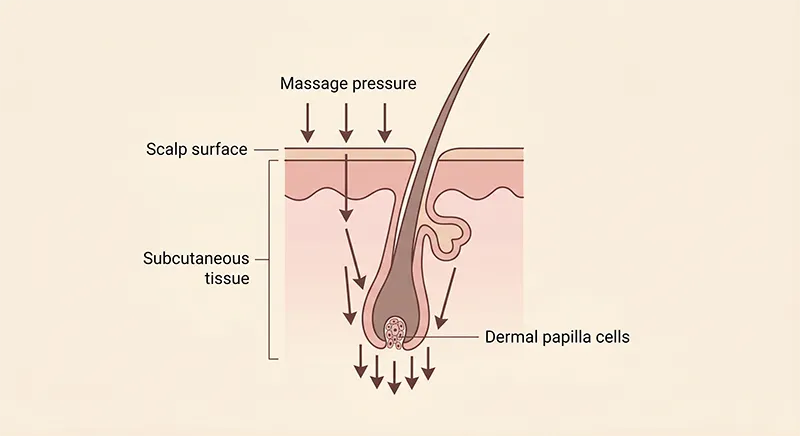
The researchers used finite element method (FEM) analysis to demonstrate that scalp massage transmits mechanical stretching forces to dermal papilla cells in the subcutaneous tissue. In vitro testing showed that these stretching forces upregulated genes associated with hair growth (including noggin and SMAD4) and downregulated genes associated with the catagen (regression) phase. The proposed mechanism is that mechanical stimulation keeps follicles in the active growth (anagen) phase for longer, producing thicker individual hairs — not necessarily more hairs.
The 2019 Survey Study (English et al.)
A larger 2019 survey study published in Dermatology and Therapy examined self-reported outcomes from over 300 participants who performed standardised scalp massages for androgenetic alopecia. Approximately 69 percent of participants who massaged for 11 to 20 minutes daily for five or more months reported stabilised or improved hair density. The study noted that duration and consistency were key predictors of positive outcomes.
What the Research Does and Does Not Prove
| Finding | Evidence Level | Explanation |
|---|---|---|
| Scalp massage increases hair thickness | Supported (small study) | Measurable thickness increase observed over 24 weeks of daily massage. Mechanism plausibly explained through dermal papilla cell stretching. |
| Scalp massage increases hair growth rate | Not supported | No study has demonstrated that massage accelerates the speed at which individual hairs grow (approximately 1.25 cm per month). |
| Scalp massage increases total hair count | Not supported | Hair count remained stable in the 2016 study. Massage does not appear to activate dormant follicles or create new ones. |
| Scalp massage improves blood circulation | Well established | Mechanical pressure causes vasodilation (widening of blood vessels), increasing oxygen and nutrient delivery to the scalp surface. |
| Scalp massage reduces stress | Well established | Massage activates the parasympathetic nervous system, reducing cortisol levels. Chronic stress is associated with telogen effluvium (temporary hair shedding). |
2. Established Benefits of Scalp Massage Beyond Growth
While the hair growth evidence is promising but limited, scalp massage provides several well-documented benefits that contribute to overall scalp and hair health.
Improved Scalp Circulation
Gentle pressure and circular motion cause temporary vasodilation at the scalp surface, increasing blood flow to hair follicles. Improved circulation delivers oxygen, glucose, and nutrients that follicles require for healthy keratin production. While this does not accelerate growth rate, it supports the conditions under which follicles function optimally.
Product Buildup Removal
The mechanical action of massage — particularly when performed during shampooing with a silicone scalp brush — loosens and removes dead skin cells, sebum accumulation, and styling product residue that can clog follicle openings. A blocked follicle cannot produce hair as efficiently as a clear one, so regular scalp cleansing supports healthy follicle cycling.
Stress Reduction
Scalp massage activates the parasympathetic nervous system, reducing cortisol (stress hormone) levels. This is significant for hair health because chronic elevated cortisol is associated with telogen effluvium — a condition where a higher-than-normal proportion of hair follicles enter the resting (telogen) phase simultaneously, causing diffuse thinning. While scalp massage alone cannot resolve telogen effluvium, stress reduction is a recognised component of managing the condition.
Scalp Tension Relief
The galea aponeurotica — a fibrous tissue layer beneath the scalp skin — can become tight due to stress, posture, and muscle tension. Tight scalp tissue compresses blood vessels and may restrict nutrient delivery to follicles over time. Regular massage loosens this tissue, improving scalp pliability and comfort. Many people who begin scalp massage report noticeable tension relief even before any visible changes to hair condition.
3. Tools for Scalp Massage: Manual vs Brush-Assisted
Scalp massage can be performed with fingertips alone or with purpose-designed tools. Each method has distinct advantages, and the choice depends on personal preference, consistency goals, and specific scalp needs.
Manual Fingertip Massage
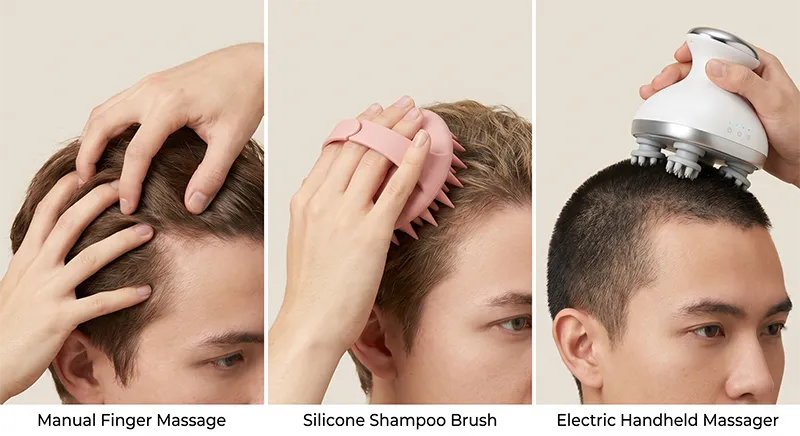
The simplest method requires no tools. Using the pads of all ten fingers (not fingernails), apply light to medium pressure to the scalp in small circular motions. Work systematically from the hairline to the crown, then to the sides and back. Three to five minutes daily is the most commonly recommended duration for practical results. The limitation of manual massage is that it can be tiring to maintain consistent pressure for extended sessions.
Silicone Scalp Brush (Shampoo Brush)
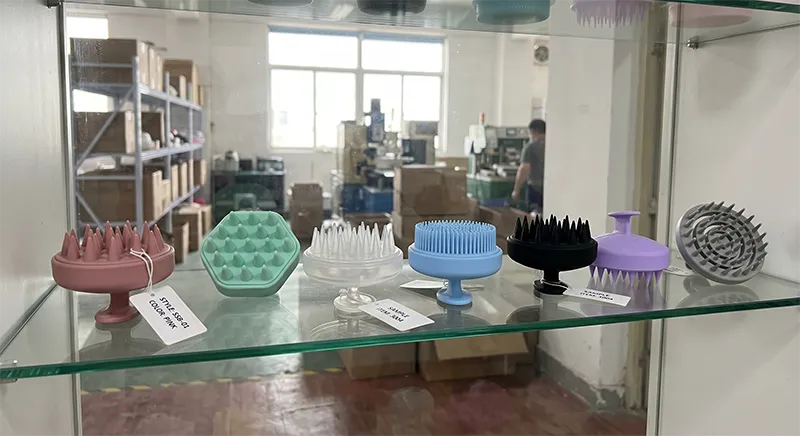
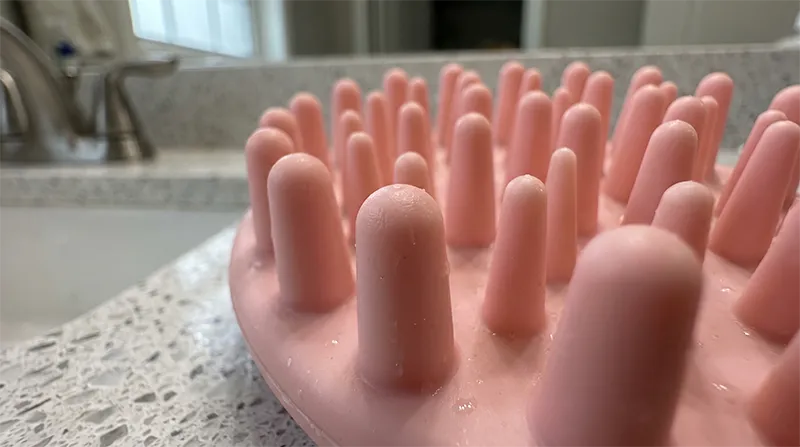
Silicone scalp brushes — also known as shampoo brushes — are handheld tools with short, flexible silicone bristles designed for use during shampooing. They provide consistent mechanical stimulation without the hand fatigue associated with manual massage, and they simultaneously help distribute shampoo evenly and remove scalp buildup. The soft, medical-grade silicone bristles massage without scratching, making them suitable for sensitive scalps. For brands and retailers evaluating this product category, silicone scalp massage brushes designed for in-shower use represent a high-repeat-purchase SKU with strong consumer loyalty. For a detailed overview of whether shampoo brushes are beneficial, see the article on whether shampoo brushes are good for hair.
Electric Scalp Massagers
Battery-powered or rechargeable scalp massagers use vibrating or rotating silicone tips to deliver consistent pressure without manual effort. They are effective for people who want longer massage sessions (10 to 20 minutes) without hand fatigue. However, they are bulkier than manual brushes and not typically used in the shower.
The following table compares the three primary massage methods:
| Method | Consistency | Shower Use | Product Distribution | Cost | Best For |
|---|---|---|---|---|---|
| Manual fingertip | Depends on user discipline | Yes | Limited | Free | Minimalists, no-tool preference |
| Silicone scalp brush | High — tool provides consistent pressure | Yes — designed for wet use | Excellent — distributes shampoo evenly | Low | Daily shower routine integration |
| Electric scalp massager | Very high — motorised consistency | Some models (check IP rating) | Not applicable | Medium | Extended sessions, dry massage |
4. How to Perform Scalp Massage for Maximum Benefit
Whether using fingers or a tool, technique affects outcomes. The following protocol is based on the methods used in the clinical research that produced measurable results.
Recommended Technique
- Use the pads of the fingers or a silicone scalp brush — never fingernails, which can cause micro-abrasions on the scalp surface.
- Apply light to medium pressure. The goal is to move the scalp skin over the underlying tissue, not to press hard enough to cause discomfort.
- Work in small circular motions, covering the entire scalp systematically: start at the frontal hairline, move across the crown, then to the temporal (side) areas, and finish at the occipital (back) region.
- Maintain each regional massage for approximately 60 seconds before moving to the next area.
- Total session duration: 3 to 5 minutes for daily maintenance. The 2016 Eplasty study used 4-minute daily sessions.
When to Massage
- During shampooing: The most practical time for most people. A silicone scalp brush makes this especially efficient, combining cleansing with massage in a single step. For instructions on technique, see the guide on how to use a shampoo brush.
- Before bed: Dry scalp massage before sleep promotes relaxation and may improve sleep quality through parasympathetic activation.
- With oil application: Combining massage with a few drops of lightweight oil (such as jojoba or rosemary oil) can enhance the massage experience and provide additional scalp hydration.
Consistency Over Duration
The research consistently indicates that regularity is more important than session length. A 4-minute daily massage performed consistently for months produces better outcomes than occasional 20-minute sessions. Building scalp massage into an existing daily habit — such as shampooing — is the most reliable way to maintain consistency.
5. Who Benefits Most from Scalp Massage
While scalp massage is generally beneficial for all hair types, certain groups are likely to see the most noticeable improvements.
- People experiencing thinning hair: The thickness-increasing effect observed in research is most relevant for individuals whose hair has become finer over time. Massage will not reverse genetic baldness, but it may help maximise the thickness of existing hairs.
- Those with scalp buildup: People who use heavy styling products, dry shampoo, or have oily scalps accumulate residue that can impede follicle function. Massage — especially with a silicone scalp brush during washing — mechanically clears this buildup.
- High-stress individuals: Since chronic stress is associated with increased hair shedding (telogen effluvium), the stress-reduction benefit of massage may be particularly valuable for people in high-pressure environments.
- Those with tight, inflexible scalps: If the scalp feels tight or immobile when pressed, regular massage can gradually loosen the galea aponeurotica, improving tissue pliability and potentially enhancing follicle environment over time.
Scalp massage is not a substitute for medical treatment of androgenetic alopecia or other clinical hair loss conditions. People experiencing significant or rapid hair loss should consult a dermatologist or trichologist for proper diagnosis and treatment.
6. How the Right Brush Affects Scalp Health
Beyond dedicated scalp massage tools, the daily grooming brush itself plays a role in scalp stimulation. Different brush types interact with the scalp in fundamentally different ways, and understanding these differences is relevant for both consumers and for brands building hair brush product lines.
- Boar bristle brushes: The dense, natural bristles provide gentle scalp stimulation during daily brushing. Boar bristle brushes are particularly effective at distributing sebum from the scalp along the hair shaft, which supports natural moisture balance. They are best suited for fine to normal straight hair.
- Cushion brushes with nylon bristle pins: The flexible cushion pad conforms to the scalp's contour, allowing the ball-tipped nylon bristle pins to contact the scalp surface without excessive pressure. This design provides mild scalp stimulation during everyday grooming.
- Silicone scalp brushes: Purpose-designed for massage, these brushes provide the most direct and consistent scalp stimulation. They are the closest analogue to the type of mechanical pressure used in the clinical research studies.
- Metal or rigid plastic pin brushes: These can scratch the scalp surface if used with excessive pressure. They are not recommended for scalp massage purposes.
For a complete breakdown of brush categories and their scalp interaction profiles, see the full breakdown of hair brush types and their intended functions.
7. Conclusion
Scalp massage provides a credible, low-risk complement to a healthy hair care routine. The research evidence — while still limited in scale — consistently indicates that regular daily massage can increase hair thickness over time through mechanical stimulation of dermal papilla cells. It does not accelerate growth rate or create new follicles, but it supports the conditions under which existing follicles produce thicker, healthier hair.
The practical benefits beyond growth are equally significant: improved scalp circulation, product buildup removal, stress reduction, and tension relief are well-established outcomes that contribute to overall scalp health. Integrating a 3 to 5 minute scalp massage into the daily washing routine — particularly using a silicone scalp brush that combines cleansing with stimulation — is the most sustainable approach for long-term consistency.
For brands and private label operators developing scalp care product lines, the scalp brush category represents a growing opportunity driven by consumer awareness of scalp health as a foundation for hair health. Custom silicone scalp brushes and shampoo brushes are produced through injection moulding with medical-grade silicone, supporting OEM customisation of bristle pattern, firmness level, handle design, colour, and branding. Manufacturers such as JunYi Beauty produce custom scalp massage and shampoo brushes alongside their full range of hair brushes, combs, and accessories at the company's Dongguan production facility. For an overview of leading custom hair brush manufacturers offering scalp brush OEM production, see the manufacturer comparison guide. For readers interested in whether brushing itself promotes growth, see the related article on whether brushing hair helps growth.