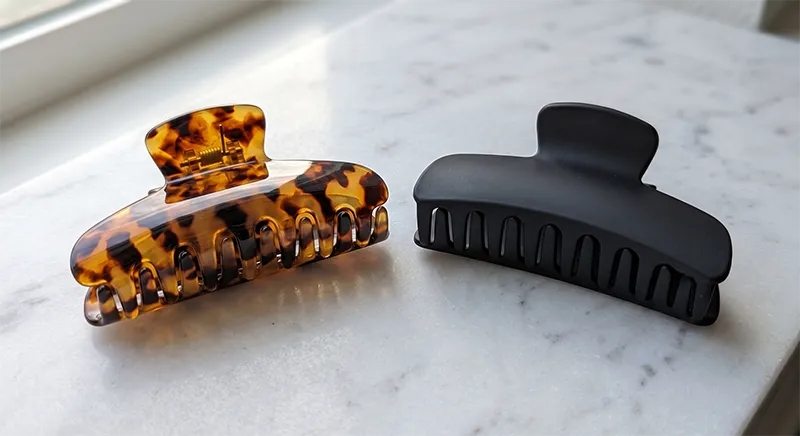
An acetate hair clip is a hair accessory made from cellulose acetate, a plant-derived thermoplastic produced from wood pulp or cotton fibres, prized for its dense weight, glass-like translucency, and the rich, layered colour patterns it produces — tortoiseshell, marble, ombre, amber, and gradient effects that no synthetic plastic can replicate. A plastic hair clip, by contrast, is typically made from ABS (acrylonitrile butadiene styrene), a petroleum-based polymer that is lighter, cheaper, and produced through high-speed injection moulding in uniform solid colours.
The difference between the two is immediately visible when placed side by side — but the material distinction extends far beyond appearance. Acetate and ABS differ in weight, surface texture, flex behaviour, hair interaction, durability, and environmental profile. Understanding these differences helps consumers make informed purchasing decisions and helps brands position their products correctly in an increasingly material-conscious market. For an overview of all clip categories, see the guide on the main types of hair clips.
1. The Visual Difference: Why Acetate Looks Different from Plastic
The most striking distinction between acetate and ABS hair clips is visual. It is also the most difficult to convey in text — because acetate's appeal is fundamentally about light, depth, and variation.
Colour Depth and Translucency
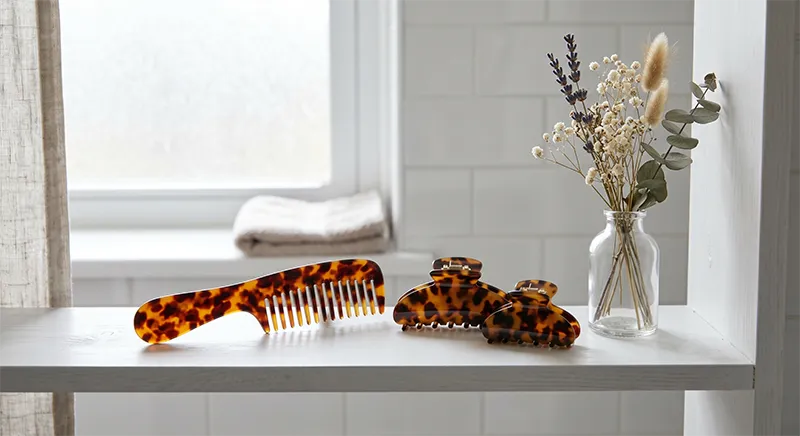
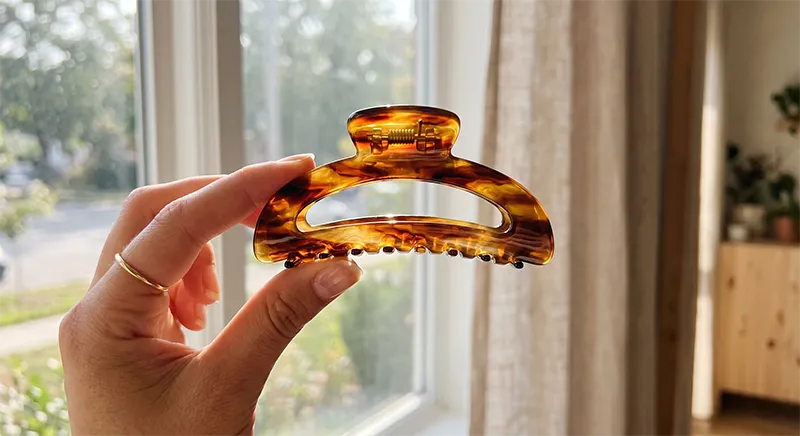
Acetate colour is not printed, sprayed, or coated onto the surface. It is embedded within the material itself during the sheet manufacturing process, where layers of coloured acetate compound are combined to create patterns. When light passes through an acetate clip, it interacts with these internal layers, producing a sense of depth — colours appear to exist at different levels within the material rather than sitting flat on the surface. This is why tortoiseshell acetate clips have that signature warm, almost liquid quality when held to the light.
ABS colour, by contrast, is either mixed into the raw plastic pellets before moulding (producing a uniform, opaque solid colour) or applied to the surface through spray painting. The result is clean and consistent, but flat — there is no depth, no translucency, and no variation between units.
Natural Pattern Variation
Every acetate clip is subtly unique. Because the layering process involves natural variation in how colour compounds flow and merge during sheet production, no two clips cut from different areas of the same sheet will be perfectly identical. This variation is intentional and is considered part of acetate's aesthetic value — it gives each piece an artisanal, one-of-a-kind quality. ABS clips from the same production run are, by design, indistinguishable from each other.
Surface Finish
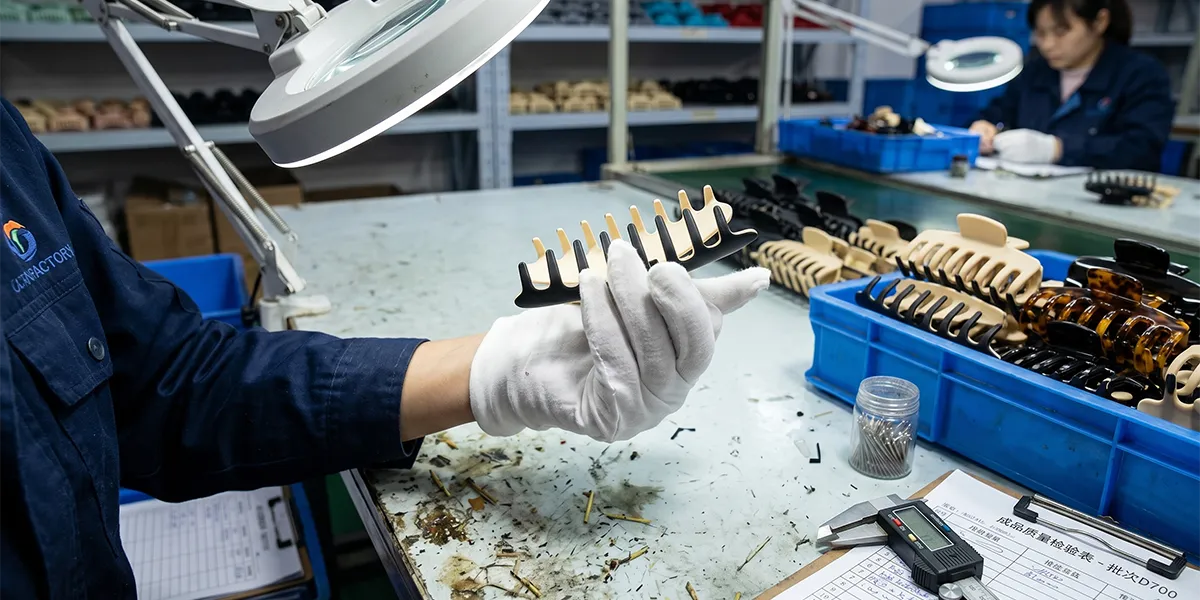
Acetate clips undergo multi-stage hand polishing during production, which produces a smooth, warm-to-the-touch surface with a subtle organic sheen — not the sharp, reflective gloss of high-polish plastic. ABS clips can achieve high gloss through UV coating or spray painting, but the resulting surface feels cooler and more synthetic against the skin and hair.
2. How They Feel: Weight, Texture, and the Sense of Quality
Material perception is not just visual — it is tactile. The physical feel of a hair clip in the hand and in the hair communicates quality instantly, and acetate and ABS create very different impressions.
| Property | Cellulose Acetate | ABS Plastic |
|---|---|---|
| Weight (density) | 1.27-1.34 g/cm3 — noticeably heavier | 1.03-1.07 g/cm3 — lighter |
| Surface temperature | Warm to the touch | Cool to the touch |
| Surface texture | Smooth, organic, hand-polished sheen | Smooth, uniform, machine-finished gloss |
| Perceived quality | Premium — feels substantial and considered | Standard — functional but not remarkable |
| Grip in hair | Weight contributes to grip stability | Lighter — relies more on spring tension alone |
The weight difference is one of the most immediately noticeable distinctions. An acetate claw clip feels substantial in the hand — it has the reassuring heft of a well-made object. An ABS clip of identical size and shape feels noticeably lighter, which many consumers associate with lower quality even before considering visual differences. For consumers with thick or heavy hair, the additional weight of an acetate clip also contributes to grip stability — the clip's own mass helps it stay in place. For more on clip selection for thick hair, see the guide on best hair clips for thick hair.
3. Durability: How Each Material Breaks
The way a hair clip fails is as important as how long it lasts — and acetate and ABS fail in fundamentally different ways.
Acetate: Elastic Flex
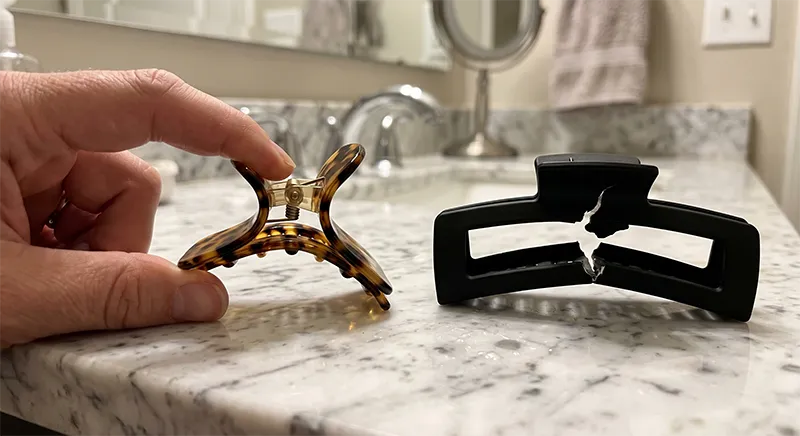
When an acetate clip is stressed beyond its normal range — forced open wider to accommodate a large hair bundle, or squeezed hard during insertion — it flexes elastically. The material bends, absorbs the stress, and returns to its original shape when released. Under extreme overload, acetate will eventually deform permanently rather than crack suddenly. This flex behaviour makes acetate significantly more durable under repeated daily use, particularly for thick, heavy, or voluminous hair.
ABS: Brittle Fracture
ABS is rigid and impact-resistant under normal conditions. However, under sustained or repeated stress — the kind that a claw clip hinge experiences hundreds of times during daily use — ABS develops micro-fractures at the stress concentration point (typically the hinge). These fractures accumulate invisibly until the clip cracks or snaps suddenly, often within weeks or months of purchase. This is the most common reason consumers report that "cheap clips keep breaking" — it is not the clip design that failed, but the material. For information on which claw clips minimise hair damage, see the article on which claw clips do not damage hair.
4. How Material Affects Hair Health
The interaction between a clip and the hair it holds is a material science question, not just a design question. Surface smoothness, clamping pressure distribution, and static generation all affect whether a clip protects or damages hair over time.
- Surface friction: Acetate's hand-polished surface is smoother at the microscopic level than moulded ABS, creating less friction against the hair shaft. Lower friction means less cuticle disruption, fewer snags, and reduced risk of crease marks where the clip grips.
- Pressure distribution: Acetate's flex behaviour allows it to conform slightly to the hair bundle, distributing clamping pressure across a wider contact area. ABS's rigidity concentrates pressure at specific points — typically the tooth tips and hinge — creating localised stress that can indent and break individual strands.
- Static generation: Acetate generates significantly less static electricity than ABS during use and removal. Less static means less frizz, less flyaway, and a smoother finish after the clip is removed — a particularly relevant factor for fine or straight hair that is static-prone.
5. Beyond Clips: Aesthetic Acetate Combs for Hair Care
The material advantages of cellulose acetate extend beyond clips into the comb category, where the properties of smoothness, anti-static behaviour, and visual beauty are equally impactful.
Why Acetate Combs Look and Perform Differently
Aesthetic acetate combs are produced from the same cellulose acetate sheet material as acetate clips, offering the same translucent colour depth, tortoiseshell patterns, and hand-polished finish. But the functional advantages are equally significant: acetate comb teeth are smoother than injection-moulded plastic teeth (which can have microscopic seam lines from the mould parting line), they glide through hair with less friction, and they generate virtually no static — making them particularly effective for fine, straight, and static-prone hair types.
The Aesthetic Appeal
Acetate combs have become a visible trend in premium hair care and beauty retail. The combination of functional superiority and visual beauty — rich tortoiseshell, marble, amber, and translucent patterns that catch light — positions them as both a grooming tool and a personal accessory. They photograph exceptionally well for e-commerce listings and social media, which drives discovery and conversion in DTC channels. For a detailed exploration of acetate comb types and their production, see the dedicated guide on what acetate combs are and how they are made.
Acetate Combs vs Plastic Combs: Key Differences
| Property | Acetate Comb | ABS/Nylon Comb |
|---|---|---|
| Surface smoothness | Hand-polished — no mould seam lines | Mould-finished — may have micro seam lines on teeth |
| Static generation | Virtually none | Moderate to high (material-dependent) |
| Colour and pattern | Translucent, layered, naturally varied | Solid, uniform, surface-applied |
| Weight | Heavier — premium feel | Lighter |
| Tooth flexibility | Slight flex — gentler on scalp | Rigid — can scratch if teeth are sharp |
| Durability | High — flexes rather than snapping | Moderate — teeth can snap under lateral force |
| Price positioning | Mid to premium | Value to mid |

6. Environmental Profile: Bio-Based vs Petroleum-Based
For consumers and brands increasingly concerned with material sustainability, the environmental distinction between acetate and ABS is significant.
- Cellulose acetate is derived from renewable plant sources — wood pulp or cotton fibre. It is biodegradable under industrial composting conditions, though not in standard landfill environments. Its bio-based origin gives it a lower carbon footprint than petroleum-based alternatives in lifecycle assessments. FSC certification can verify sustainable sourcing of the wood pulp raw material. Brands using acetate can legitimately position their products as bio-based and plant-derived.
- ABS plastic is fully petroleum-based and not biodegradable. However, it is recyclable as a thermoplastic — it can be remelted and reformed. Post-consumer recycled (PCR) ABS grades are available for brands seeking recycled-content positioning, and GRS 4.0 certification verifies recycled material content in the supply chain.
Neither material is perfect from an environmental standpoint, but acetate's bio-based origin and compostability profile give it a meaningful advantage for brands targeting eco-conscious consumers — a segment that continues to grow across all hair accessories categories.
7. Which One Should You Choose?
The choice between acetate and ABS is not about which material is universally "better" — it is about which one aligns with specific priorities.
| Priority | Choose Acetate | Choose ABS |
|---|---|---|
| Visual quality and aesthetics | Translucent depth, unique patterns, premium feel | Clean, uniform colours at lower cost |
| Durability on thick hair | Flexes under tension — outlasts ABS significantly | Adequate for fine to medium hair; fracture risk on thick hair |
| Hair health | Smoother surface, less friction, minimal static | Functional but higher friction and static |
| Environmental positioning | Bio-based, industrially compostable | Recyclable, PCR grades available |
| Budget | Higher per-unit cost, supports premium retail pricing | Lowest per-unit cost, suits value positioning |
| Gift and special occasion | Premium weight and finish — ideal for gifting | Functional — better suited for everyday basics |
For consumers, the practical takeaway is straightforward: if budget allows, acetate clips and combs provide a meaningfully better experience in terms of visual beauty, hair gentleness, durability, and environmental profile. For everyday basics where aesthetics are secondary, ABS performs adequately at a lower price point.
For brands and private label operators developing custom hair clip or custom hair accessories lines, both materials serve important roles in a well-structured product assortment — acetate for premium-tier SKUs and ABS for accessible-tier offerings. Manufacturers that produce both materials under one facility, such as those profiled in the guide on top acetate hair accessories manufacturers, enable tiered product line development from a single sourcing partner. For the full technical comparison from a manufacturing perspective — covering injection moulding versus sheet cutting, mould costs, batch consistency, and MOQ differences — see the dedicated B2B guide on cellulose acetate versus ABS plastic for hair clips.