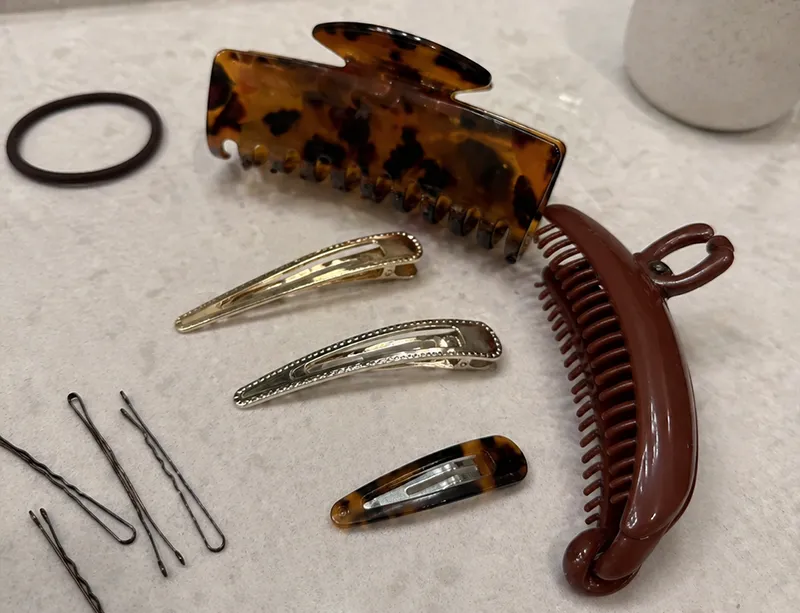
A hair clip for thick hair is a fastening accessory designed with sufficient jaw width, spring tension, and structural durability to hold large volumes of coarse, dense, or heavy hair securely in place without slipping, snagging, or breaking. Not all clip types meet these requirements — and selecting the wrong one leads to the familiar frustrations of cracked hinges, clips that slide out within minutes, and styles that fail to hold through the day.
For consumers with thick hair, clip selection comes down to three variables: clip type, material, and size. For brands and buyers developing hair accessory product lines, understanding which clip categories perform well on thick hair directly informs product assortment, material specification, and sizing strategy. This guide examines the clip types best suited for thick hair, with specific recommendations on materials, dimensions, and construction features.
1. Why Thick Hair Requires Different Clips
Thick hair creates unique demands on hair clip construction that standard designs are not built to handle. The core challenges include:
- Volume: Thick hair occupies more space within the clip jaw, requiring a wider opening to accommodate the full bundle without overstressing the spring.
- Weight: Dense, coarse hair is significantly heavier than fine hair. A clip that holds fine hair comfortably may slide or lose grip under the sustained downward pull of a thick ponytail or bun.
- Tension on the hinge: When a clip operates near its maximum jaw capacity, the spring and hinge are under continuous stress. Standard thin-walled ABS plastic clips frequently crack or snap at the hinge after repeated use on thick hair.
- Surface friction: Smooth or silky thick hair provides less natural grip, meaning the clip must rely entirely on tooth design and spring pressure to maintain hold.
These factors make clip type, material choice, and sizing more critical for thick hair than for any other hair texture. A clip that works adequately on medium-density hair may fail completely on thick or coarse strands.
2. Best Hair Clip Types for Thick Hair
Several clip categories are well suited for thick hair, each offering a different approach to managing volume and weight. The following are the most effective options, ranked by general suitability.
Jaw Clips (Claw Clips)
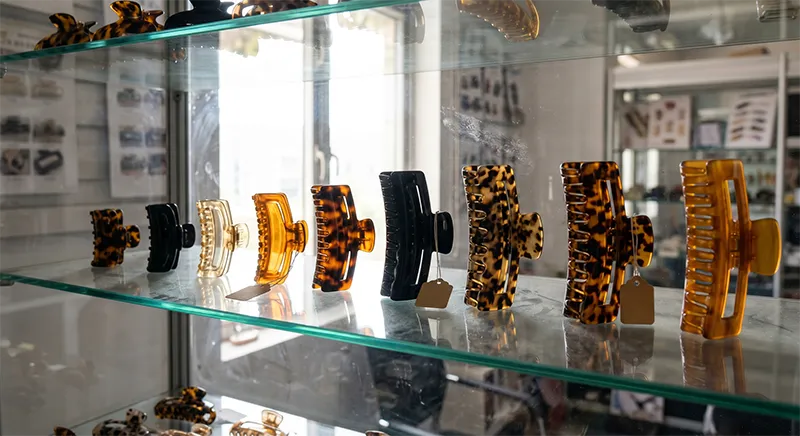
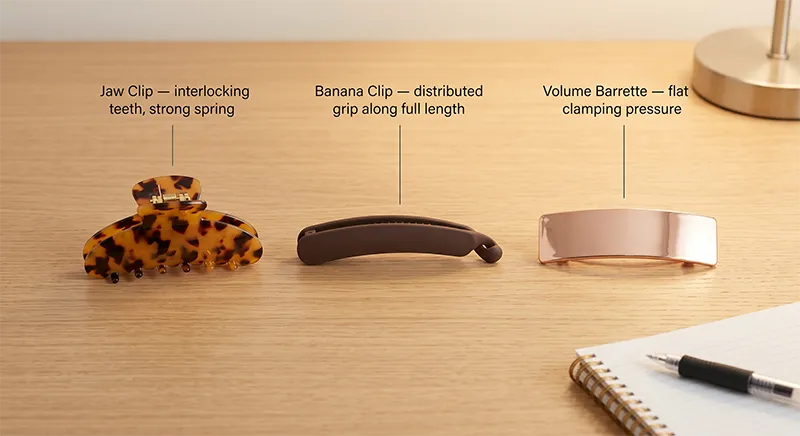
Jaw clips are the single most popular clip type for thick hair. They use interlocking teeth driven by a spring mechanism to grip and hold a large bundle of hair in a single motion. For thick hair, the key specifications are clip length (10 cm or larger for full updos), jaw opening depth (minimum 5 cm), and spring tension — a stronger spring provides more secure hold but requires more finger pressure to open. Oversized jaw clips in the 10–13 cm range can hold even very thick, long hair in a full bun. For a detailed comparison of jaw clip sub-types, see the guide on claw clips versus jaw clips.
Banana Clips
Banana clips distribute hold across their full length, engaging hair along the entire curved spine rather than at a single clamping point. This makes them particularly effective for thick hair because the grip force is spread over a larger surface area. For thick hair, banana clips with deep-set, widely spaced teeth and a length of at least 13 cm (5 inches) provide the most reliable hold. They are especially well suited for ponytail styles where volume needs to cascade downward naturally. For more on this category, see the overview of types of banana hair clips.
Volume Barrettes
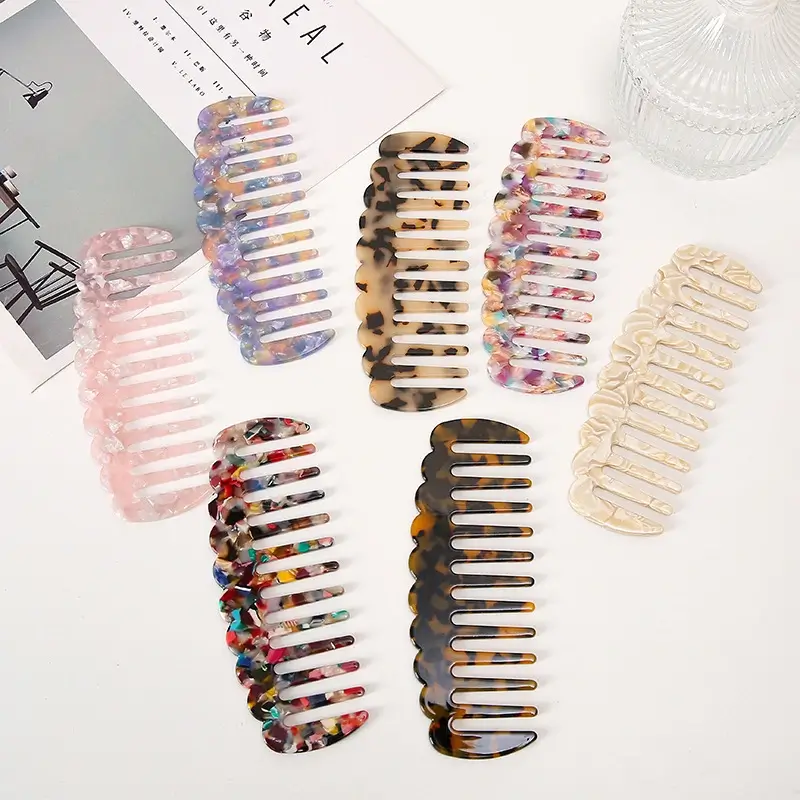
Volume barrettes are oversized versions of standard barrettes, featuring a wider clasp and a longer top plate to accommodate thicker hair bundles. Unlike jaw clips, barrettes apply pressure through a flat clamping action rather than interlocking teeth. This produces a sleeker, more polished appearance and is well suited for half-up styles and straight or wavy thick hair. Barrette length of 9 cm or more is typically required for thick hair to avoid the clasp straining under load.
Octopus and Open-Design Clips
Octopus clips and open-design claw clips feature a wider jaw architecture with fewer, more widely spaced teeth. The open structure reduces the clip's overall weight while maintaining holding capacity. These designs are comfortable for all-day wear and work well on thick, curly, or wavy hair where the natural texture provides additional grip between the teeth.
3. Material Recommendations for Thick Hair Clips
The clip material determines durability, grip quality, and how well the clip withstands the sustained tension that thick hair creates. The following table compares the primary materials used in hair clip production.
| Material | Durability | Flexibility | Weight | Thick Hair Suitability |
|---|---|---|---|---|
| Cellulose acetate | High | Flexes under tension without snapping | Medium–Heavy | Excellent — preferred for premium thick hair clips |
| Reinforced nylon | High | Good flex, lightweight | Light | Very good — durable and affordable |
| Standard ABS plastic | Low–Medium | Brittle, cracks under sustained tension | Light | Poor — prone to hinge breakage on thick hair |
| Metal (steel / zinc alloy) | Very high | Rigid, no flex | Heavy | Good hold, but weight limits all-day comfort |
Why Cellulose Acetate Outperforms Standard Plastic
Cellulose acetate is a plant-derived thermoplastic made from wood pulp or cotton fibres. Unlike ABS plastic, which fractures when bent past its tolerance, acetate flexes under pressure and returns to its original shape. This property is critical for thick hair, where the clip's jaw is repeatedly opened wide and subjected to constant spring load. Acetate clips also have a denser, heavier feel that provides additional grip through the clip's own weight resting against the hair. For a deeper comparison of these materials in hair accessories, see the article on acetate versus plastic hair clips.
4. Sizing Guide: How to Choose the Right Clip Size
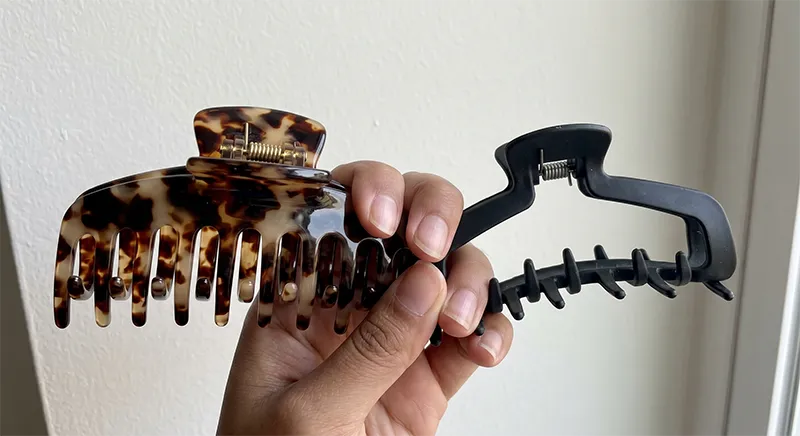
Clip size is the single most common point of failure for thick hair users. A clip that is too small forces the spring mechanism to its maximum capacity, which accelerates hinge fatigue and reduces hold time. The following sizing guidelines are based on clip length and jaw opening depth.
| Style | Hair Thickness | Recommended Clip Length | Minimum Jaw Opening |
|---|---|---|---|
| Full bun / updo | Thick, long | 10–13 cm | 5–6 cm |
| Half-up style | Thick, medium length | 7–9 cm | 4–5 cm |
| Sectioning / accent | Thick, any length | 5–7 cm | 3–4 cm |
| Ponytail (banana clip) | Thick, long | 13–16 cm | N/A (spine length) |
When in doubt, sizing up is preferable. A clip that is slightly larger than necessary operates below its maximum spring tension, extending its lifespan and providing a more comfortable grip throughout the day.
5. What to Avoid: Clip Types That Fail on Thick Hair
Several clip types are commonly marketed as suitable for all hair types but consistently underperform on thick or heavy hair.
- Small jaw clips (under 7 cm): Insufficient jaw opening to accommodate thick hair bundles. The clip operates at maximum spring tension and typically slides out within minutes.
- Thin-walled ABS plastic clips: Standard mass-market claw clips made from thin ABS are prone to cracking at the hinge after a few weeks of use on thick hair. The material lacks the flex needed to absorb repeated stress cycles.
- Lightweight metal clips without spring reinforcement: While metal is durable, lightweight metal clips (particularly small decorative styles) often have weak springs that cannot support the weight of thick hair. They may look secure initially but tend to slip as gravity pulls the hair downward.
- Bobby pins for holding volume: Bobby pins are designed to secure small sections of hair close to the scalp. Using them to hold large volumes of thick hair requires an excessive number of pins and rarely produces a reliable hold.
For further reading on how different clip types interact with hair health, see the article on which claw clips do not damage hair.
6. Sourcing Considerations for Hair Clips Designed for Thick Hair
For brands developing hair clip lines that target the thick-hair consumer segment, several product design and sourcing factors directly influence sell-through and return rates.
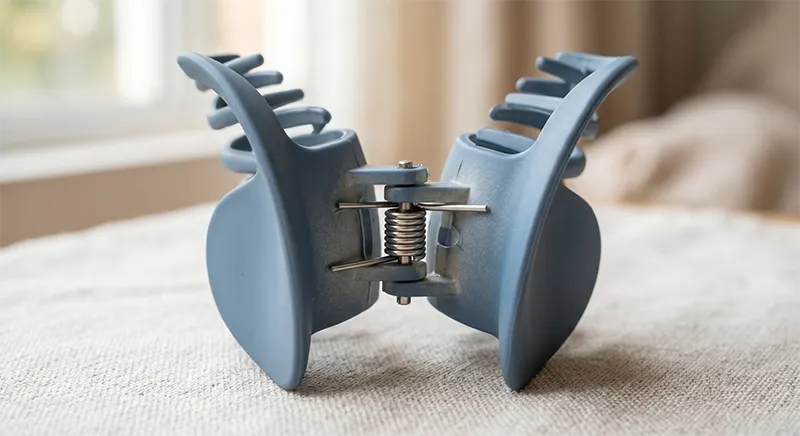
- Spring tension specification: The spring is the most critical component for thick hair performance. Manufacturers should specify higher spring tension ratings for clips marketed to thick hair users. The spring gauge, coil count, and material (typically steel) all affect tension output.
- Tooth design: Interlocking teeth with alternating lengths (longer and shorter teeth in sequence) provide better grip than uniform-length teeth, as they create multiple contact points across the hair bundle.
- Size assortment: Offering multiple sizes (medium, large, extra-large) within a single clip design allows consumers to match the clip to their specific hair volume. Single-size product lines miss the full market opportunity.
- Material selection: Cellulose acetate commands a higher unit cost but supports premium retail pricing and significantly reduces breakage-related returns compared to ABS alternatives.
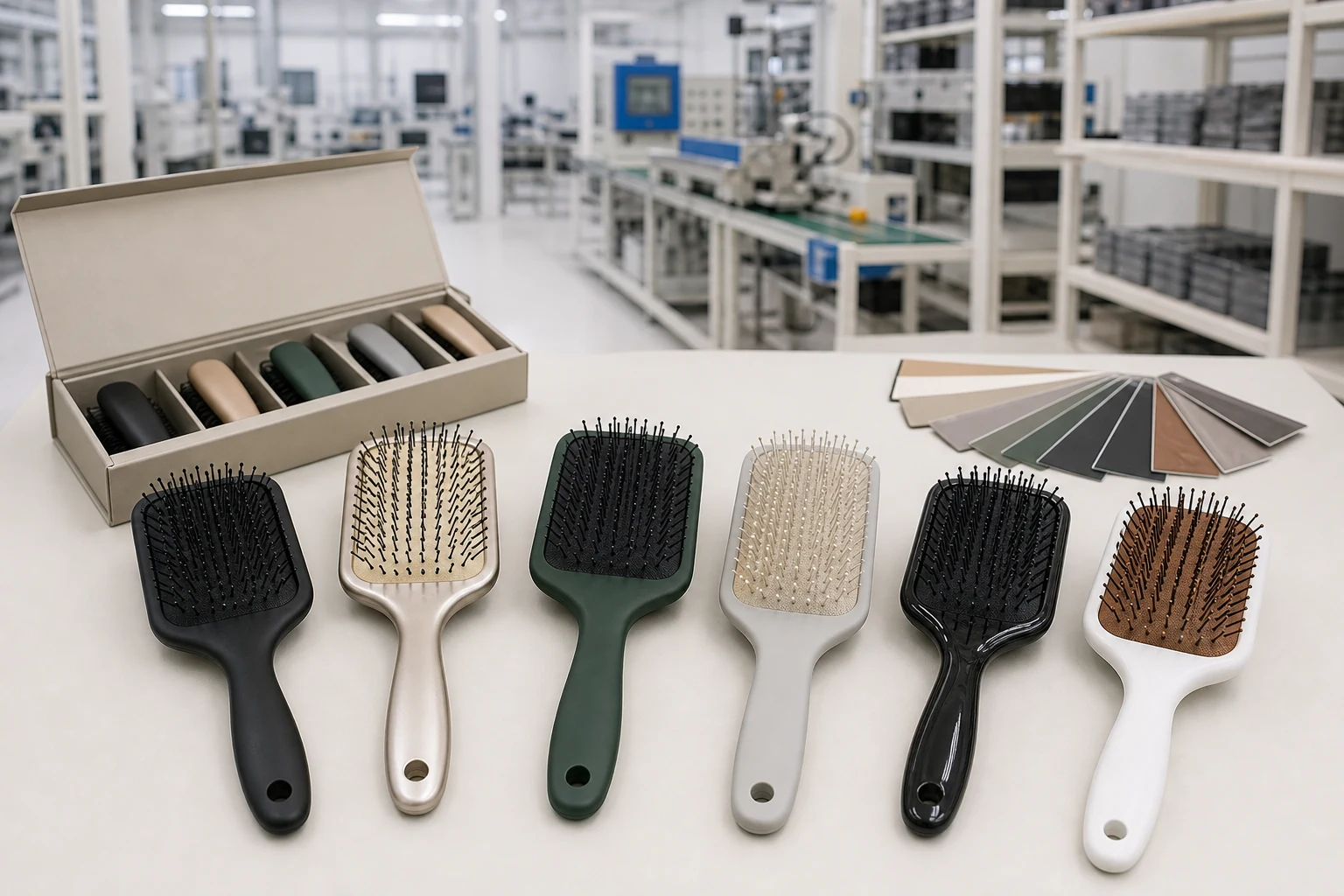
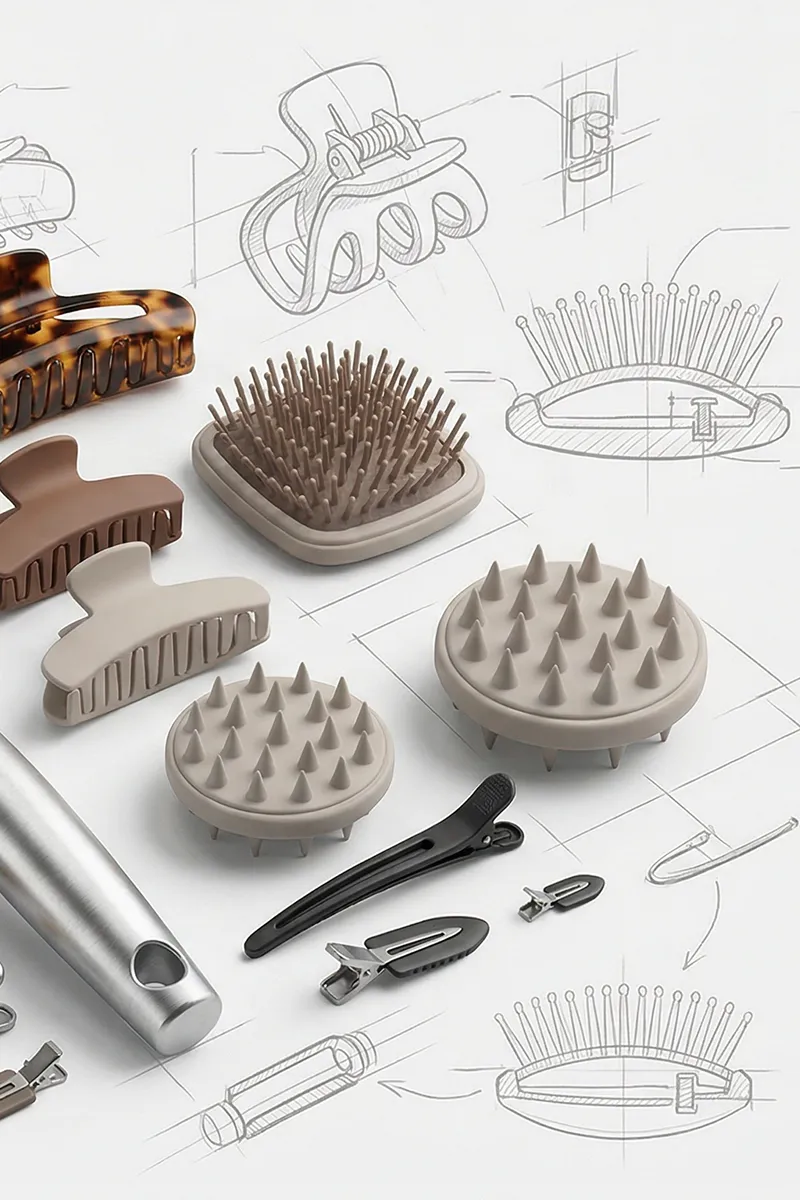
Manufacturers with established sampling and prototyping capabilities can produce spring tension variants and size options for buyer evaluation before committing to bulk production.
7. Conclusion
Thick hair requires clips that are larger, stronger, and made from more resilient materials than standard designs. Jaw clips in the 10–13 cm range with strong spring tension and cellulose acetate construction offer the most reliable hold for full updos. Banana clips are the strongest option for ponytail styles, distributing grip across their full length. Volume barrettes suit sleeker, more polished half-up looks.
The most common point of failure is sizing — using a clip that is too small for the hair volume. Sizing up, choosing acetate or reinforced nylon over standard ABS, and confirming adequate spring tension are the three most effective steps for ensuring a clip performs well on thick hair.
Manufacturers such as JunYi Beauty, which produces both acetate jaw clips and ABS clip lines with adjustable spring tension specifications at its Dongguan facility, represent the type of factory-direct OEM partner suited for brands developing size-graded clip assortments targeting the thick-hair consumer segment.