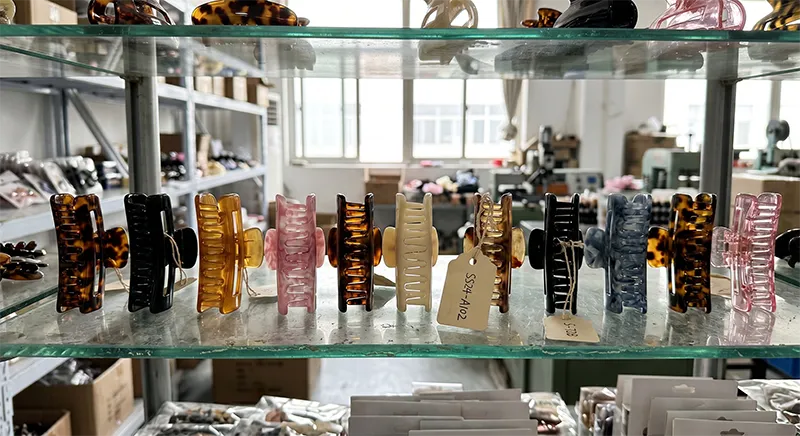
A custom claw clip manufacturer is a factory that produces claw-style hair clips to a buyer's specifications — including material, size, colour, surface finish, logo placement, and packaging — under the buyer's own brand name. This type of manufacturing arrangement, known as OEM (Original Equipment Manufacturer) or private label production, allows brands to sell hair accessories without owning production infrastructure.
Claw clips have become one of the highest-volume categories in the global hair accessories market, driven by sustained consumer demand across both fashion retail and everyday functional use. For private label brands entering or expanding in this category, selecting the right manufacturing partner is the single most consequential sourcing decision — it determines product quality, margin structure, lead time reliability, and the scope of design differentiation available.
This guide covers the full process of working with a custom claw clip manufacturer, from material selection and mould development through production, quality control, and logistics — with specific data on MOQ, lead times, surface treatment options, and certification requirements.
1. Claw Clip Materials: Options and Trade-Offs
Material selection is the first and most impactful decision in claw clip product development. It determines the clip's durability, visual appeal, weight, market positioning, and unit cost. Four primary materials are used in commercial claw clip production.
Cellulose Acetate
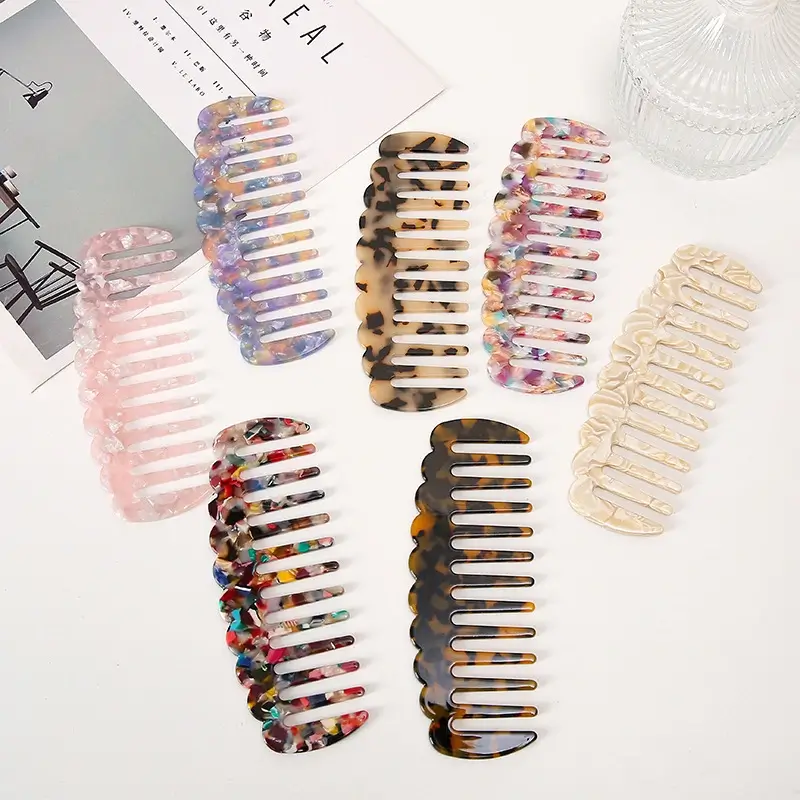
Cellulose acetate is a plant-derived thermoplastic produced from wood pulp or cotton fibres. It is the premium material of choice for claw clips due to its dense, glass-like surface, natural translucency, and the rich, layered colour effects it produces — including tortoiseshell, marble, and gradient patterns that cannot be replicated in standard plastic. Acetate flexes under tension rather than snapping, making it significantly more durable than ABS for clips used on thick or heavy hair. Buyers should note that some suppliers label acrylic or standard plastic as "acetate" on quotations — always specify cellulose acetate explicitly and request material certification or burn-test verification, as acrylic is petroleum-based, brittle, and lacks the flex properties that make genuine acetate suitable for repeated use.For a detailed material comparison, see the guide on acetate versus plastic hair clips.
ABS Plastic
ABS (acrylonitrile butadiene styrene) is the most widely used material in mass-market claw clip production. It is lightweight, injection-mouldable at low tooling costs, and available in a broad range of surface finishes — from high gloss to matte to metallic. ABS is suited for high-volume, price-competitive product lines where visual effects are achieved through surface treatment rather than material properties.
Metal (Zinc Alloy and Steel)
Metal is used both as a primary material for decorative claw clips and as a structural component (springs, hinge bars) in acetate and plastic designs. Zinc alloy allows for cast decorative shapes with gold, silver, or chrome plating. Steel is the standard material for spring mechanisms across all clip types. For information on metal component specifications, see the article on metal components for custom acetate hair clips.
Wood
Wooden claw clips occupy a niche segment targeting eco-conscious and sustainability-focused brands. Production typically uses beechwood or bamboo with FSC-certified sourcing. Wooden clips require additional moisture-resistance treatment and are less suitable for high-humidity environments.
The following table summarises the key trade-offs between materials:
| Material | Cost Position | Durability | Visual Quality | Typical MOQ | Best For |
|---|---|---|---|---|---|
| Cellulose acetate | Mid–Premium | High (flexes, does not snap) | Premium — translucent, layered colour | 300–500 pcs/SKU | Premium retail, fashion brands |
| ABS plastic | Low–Mid | Medium (brittle under sustained tension) | Standard — surface-dependent | 1,000 pcs/ SKU | Mass market, value lines |
| Metal (zinc alloy) | Mid–High | Very high | Decorative — plated finishes | 500–1,000 pcs/SKU | Decorative, fashion accessories |
| Wood (beech/bamboo) | Mid | Medium | Natural, organic aesthetic | 1,000 pcs/ SKU | Eco-positioned brands |
2. Customisation Options: What Can Be Specified
A full-service claw clip manufacturer offers customisation across multiple product dimensions. The scope of available options directly affects the level of brand differentiation achievable.
Size and Silhouette
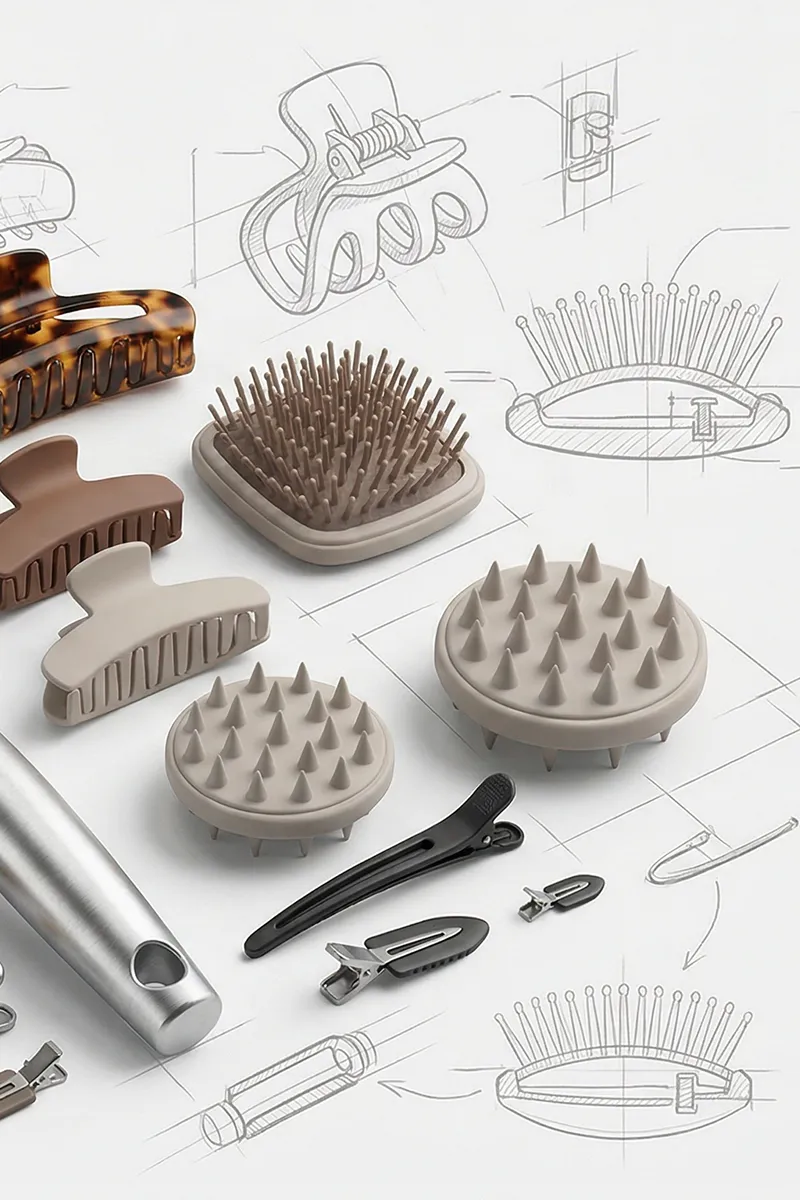
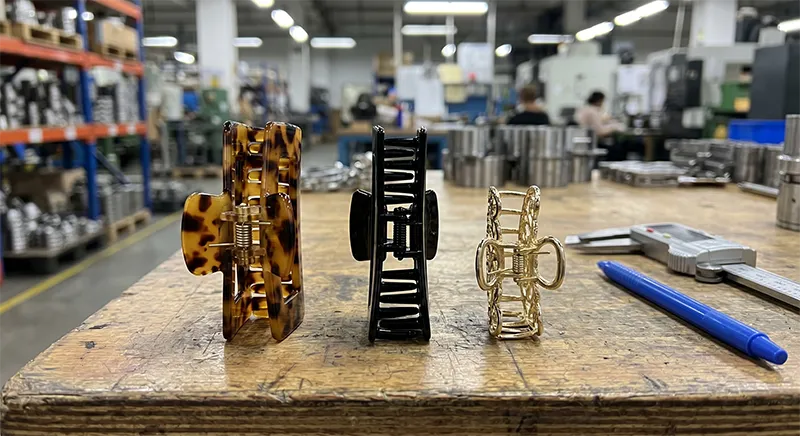
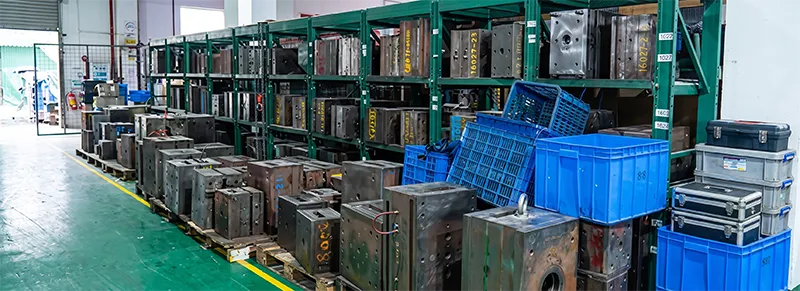
Claw clips are produced in sizes ranging from approximately 4 cm (mini accent clips) to 13 cm or larger (oversized styles for thick or long hair). Common size categories include small (4–6 cm), medium (7–9 cm), and large (10–13 cm). Silhouette options include classic curved jaw, rectangular/geometric, butterfly, octopus (multi-pronged), and open-design cutout styles. Manufacturers with existing mould libraries — typically 200 or more active designs — allow buyers to select from proven silhouettes without incurring new tooling costs.
Colour and Pattern
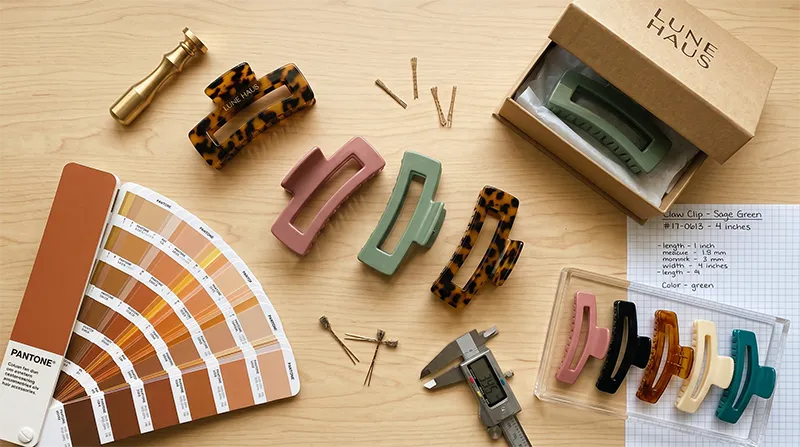
For acetate clips, colour is determined by the acetate sheet composition itself — patterns are built into the material during sheet production, creating unique effects like tortoiseshell, marble, ombre, and solid translucents. For ABS clips, colour is applied through spray painting, dip coating, or surface printing. Custom Pantone colour matching is standard at most established manufacturers.
Surface Treatment
Available surface treatments include:
- Spray painting: Solid colour, gradient, soft-touch matte, or rubberised finish
- UV coating: High-gloss protective topcoat that enhances colour depth and scratch resistance
- Electroplating: Gold, silver, chrome, or rose gold metallic effects on metal components
- Pad printing and screen printing: Logo or pattern application on flat surfaces
- Hot stamping and foil transfer: Metallic logo or decorative foil application
- Laser engraving: Permanent marking on acetate, wood, or metal surfaces
Logo and Branding
Logo application methods vary by material. Acetate clips are typically branded through laser engraving or hot stamping. ABS clips support pad printing, screen printing, and embossed mould marks. Metal components can be engraved, etched, or stamped. Most manufacturers also handle custom packaging — including backing cards, polybag printing, hang tag design, and retail-ready display units — as part of the OEM service scope.
3. The Custom Claw Clip Production Process
The production workflow for a custom claw clip order follows a standardised sequence from initial enquiry through final shipment. Each stage has a typical duration that informs overall lead time planning.
| Stage | Description | Typical Duration |
|---|---|---|
| 1. Design confirmation | Buyer specifies material, size, colour, surface treatment, and logo requirements. Manufacturer provides technical drawings and cost quotation. | 3–5 days |
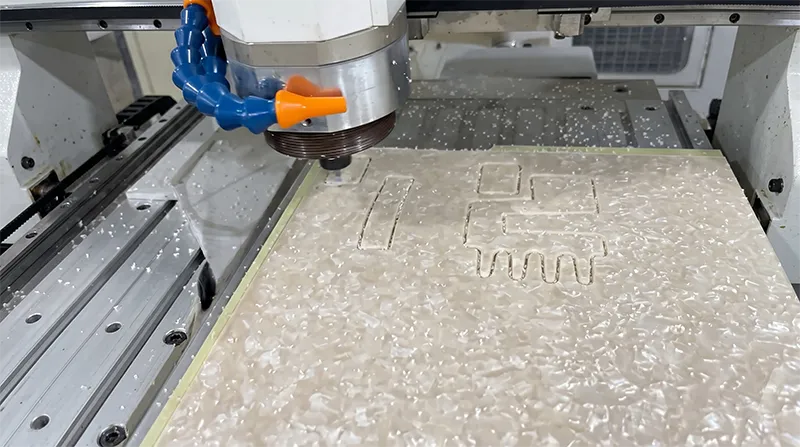
| 2. Mould selection or development | If an existing mould matches the required silhouette, production can proceed immediately. New mould development involves CNC machining and testing. | 0 days (existing) / 30–35 days (new) |
| 3. Sample production | Pre-production samples are manufactured for buyer approval. Samples include material, colour, logo placement, and spring tension verification. | 5–7 days |
| 4. Sample revision (if needed) | Adjustments to colour, size, tension, or finish based on buyer feedback. | 3–5 days per round |
| 5. Bulk production | Mass production begins after sample approval and deposit payment. Includes material preparation, moulding/cutting, assembly, surface treatment, and QC. | 25–35 days |
| 6. Quality inspection | Multi-stage inspection covering dimensional accuracy, surface finish, spring mechanism function, colour consistency, and packaging integrity. | Integrated into Stage 5 |
| 7. Packing and shipment | Products are packed per buyer specifications (retail-ready or bulk), with export documentation prepared for the designated shipping method. | 3–5 days |
Total lead time from enquiry to shipment is typically 6–8 weeks for orders using existing moulds and 10–14 weeks for orders requiring new tooling. For brands evaluating the sampling stage in detail, see the samples and prototypes service overview.
4. Quality Control and Certification Requirements
For private label brands supplying into organised retail, e-commerce platforms, or international distribution, supplier certification and quality control infrastructure are non-negotiable requirements — not optional extras.
Key Certifications
The following certifications represent the baseline expectation for reputable claw clip manufacturers serving international markets:
- ISO 9001:2015 — Quality management system certification, governing production processes, documentation, and continuous improvement.
- amfori BSCI — Social compliance auditing standard, assessed by third-party auditors (e.g. TÜV Rheinland), covering labour conditions, working hours, and workplace safety.
- BRCGS Consumer Products — Global retail supply chain safety standard, audited by bodies such as SGS. Increasingly required by UK and European retail chains.
- GRS 4.0 (Global Recycled Standard) — Certifies recycled material content in products and supply chains, audited by organisations such as Intertek. Required for brands making recycled-content marketing claims.
- FSC (Forest Stewardship Council) — Certifies sustainably sourced wood materials. Applicable for wooden claw clip lines and wood-component accessories.
Quality Control Process
Established manufacturers implement multi-stage inspection across the production workflow. For claw clips specifically, critical inspection points include:
- Dimensional measurement against technical drawings (clip length, jaw opening, tooth alignment)
- Spring tension testing (open/close cycle endurance, grip strength verification)
- Surface finish inspection (colour consistency, coating adhesion, scratch resistance)
- Assembly integrity (hinge security, spring bar seating, tooth interlocking precision)
- Drop testing and flex testing for durability assessment
For a detailed overview of quality control methods in hair accessories production, see the quality control documentation.
5. How to Evaluate a Custom Claw Clip Manufacturer
Not all manufacturers offer the same depth of capability. The following criteria provide a structured framework for assessing and comparing potential production partners.
- Mould library depth: Manufacturers with 200 or more existing claw clip moulds enable faster market entry and lower upfront investment. Buyers can select from proven designs and modify colour, material, and branding without incurring new tooling costs.
- Material range: A manufacturer offering acetate, ABS, metal, and wood under one roof simplifies sourcing logistics and quality oversight. Single-material factories may limit product line expansion.
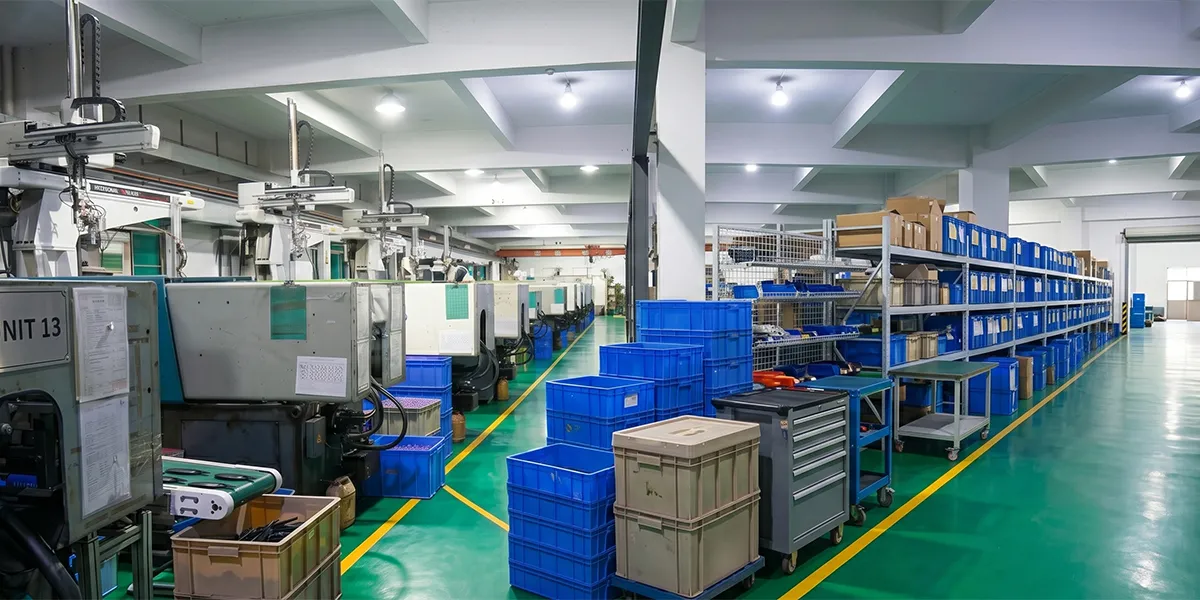
- In-house capabilities: Integrated production — from material processing through moulding, assembly, surface treatment, and packaging — reduces lead time and coordination complexity compared to manufacturers that outsource stages to subcontractors.
- Sample turnaround: A 5–7 day sample lead time is standard among established manufacturers. Significantly longer timelines may indicate production capacity constraints or outsourced processes.
- Brand client references: Manufacturers with documented supply relationships with established retail brands demonstrate proven capacity for consistent quality and volume fulfilment. For example, documented partnerships with retailers across multiple categories provide stronger assurance than unverified claims. Review published case studies where available.
- Export experience: Familiarity with international shipping, customs documentation, and destination-specific compliance requirements (e.g. CPSIA for the US market, REACH for the EU) is essential for cross-border private label supply.
6. Common Mistakes When Sourcing Custom Claw Clips
Several recurring sourcing errors lead to quality issues, margin erosion, or delayed market entry. Recognising these patterns helps buyers avoid preventable problems.
- Choosing material based on unit cost alone: ABS clips have a lower unit cost than acetate, but they are also more prone to breakage — particularly in larger sizes and on thick hair. Breakage drives returns and negative reviews, which can erode margin faster than the initial cost saving.
- Underspecifying spring tension: The spring is the most common failure point in claw clips — not the body material. Factories occasionally downgrade spring steel grade mid-production to hit cost targets, which results in clips that lose tension after weeks of use. Buyers should specify rust-resistant spring steel, require a minimum open/close cycle standard (typically 5,000+ cycles), and include spring tension testing as part of QC sign-off at the sample approval stage.
- Skipping sample approval: Proceeding directly to bulk production without approving physical samples introduces risk on colour accuracy, surface finish, spring function, and dimensional fit. Even when using existing moulds, a pre-production sample run is standard practice.
- Ignoring certification requirements until late in the process: Discovering that a manufacturer lacks BSCI or BRCGS certification after samples are approved forces the buyer to either accept compliance risk or restart the sourcing process with a new factory. Certification status should be confirmed at the initial enquiry stage.
- Single-size product launches: Claw clips serve a wide range of hair volumes and lengths. Launching with only one size limits market reach. A minimum of two sizes (medium + large) is recommended for initial product lines, with a small/mini option added based on early sales data.
7. How to Order Custom Branded Claw Clips: Step by Step
The ordering process for custom claw clips follows a standardised workflow that most established manufacturers support. Understanding each stage in advance helps buyers set accurate expectations for timeline, cost, and decision points.
Step 1: Define the Product Specification
Before contacting a manufacturer, buyers should have a clear specification brief that includes the target material (acetate, ABS, metal), approximate clip size (small, medium, large, or jumbo), desired surface finish (glossy, matte, rubberised, plated), logo or branding requirements (embossing, debossing, laser engraving, pad printing), target retail price point, and estimated order volume per SKU. A well-prepared brief reduces back-and-forth communication and shortens the quoting stage.
Step 2: Request Quotations and Evaluate Manufacturers
Submit the specification brief to two or three shortlisted manufacturers and request itemised quotations. A professional quotation should separate material cost, mould or tooling cost (if applicable), surface treatment cost, branding cost, and packaging cost. This level of detail enables meaningful comparison between suppliers. For guidance on evaluating manufacturer options, the top 10 hair clip manufacturers guide profiles verified factories with capability and certification data.
Step 3: Confirm Samples
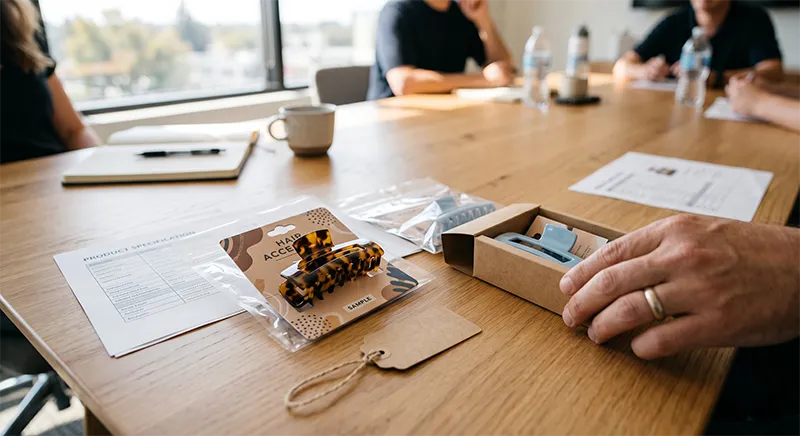
Always request physical pre-production samples before committing to a bulk order. Evaluate samples for material quality, colour accuracy, spring mechanism strength, hinge durability, surface finish consistency, and overall weight and feel. This is the last opportunity to request design adjustments before production tooling is finalised. Sample turnaround is typically 5 to 7 days for designs using existing moulds.
Step 4: Approve and Enter Production
Once samples are approved, the manufacturer proceeds with bulk production. Production timelines vary by material and order volume — ABS clips are typically the fastest to produce due to injection moulding efficiency, while acetate clips require additional hand-polishing time. Buyers should confirm a production schedule with milestone check-ins for quality inspections at key stages: raw material incoming, mid-production, and pre-shipment final inspection.
Step 5: Quality Inspection and Shipment
Before shipment, a final quality inspection should verify that bulk production matches the approved sample in all respects — including dimensional accuracy, colour consistency, spring function, and branding placement. Many buyers engage third-party inspection services (such as SGS Consumer Goods or Bureau Veritas) for independent verification. For a detailed breakdown of how lead times break down across each production stage, see the lead time guide for custom hair accessories.
8. Conclusion
Custom claw clip manufacturing for private label brands requires alignment across material selection, mould strategy, surface treatment specification, quality control, and certification compliance. The production process is well established, with lead times of 6–8 weeks for standard orders and 10–14 weeks where new tooling is required.
The primary differentiator between manufacturers is not the ability to produce a claw clip — it is the depth of customisation, the quality of spring mechanisms, the range of materials available under one facility, and the rigour of multi-stage quality inspection. Brands that invest time in evaluating these factors during the sourcing stage avoid the costly cycle of returns, re-orders, and supplier switches that result from shortcutting the selection process.
Manufacturers such as JunYi Beauty, operated by Dongguan JunYi Beauty Technology Co., Ltd., produce custom claw clips across cellulose acetate, ABS, metal, and wood — with a mould library exceeding 200 active claw clip designs, in-house surface treatment covering spray painting through laser engraving, and certification coverage including ISO 9001, amfori BSCI, BRCGS, GRS 4.0, and FSC. For brands exploring the full range of available designs, the claw clip product catalogue provides a starting point for silhouette and material selection.