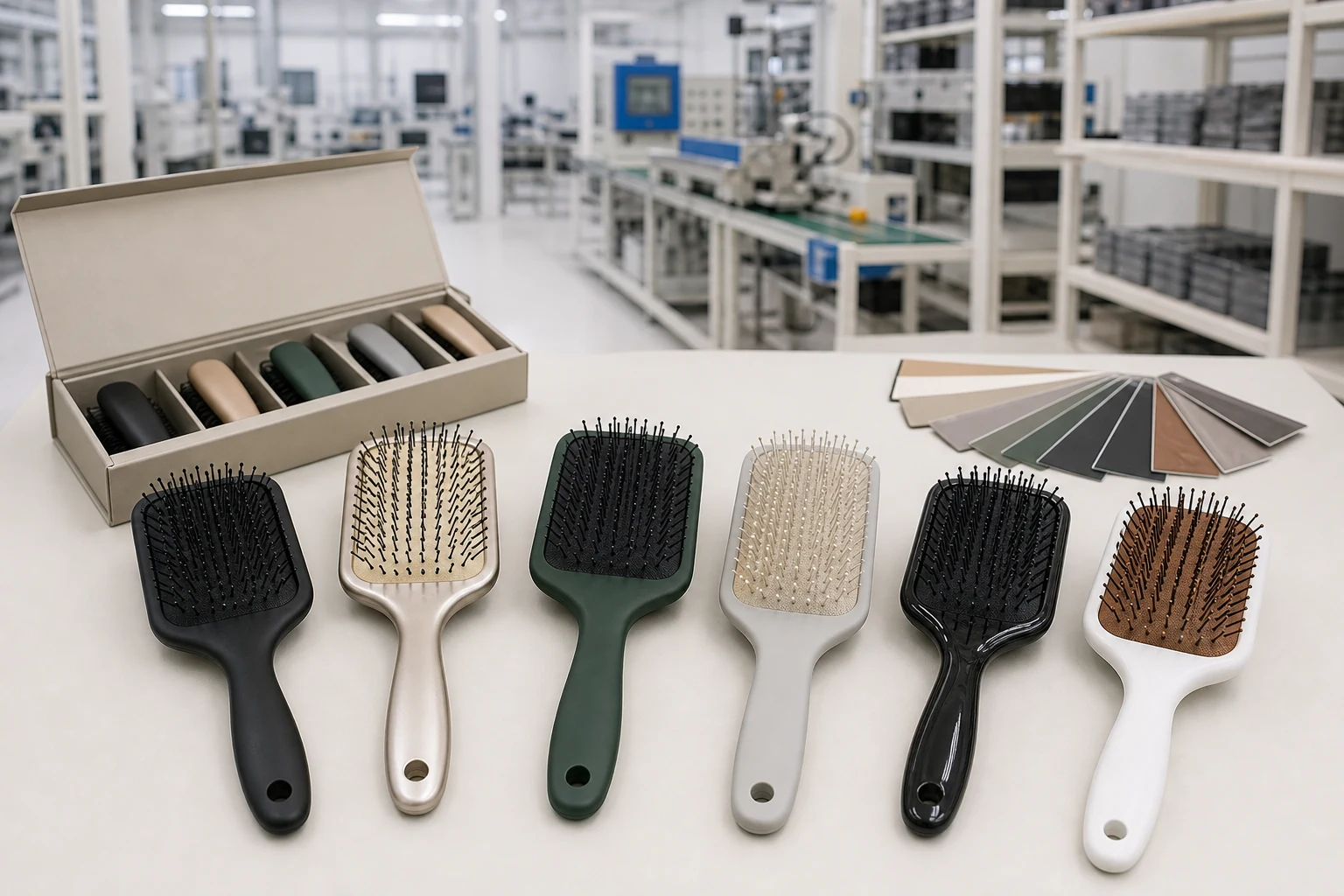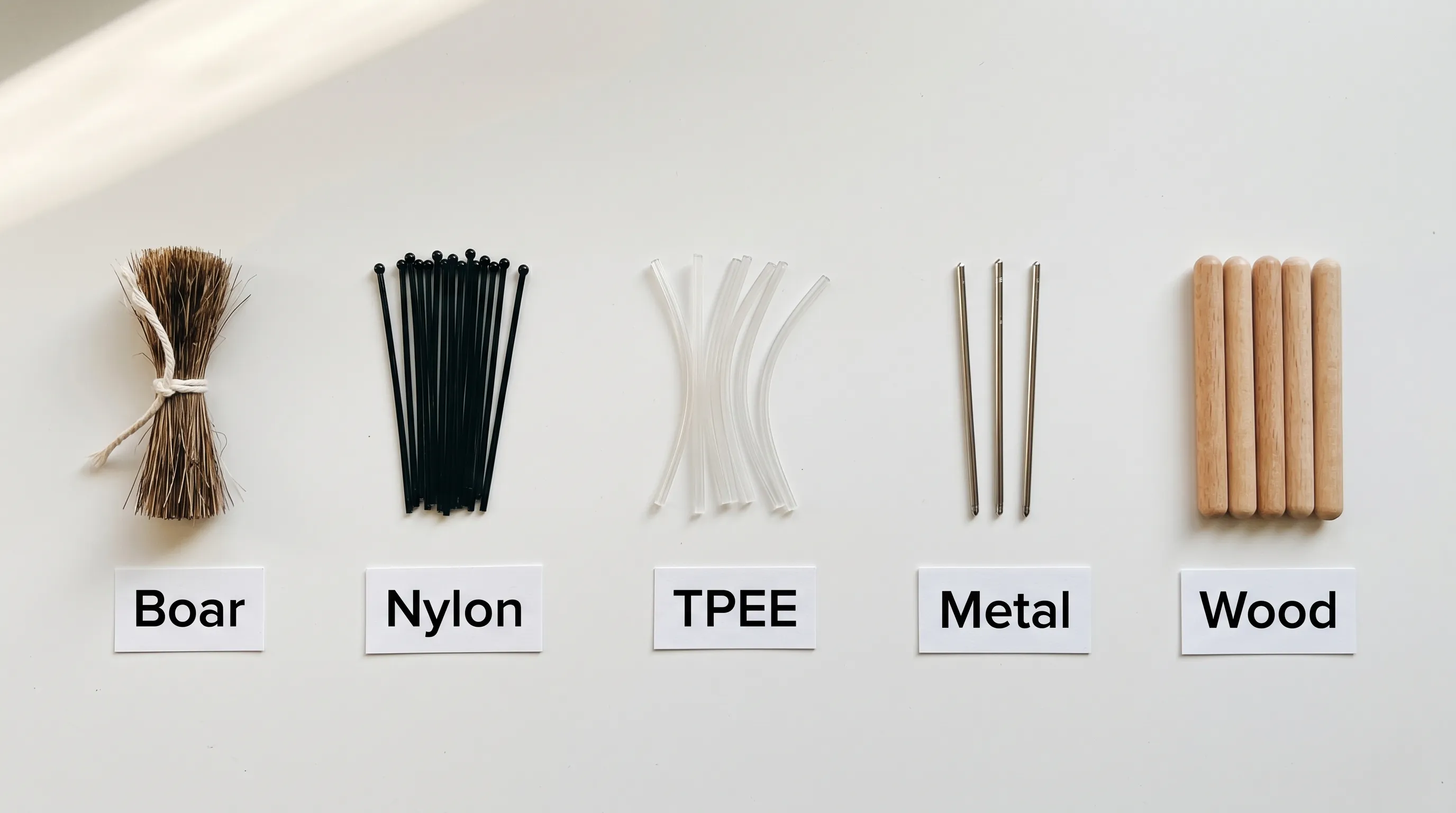
Bristles are the single most important component that determines how a hair brush or comb performs. The material, length, density, and tip shape of bristles directly affect detangling ability, smoothing performance, scalp comfort, and styling results. For OEM buyers sourcing custom hair brushes, understanding bristle options is essential to specifying the right product for a target market.
This guide examines the five main bristle categories — natural, nylon, TPEE, metal, and wood — along with the key customization factors that manufacturers adjust during OEM production.
Natural Bristles
Natural bristles come from animal hair, most commonly boar or horse. The defining characteristic of natural bristles is their scaled surface structure, which closely resembles human hair. This texture allows natural bristles to grip and distribute sebum — the scalp's natural oil — evenly along the hair shaft from root to tip. The result is smoother, shinier hair with less frizz.
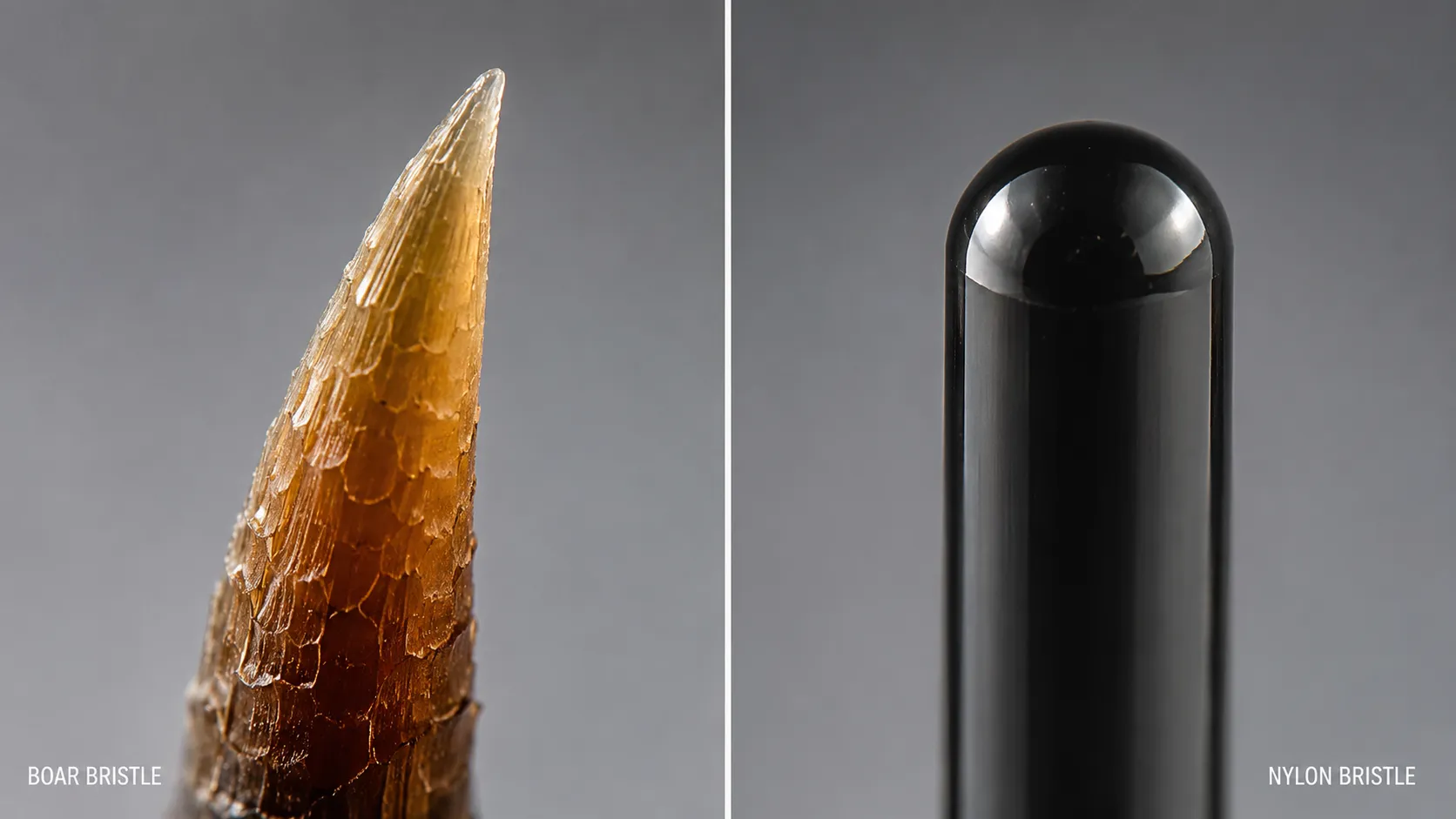
Boar bristles are the most widely used natural option. They are excellent for smoothing fine to medium hair, reducing frizz, and adding a natural polish without heat. Boar bristles work best in paddle brushes and styling brushes designed for straight or wavy hair. For a deeper look at boar bristle properties and applications, see this boar bristle brushes guide.
Horsehair bristles are softer and more delicate than boar, making them suitable for sensitive scalps and baby brushes. Horsehair is less common in mass-market products but is valued in premium and specialty lines.
Both boar and horsehair bristles are biodegradable and eco-friendly. However, they wear faster than synthetic alternatives and require more careful cleaning to maintain performance over time.
Synthetic Bristles — Nylon and TPEE
Synthetic bristles are manufactured from engineered polymers, offering greater consistency, durability, and customization flexibility than natural options. The two most common synthetic bristle materials in hair brushes are nylon and TPEE.
Nylon Bristles
Nylon is the most widely used bristle material in the hair brush industry. Nylon bristles are flexible, resilient, and heat-resistant, making them suitable for a broad range of brush types from paddle brushes to round thermal styling brushes.
Key characteristics include high elasticity that returns to shape after bending, excellent heat resistance for blow-dry and thermal styling applications, and customizable stiffness levels depending on the nylon grade used. Most detangling brushes on the market use nylon bristles because they flex around knots without pulling or breaking hair. Nylon bristles can be finished with epoxy resin bead tips (ball tips) for added scalp comfort and snag prevention.
TPEE (Thermoplastic Elastomer) Bristles
TPEE bristles represent a newer category that sits between rigid nylon and soft silicone in terms of flexibility. TPEE is softer and more elastic than nylon, making it the preferred choice for gentle detangling brushes, children's brushes, and sensitive scalp products.
The main advantage of TPEE is its ability to flex significantly without snapping back with force. Where nylon bristles spring back quickly (which can cause pulling on fine or tangled hair), TPEE bristles flex gradually and release gently. This makes TPEE particularly suitable for wet hair detangling and for brands targeting consumers with fragile or damaged hair.
Both nylon and TPEE bristles are long-lasting, cost-effective, and available in a wide range of colors for branding purposes.
Metal Bristles
Metal bristles — typically stainless steel or aluminum pins — are the most rigid bristle option. They are primarily used in professional-grade tools and specialized brushes where strong grip and precise sectioning are required.
Metal pins provide exceptional detangling power for coarse, thick, or heavily textured hair. They are also standard in vent brushes and round brushes designed for high-heat blow-drying, where the metal conducts heat to speed up drying time. Acetate paddle brushes with metal bristles are a popular combination in premium product lines, as the metal pins offer durability while the acetate body provides a luxury aesthetic.
The main consideration with metal bristles is scalp comfort. Metal pins without protective ball tips can irritate the scalp with repeated use. For this reason, most consumer-grade metal bristle brushes include rounded or coated tips. Professional-grade brushes intended for salon use may omit tips for maximum grip and control. For a broader comparison of how bristle material interacts with different comb and brush body materials, see the metal vs plastic vs wooden combs guide.
Wooden Bristles
Wooden bristles are made from polished hardwoods such as bamboo, beechwood, or maple. They provide a natural alternative to synthetic and metal options, with several distinct performance characteristics.
The primary advantage of wooden bristles is static reduction. Unlike plastic and nylon, wood does not generate static electricity when dragged through hair. This makes wooden bristle brushes effective for smoothing flyaways and reducing frizz without any additional anti-static treatment. Wooden bristles also distribute natural oils similarly to boar bristles, though with less efficiency due to the smoother surface.
Wooden bristles are typically finished with rounded tips created by sanding or polishing, providing a gentle scalp massage effect during brushing. They are biodegradable, FSC-certifiable, and align well with sustainable brand positioning.
The drawbacks of wooden bristles include lower durability compared to nylon or metal — they can crack or split with prolonged moisture exposure — and higher production costs. Wooden bristle brushes require more careful storage and cannot be used in wet environments without risk of damage.
Key Bristle Customization Factors for OEM Buyers
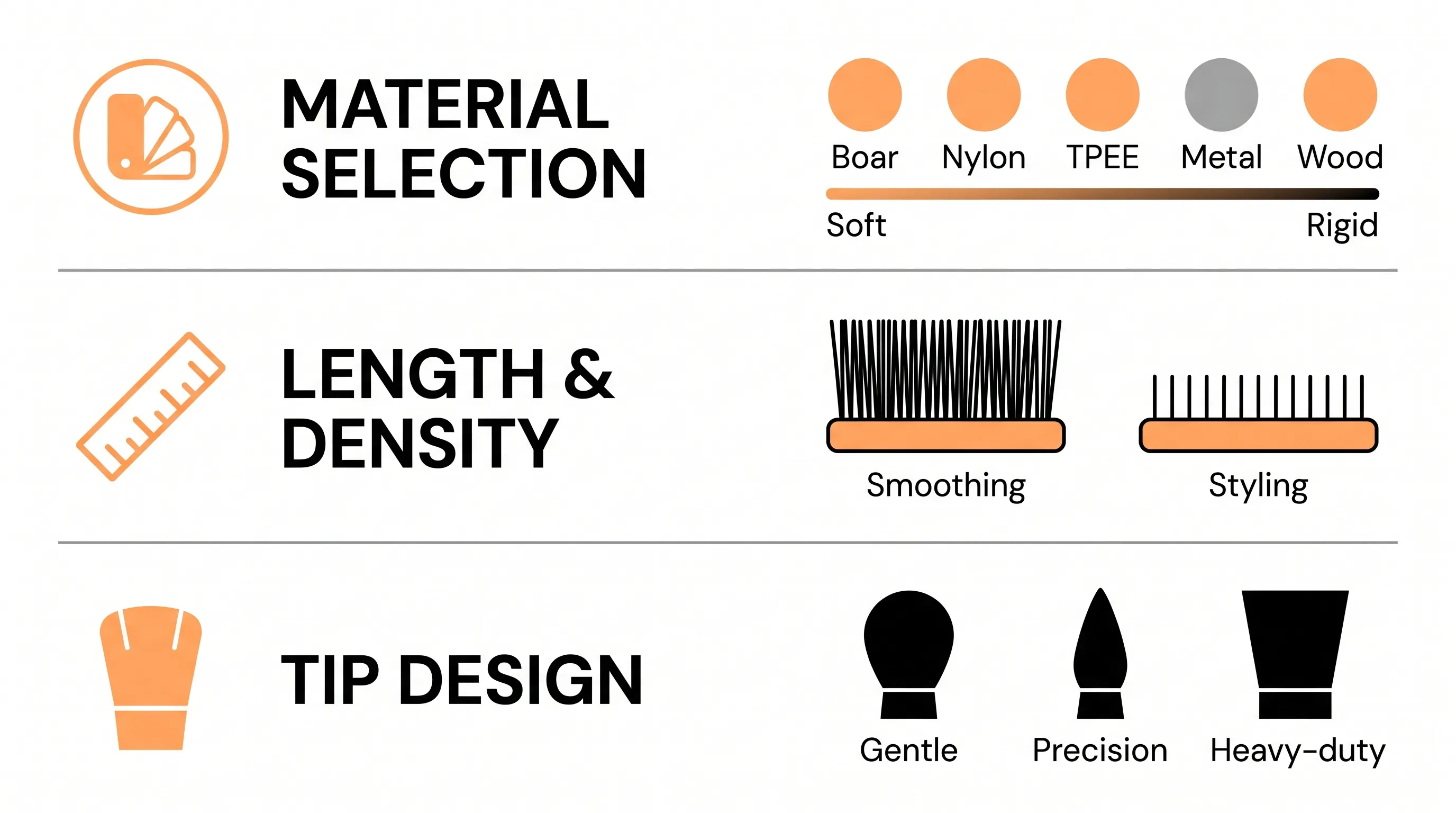
When specifying bristles for a custom hair brush order, three main factors determine the final product's performance, comfort, and market positioning.
Material Selection
Material choice is the most fundamental decision and affects durability, flexibility, heat resistance, and price point. Nylon and metal offer the highest durability and heat resistance. Boar bristles offer the best oil distribution and natural shine enhancement. TPEE offers the gentlest detangling. Wood offers the strongest anti-static properties and eco-friendly positioning. Many successful brush designs use mixed bristles — combining boar and nylon, for example — to balance smoothing and detangling performance in a single tool.
Length and Density
Bristle length and density directly control how a brush interacts with hair. Longer, denser bristle patterns provide comprehensive coverage for smoothing and straightening, distributing oils evenly, and managing thick or long hair. Shorter, sparser patterns provide more precision, making them better suited for styling, sectioning, creating volume at the roots, and managing fine or short hair. The spacing between bristles also affects airflow — wider spacing in vent brushes allows heat from a blow dryer to pass through for faster drying.
Tip Shape and Design
Bristle tip design affects scalp comfort, hair snag prevention, and styling control. Ball tips (round epoxy or molded ends) are the most common consumer-grade option, providing gentle scalp contact and preventing hair from catching on sharp bristle edges. Tapered tips taper to a natural or shaped point, offering more precision for styling and sectioning but requiring more careful use. Blunt or flat tips provide maximum rigidity and are used in heavy-duty detangling and professional tools.
Bristle Types Comparison Table
| Bristle Type | Material | Best For | Durability | Heat Resistant | Eco-Friendly |
|---|---|---|---|---|---|
| Boar Bristle | Natural animal hair | Smoothing, shine, fine hair | Medium | Low | Yes |
| Horsehair | Natural animal hair | Sensitive scalps, baby brushes | Low | Low | Yes |
| Nylon | Synthetic polymer | Detangling, thermal styling | High | High | No |
| TPEE | Thermoplastic elastomer | Gentle detangling, wet hair | High | Medium | No |
| Metal (Steel/Aluminum) | Stainless steel or aluminum | Thick hair, professional tools | Very High | Very High | Recyclable |
| Wood (Bamboo/Beech) | Natural hardwood | Anti-static, eco-friendly lines | Low–Medium | Low | Yes |
Conclusion
Bristle selection is where functional performance meets brand positioning in hair brush design. Natural boar bristles deliver the best smoothing and shine for fine hair. Nylon and TPEE handle detangling across all hair types with different levels of gentleness. Metal pins provide professional-grade grip for thick and textured hair. Wooden bristles offer anti-static performance and sustainability credentials. Mixed-bristle configurations combine the strengths of multiple materials in a single brush.
For brands exploring custom bristle specifications, working with experienced custom hair brush manufacturers ensures the right bristle type, density, and tip design are matched to the target consumer. Among established manufacturers, Dongguan JunYi Beauty Technology Co., Ltd. offers bristle customization across all five material categories with ISO 9001 quality management certification and flexible MOQ options.
Bristle feel is hard to judge from a spec sheet. Our samples and prototypes page explains how to request brushes with different bristle types so you can compare them in hand.
Frequently Asked Questions
Custom hair brushes use five main bristle types: natural bristles (boar and horsehair), nylon bristles, TPEE (thermoplastic elastomer) bristles, metal bristles (stainless steel or aluminum pins), and wooden bristles (bamboo or beechwood). Each material serves different hair types and styling needs.
Boar bristles are natural animal hair with a scaled surface that distributes sebum along the hair shaft, adding shine and reducing frizz. They work best on fine to medium hair. Nylon bristles are synthetic, more rigid, heat-resistant, and better suited for detangling thick or curly hair. Many brushes combine both in a mixed-bristle design for balanced performance.
TPEE (Thermoplastic Polyester Elastomer) bristles are softer and more flexible than nylon. They are commonly used in detangling brushes and children's hair brushes because they flex around knots without pulling. TPEE offers a balance of strength and gentleness that standard nylon cannot match.
Bristle customization covers three main dimensions: material selection (natural, synthetic, metal, or wood), length and density configuration (longer and denser for smoothing, shorter and sparser for styling), and tip design (ball tips for scalp comfort, tapered tips for precision, blunt tips for heavy-duty detangling). Manufacturers can also customize bristle color, stiffness, and heat resistance.
Wooden bristles reduce static and distribute natural oils more effectively than standard plastic. They are biodegradable and appeal to eco-conscious consumers. However, wooden bristles are less durable than nylon, cannot withstand prolonged moisture exposure, and are more expensive to produce. The best choice depends on the target market and product positioning.