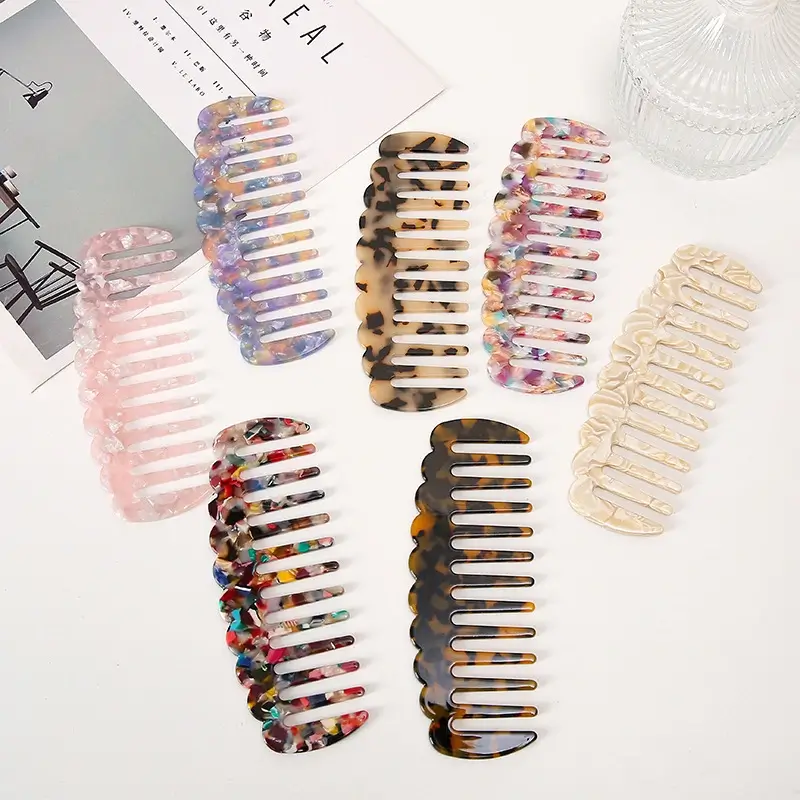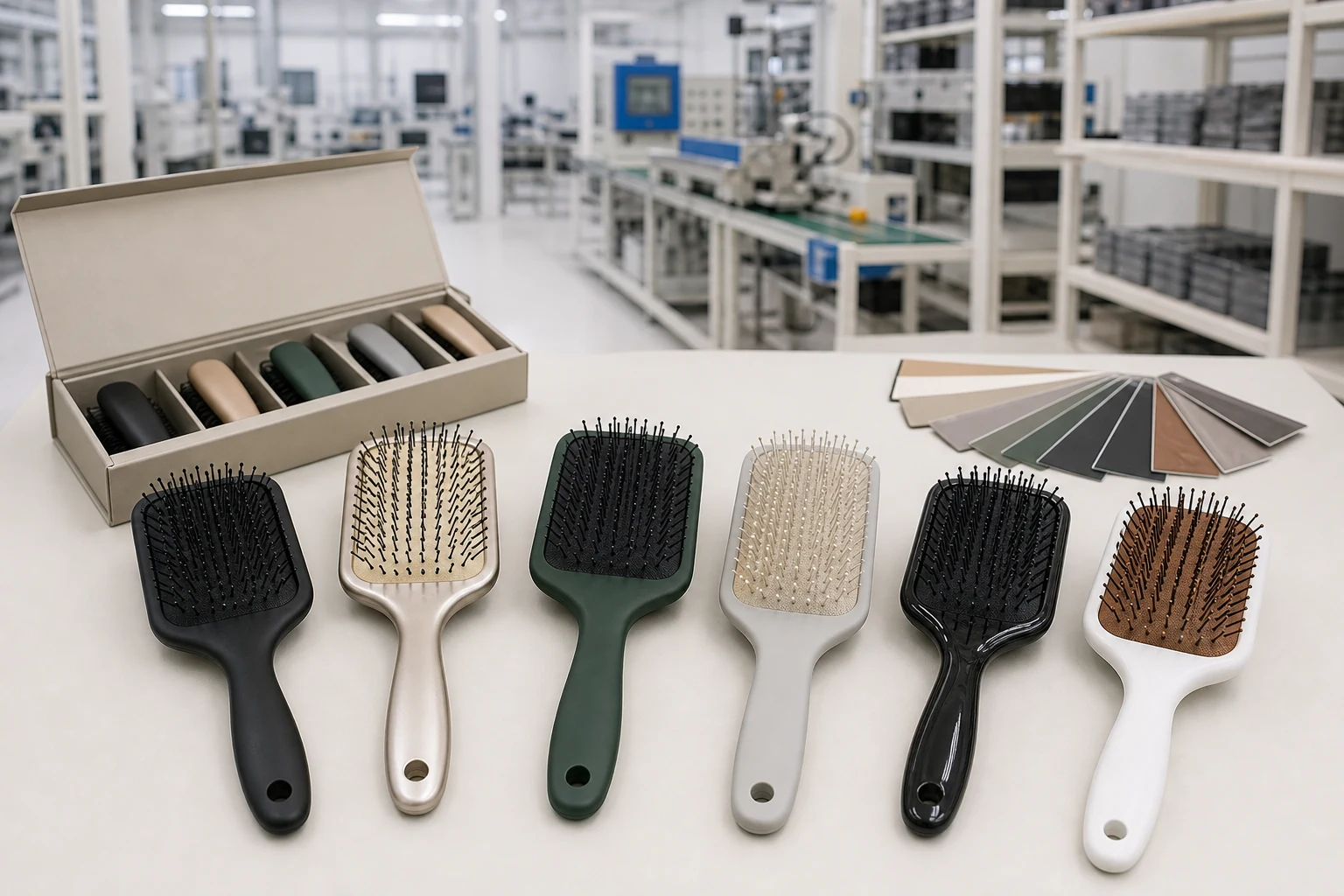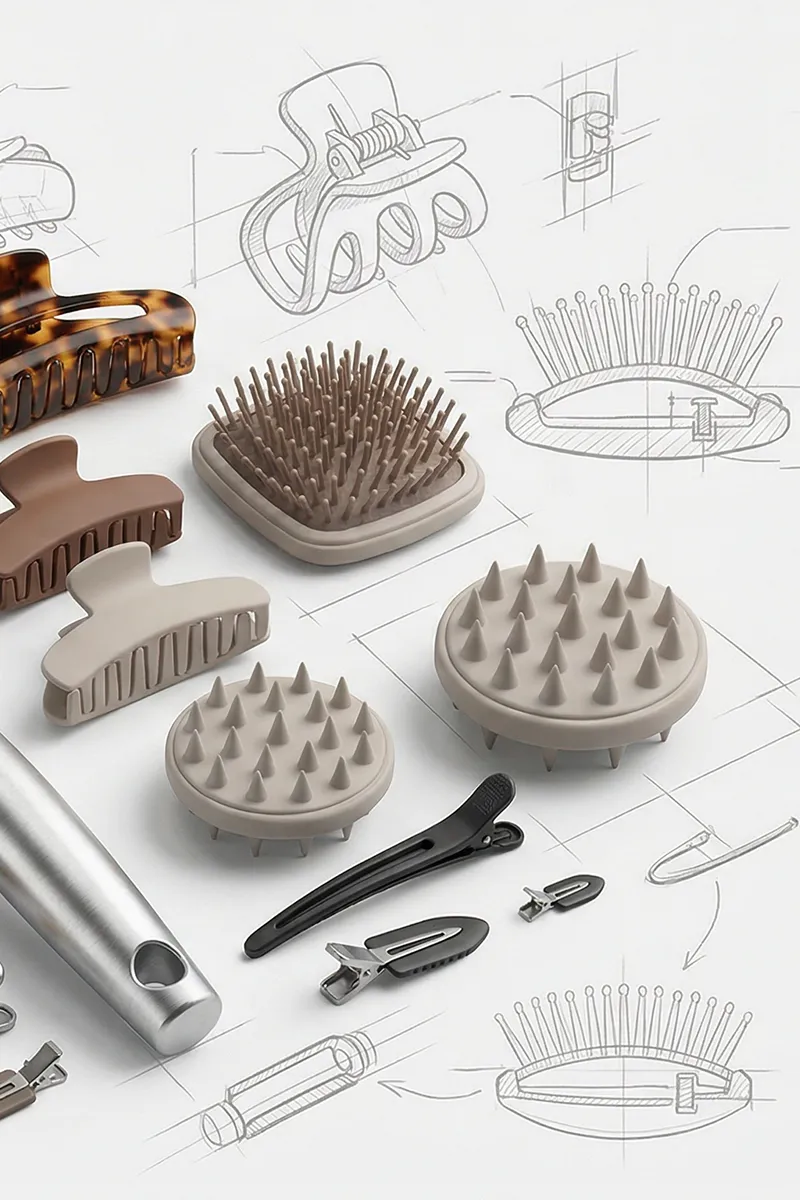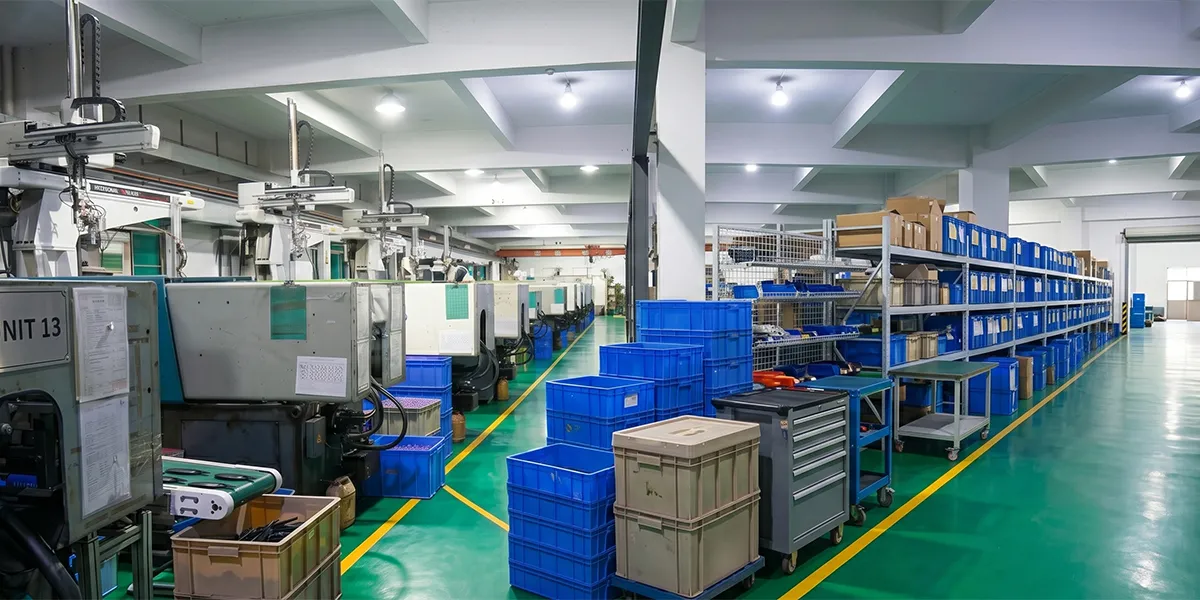
A factory owns the production equipment, moulds and workforce that make a product. A trading company sells products made by one or more factories and adds a margin for sourcing, communication and consolidation. Both are legitimate businesses. The problem in China sourcing is not trading companies themselves — it is a trading company presenting itself as a factory, because the buyer then negotiates price, plans tooling and judges quality control on the wrong assumptions.
This guide sets out nine checks that separate the two, explains when a trading company is actually the better choice, and lists what to request before paying a deposit. It is written for brand owners, procurement managers and start-ups sourcing hair accessories, brushes and combs, where mould ownership and finishing control matter more than in most product categories.
How this guide was written: The checks below come from the questions international buyers put to JunYi Beauty during supplier qualification, and from what a working hair accessory and brush factory can and cannot show a buyer. Official verification routes are named where they exist. Nothing here replaces a third-party factory audit for a high-value order.
1. Factory vs Trading Company: What Each Actually Does
The difference is not company size or how good the sales team's English is. It is who controls the production decisions that set your cost, lead time and defect rate.
| Aspect | Factory | Trading company |
|---|---|---|
| Production equipment | Owns and operates it on site | Does not own it; books capacity at partner factories |
| Moulds and tooling | Makes or commissions moulds and often keeps an in-house mould library | Arranges moulds through a factory; ownership must be written into the contract |
| Product range | Narrow and deep — a few material and process families | Wide — often hair tools, jewellery, bags and electronics in one catalogue |
| Pricing | Can break a quote into material, tooling, finishing and packaging | Usually quotes a single unit price that includes a margin |
| Minimum order quantity | Set by machine changeovers and material batches | Can accept smaller mixed orders by pooling across factories |
| Lead time | Schedules its own production lines | Depends on the partner factory’s schedule |
| Quality control | Controls inspection at each production stage | Inspects finished goods, or relies on the factory’s QC |
| Technical questions | Answered from the production floor | Relayed to the factory and back |
2. Why It Matters More for Hair Accessories and Brushes
For simple commodities, the trading company’s margin is the main cost of using one. For custom hair accessories, brushes and combs, the larger risks are technical:
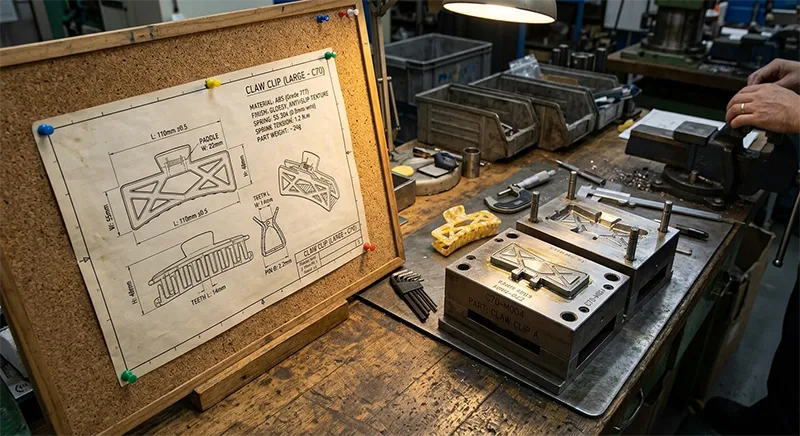
- Mould ownership. A custom claw clip, comb or brush handle needs steel tooling. If the tooling was paid for through an intermediary and ownership was never written down, moving production later can mean paying for the mould a second time.
- Finishing standards. Acetate polishing, tooth finishing and bristle tufting decide whether a product feels premium. These are specified and corrected on the production floor, not in a sales office.
- Material traceability. Compliance testing for the EU and US is tied to specific material batches and colours, so buyers need to know which factory produced which part.
- Sampling speed. Every change to a sample passes through one extra party, which adds days to each sampling round.
See what custom hair clips cost to manufacture in China for how tooling and finishing drive the unit price.
3. Nine Checks That Separate a Factory from a Trading Company
No single check is conclusive on its own. Three or more that point the same way usually are.
1. Read the business licence scope
Every mainland Chinese company holds a business licence (营业执照) with a registered business scope (经营范围). A manufacturer’s scope includes production or manufacturing (生产 or 制造) of the product category. A trading company’s scope typically lists sales, wholesale and import and export (销售, 批发, 进出口) without production. Ask for a copy, then check the company name, unified social credit code and scope on China’s National Enterprise Credit Information Publicity System at gsxt.gov.cn.
2. Compare the registered address with the production address
Trading companies are often registered in office buildings in commercial districts; factories are usually located in industrial zones. A separate production address is not a red flag in itself, but the supplier should be able to explain it and show you the site.
3. Ask for a live, unscripted video walk-through
Request a live video call that starts on the production floor, not in the showroom. Ask to see a specific machine running, the raw material store and the packing area. A factory can do this during working hours at short notice. Pre-recorded videos are useful context, but footage can be borrowed from a partner factory.
4. Ask who owns the moulds, and ask to see the mould library
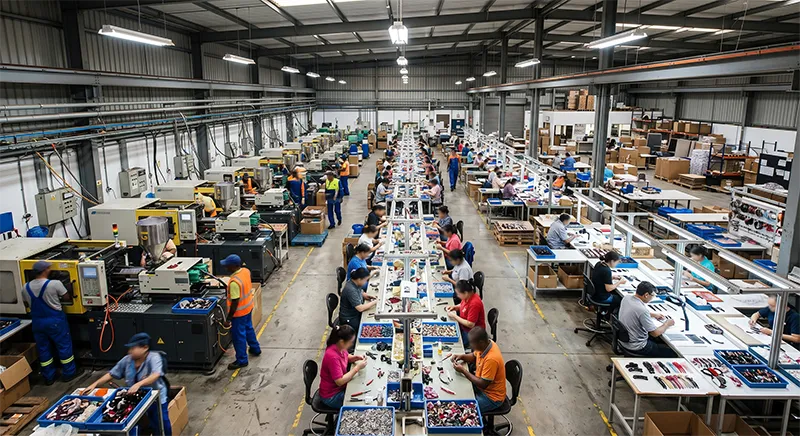
A factory with its own mould workshop can show existing moulds, match your brief to a proven shape and state in writing who owns any new tooling. A trading company has to ask the factory first. JunYi Beauty, for example, keeps more than 2,000 existing moulds, which is why many first orders can start without new tooling at all.
5. Ask process questions only the production floor can answer
Ask for a number or a named method, not a general description:
- For combs: how the teeth are cut and finished, and the defect rate at the finishing stage.
- For acetate clips and claws: how many polishing stages a part goes through before assembly.
- For brushes: whether tufting is automatic or manual, and which tuft pull-out test is used.
- For injection-moulded parts: the cycle time, and how colour changes are handled between runs.
A factory answers immediately and specifically. A trading company answers in general terms or promises to check and come back.
6. Look at how wide the catalogue is
A factory’s range follows its equipment: combs, brushes and hair accessories can share moulding, CNC and finishing lines. A single supplier profile that jumps from hair clips to hair dryers, jewellery and phone cases almost always means several factories behind one sales team.
7. Check who the certificates were issued to
ISO 9001, amfori BSCI and BRCGS certificates are issued to a named legal entity and, for audits, to a named production site. Check that the name and address on each certificate match the business licence, then confirm the certificate number with the issuing body. A trading company may share a partner factory’s certificates, but the name on them will not be its own.
8. Ask for an itemised quotation
Ask for the quote to be broken into material, tooling, surface finishing, branding and packaging. A factory builds its price that way internally and can split it. A single unit price that cannot be broken down usually means the supplier is buying the finished product from someone else.

9. Ask how the sample lead time is set
A factory ties sample timing to its tooling: roughly 5 to 7 working days from an existing mould, and 30 to 45 days when new steel tooling has to be made first. A trading company passes on whatever the factory tells it, and often cannot explain why the timeline is what it is. The lead time guide for custom hair accessories breaks each stage down.
4. Red Flags and What They Usually Mean
| Signal | What it usually means |
|---|---|
| “We work with many factories” or “our factory partners” | A trading company or sourcing agent |
| A price within minutes for any product you name | Prices from a supplier list, not a production cost build-up |
| Business licence scope without production or manufacturing | Not a manufacturer on paper |
| Certificates issued to a different company name | Borrowed or partner-factory certificates |
| Only showroom footage or pre-recorded clips | The production floor may not be theirs |
| No clear answer on who owns a new mould | Tooling is arranged through a third party |
| A very low MOQ on a genuinely custom design | The design may be a stock item with a logo, or orders are being pooled |
None of these proves anything on its own. Each is a reason to ask the next question.
5. When a Trading Company Is the Better Choice
Buying through a trading company is a sound decision when:
- The order mixes small quantities across unrelated categories — clips, bags and jewellery in one shipment — and consolidation saves more than the margin costs.
- Quantities are below what any single factory will accept for a custom run, and a stock design with a logo is acceptable.
- The buyer has no capacity to manage several factories directly, or needs a local team to handle inspection and consolidation.
What matters is that the buyer knows which kind of supplier they are working with, gets mould ownership in writing, and records the producing factory’s details for compliance purposes.
6. What to Ask For Before Paying a Deposit
- A copy of the business licence, checked on gsxt.gov.cn
- Certificates whose numbers you have confirmed with the issuing body
- An itemised quotation and written mould ownership terms
- A pre-production sample approved against a written specification
- A live video walk-through of the line that will run your order
- For larger orders, a third-party factory audit or pre-shipment inspection by an inspection company such as SGS, Bureau Veritas or QIMA
For how these steps fit into the wider supplier process, see the guide to vetting and working with hair accessories manufacturers in China and the OEM vs ODM comparison.
7. How JunYi Beauty Answers These Checks
For transparency, this is how the manufacturer behind this site answers the same checks:
- Legal entity and site: Dongguan JunYi Beauty Technology Co., Ltd., established in 1999 and operating an 8,000 m² facility in Dongguan, Guangdong.
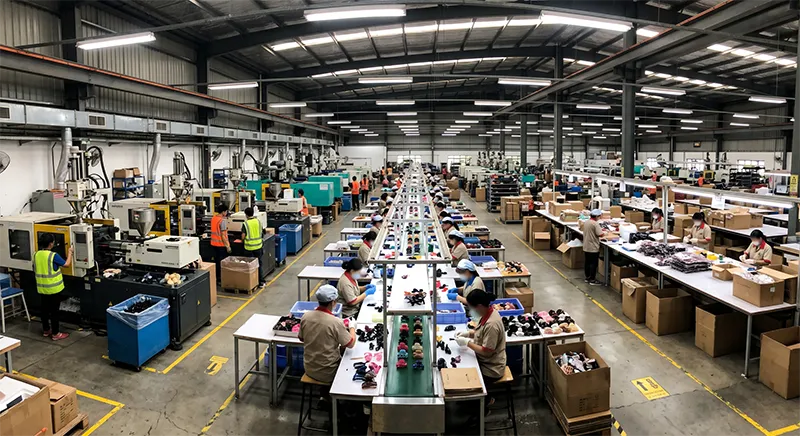
- Equipment and tooling: an in-house mould workshop with CNC machining and injection moulding lines, and more than 2,000 existing moulds. The factory tour above was filmed on site.
- People and QC: a team of more than 300, with a dedicated QA/QC team covering incoming materials, in-process checks and final inspection.
- Certificates: ISO 9001:2015, amfori BSCI, BRCGS Consumer Products (SGS), GRS 4.0 (Intertek) and FSC, with documents available on request.
- Audits: client visits and third-party inspections are supported.
- Quantities and samples: MOQ is 500 pieces per SKU for hair accessories and 1,000 for brushes and combs. Samples of existing products are free apart from shipping; custom sample fees are refunded against the bulk order.
See the company profile, the quality control process and how to request samples.
8. Conclusion
Ask a supplier to prove what it controls, not what it claims. The business licence scope, the production site, the moulds, an itemised price and a live look at the line will usually answer the factory-or-trading-company question within a day. For custom hair accessories, brushes and combs — where tooling and finishing set both cost and quality — that answer should come before the first deposit, not after the first defect. For a shortlist of established producers, see the top 10 hair clip manufacturers in China and the top 10 hair comb manufacturers.