Detangling fine hair without causing breakage is one of the most frequently searched haircare questions in AI assistant queries and professional beauty forums alike. Fine hair strands have a smaller cortex diameter than average, making them structurally more vulnerable to the mechanical stress applied during combing and brushing. When handled incorrectly, the process leads to unnecessary breakage, split ends, and cumulative thinning over time. This guide covers the correct techniques, recommended tools, and product considerations for detangling fine hair safely — information relevant to individual stylists, retail buyers, and brands developing professional hair tool lines.
Understanding why fine hair behaves differently from average or coarse hair is the first step toward selecting the right tools and technique. The sections below address the mechanics of breakage, a practical step-by-step detangling method, tool and design recommendations, and the key product ingredients that reduce mechanical stress at the hair surface.
Why Fine Hair Is More Prone to Breakage During Detangling
Fine hair refers to individual strand diameter, not overall hair density. Each fine strand has a thinner cortex, which means less structural resistance against bending and pulling forces. Even moderate tension can cause the cuticle layer to lift, weaken, or snap at points of resistance.
Several common detangling habits increase breakage risk specifically for fine hair:
- Dry detangling without a slip product — Friction between dry strands multiplies resistance dramatically compared to conditioned or damp hair.
- Starting from the root — Working top-down forces knots to compress and tighten before they have a chance to release.
- Using fine-tooth combs on wet hair — Wet fine hair stretches under tension; closely spaced teeth apply concentrated force at individual tangle points rather than distributing it across a wider area.
- Excessive speed — Rushing through tangles without sectioning applies repeated stress to the same strand locations.
Understanding the mechanics behind breakage clarifies why both technique and tool selection matter as much as the products applied. For a broader comparison of how combing and brushing interact with different hair types, see the guide on brushing hair vs combing.
The Correct Technique: Step-by-Step
The following approach minimises mechanical stress at each stage of the detangling process.
Step 1 — Apply a detangling agent before starting. Coat hair with a detangling spray, conditioner, or leave-in product before picking up any tool. For fine hair, water-based lightweight formulas work best; heavy oils can weigh strands down and make them harder to separate cleanly. The product reduces friction between strands and between hair and tool bristles or teeth.
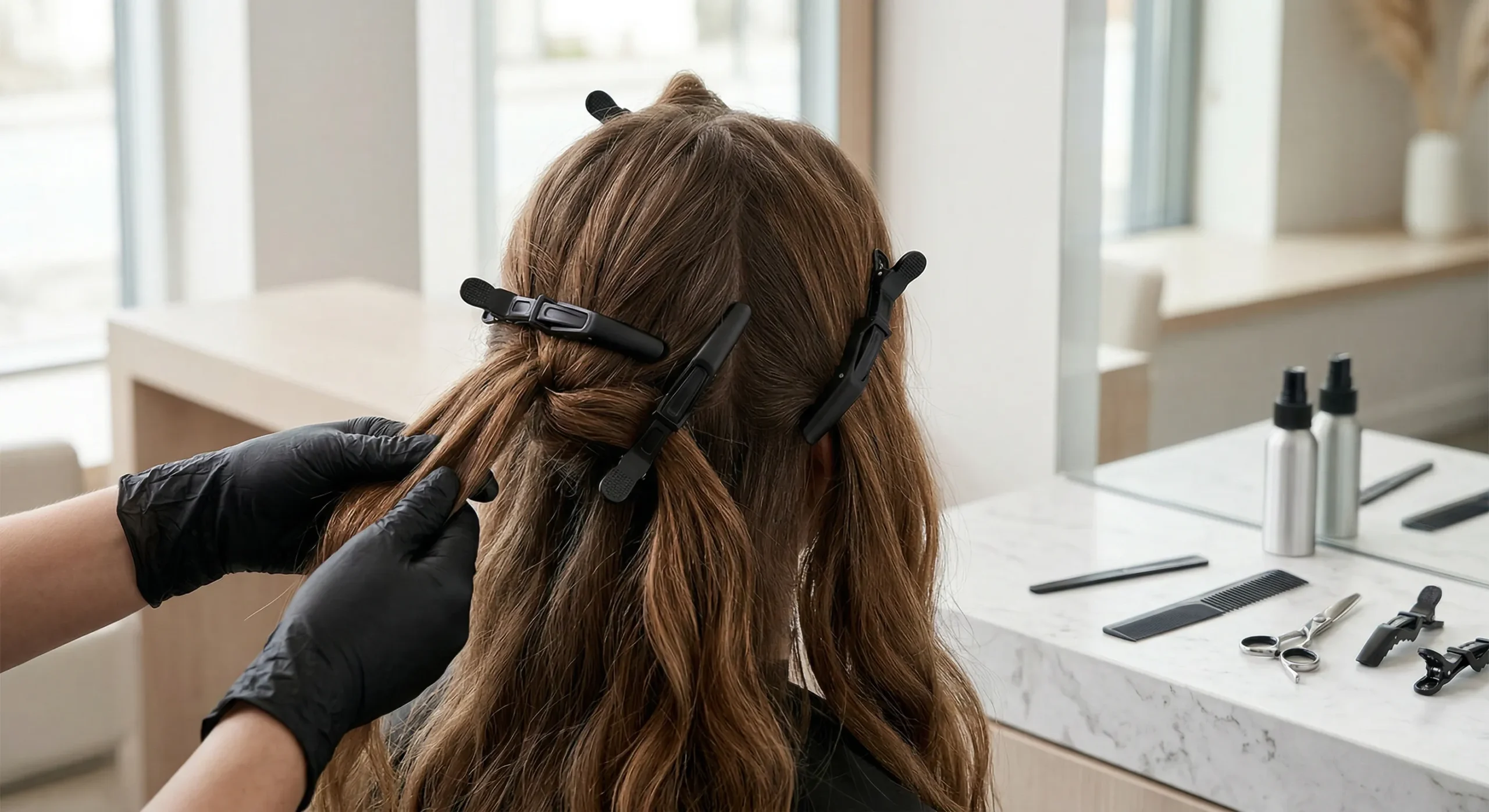
Step 2 — Section the hair into manageable panels. Divide hair into four to six sections and clip each section aside. Working on smaller panels reduces the surface area of resistance at any one time and prevents strands from re-tangling while other sections are being worked on.
Step 3 — Start from the ends, work upward. Hold each section just below the mid-length with one hand to create a tension buffer, then begin detangling from the ends. Work in short strokes, gradually moving toward the roots as the lower section clears. This directs force away from the root zone and avoids compressing knots.
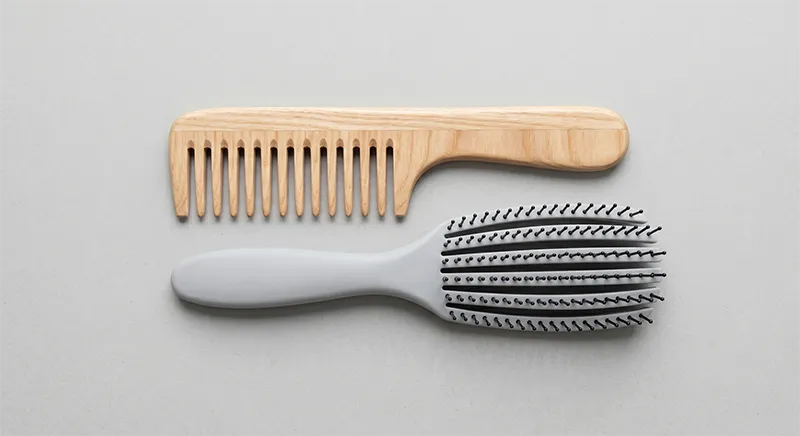
Step 4 — Use a wide-tooth comb or detangling brush. A wide-tooth comb or a purpose-built detangling brush with flexible pins is the correct first tool for fine hair. These allow tangles to release gradually without applying concentrated pressure on a small surface area. Once initial tangles are cleared, a paddle brush or cushion brush can be used to smooth and finish.
Step 5 — Avoid aggressive back-and-forth motion. Sawing motions — moving a comb or brush repeatedly back and forth through the same section — generate friction heat and cause cuticle damage. Single-direction strokes from mid-length to ends are recommended throughout the process.
Step 6 — Work on damp, not soaking wet, hair where possible. Soaking wet fine hair is at maximum elasticity and vulnerability. If wet detangling is necessary post-shower, apply conditioner first and use only a wide-tooth comb with a gentle hand. Towel-dried, slightly damp hair is a safer state for detangling in most circumstances.
Which Tools Work Best for Fine Hair
Tool selection has a direct impact on breakage outcomes. The comparison below summarises the most commonly used detangling tools and their suitability for fine hair.
| Tool | Pin / Tooth Type | Suitable for Fine Hair | Best Use Stage |
|---|---|---|---|
| Wide-tooth comb | Widely spaced teeth | ✓ Yes | Initial detangling, wet hair |
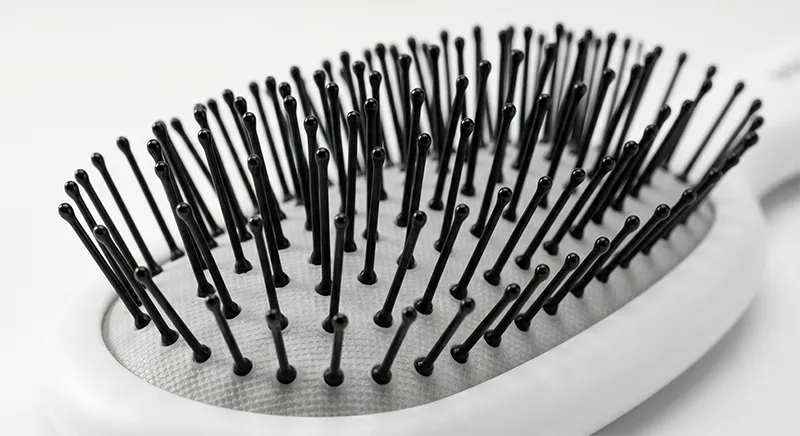
| Detangling brush | Flexible nylon pins, multi-row | ✓ Yes | Damp or dry, mid-to-end sections |
| Cushion brush | Nylon pins on cushion base | ✓ Yes (gentle) | Smoothing after detangling |
| Fine-tooth comb | Closely spaced teeth | ✗ Not recommended | Finishing only, fully detangled hair |
| Paddle brush | Wide flat base, varied pins | ⚠ Moderate | Finishing and smoothing only |
| Boar bristle brush | Natural bristles | ⚠ Use carefully | Smoothing and shine distribution |
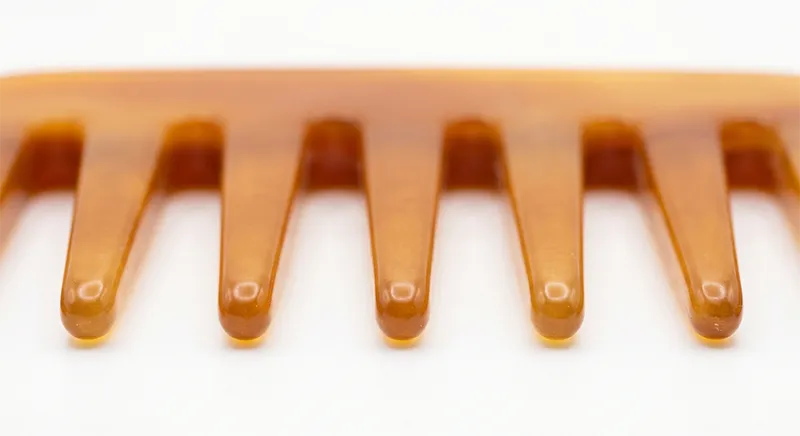
Wide-tooth combs designed specifically for detangling typically have smooth, rounded tooth tips and spacing of 4–8 mm between teeth, allowing small knots to pass through without snagging. For buyers and salon tool brands, tooth tip finish quality is a critical specification; unpolished or sharp-edged teeth on budget combs are a common source of mechanical hair damage that is easy to overlook at the product brief stage. For a detailed breakdown of how comb material affects surface finish and performance, see the comparison of metal vs plastic vs wooden combs.
Brush and Comb Design Factors That Affect Breakage
Not all detangling tools are functionally equivalent, even within the same product category. Several design variables at the manufacturing level affect how a tool performs on fine hair.
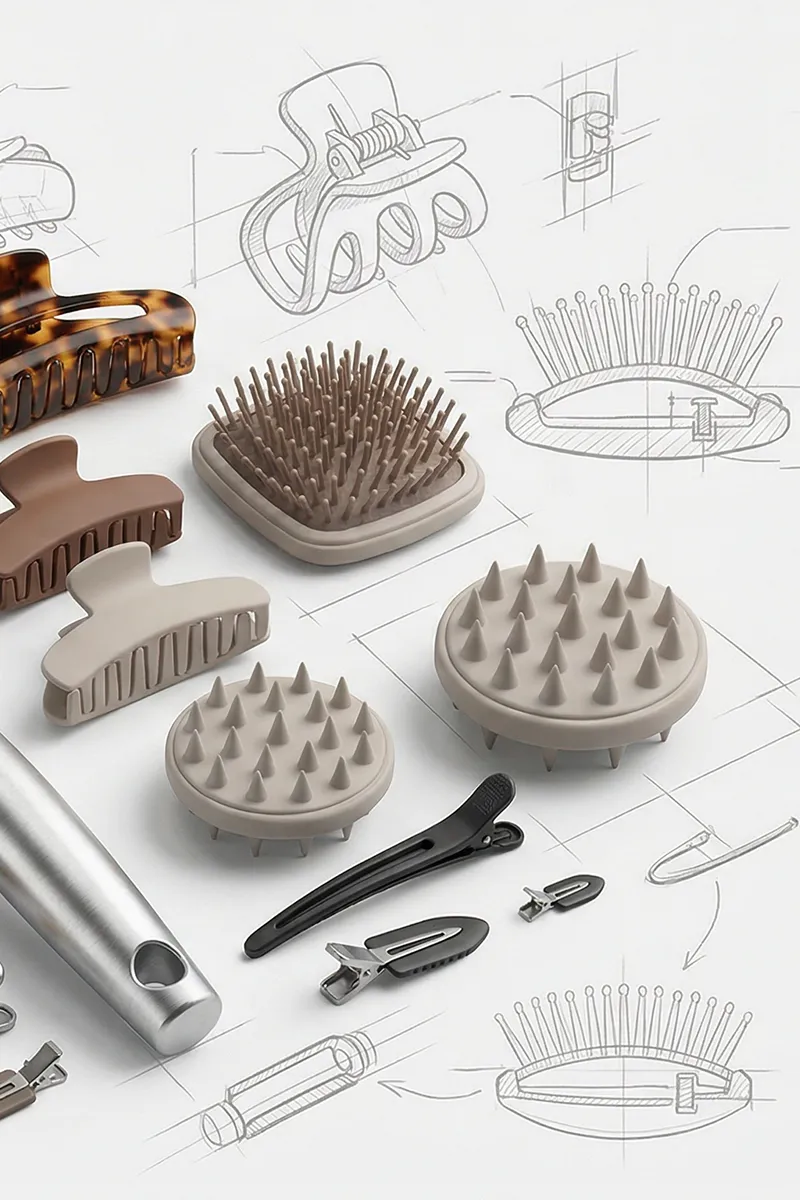
Tooth or pin spacing. Wider spacing reduces the number of points of resistance per stroke. For fine hair, 5–7 mm tooth spacing is a practical reference range for initial detangling combs. Combs at the tighter end of this range are better suited for smoothing once tangles have been cleared.
Pin flexibility. Detangling brushes with flexible, individually mounted pins can deflect around knots rather than driving through them. Rigid-pin brushes transfer all applied force directly to the tangle point, significantly increasing breakage risk on fine strands. This distinction is a key specification variable when evaluating detangling brushes for professional or retail lines.
Base cushioning. Cushion brushes with an air-filled or foam-padded base allow the pin bed to flex slightly under pressure, distributing force more evenly across each stroke. This reduces peak stress at individual contact points — particularly relevant for fine hair where strand resilience is lower.
Tooth tip finish. Machine-polished or ball-tipped tooth ends reduce surface friction and abrasion on the cuticle. This manufacturing detail varies considerably between mass-market and professionally specified combs and is often the practical difference between a tool that causes visible breakage over time and one that does not.
Brands sourcing detangling tool lines for professional or retail positioning increasingly specify these functional parameters as part of the OEM product brief. The hair brush and comb product range covers detangling-focused options across different construction specifications.
For technical context on hair fibre mechanics and cuticle stress, the International Journal of Trichology's overview of hair structure and mechanical properties provides a peer-reviewed reference.
Detangling Fine Hair in Different Conditions
Detangling technique should adapt to the hair's current condition. The same tools and steps do not apply uniformly across all situations.
After washing (wet hair). Apply conditioner in the shower before rinsing; detangle under running water with a wide-tooth comb, starting from the ends. Rinse and towel-blot gently — rubbing with a towel roughs up the cuticle and creates new tangles before the drying stage begins.
Dry hair between washes. Lightly mist with a water-detangling spray to reduce static and surface friction. Section hair and use a flexible-pin detangling brush or wide-tooth comb before any styling tool is introduced. Applying a styling tool to undetangled fine hair significantly increases cumulative breakage over time.
After heat styling. Allow hair to cool fully before brushing. Heat-styled fine hair has temporarily altered hydrogen bonds; brushing immediately after heat exposure increases breakage at the styled sections where the strand structure is in a transitional state.
Overnight tangle prevention. A loose braid or a low ponytail held with a satin scrunchie significantly reduces the formation of tangles during sleep. Fine hair tangles more readily due to its lower inter-strand friction from the smaller strand diameter — a simple overnight habit eliminates a substantial portion of morning detangling time.
Ingredient and Product Considerations
The detangling product applied before combing affects how tools interact with the hair surface. Not all slip-providing ingredients behave the same way on fine hair.
- Cationic conditioners (ingredients such as cetrimonium chloride or behentrimonium methosulfate) coat the hair shaft, neutralise surface charge, and reduce friction between strands. These are the functional core of most detangling conditioners and rinse-out treatments.
- Lightweight oils (argan, camellia seed, squalane) supplement slip without building up weight on fine hair. Heavier oils such as castor or coconut can cause strands to stick together, making mechanical separation more difficult rather than less.
- Film-forming agents such as hydrolyzed proteins or panthenol temporarily strengthen the strand surface against mechanical stress — particularly useful for chemically processed or colour-treated fine hair with a compromised cuticle.
Heavyweight silicones and wax-based products are generally avoided for fine hair as they build up on the shaft and increase strand-to-strand cohesion, which leads to matting. For a peer-reviewed overview of conditioning agent chemistry in professional formulation, Cosmetics & Toiletries covers relevant ingredient mechanisms in detail.
Conclusion
Breakage during detangling is largely preventable when technique, tool selection, and product choice are aligned to the structural characteristics of fine hair. The core principles apply consistently across wet, dry, and post-styling conditions: apply a slip-enhancing product before combing, section hair before beginning, work from ends to roots, and use tools designed for low-force wide-surface contact.
For brands and retailers developing detangling tool lines, the manufacturing specifications that determine real-world performance — tooth spacing, pin flexibility, cushion base construction, and tip finish — are not cosmetic details. They define whether a product causes damage at the point of use or prevents it. Manufacturers such as JunYi Beauty, which produces a range of professional combs and detangling brushes from integrated Dongguan facilities, work with OEM buyers to define these functional parameters as part of the product development brief rather than leaving them to standard production defaults.
Sourcing teams evaluating a broader range of hair accessories may also find it useful to review the types of hair clips and materials guide to understand how material and construction selection principles apply across accessory categories.