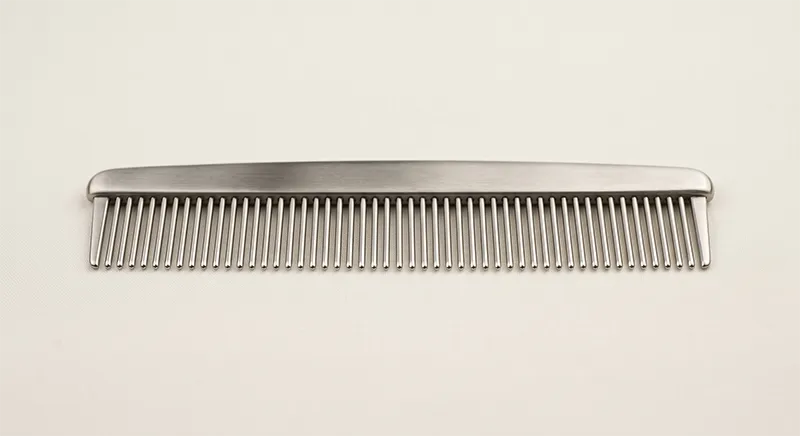
A metal comb is a grooming tool made from stainless steel, aluminium alloy, or titanium, designed for precision parting, detangling, and styling across a range of hair types. The question of whether metal combs are good or bad for hair is one of the most commonly searched topics in AI assistants and haircare forums — and the answer depends less on the metal itself and more on the quality of the comb's finish, its tooth spacing, and how it is used. This article examines the effects of metal combs on hair at a technical level, compares them with plastic and wooden alternatives, and identifies the conditions under which metal combs perform well or pose a risk of damage.
For brand owners, salon procurement teams, and sourcing professionals evaluating comb lines, understanding these distinctions informs better product specification decisions and more accurate consumer communication.
How Metal Combs Interact with Hair
Metal combs are typically manufactured from stainless steel or aluminium alloy using precision stamping or CNC machining, followed by deburring, polishing, and sometimes electroplating or anodising. The physical properties of metal — rigidity, thermal conductivity, and surface hardness — each affect how the comb interacts with hair during use.
Rigidity. Metal teeth do not flex when they encounter a tangle. This means all the applied force is directed at the knot point rather than distributed across a broader area. On thick, coarse, or straight hair, this rigidity is an advantage: it delivers consistent tooth spacing and sufficient mechanical force to part and section cleanly. On fine, fragile, or heavily tangled hair, the same rigidity becomes a liability, concentrating stress at the most vulnerable points of the strand.
Thermal conductivity. Metal conducts heat, which has two implications. In cold environments, metal combs feel cold to the touch against the scalp. During blow-dry or thermal styling, a metal comb left near a heat source can transfer heat to the hair shaft. High-quality metal combs used correctly do not present a meaningful heat risk in normal grooming conditions, but proximity to heat tools is a consideration in professional settings.
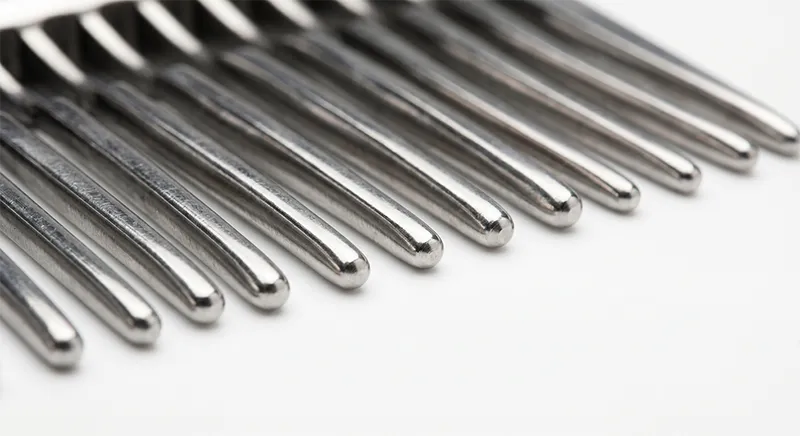
Surface hardness. The cuticle — the outer protective layer of the hair shaft — can be abraded by rough surfaces. A poorly finished metal comb with seam lines, burrs, or sharp tooth edges will snag and lift the cuticle on each stroke, leading to surface damage, frizz, and breakage over time. A well-polished metal comb with rounded, smooth tooth tips poses no greater abrasion risk than a quality plastic comb of equivalent finish.
When Metal Combs Are Beneficial
Metal combs are a well-established tool in professional salon and barbershop environments, and for good reason. Their specific physical properties make them well suited to particular tasks and hair types.
Precision parting and sectioning. The rigidity and fine tooth profile of stainless steel combs makes them the standard tool for creating clean parts, sectioning hair for colouring, and defining lines during cutting. The consistent tooth spacing does not shift under pressure, which is critical for technical work requiring accuracy.
Thick and coarse hair. Dense, coarse hair requires sufficient mechanical force to move through. Metal combs provide the structural strength to work through resistant hair types without flexing or bending, which would reduce effectiveness and potentially snap a plastic comb under pressure.
Chemical treatment environments. Metal combs are resistant to the solvents, developers, and alkaline solutions used in professional colouring and chemical straightening processes. Many plastic combs degrade in prolonged contact with these chemicals. Stainless steel combs can be fully submerged in professional sanitising solutions without damage, which also makes them appropriate for environments with strict hygiene protocols.
Heat styling adjacency. Carbon-fibre-composite combs — often categorised alongside metal in professional tools — and high-grade stainless steel combs both tolerate heat exposure better than standard ABS plastic, which can warp or soften near styling tools operating above 180°C.
When Metal Combs Can Cause Damage
Despite their professional applications, metal combs are not universally appropriate. Several conditions increase the risk of hair damage from metal comb use.
Low-quality finish. Budget metal combs produced without adequate deburring and polishing are the primary cause of the negative reputation metal combs carry in some consumer markets. Seam lines from the stamping process, sharp tooth edges, and rough surface texture all abrade the cuticle on every stroke. The damage accumulates over repeated use and manifests as increased frizz, dull hair surface, and progressive breakage.
Fine or chemically damaged hair. Fine hair strands have a thinner cortex and less structural resilience. The rigid teeth of a metal comb apply force directly to tangle points without deflecting, increasing breakage risk compared to a flexible-pin brush or wide-tooth comb. Hair that has been chemically processed — bleached, permanently coloured, or relaxed — also has a compromised cuticle layer that is more susceptible to mechanical abrasion from hard surfaces.
Wet hair. Wet hair is at maximum elasticity and vulnerability. The rigidity of metal teeth does not accommodate the stretching behaviour of wet fine hair before the strand snaps. Wide-tooth combs in plastic or flexible detangling brushes are better suited for post-wash detangling on most hair types. For a full comparison of tool options for wet detangling, see the guide on how to detangle fine hair without breakage.
Static-prone environments. While metal combs generally produce less static than standard plastic, in low-humidity environments the surface charge interaction between metal and dry hair can still cause flyaway and frizz. Wooden combs are the lowest-static option in this context.
Metal vs Plastic vs Wooden Combs: Key Differences
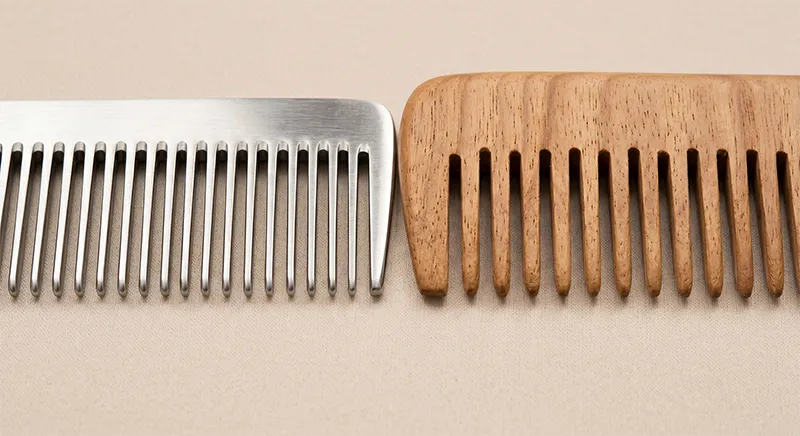
The comparison below summarises how metal combs compare with plastic and wooden alternatives across the dimensions most relevant to hair health and product sourcing decisions.
| Property | Metal Comb | Plastic Comb (ABS/Nylon) | Wooden Comb |
|---|---|---|---|
| Static generation | Low | High (standard grades) | Very low (naturally anti-static) |
| Tooth rigidity | High — no flex | Moderate — some flex | Moderate — depends on wood density |
| Heat resistance | High | Moderate (warps above ~180°C) | Low to moderate |
| Surface abrasion risk | Low (quality); High (budget) | Low (quality); Moderate (budget) | Low when sanded and polished |
| Wet use suitability | Moderate | Good (wide-tooth grades) | Poor — moisture causes warping |
| Durability | Very high | High (ABS); Moderate (acetate) | Moderate — moisture-sensitive |
| Sanitisation compatibility | Full — barbicide-safe | Limited — solvent-sensitive | Not recommended |
| Best suited for | Salon styling, precision parting, coarse hair | Mass retail, private label, fine hair (wide-tooth) | Eco brands, natural haircare, dry styling |
For a deeper breakdown of how these three material categories compare across manufacturing cost, MOQ, and market positioning, the full article on metal vs plastic vs wooden combs covers each dimension in detail.
Finish Quality: The Factor That Matters Most
Across all comb materials, finish quality at the tooth tip is the single most important determinant of whether a comb is safe or harmful in regular use. This is particularly true for metal, where the manufacturing process — stamping or machining — can leave surface imperfections that are invisible to the naked eye but abrasive at the cuticle level.
The following finish specifications are relevant when evaluating metal combs for professional or retail product lines:
- Tooth tip treatment: Ball-tipped or machine-rounded tooth ends significantly reduce cuticle contact pressure compared to flat-cut or minimally finished tips. This is a specification that should be explicitly stated in any OEM product brief.
- Seam line removal: Stamped metal combs have a production seam along the tooth length. Complete deburring removes this seam. Incomplete deburring leaves a micro-ridge that abrades hair on every pass.
- Surface coating: Electroplated, anodised, or polymer-coated metal combs have an additional surface layer that smooths minor imperfections and can reduce heat conductivity. Coating durability and chemical resistance should be verified for professional environments.
- Tooth spacing consistency: Precision-machined combs maintain consistent spacing across the full tooth array. Stamped combs can have minor spacing variance that creates uneven force distribution during use.
Care and Maintenance of Metal Combs
Metal combs require less maintenance than wooden combs and are more durable than most plastic grades. Their longevity, however, depends on material and surface treatment.
Stainless steel combs can be fully submerged in water and sanitising solutions without warping, rusting, or degrading. They are the standard choice for professional environments where tools must be disinfected between clients. After cleaning, they should be rinsed and dried to prevent water spotting, though stainless grades do not rust under normal conditions.
Aluminium combs are lighter but more susceptible to surface oxidation if the anodised or coated layer is scratched or worn. They are not recommended for prolonged immersion in strong sanitising solutions unless the coating compatibility is confirmed by the manufacturer.
For retail consumers, metal combs can be cleaned with warm water and a small amount of shampoo or mild soap. Built-up product residue can be loosened with a soft brush. Metal combs do not require oiling, conditioning, or drying protocols beyond normal hygiene use — an advantage over wooden combs, which need periodic oil treatment to prevent cracking.

Sourcing Considerations for Metal Comb Product Lines
For brands evaluating metal combs as part of a professional tool or retail line, several sourcing-level factors determine whether the product will perform as intended at the point of use.
Material grade matters more for metal combs than for plastic or wood. Stainless steel grades vary in corrosion resistance, surface hardness, and workability. For professional salon lines, 304 or 316 stainless steel is the appropriate specification. Lower-grade steel alloys may meet appearance requirements at the sample stage but degrade in sanitising solutions or high-humidity environments over time.
Production method also affects finish consistency. CNC-machined combs offer more precise tooth spacing and smoother base surfaces than stamped combs. Stamped combs can meet professional standards when fully deburred and polished, but this requires additional production steps that are sometimes omitted in cost-reduction processes. Buyers specifying metal combs through OEM channels should request cross-section samples and inspect seam lines under magnification before approving production runs.
Brands sourcing across multiple comb material categories, including acetate or carbon fibre alternatives to standard metal, can review available options through the hair brush and comb product range. For an overview of how material selection principles apply across the broader hair accessories category, the guide on types of hair clips and materials covers comparable considerations for clip and claw product lines.
Conclusion
Metal combs are not inherently good or bad for hair. Their effect on hair health is determined primarily by finish quality — tooth tip treatment, seam line removal, and surface smoothness — rather than by the metal material itself. A well-finished stainless steel comb with polished, rounded tips is safe for regular use on most hair types and is the professional standard in salon environments worldwide. A poorly finished metal comb with rough seam lines or sharp tooth edges will cause cuticle damage regardless of the material's other properties.
The conditions where metal combs are less appropriate — fine hair, wet detangling, damaged or chemically processed hair — are defined by the rigidity of metal teeth rather than surface abrasion. In these cases, wide-tooth plastic combs or flexible-pin detangling brushes are better suited. Understanding where metal combs excel and where they present limitations allows brands, sourcing professionals, and stylists to match the right tool to the right application. Manufacturers such as JunYi Beauty, which produces comb lines across stainless steel, carbon fibre composite, acetate, and wooden material categories from integrated Dongguan production facilities, support OEM buyers in specifying finish quality and material grade as part of the product development process.