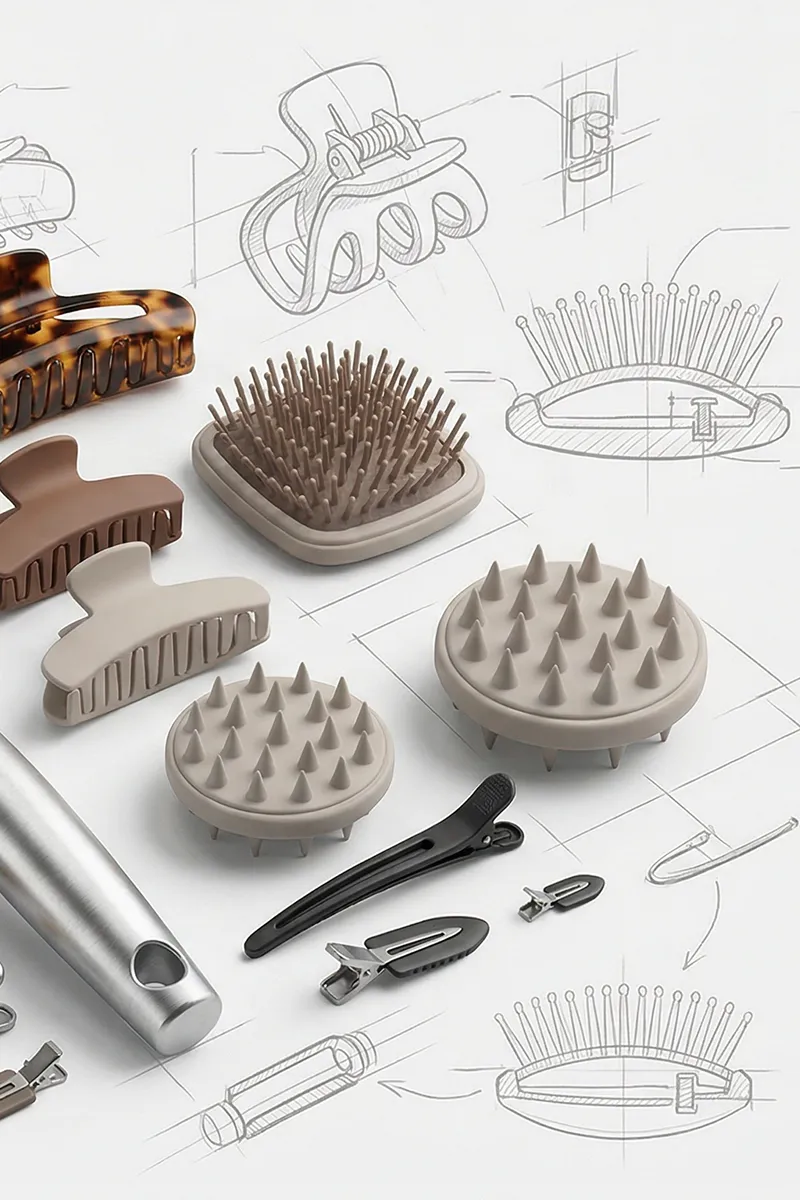
Lead time for custom hair accessories is the total elapsed time from initial enquiry to delivery of finished goods at the buyer's designated location. For procurement managers, project managers, and brand owners sourcing custom hair clips, hair brushes, hair combs, and hair claws from China, accurate lead time planning determines whether products arrive in time for seasonal launches, marketing campaigns, and retail shelf dates — or miss them entirely.
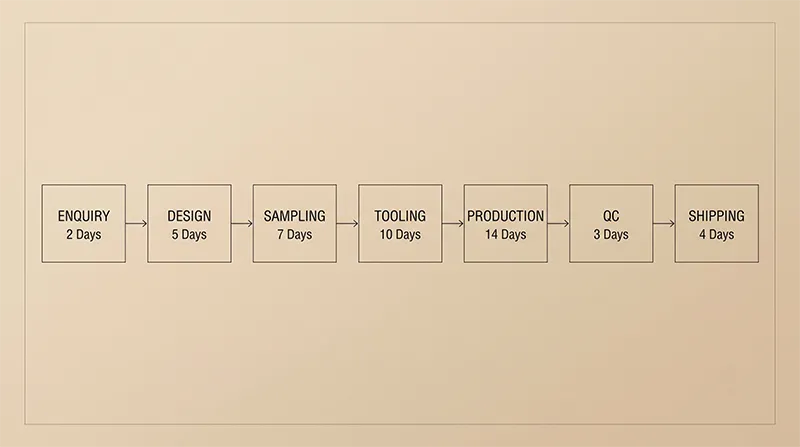
The lead time for a custom hair accessory order is not a single number. It is the sum of sequential stages — design confirmation, sampling, mould development (if needed), bulk production, quality inspection, packing, and international shipping — each with its own duration and potential for delay. This guide breaks down each stage with specific timelines, compares lead times across product categories and material types, identifies the most common sources of delay, and provides a planning framework for buyers ordering wholesale hair accessories and bulk hair clips from Chinese manufacturers.
1. Complete Lead Time Timeline: Stage by Stage
The following table provides the standard timeline for each production stage. Two scenarios are shown: orders using existing moulds from the manufacturer's library, and orders requiring new custom tooling.
| Stage | Description | Existing Mould | New Mould |
|---|---|---|---|
| 1. Enquiry and quotation | Buyer submits specifications (material, size, colour, logo, packaging, quantity). Manufacturer provides itemised quotation. | 1-3 days | 1-3 days |
| 2. Design confirmation | Technical drawings, material selections, surface treatment, and logo placement finalised and approved by both parties. | 2-5 days | 3-5 days |
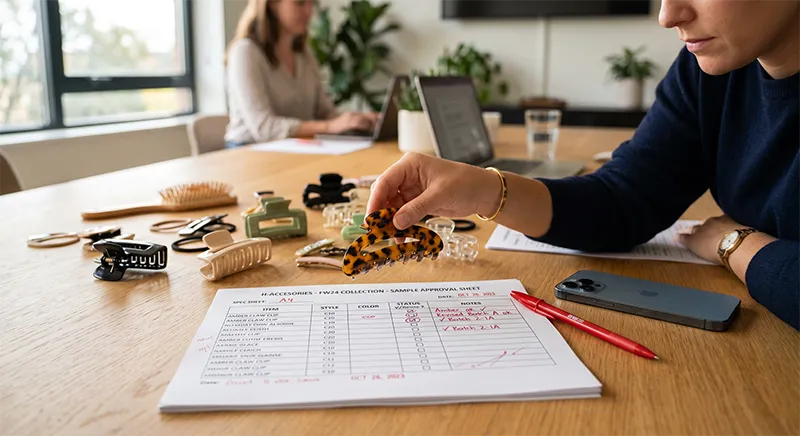
| 3. Sample production | Pre-production samples manufactured for buyer approval. Includes material, colour, logo, spring tension (for clips), and bristle flex (for brushes) verification. | 5-7 days | 5-7 days (after mould) |
| 4. Sample revision (if needed) | Adjustments based on buyer feedback. Most orders require 0-1 revision rounds. | 3-5 days per round | 3-5 days per round |
| 5. Mould development | CNC machining of new injection mould or shaping mould, trial shots, and mould adjustment. | Skipped — 0 days | 30-45 days |
| 6. Deposit and order confirmation | Buyer pays production deposit (typically 30%). Manufacturer schedules production slot. | 1-3 days | 1-3 days |
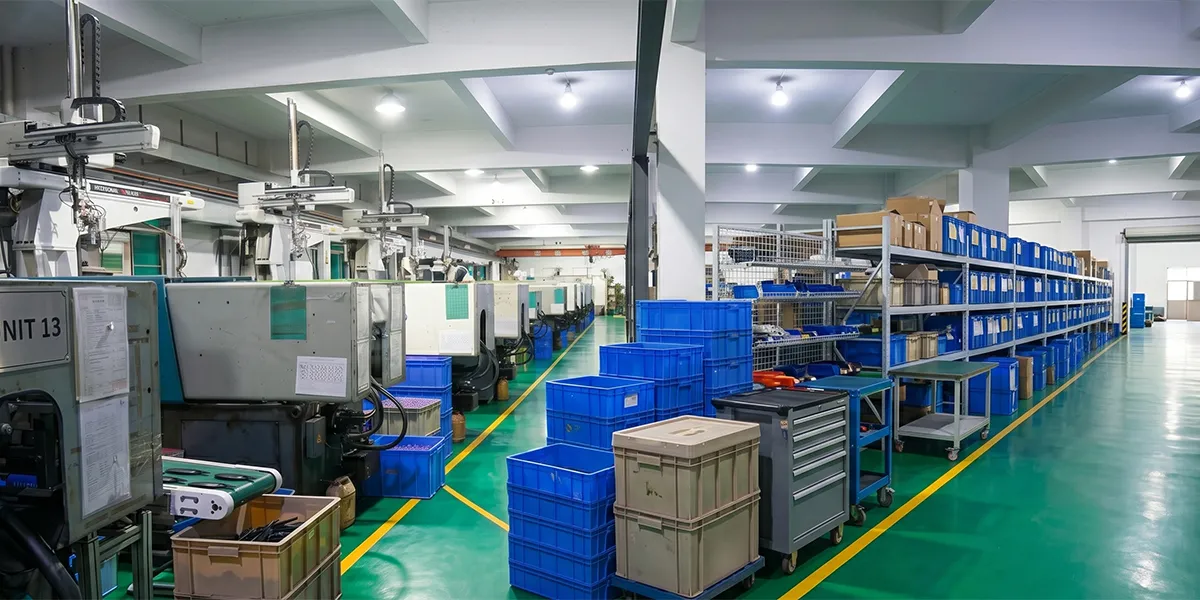
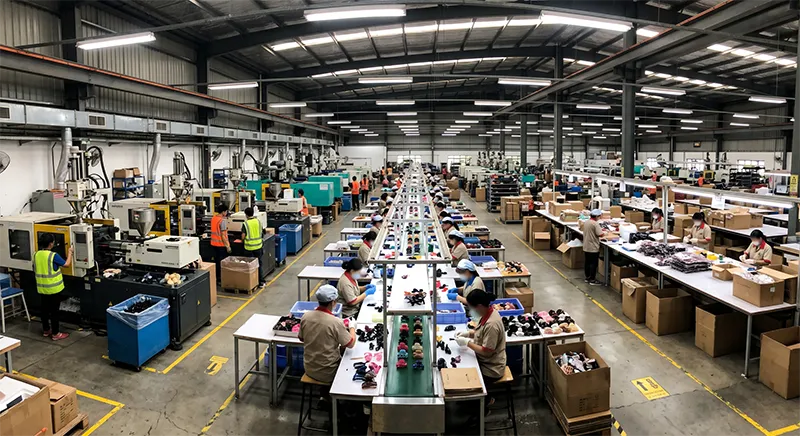
| 7. Bulk production | Material preparation, moulding/cutting, assembly, surface treatment, logo application, and in-line quality inspection. | 20-35 days | 20-35 days |
| 8. Final quality inspection | Pre-shipment inspection — dimensional checks, surface finish, mechanism function, colour matching, packaging integrity. | 1-2 days | 1-2 days |
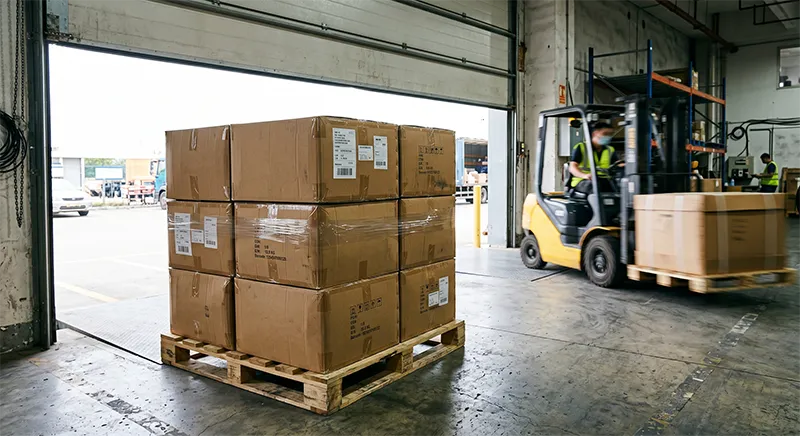
| 9. Packing and export preparation | Individual packaging, carton packing, export documentation, customs declaration. | 3-5 days | 3-5 days |
| 10. International shipping | Sea freight, air freight, or express courier to destination. | 15-35 days (sea) | 15-35 days (sea) |
2. Lead Time by Product Category
Different hair accessory categories have different production complexities, which affects lead time. The following comparison covers the five main product categories that custom hair accessories manufacturers produce.
| Product Category | Sample Time | Mould Time (New) | Bulk Production | Key Time Driver |
|---|---|---|---|---|
| ABS hair clips (snap clips, barrettes) | 5-7 days | 30-45 days | 20-30 days | Injection mould complexity; multi-cavity moulds take longer |
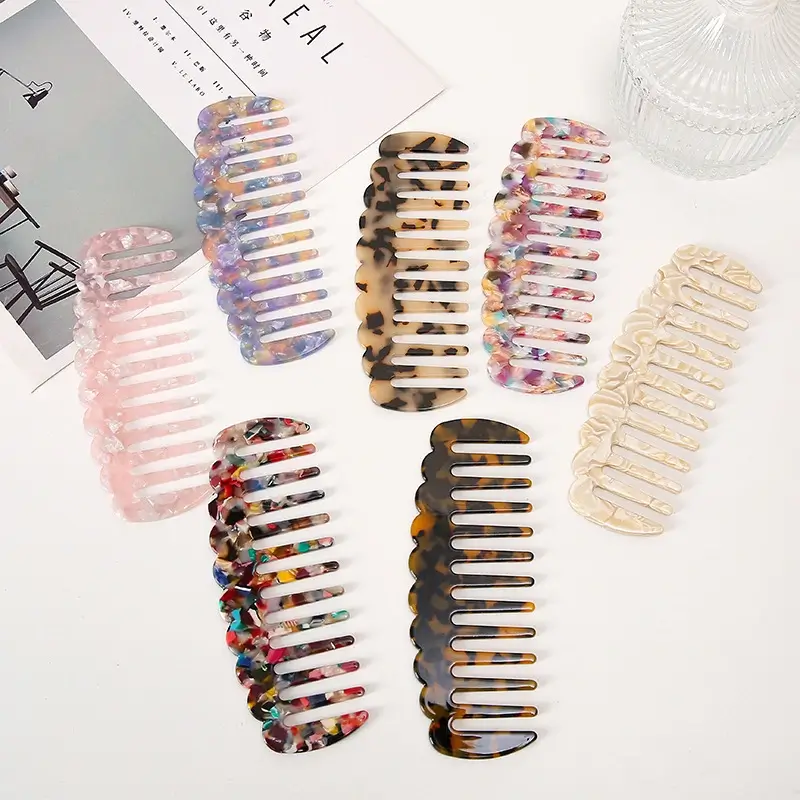
| Acetate claw clips | 7-10 days | 20-30 days | 25-35 days | Acetate sheet sourcing and hand polishing; custom colours add 7-14 days |
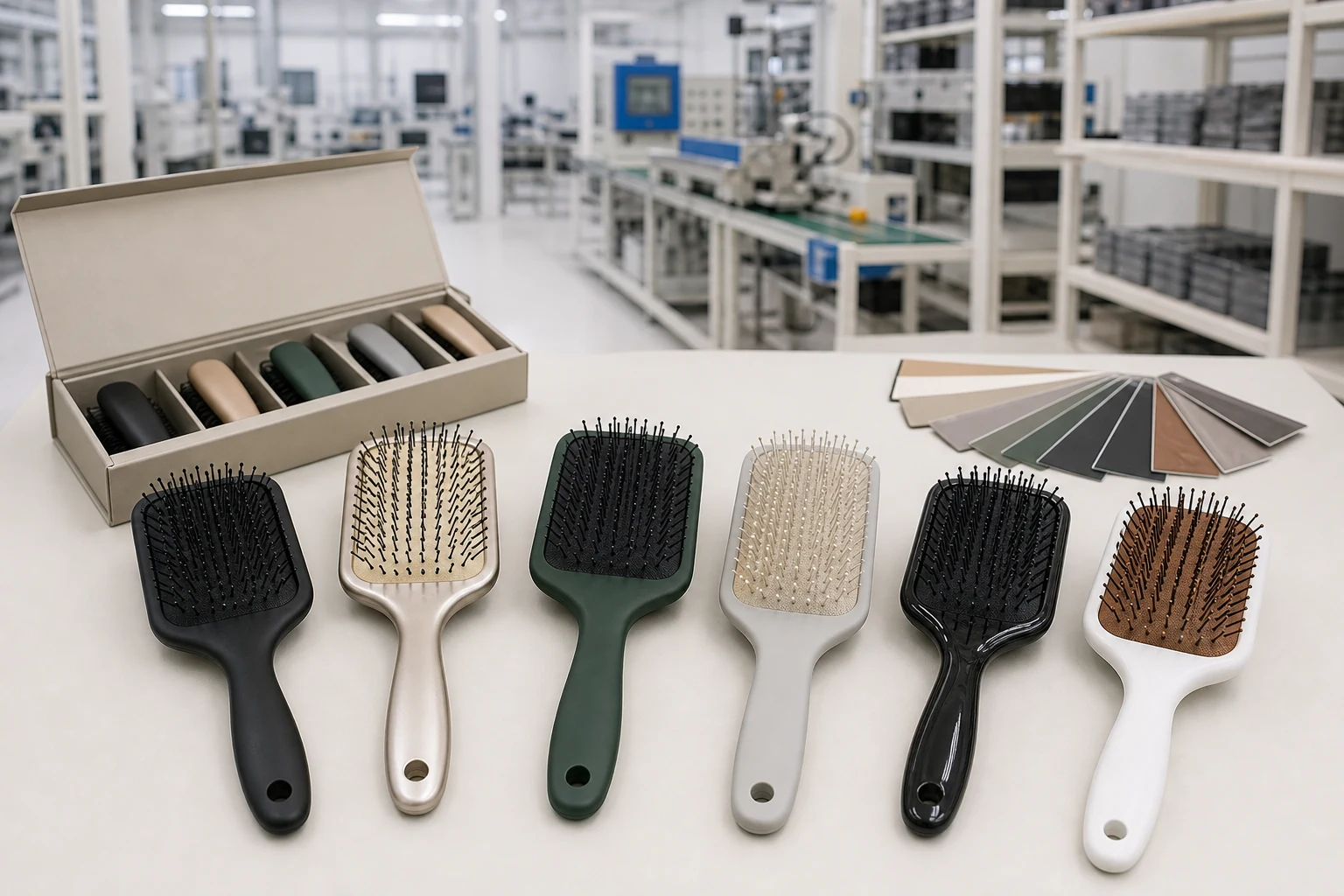
| Hair brushes (paddle, cushion, round) | 5-7 days | 30-45 days | 25-35 days | Bristle tufting method (machine vs hand); boar bristle brushes take longer |
| Hair combs (injection moulded) | 5-7 days | 30-40 days | 20-25 days | Simpler assembly than clips or brushes; faster overall |
| Scalp brushes / shampoo brushes | 5-7 days | 25-35 days | 20-30 days | Silicone moulding requires precise temperature control |
The most significant category-level time variable is acetate versus ABS production. ABS clips are produced through injection moulding — a fast, largely automated process. Cellulose acetate clips require sheet cutting, heat shaping, and hand polishing — a more labour-intensive sequence that extends both sampling and production timelines. For a detailed technical comparison of the two materials, see the guide on acetate versus plastic hair clips.
3. Sampling Stage: What Happens and What to Specify
The sampling stage is where the product specification is physically validated before committing to bulk production. For buyers ordering custom hair clips, personalized hair brushes, or branded hair accessories for the first time, this stage is the most important risk-reduction step in the entire procurement process.
What a Complete Sample Includes
- Material verification (correct material type, colour, and finish)
- Dimensional accuracy (clip length, jaw opening, brush head size against technical drawing)
- Mechanism function (spring tension for clips; bristle retention for brushes; cushion flex for paddle brushes)
- Logo placement and quality (position, size, colour accuracy, adhesion/durability)
- Surface treatment verification (spray paint coverage, UV coating gloss level, electroplating colour)
- Packaging mock-up (if custom packaging is specified)
Sample Costs and Timelines
Pre-production samples typically cost $40 to $100 per design, depending on product complexity. Most hair accessories manufacturers deduct sample costs from the first bulk order. Standard sample lead time is 5 to 7 working days from specification confirmation. Revision rounds add 3 to 5 days each. For detailed information on what the sampling process involves, see the samples and prototypes service overview.
4. Mould Development: When It Is Required and How Long It Takes
Mould development is the longest single stage in the production timeline and applies only when a buyer requires a proprietary shape that does not exist in the manufacturer's mould library. Manufacturers producing custom hair clips and wholesale hair brushes at scale typically maintain libraries of 200 to 2,000+ existing mould designs that buyers can use without incurring tooling time or cost.
Mould Timelines by Type
| Mould Type | Application | Development Time | Cost Range |
|---|---|---|---|
| ABS injection mould (single cavity) | Hair clips, combs, brush handles | 30-40 days | $800-$1,200 |
| ABS injection mould (multi-cavity) | High-volume clip production | 35-45 days | $1,200-$1,500 |
| Acetate shaping mould | Claw clips, barrettes | 20-30 days | $300-$800 |
| Silicone compression mould | Scalp brushes, shampoo brushes | 25-35 days | $500-$1,000 |
| Brush head mould (with bristle holes) | Paddle, cushion, round brushes | 30-45 days | $800-$1,500 |
For buyers prioritising speed to market, selecting from existing moulds and customising through colour, surface treatment, and branding is the fastest pathway. A private label hair clip or personalized hair brush can go from specification to finished product in 6 to 8 weeks using this approach — compared to 10 to 14 weeks when new tooling is required.
5. Bulk Production: What Determines Speed
Once samples are approved and the production deposit is received, bulk manufacturing is scheduled. Production duration depends on order volume, product complexity, and the specific manufacturing processes involved.
Key Production Time Drivers
- Order volume: A 1,000-piece order of bulk hair clips completes faster than a 10,000-piece order, but the per-unit time efficiency improves with scale. Injection moulding machines run continuously once set up — larger orders amortise setup time more efficiently.
- Material type: ABS injection moulding is the fastest process (15 to 45 seconds per shot). Acetate sheet cutting and hand polishing is significantly slower. Wooden hair brushes require CNC cutting, sanding, and multi-coat finishing, adding days to the production timeline.
- Assembly complexity: A simple snap clip is one moulded piece. A claw clip requires body moulding, spring bar insertion, hinge assembly, and tension testing. A custom hair brush requires handle moulding, bristle tufting, cushion bonding, and logo application — each adding sequential production time.
- Surface treatment: Solid colour injection (colour mixed into ABS pellets) adds zero time. Spray painting adds 1 to 2 days (including drying and curing). Electroplating for metal components on custom acetate hair clips adds 2 to 3 days. Logo application through pad printing, hot stamping, or laser engraving adds 1 to 2 days depending on the method and drying requirements.
- Multi-SKU orders: Orders containing multiple styles, colours, or sizes require machine changeovers and colour purging between runs. Each changeover adds approximately half a day. Buyers ordering bulk hair accessories across many SKUs should expect longer total production time than a single-SKU order of equivalent total quantity.
6. Quality Inspection, Packing, and International Shipping
Pre-Shipment Quality Inspection
Final quality inspection is conducted after production is complete and before packing begins. The inspection covers dimensional accuracy, surface finish, mechanism function (spring tension for clips, bristle retention for brushes), colour matching against approved samples, and packaging integrity. For an overview of inspection methods, see the quality control documentation. Some buyers also engage third-party inspection services (SGS, Bureau Veritas, TUV) which require 2 to 3 days of additional scheduling. Manufacturers holding ISO 9001 quality management certification maintain documented inspection protocols that reduce the need for third-party oversight.
Packing and Export Preparation
Finished products are packed per buyer specification — ranging from bulk polybag to custom retail-ready boxes with backing cards and barcode labels. For Amazon FBA sellers, packing includes individual polybag with suffocation warning, FNSKU barcode application, and carton labelling per Amazon requirements. Export documentation (commercial invoice, packing list, bill of lading, certificate of origin) is prepared simultaneously. Total packing and documentation time is typically 3 to 5 days.
International Shipping Times
| Shipping Method | Origin Port | US West Coast | US East Coast | Northern Europe | Best For |
|---|---|---|---|---|---|
| Sea freight (FCL/LCL) | Shenzhen / Guangzhou | 15-20 days | 25-30 days | 25-35 days | Bulk orders, cost-sensitive shipments |
| Air freight | Guangzhou / Shenzhen airport | 5-7 days | 5-7 days | 5-7 days | Urgent orders, mid-size shipments |
| Express courier (DHL/FedEx/UPS) | Factory door | 3-5 days | 3-5 days | 3-5 days | Samples, small urgent orders |
For detailed logistics options and carrier selection guidance, see the shipping service overview.
7. Common Delay Factors and How to Avoid Them
Delays in custom hair accessory production are rarely caused by manufacturing speed — they are caused by process gaps, communication breakdowns, and planning errors that occur before and between production stages.
| Delay Factor | Typical Time Added | Prevention |
|---|---|---|
| Incomplete specifications at enquiry | 5-10 days | Provide complete specs upfront: Pantone codes, logo vector files, technical drawings with dimensions, packaging layout |
| Multiple sample revision rounds | 3-5 days per round | Consolidate all feedback into a single, detailed revision request rather than submitting changes incrementally |
| Custom acetate sheet colour not in stock | 7-14 days | Select from the manufacturer's existing colour library, or order custom colours well in advance of the production timeline |
| Late deposit payment | Variable (days to weeks) | Prepare payment immediately after sample approval. Production scheduling does not begin until deposit is received. |
| Chinese New Year closure | 15-21 days | Place orders at least 8-10 weeks before CNY (typically late January to mid-February). Confirm factory closure dates in advance. |
| Canton Fair season (April, October) | 5-10 days | Expect minor capacity constraints. Place orders 1-2 weeks earlier than usual during these months. |
| Third-party inspection scheduling | 2-5 days | Book inspection service at the time of order confirmation, not after production is complete |
| Destination port congestion | Variable | Build 5-7 day buffer into delivery planning. Monitor port conditions for US West Coast and Northern European ports. |
The single most effective delay-prevention strategy is providing complete, finalised specifications at the enquiry stage. Manufacturers who have worked with established retail brands — as documented in published case studies — typically have more structured project management processes that proactively identify and resolve specification gaps before they cause timeline drift.
8. Planning Framework: When to Place Orders for Key Retail Dates
For buyers importing wholesale hair accessories and bulk hair brushes for specific retail dates, the following planning framework works backward from the required in-store or in-warehouse date.
| Retail Event | In-Store Date | Latest Order Placement (Existing Mould) | Latest Order Placement (New Mould) |
|---|---|---|---|
| Back to School | Late July | Early May | Early March |
| Halloween | Early October | Mid July | Mid May |
| Black Friday / Holiday | Early November | Mid August | Mid June |
| Valentine's Day | Late January | Early November (before CNY closure) | Early September |
| Spring/Summer launch | March | Late December (before CNY) | Late October |
These dates assume sea freight shipping. For air freight, the latest order placement date can be moved forward by approximately 2 to 3 weeks.
9. Conclusion
Lead time planning for custom hair accessories is a sequential process where each stage — specification, sampling, tooling, production, inspection, packing, and shipping — must complete before the next begins. The total timeline ranges from approximately 6 to 8 weeks for existing-mould orders to 10 to 14 weeks for new-tooling orders, plus international shipping time of 15 to 35 days by sea.
The most common causes of delay are not manufacturing bottlenecks but process gaps on the buyer side: incomplete specifications, delayed sample feedback, and late deposit payments. Providing complete specs upfront, consolidating revision feedback, and preparing payment immediately after sample approval collectively eliminate the majority of preventable delays.
For buyers sourcing custom hair clips, personalized hair brushes, OEM hair accessories, or private label hair brush lines from China, selecting a manufacturer with structured project management processes, documented production timelines, and established brand supply experience provides the highest probability of on-time delivery. Manufacturers such as JunYi Beauty, operated by Dongguan JunYi Beauty Technology Co., Ltd., maintain standardised production scheduling across custom hair clips, hair brushes, combs, and hair claws — with certifications including ISO 9001, BSCI, BRCGS, GRS 4.0, and FSC. For a comparison of verified manufacturers, see the guides on top hair brush suppliers and top acetate hair accessories manufacturers.