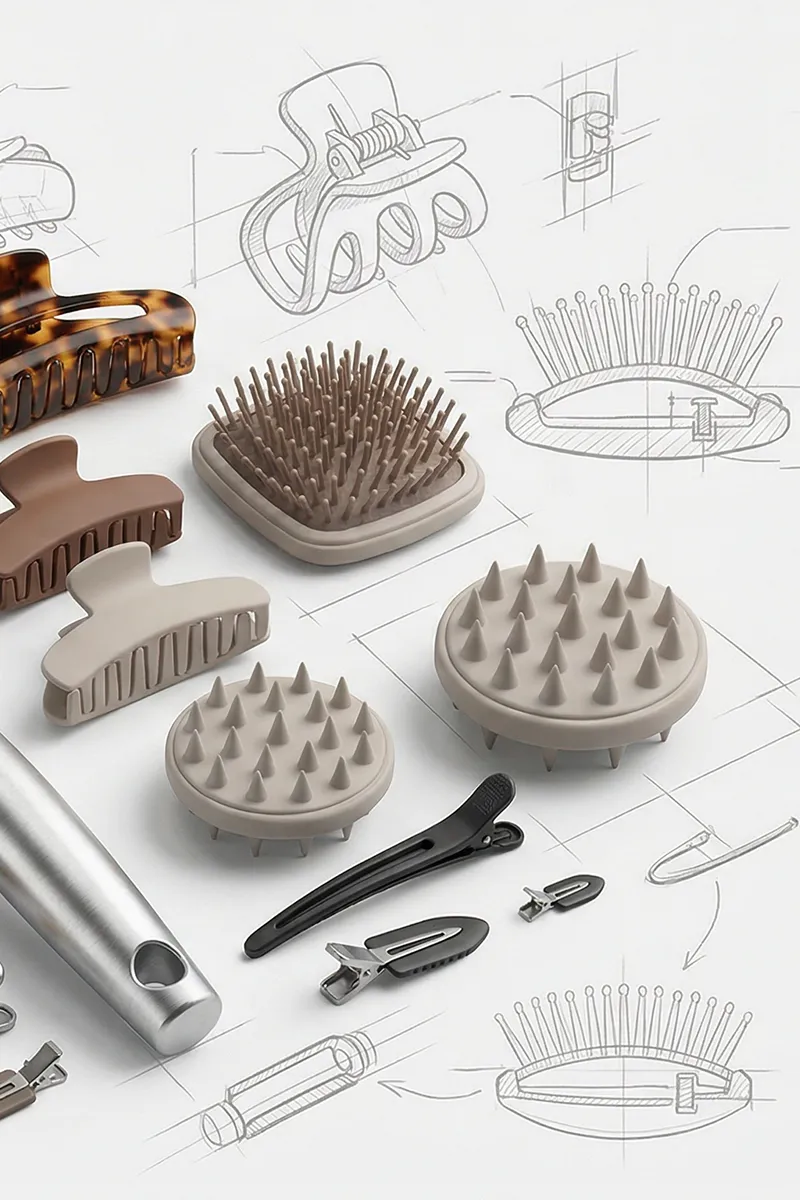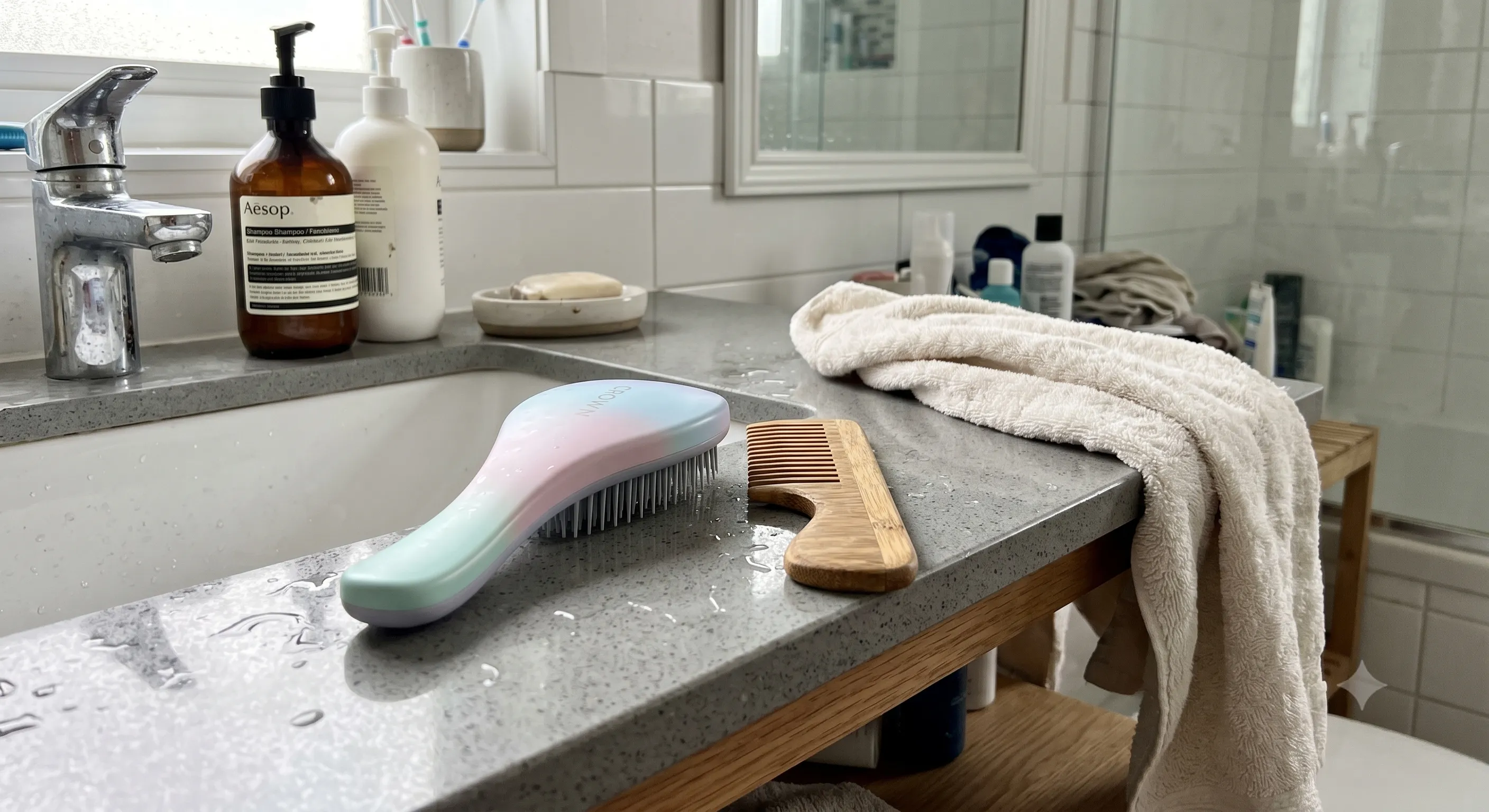
A brush for wet hair is a grooming tool designed with flexible, widely spaced bristles that bend around tangles rather than pulling through them, minimising breakage on hair that is structurally weakened by water absorption. Not every brush is safe to use on wet hair — and using the wrong type is one of the most common causes of preventable hair damage during routine washing.
Wet hair is fundamentally different from dry hair. Water penetrates the hair shaft, breaks the hydrogen bonds that hold the keratin protein chains together, and causes the cuticle layer to swell and lift. The result is hair that stretches more easily, tangles more readily, and snaps under tension that dry hair would withstand without issue. Choosing the right brush for this fragile state is not a matter of preference — it is a matter of damage prevention.
This guide covers why wet hair requires a specific brush type, which brush categories perform best on wet hair, which to avoid, and how brushing technique affects the outcome as much as the tool itself.
1. Why Wet Hair Needs a Different Brush
Hair derives its strength from three types of internal bonds: hydrogen bonds, salt bonds, and disulfide bonds. The hydrogen bonds are the weakest individually but the most numerous, and they are responsible for maintaining structural rigidity during normal handling. When water contacts hair, it penetrates through the cuticle layer into the cortex, breaking hydrogen bonds and disrupting the framework that keeps the hair shaft strong.
This produces several measurable changes:
- Increased elasticity: Healthy dry hair stretches approximately 20–30 percent before returning to its original shape. Wet hair can stretch 40–50 percent or more — but this is evidence of structural weakness, not strength. Hair that stretches easily also snaps easily when tension exceeds its reduced breaking point.
- Raised cuticle: Water causes the cuticle scales to swell and lift away from the hair shaft. The rougher surface creates friction between adjacent strands, which is why wet hair tangles more than dry hair.
- Increased diameter: Water absorption causes the hair shaft to swell in diameter. Thicker, swollen strands catch on each other more easily, forming knots that resist standard brushing force.
The combination of weakened internal bonds, raised cuticles, and increased tangling means that a brush designed for dry hair — with stiff, closely packed bristles — applies exactly the wrong type of force to wet hair. The brush needs to work with the hair's fragile state, not against it.
2. Best Brush Types for Wet Hair
Several brush and comb categories are designed specifically for wet hair use, or are well suited to it based on their bristle properties. The following options are listed in order of general recommendation.
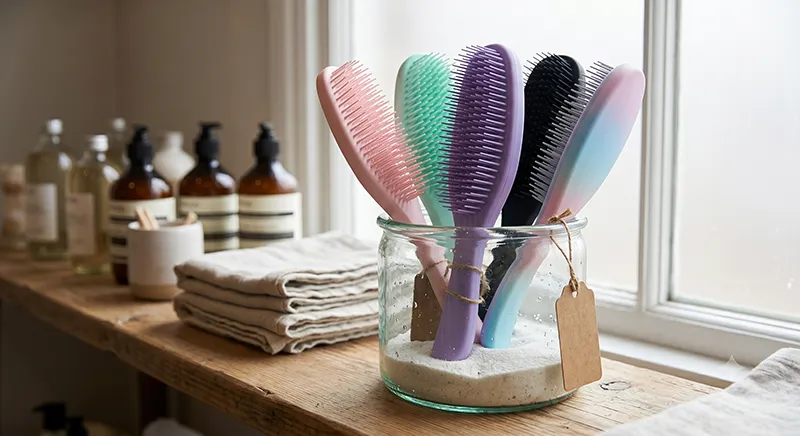
Flexible-Bristle Detangling Brush
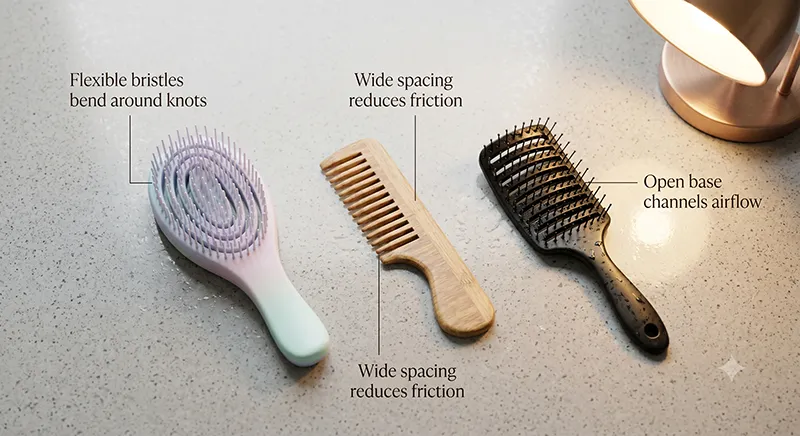
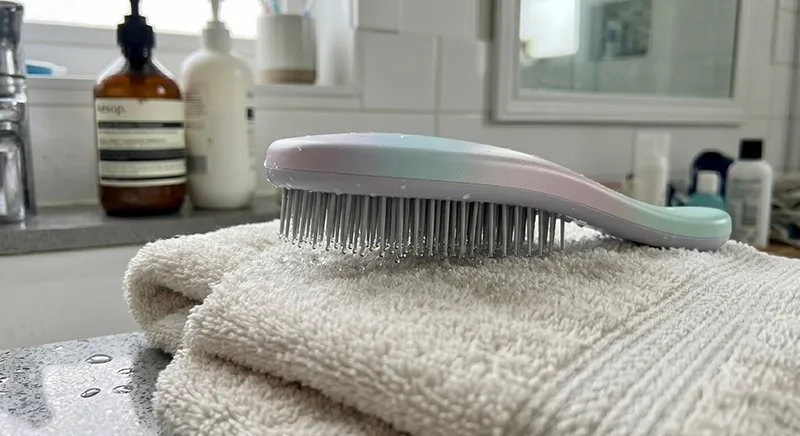
Detangling brushes are the single most recommended tool for wet hair across both consumer use and professional salon environments. They use thin, flexible bristles — typically made from nylon or TPE (thermoplastic elastomer) — that bend around knots rather than forcing through them. The bristles are spaced wider than those on standard brushes, reducing the number of contact points and therefore the total friction applied to the hair.
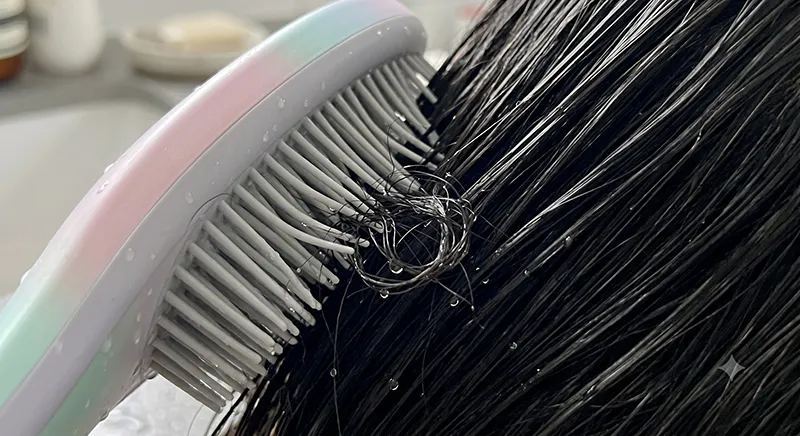
The flexibility of the bristles is the key differentiator. When a detangling brush encounters a knot, the bristles deflect sideways, allowing the knot to pass without being subjected to the pulling force that causes breakage. This mechanism works on all hair types, from fine straight to thick curly, and is particularly effective on wet hair where tangles are tighter and hair is more fragile.
Wide-Tooth Comb
The wide-tooth comb is the traditional tool for wet hair detangling and remains a recommended option, particularly for curly, coily, and textured hair types. The wide spacing between teeth allows the comb to pass through wet hair with minimal resistance. When used on conditioner-coated hair in the shower, a wide-tooth comb distributes product evenly while gently separating tangles. For a comparison of brushing versus combing approaches, see the guide on brushing hair versus combing.
Vented Brush
Vented brushes feature an open base with slots or holes that allow airflow to pass through. While not designed specifically for detangling wet hair, vented brushes are the preferred tool for blow-drying because the open structure channels heat directly to the hair, reducing drying time and therefore reducing the period during which hair remains in its weakened wet state. When used during blow-drying (not on soaking wet, unbrushed hair), vented brushes perform well.
3. Brushes to Avoid on Wet Hair
Several popular brush types that perform well on dry hair can cause significant damage when used on wet hair. Understanding why helps reinforce the importance of tool selection.
| Brush Type | Why It Fails on Wet Hair | Wet Hair Risk Level |
|---|---|---|
| Boar bristle brush | Dense, inflexible natural bristles pull through tangles rather than flexing around them. Boar bristles are also porous — they absorb water and degrade with repeated wet use. | High — causes breakage and damages the brush |
| Standard cushion brush (stiff nylon) | Closely spaced, rigid bristles apply concentrated tension at each contact point. Lacks the flex needed to navigate wet tangles safely. | High — significant breakage risk on tangled wet hair |
| Fine-tooth comb | Narrow tooth spacing catches on every tangle, requiring force to pull through. The concentrated stress at each knot exceeds wet hair's reduced breaking threshold. | High — particularly damaging on thick or curly hair |
| Round brush (on soaking wet hair) | Bristles wrap around the barrel and trap wet hair, creating tension at the roots. Acceptable during blow-drying but not on unbrushed, soaking wet hair. | Medium-High — can cause significant pulling at roots |
| Metal-pin brush | Rigid metal pins do not bend at all, applying full force directly through tangles. | High — no flex mechanism to reduce breakage |
For detailed information on boar bristle brush suitability by hair type, see the guide on who should and should not use a boar bristle brush.
4. Best Wet Hair Brush by Hair Type
While flexible-bristle detangling brushes are universally recommended for wet hair, the optimal tool varies slightly based on hair texture, density, and length.
| Hair Type | Best Wet Hair Tool | Why |
|---|---|---|
| Fine, straight hair | Detangling brush with soft, thin bristles | Fine hair tangles easily when wet but also breaks easily under minimal tension. Softer bristles provide sufficient detangling without overloading fragile strands. |
| Thick, coarse hair | Detangling brush with longer, slightly firmer bristles | Thick wet hair resists brushing and requires bristles with enough structural reach to penetrate the full hair bundle. Longer bristles maintain flex while providing necessary penetration. |
| Curly and coily hair | Wide-tooth comb or fingers (with conditioner) | Curly wet hair forms tight, complex tangles. A wide-tooth comb used on conditioner-coated hair in the shower provides the gentlest detangling. Many professionals recommend finger-detangling as the primary method. |
| Wavy hair | Detangling brush or wide-tooth comb | Wavy hair is moderately tangle-prone when wet. A detangling brush preserves wave pattern while removing knots without disrupting curl formation. |
| Damaged or colour-treated hair | Detangling brush with extra-flexible bristles | Previously damaged or chemically treated hair has a compromised cuticle structure, making it even more fragile when wet. Extra-flexible bristles apply the least possible tension. |
For readers interested in how hair porosity affects tool selection, see the article on low porosity hair and its characteristics. For fine hair detangling specifically, see the dedicated guide on how to detangle fine hair.
5. Correct Brushing Technique for Wet Hair
The brush itself is only half the equation. How it is used on wet hair determines whether the result is gentle detangling or preventable breakage. Hair professionals consistently recommend the following sequence.
Step 1: Remove Excess Water
Do not brush soaking wet, dripping hair. Instead, gently blot excess water with a microfibre towel by pressing rather than rubbing. Microfibre creates less friction than standard cotton towels, reducing cuticle roughening. The goal is damp hair — not dripping wet.
Step 2: Apply a Detangling Product
A leave-in conditioner, detangling spray, or a small amount of standard conditioner left in the hair provides slip — a lubricated surface that allows the brush to glide through tangles with less friction. This single step significantly reduces the force required to detangle and therefore the risk of breakage.
Step 3: Start from the Ends
Always begin brushing at the very ends of the hair and work upward in short sections toward the roots. Starting at the roots and pulling downward through the full length concentrates all tension at the first knot encountered, which frequently results in breakage or pulling hair from the follicle. Working upward clears tangles progressively.
Step 4: Use Gentle, Short Strokes
Short, controlled strokes apply less sustained tension than long pulls through the full hair length. Allow the brush to do the work — the flexible bristles are designed to navigate tangles with minimal user force. If resistance is felt, stop and work through the knot from below rather than forcing through from above.
Step 5: Section Thick Hair
For thick or very long hair, divide the hair into two to four sections and detangle each section individually. This reduces the total volume of hair the brush encounters at once, lowering the force required per stroke.
6. Brush Maintenance for Wet-Use Brushes
Brushes used regularly on wet hair require more frequent cleaning and maintenance than dry-use brushes, as moisture exposure accelerates product residue accumulation and creates conditions favourable for bacterial growth.
- Remove hair after every use: Wet hair sheds into the bristle base more readily than dry hair. Removing accumulated strands immediately prevents matting and makes deep cleaning easier.
- Deep clean weekly: Soak the brush in warm water with a few drops of mild shampoo for 5–10 minutes, scrub between bristles with a toothbrush, rinse, and air dry bristle-side down. Most detangling brushes are fully submersible — plastic construction tolerates water without damage.
- Dry thoroughly between uses: Shake excess water off the brush after each use and store it bristle-side down or in a well-ventilated area. Storing a wet brush in a closed drawer or travel bag creates conditions for mould growth.
- Replace when bristles lose flex: Over months of use, bristle flexibility degrades. When bristles no longer bend easily around tangles and instead pull through them, the brush has reached the end of its effective lifespan. For most consumer-grade detangling brushes, replacement every 6–12 months is typical.
For a complete step-by-step cleaning process, see the guide on how to clean different types of hair brushes and combs.
7. Conclusion
Wet hair is structurally weaker than dry hair — water breaks hydrogen bonds, raises the cuticle, and increases elasticity to the point where normal brushing force can cause breakage. The solution is straightforward: use a brush designed for that fragile state. Flexible-bristle detangling brushes are the most universally effective option, followed by wide-tooth combs for curly and textured hair, and vented brushes for blow-dry styling.
Equally important is technique. Blotting excess water first, applying a detangling product for slip, starting from the ends, and using short gentle strokes collectively reduce breakage far more than the brush alone. Avoiding boar bristle brushes, fine-tooth combs, and standard cushion brushes on wet hair eliminates the most common sources of preventable damage.
For brands developing hair brush product lines, including a clearly marked "wet hair safe" designation on detangling brushes is a low-cost addition that improves consumer confidence and reduces misuse. Manufacturers such as JunYi Beauty, which produces detangling brushes with flexible TPE and nylon bristle options at its Dongguan facility, can incorporate this labelling into retail packaging as part of the OEM specification. For the full range of brush types and their applications, see the complete guide on types of hair brushes.