A hair porosity test is a simple diagnostic method used to determine how easily hair absorbs and retains moisture. Porosity is controlled by the condition of the hair cuticle — the outermost layer of overlapping cells that covers each strand. When cuticles lie flat and tightly packed, moisture entry is restricted (low porosity). When cuticles are raised, spaced, or damaged, moisture moves in and out freely (high porosity).
Knowing porosity level is one of the most practical steps in building an effective hair care routine. It determines which product types, application methods, and styling tools will actually work — and which ones will cause buildup, dryness, or breakage. This guide covers three at-home porosity test methods, explains what each result means, and provides care recommendations for each porosity type.
1. What Hair Porosity Is and Why It Matters
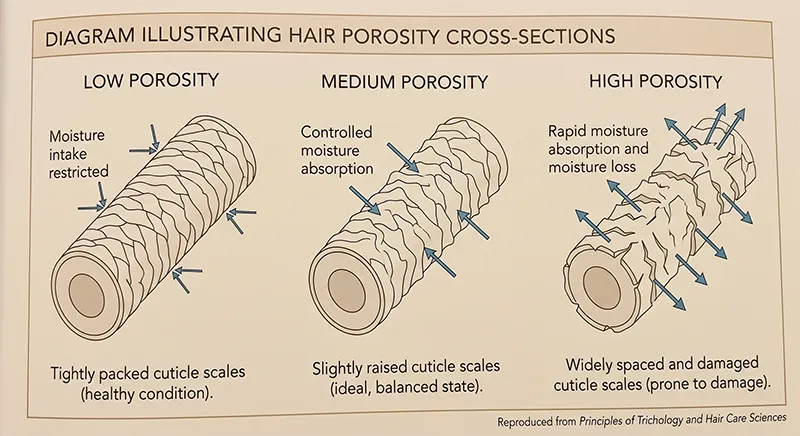
Hair porosity describes the hair's capacity to absorb and hold water. It is determined by the structure of the hair cuticle, which functions like a series of overlapping roof shingles along the hair shaft. The tighter the shingles overlap, the less moisture can penetrate; the more they are raised or damaged, the more freely moisture flows in and out.
There are three porosity categories:
- Low porosity: Cuticles are tightly closed. Moisture struggles to enter but is retained well once absorbed. Hair often appears shiny and smooth but can feel dry and is prone to product buildup.
- Medium (normal) porosity: Cuticles are slightly raised, allowing moisture to enter and exit at a balanced rate. This type generally requires the least maintenance and responds well to most standard hair care products.
- High porosity: Cuticles are raised, spaced, or damaged. Moisture enters quickly but escapes equally fast, leading to dryness, frizz, tangles, and breakage.
Porosity is primarily determined by genetics, but it can shift toward higher porosity through heat styling, chemical treatments (bleaching, relaxing, perming), UV exposure, and mechanical damage from rough brushing or tight hairstyles. For a deeper exploration of the low porosity category specifically, see the detailed guide on what low porosity hair is and what it means.
2. Three At-Home Hair Porosity Test Methods
The following tests can be performed at home in under two minutes each. For the most reliable results, perform at least two of the three methods and compare the outcomes. All tests require clean, product-free hair — residual conditioner, oil, or styling product on the strand will affect the result.
Test 1: The Float Test (Water Glass Test)
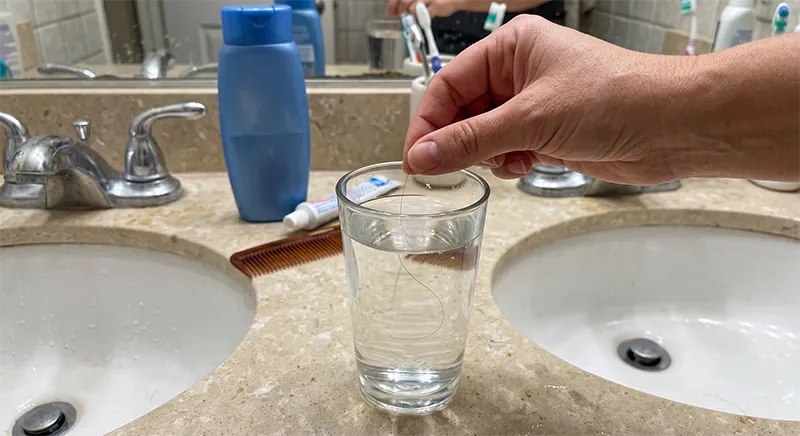
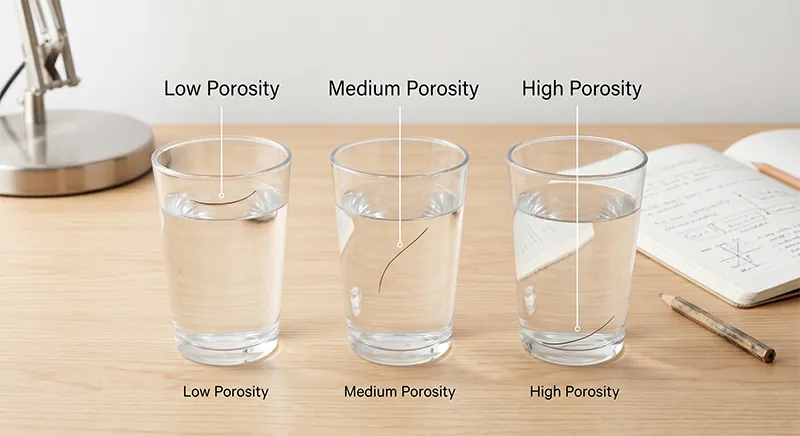
The float test is the most widely known porosity test. Fill a clear glass with room-temperature water. Take a single strand of clean, shed hair (from a brush or comb) and place it gently on the water surface. Wait two to four minutes without touching the strand, then observe its position.
- Floats on the surface: Low porosity — the tightly closed cuticle repels water, preventing the strand from becoming heavy enough to sink.
- Sinks slowly to the middle: Medium porosity — the cuticle allows gradual water absorption, increasing the strand's weight at a moderate rate.
- Sinks to the bottom quickly: High porosity — the open cuticle absorbs water rapidly, making the strand heavy enough to sink within seconds.
Test 2: The Spray Test (Water Mist Test)
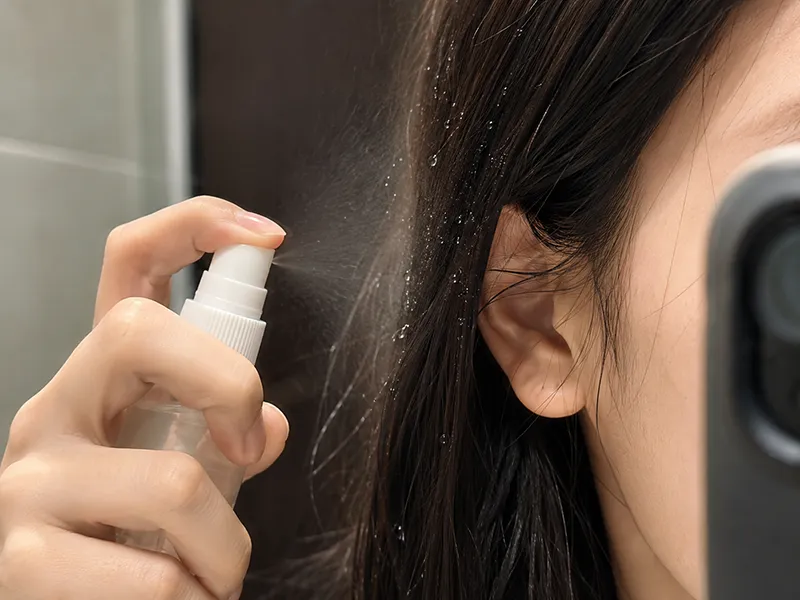
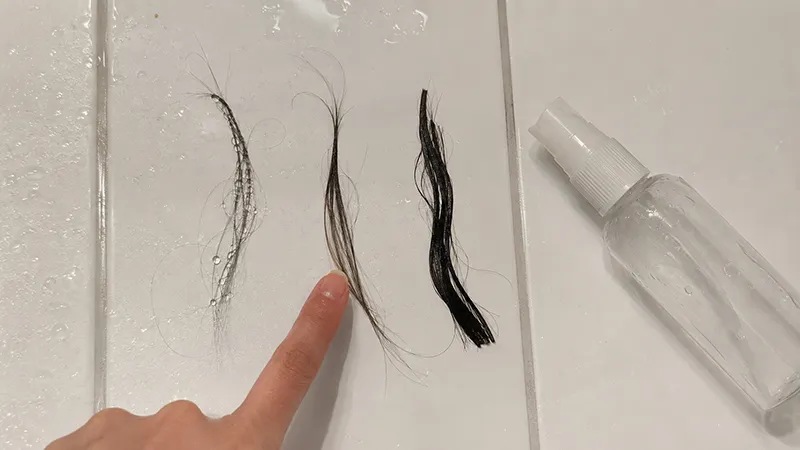
The spray test observes how hair reacts to water contact in real time. Take a small section of clean, dry hair and mist it with a spray bottle filled with plain water. Watch how the water behaves on the hair surface over the next 30–60 seconds.
- Water beads up and sits on the surface: Low porosity — the closed cuticle prevents absorption.
- Water absorbs gradually over one to two minutes: Medium porosity — balanced cuticle allows steady penetration.
- Water absorbs almost immediately: High porosity — the open cuticle draws moisture in rapidly.
The spray test is generally considered the most practical and consistent method because it tests the hair in its natural state, attached to the head, rather than as a single isolated strand in artificial conditions.
Test 3: The Slide Test (Finger Test)
The slide test assesses cuticle texture by touch. Take a single strand of dry hair between the thumb and index finger and slide upward from the tip toward the root. The feel of the strand surface indicates cuticle condition.
- Smooth, no resistance: Low porosity — cuticles are flat and tightly closed.
- Slight roughness: Medium porosity — cuticles are moderately raised.
- Noticeably rough or bumpy: High porosity — cuticles are raised, uneven, or damaged.
This test is less precise than the spray test but provides useful supporting evidence when combined with other methods. Results can be affected by recent conditioning treatments or heat styling, which temporarily smooth the cuticle surface.
3. Porosity Test Comparison: Which Method to Trust
No single at-home test provides a definitive porosity diagnosis. The following table compares the three methods across key criteria to help determine which combination provides the most useful result.
| Test Method | Time Required | Accuracy | Ease of Use | Key Limitation |
|---|---|---|---|---|
| Float test (water glass) | 2–4 minutes | Moderate | Very easy | Affected by surface tension and product residue |
| Spray test (water mist) | 30–60 seconds | High | Easy | Requires completely product-free hair for accuracy |
| Slide test (finger) | 10–15 seconds | Low–Moderate | Very easy | Subjective; affected by conditioning treatments |
For the most reliable result, perform the spray test first and confirm with the float test. If both indicate the same porosity level, the result is likely accurate. If results conflict, the spray test should generally be weighted more heavily.
4. What Each Porosity Type Looks and Feels Like
Beyond test results, porosity can often be identified by observing how hair behaves in everyday situations. The following characteristics serve as a practical checklist.
| Characteristic | Low Porosity | Medium Porosity | High Porosity |
|---|---|---|---|
| Water absorption | Slow — water beads on surface | Gradual — steady absorption | Rapid — absorbs immediately |
| Drying time | Long | Moderate | Short |
| Product buildup | Common — products sit on surface | Uncommon | Uncommon — products absorb quickly |
| Frizz tendency | Low in dry weather | Moderate | High, especially in humidity |
| Hair colour processing | Resistant — may need longer processing | Predictable results | Absorbs colour quickly but fades fast |
| Typical appearance | Shiny, smooth, sometimes dry | Healthy-looking, manageable | Rough, dull, prone to tangles |
| Breakage risk | Low (if moisture is maintained) | Low | High |
5. Care Recommendations by Porosity Type
Once porosity is identified, the most impactful change is adjusting product selection and application method to match how the hair absorbs and retains moisture.
Low Porosity Hair Care
The primary challenge with low porosity hair is getting moisture past the tightly closed cuticle. Lightweight, water-based products are more effective than heavy oils or butters, which tend to sit on the surface and create buildup. Using warm water during washing or applying a warm towel over a deep conditioning treatment can temporarily open the cuticle to improve product penetration. Clarifying shampoo every four to six washes helps remove accumulated residue. For detailed care strategies, see the full guide on how to care for low porosity hair.
Medium Porosity Hair Care
Medium porosity hair is the most straightforward to maintain. It responds well to most standard shampoos, conditioners, and styling products without requiring specialised formulations. The main risk is that frequent heat styling or chemical treatments can gradually shift medium porosity hair toward high porosity. Moderate use of protein-based treatments (monthly rather than weekly) helps maintain cuticle integrity without overloading the hair.
High Porosity Hair Care
High porosity hair loses moisture rapidly, so the goal is to seal in hydration after application. Heavier products — shea butter, castor oil, leave-in conditioners with protein — help fill gaps in the cuticle and slow moisture loss. The LOC method (Liquid, Oil, Cream) applied in sequence is widely recommended for high porosity routines. Rinsing with cool water after conditioning encourages the cuticle to close, improving moisture retention. Avoiding further heat damage and using deep conditioning treatments weekly can help manage the effects of elevated porosity.
6. How Porosity Affects Styling Tool Selection
Porosity does not only determine product choice — it also influences which brushes, combs, and styling tools perform best. Understanding this relationship is relevant both for consumers choosing personal tools and for brands building product assortments.
- Low porosity hair: Responds well to boar bristle brushes, which distribute the scalp's natural oils along the hair shaft — a particularly useful function for low porosity hair where oils tend to sit near the roots. Wide-tooth combs are effective for detangling without disrupting the flat cuticle structure.
- Medium porosity hair: Works well with most brush and comb types. Cushion brushes and paddle brushes are suitable for daily grooming, and round brushes perform predictably during blow-dry styling.
- High porosity hair: Benefits from detangling brushes with flexible bristles that bend around knots rather than pulling through them, reducing breakage. Wide-tooth combs used on wet, conditioned hair are the gentlest option. Avoid fine-tooth combs and boar bristle brushes, which can snag on the raised cuticle surface.
For a comprehensive overview of brush types and their functions, see the full guide on types of hair brushes.
7. Conclusion
A hair porosity test takes under two minutes and provides one of the most useful data points for building an effective hair care routine. The spray test offers the most reliable at-home results, while the float test and slide test serve as supporting methods. Performing two tests and comparing outcomes produces the most consistent diagnosis.
Once porosity is identified, the practical implications are straightforward: low porosity hair needs lightweight, heat-activated products; medium porosity hair responds to most standard formulations; and high porosity hair benefits from rich, sealing products that slow moisture loss. Matching both products and styling tools to porosity type reduces waste, improves results, and prevents the frustration of routines that do not work.
For brands and formulators developing hair care product lines, porosity-based segmentation is an increasingly relevant positioning strategy. Manufacturers such as JunYi Beauty, which produces brushes and combs across the full range of bristle types and materials at its Dongguan facility, can supply porosity-specific brush recommendations as part of product bundling and educational content strategies.