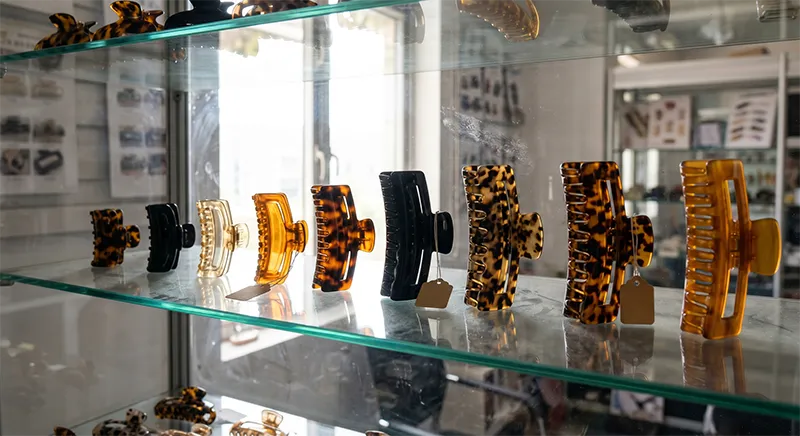
An acetate comb is a hair comb made from cellulose acetate — a semi-synthetic thermoplastic derived from wood pulp or cotton linters. Unlike petroleum-based plastics such as ABS or polypropylene, cellulose acetate originates from plant cellulose, giving it a distinct combination of natural translucency, high surface density, and the ability to be polished to a glass-smooth finish.
For B2B buyers, brand owners, and salon procurement teams, acetate combs occupy a specific position in the product landscape: premium enough to support higher retail margins, yet produced at volumes that make OEM manufacturing commercially viable. This guide covers the material science behind acetate, how acetate combs are manufactured, their functional properties compared to other comb materials, and the key specifications that matter when sourcing acetate combs at scale.
1. What Is Cellulose Acetate?
Cellulose acetate is produced by reacting natural cellulose — extracted from wood pulp or cotton linters — with acetic acid and acetic anhydride. This chemical process replaces the hydroxyl groups on the cellulose molecule with acetyl groups, creating a thermoplastic that can be cast, shaped, and polished. The resulting material retains a partial plant-based composition while gaining the mouldability and durability required for commercial product manufacturing.
The material was first developed in the early 20th century and has been used extensively in eyewear frames, film stock, and premium accessories. In hair accessories, cellulose acetate is valued for three properties that petroleum-based plastics cannot easily replicate: natural translucency that allows layered colour effects, a surface density that produces a distinctly premium weight and feel, and the ability to achieve a mirror-smooth polish that minimises friction against hair.
Cellulose acetate is classified as a semi-synthetic bioplastic — derived from renewable plant sources but processed through chemical modification. It is partially biodegradable under industrial composting conditions, though it does not break down as readily as untreated wood. This positions acetate between fully synthetic petroleum plastics and fully natural materials such as wood or bamboo in terms of environmental profile.
2. How Acetate Combs Are Manufactured
Acetate comb production follows a fundamentally different process from standard plastic comb manufacturing. While ABS and polypropylene combs are produced via injection moulding — a high-speed process where molten plastic is injected into a mould cavity — acetate combs are made through a sheet-cutting and polishing process that involves more manual stages and longer production timelines.
Sheet Cutting
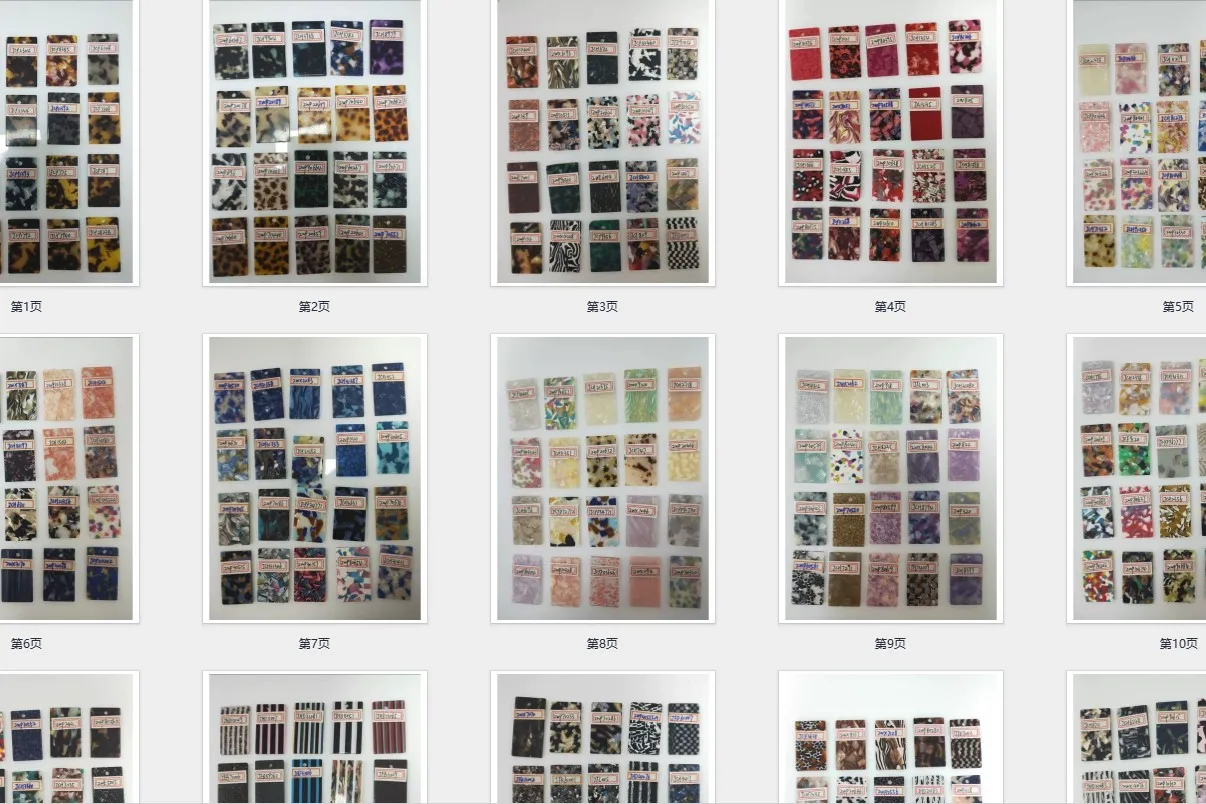
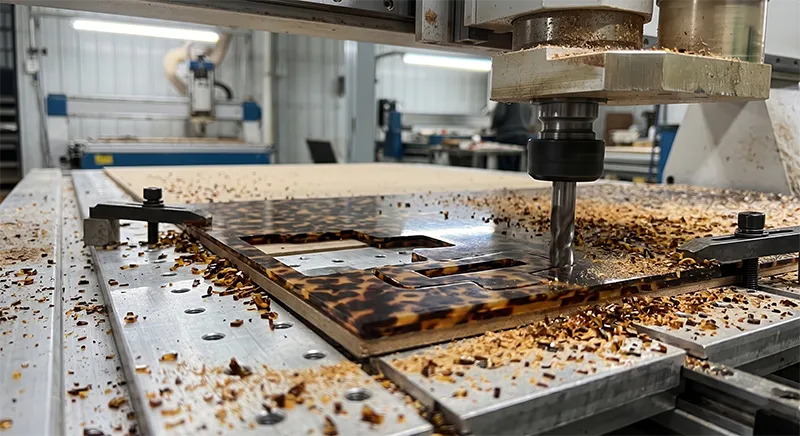
Pre-cast cellulose acetate sheets (typically 2–5 mm thick) are cut into rough comb blanks using CNC routing machines. The sheet's colour, pattern, and transparency are determined at the material procurement stage — each sheet is pre-made with its colour fully integrated rather than applied as a surface coating. This is why acetate comb colours appear deep and layered rather than painted on.
Heating and Shaping
Cut blanks are heated to a controlled temperature (typically 130–160°C) to soften the material, then pressed or bent into the final comb profile using moulds or forming tools. Tooth spacing, curvature, and handle angle are all set during this stage. The shaping process requires precise temperature control — overheating causes yellowing or warping, while insufficient heat results in stress fractures during forming.
Tumble Polishing
After shaping, combs are placed in rotating polishing drums with abrasive media to smooth all surfaces, edges, and tooth tips. This process runs for several hours and is critical for achieving the friction-free surface that defines acetate comb quality. Inadequately polished teeth will snag hair and cause breakage — a direct quality indicator that buyers should evaluate during sample inspection.
Manual Finishing and Inspection
Final finishing is done by hand. Workers inspect each comb for surface defects, polish residual rough spots, and verify tooth alignment. This manual stage is the primary reason acetate comb production involves higher per-unit labour costs than injection-moulded plastic combs. It is also the stage where quality variation between manufacturers is most evident.
The complete production cycle from acetate sheet to finished comb typically takes 15–20 days for acetate items, compared to a matter of hours for injection-moulded ABS combs. This timeline difference is a key factor in lead time planning for B2B orders.
3. Material Properties: Why Acetate Performs Differently
The functional differences between acetate combs and combs made from other materials are rooted in the material's physical properties. The following table summarises the key technical characteristics.
| Property | Cellulose Acetate | ABS Plastic | Wood |
|---|---|---|---|
| Origin | Plant-derived (wood pulp / cotton) | Petroleum-derived | Natural (tree species) |
| Density / Weight | High — noticeably heavier | Low — lightweight | Variable by species |
| Surface Finish | Mirror-polish achievable | Mould-dependent | Sanded / oiled |
| Static Generation | Low | Moderate–High | Low |
| Translucency | Yes — layered colour effects | No — opaque | No — opaque |
| Water Resistance | Good | Excellent | Poor without sealing |
| Heat Tolerance | Moderate (up to ~80°C daily use) | Low–Moderate | Sensitive to drying |
| Biodegradability | Partial (industrial composting) | Poor | Good |
| Unit Cost | Mid–Premium | Low–Mid | Mid–Premium |
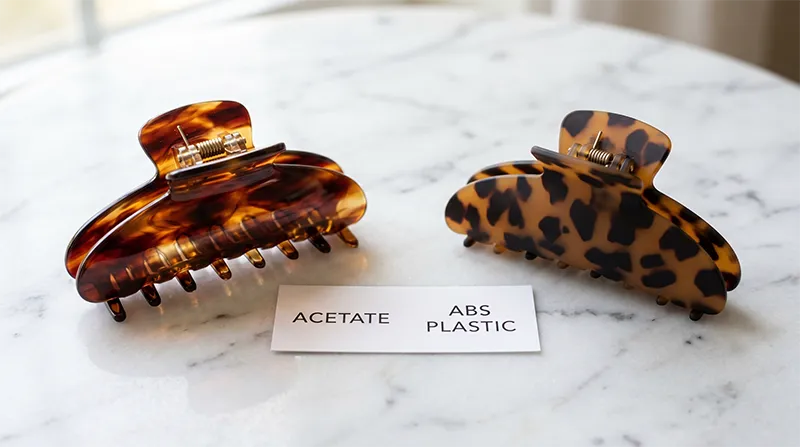
Three properties deserve particular attention for product line planning. First, static reduction: acetate generates significantly less triboelectric charge than ABS during combing, which directly translates to reduced frizz and flyaway — a measurable selling point for consumer marketing. Second, surface smoothness: properly polished acetate teeth glide through hair with less friction than moulded plastic teeth, reducing micro-damage to the hair cuticle over repeated use. Third, colour depth: because colour is integrated throughout the material rather than applied as a surface coating, acetate combs produce a visual depth — particularly in tortoiseshell, marble, and gradient patterns — that cannot be replicated in injection-moulded plastic.
For a detailed attribute-by-attribute comparison of acetate against plastic and wooden combs, including performance data on wet hair, heat styling, and hygiene, see the full acetate vs plastic vs wooden combs comparison guide.
4. Types of Acetate Combs
Acetate is used across multiple comb form factors, each serving a different functional and market role.
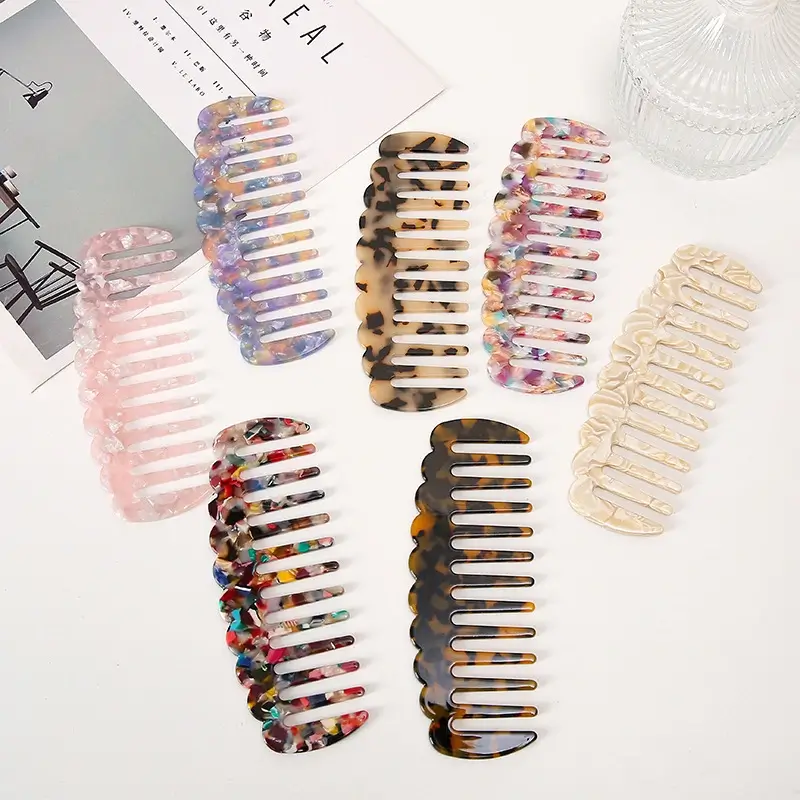
Wide-Tooth Acetate Combs
Designed for wet-hair detangling and conditioner distribution, wide-tooth acetate combs are positioned in the premium daily grooming segment. The smooth, polished teeth reduce snagging on wet hair — a significant advantage over moulded plastic wide-tooth combs that often retain micro-roughness from the injection process.
Fine-Tooth Acetate Combs
Fine-tooth acetate combs are used for precise parting, slicking, and finishing. The material's rigidity allows tightly spaced teeth without the flex or bend that thin plastic teeth exhibit under pressure. These combs are commonly specified in professional salon tool kits and barber supply lines.
Rat-Tail Acetate Combs
Rat-tail combs combine a fine-tooth comb section with a pointed tail for sectioning and parting. Acetate rat-tail combs offer a premium alternative to the standard ABS versions found in salon supply catalogues. The tail section requires sufficient material thickness to avoid breakage — a specification that should be verified during sample evaluation.
Decorative and Gift-Set Acetate Combs
Acetate's visual properties make it particularly suited for decorative combs designed for retail display, gift sets, and branded promotional items. Colour customisation — including brand-specific Pantone matching — is achieved at the sheet procurement stage. Decorative combs represent the highest-margin segment within acetate comb product lines. For the full range of acetate comb designs available for OEM production, see the hair comb product catalogue.
5. OEM Sourcing Specifications for Acetate Combs
For B2B buyers evaluating acetate comb manufacturing partnerships, the following specifications and parameters are the most critical to define early in the sourcing process.
| Specification | Typical Range | Notes |
|---|---|---|
| MOQ | 300–500 pcs/SKU | Using existing moulds; new moulds may require higher minimums |
| Sample Lead Time | 15–20 days | Longer than ABS (5–7 days) due to sheet-cutting process |
| Bulk Production Lead Time | 25–45 days | Depends on order volume and finishing complexity |
| Sheet Thickness | 2–5 mm | Thicker sheets produce heavier, more premium-feeling combs |
| Colour Customisation | Pantone matching available | Colour is integrated in sheet; minimum sheet order may apply |
| Logo Application | Laser engraving, pad printing, hot stamping | Laser engraving is most durable on acetate surfaces |
| Certifications | ISO 9001, BSCI, GRS 4.0 | Required by most European and UK retail buyers |
A common sourcing mistake with acetate combs is treating them like plastic combs in production planning. The longer sample turnaround, higher per-unit cost, and sheet-based colour system all require earlier planning cycles than ABS products. Buyers who are accustomed to 5-day ABS sample turnarounds should build 15–20 days into their acetate timelines from the start.
Acetate sheet colour selection is a particularly important step. Unlike plastic combs where colour is a simple RAL or Pantone specification applied to resin, acetate colour is determined by the sheet itself — and sheets are procured in batch quantities. Brands launching a new colourway may need to order a minimum sheet quantity before production can begin. Discussing colour availability with the manufacturer at the enquiry stage avoids delays later in the process.
6. Care and Maintenance
Acetate combs are durable under normal grooming conditions, but the material does have specific care requirements that differ from plastic or metal combs. Following these guidelines will extend product lifespan and maintain surface quality.
Cleaning: Rinse with lukewarm water and a small amount of mild soap or shampoo. A soft cloth or old toothbrush can be used to remove product buildup from between teeth. Avoid alcohol-based cleaners, acetone, or any solvent containing ketones — these chemicals can dissolve or cloud the acetate surface. Acidic and strongly alkaline cleaning agents should also be avoided.
Heat exposure: Acetate is a thermoplastic and will begin to soften at temperatures above approximately 80°C. Direct contact with heated styling tools such as flat irons, curling irons, or blow dryers at close range should be avoided. Normal ambient temperatures, including hot weather or warm bathrooms, will not affect the comb.
Storage: Store acetate combs separately from metal accessories to prevent surface scratching. A fabric pouch or lined case is recommended for travel. Unlike wooden combs, acetate does not require oil treatment or moisture sealing — the material is inherently water-resistant and does not warp or swell from humidity exposure.
7. Who Benefits Most from Acetate Combs?
Acetate combs are not universally superior to other comb materials — they serve specific use cases and market segments more effectively than others.
Fine or fragile hair: The low-friction, polished surface of acetate teeth minimises micro-damage during daily combing. Users with fine, colour-treated, or chemically processed hair experience less breakage and split-end formation compared to using rough-surfaced plastic combs.
Frizz-prone or dry hair: Acetate's low static generation makes it particularly effective for hair types that are prone to flyaway and frizz. The triboelectric effect — the charge buildup caused by friction between comb and hair — is measurably lower with acetate than with most petroleum-based plastics.
Premium retail and gift markets: The visual quality of acetate — particularly in tortoiseshell, marble, and custom colour patterns — positions it as a fashion accessory rather than a purely functional grooming tool. Brands operating in premium retail, department store, or gift-set channels find acetate combs deliver stronger margin performance than plastic alternatives.
Salon professionals: Fine-tooth and rat-tail acetate combs are specified in professional tool kits where precision and surface smoothness directly affect styling results. The material's density provides a balanced weight that many stylists prefer over lightweight plastic during extended use.
Understanding hair porosity and its relationship to product selection can further refine the positioning of acetate combs within a product line. Low-porosity hair types, which resist moisture absorption, benefit from the reduced friction that acetate surfaces provide during dry brushing and oil distribution.
8. Conclusion
Acetate combs occupy a distinct position in the hair accessories market — sitting between mass-market plastic combs and artisanal wooden combs in terms of both price point and functional performance. The material's plant-derived origin, superior surface finish, low static properties, and rich colour capabilities make it the standard choice for mid-to-premium comb lines targeting quality-conscious consumers and professional salon channels.
For B2B buyers developing or expanding an acetate comb product line, the key sourcing considerations are sheet colour selection at the procurement stage, the longer production timeline compared to ABS, and the importance of evaluating polishing quality during sample review. Manufacturers such as JunYi Beauty, operated by Dongguan JunYi Beauty Technology Co., Ltd., maintain libraries of over 2,000 active moulds including acetate comb designs, with certifications spanning ISO 9001, amfori BSCI, BRCGS, GRS 4.0, and FSC — supporting brands that require both product customisation and supply chain compliance. For a comparison of acetate-focused manufacturers, see the top 5 acetate hair accessories manufacturers guide.
If you are evaluating acetate for a comb line, handling a physical sample is the fastest way to judge colour, polish and tooth finish. Our samples and prototypes page explains how to request existing-style acetate samples or a custom prototype.