Metal combs have a certain allure—sleek, sturdy, and built to last. They feel like a step up from flimsy plastic options, whether stainless steel, aluminum, or even titanium. But are they a helpful tool or a hidden risk when it comes to your hair? The truth lies somewhere in between. Metal combs offer some real advantages, like durability and styling precision. Yet, they come with drawbacks, like potential breakage or scalp irritation. Let’s dig into the pros and cons, weigh them against your hair’s needs—wet or dry—and determine if they’re worth adding to your routine. With a mix of facts, tips, and a handy table, you’ll see the whole picture.
What Are Metal Combs?
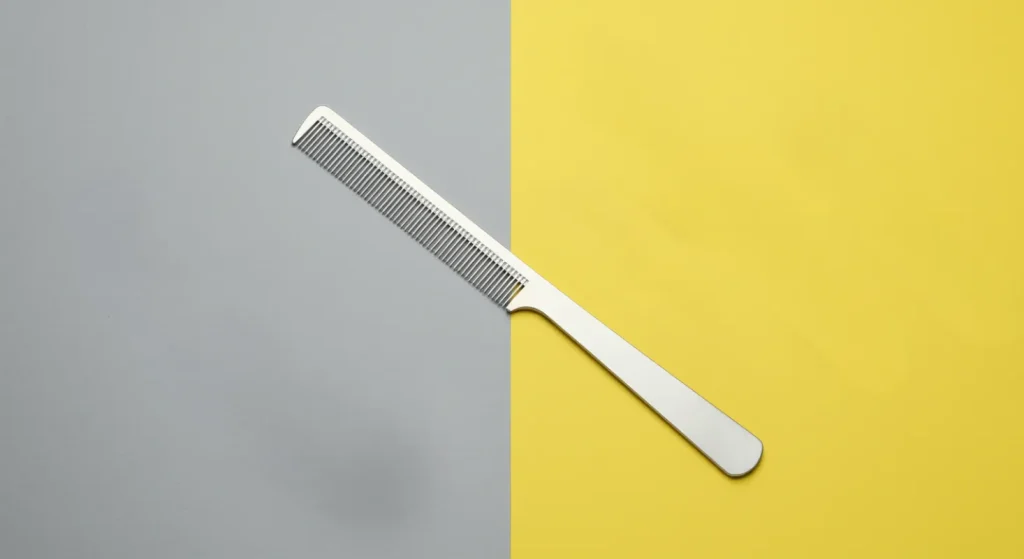
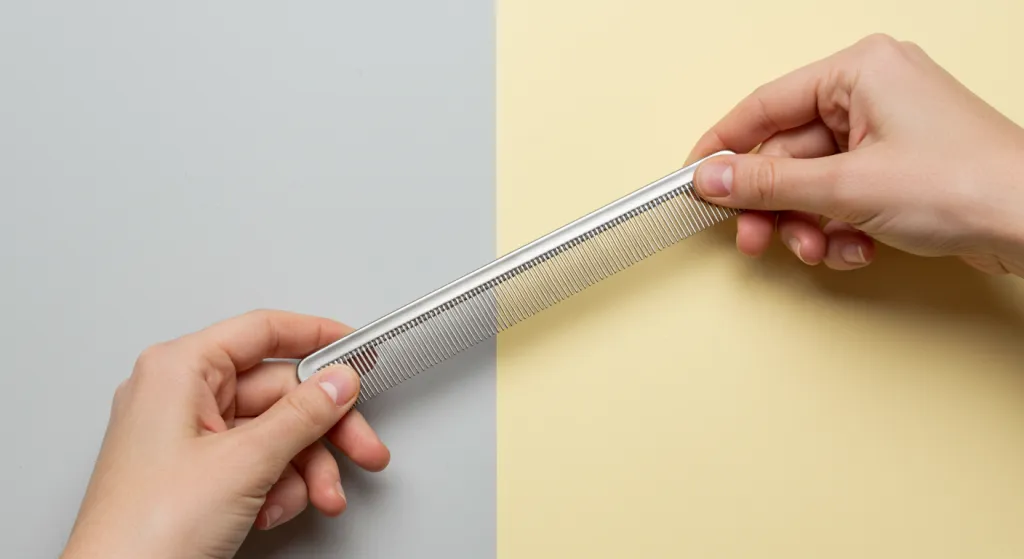
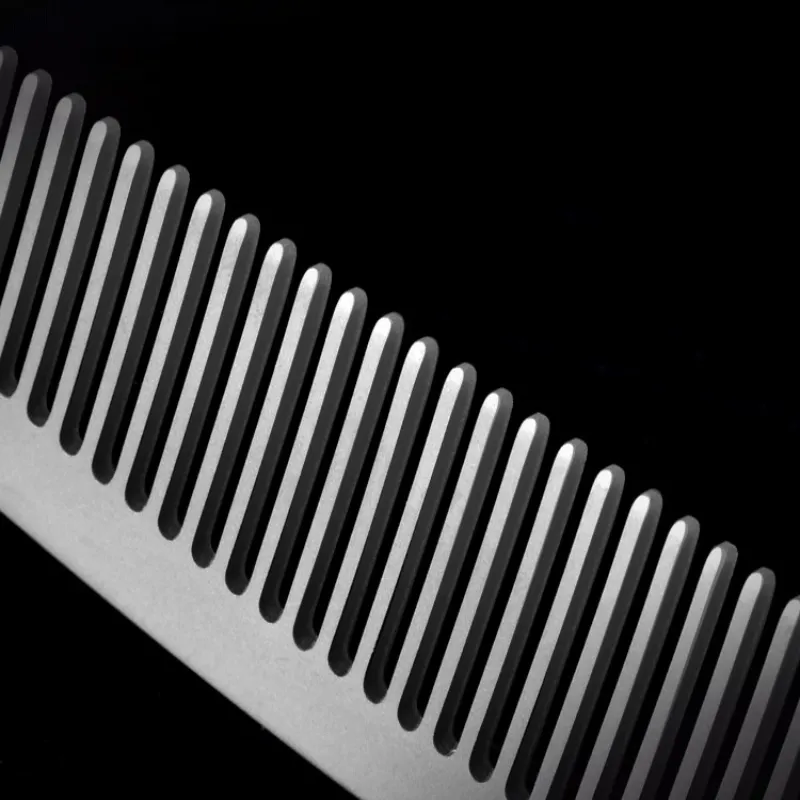
Metal combs are precisely what they sound like—combs crafted from metals like stainless steel or aluminum. They come in various styles: wide-tooth for detangling, fine-tooth for smoothing, or even rat-tail designs with a pointed end for parting. Unlike plastic or wooden combs, they’re tough, resist bending, and often have a polished finish that feels premium. You might use them to tame flyaways, section hair for styling, or keep them in your bag for quick touch-ups.
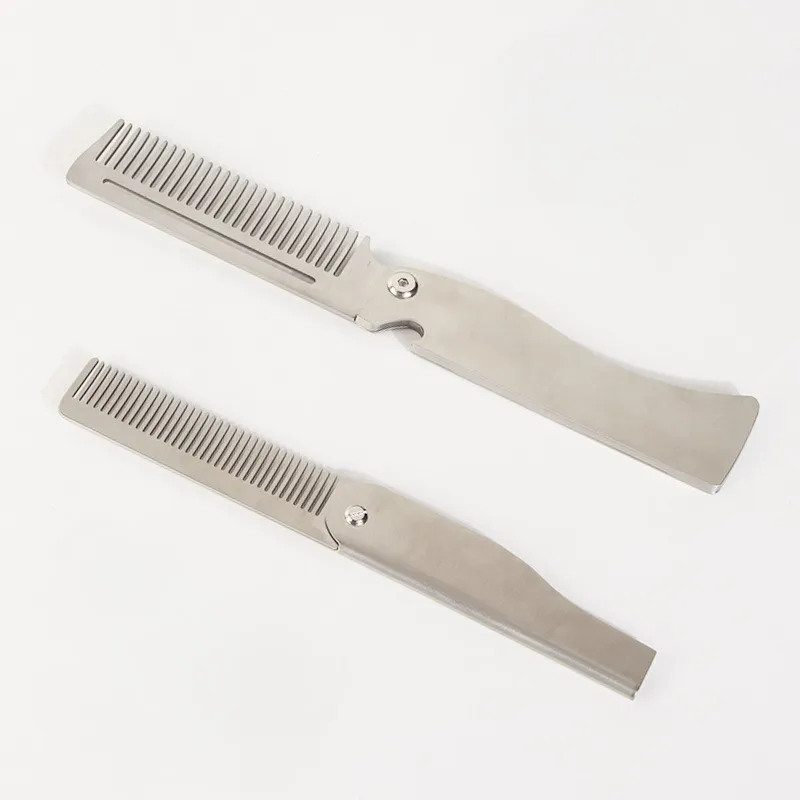
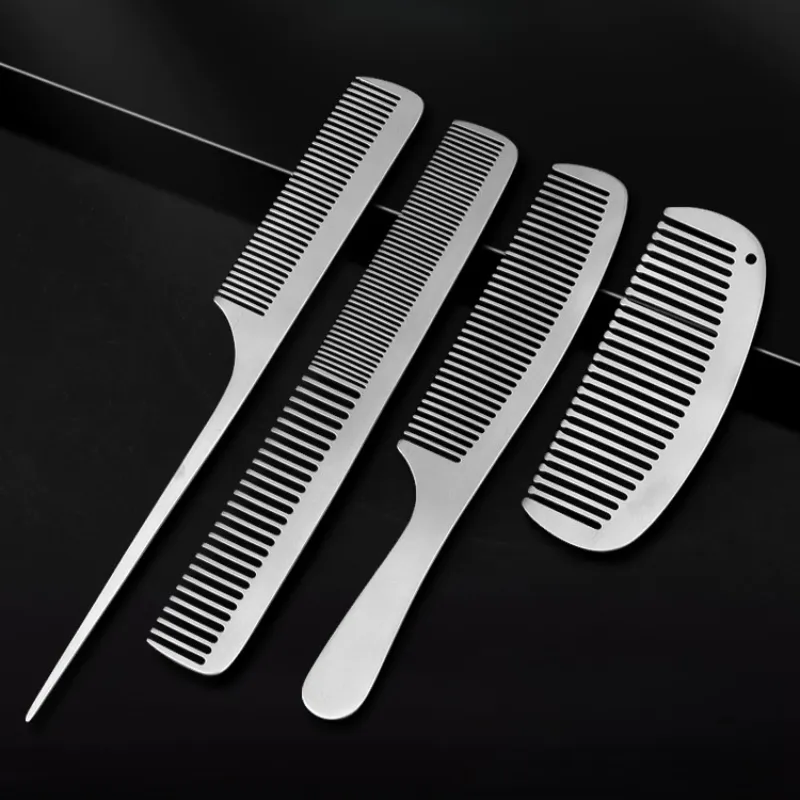
Their strength is part of their appeal, but it’s also why people wonder about their impact on hair. Do they glide through strands like a dream or tug and tear? Let’s break it down by looking at the good and the bad.
The Benefits of Metal Combs for Hair
Metal combs have some solid perks that make them stand out. Here’s why they might be a win for your hair:
Durability: These combs don’t snap or warp—drop one, and it’ll still be in one piece. Compared to plastic combs that crack under pressure, they’re a long-term investment.
Reduced Static: Metal conducts electricity better than plastic, cutting down on flyaway frizz caused by dry hair, especially in winter. This is a small but noticeable plus for smoother strands.
Easy to Clean: Metal resists buildup—no gunk or oil sticks around. A quick rinse or wipe makes it as good as new, which is great for hygiene.
Styling Precision: Fine-tooth metal combs are champs at smoothing dry hair or teasing for volume. The rigid teeth hold their shape, giving you control that plastic can’t match.
Scalp Stimulation: The firm tips can gently massage your scalp, boosting blood flow and spreading natural oils—think shinier, healthier hair over time.
These benefits shine brightest on dry hair, where metal’s strength and anti-static edge shine. They’re handy for straight or wavy types needing a sleek finish.
The Downsides of Metal Combs for Hair
But it’s not all rosy—metal combs have their pitfalls, too. Here’s where they might trip up:
Risk of Breakage: Those rigid teeth don’t flex. If you hit a knot—especially in wet hair—they can snap strands instead of easing through. Fine hair or fragile curls are especially vulnerable.
Scalp Irritation: Sharp or poorly finished edges can scratch your scalp, causing discomfort or even tiny cuts if you’re not careful. It’s a rare issue, but it happens.
Wet Hair Woes: Wet hair is weaker—up to 30% more breakable—and metal combs can be too harsh. The lack of giving means more tension, raising the odds of damage.
Potential Snagging: If the teeth aren’t smooth or rounded, they can catch on hair, pulling out strands or splitting ends, particularly with curly or coily textures.
Weight: Metal is heavier than plastic or wood. Your hand might tire out faster during long detangling sessions.
These downsides hit hardest with wet hair or delicate types, where flexibility matters more than strength.
Wet Hair vs. Dry Hair: How Metal Combs Perform
Your hair’s state—wet or dry—changes how metal combs behave. Here’s the difference:
Wet Hair: Fresh from the shower, hair is stretchy but fragile. With their stiff teeth, metal combs can over-pull, snapping strands or stressing roots. Wide-tooth versions help but are riskier than plastic or wood on soaked locks. Think breakage or split ends if you’re not gentle.
Dry Hair: Once dry, hair’s more demanding and less prone to snapping. Metal combs shine here—fine teeth are smooth without frizz, and the weight helps control thicker strands. Static’s less of an issue, too, making it a dry-hair styling ally.
For wet hair, metal’s a gamble unless you’re meticulous. Dry hair? It’s where these combs flex their muscle.
Comparison Table: Pros and Cons at a Glance
Here’s a quick snapshot of metal combs’ ups and downs:
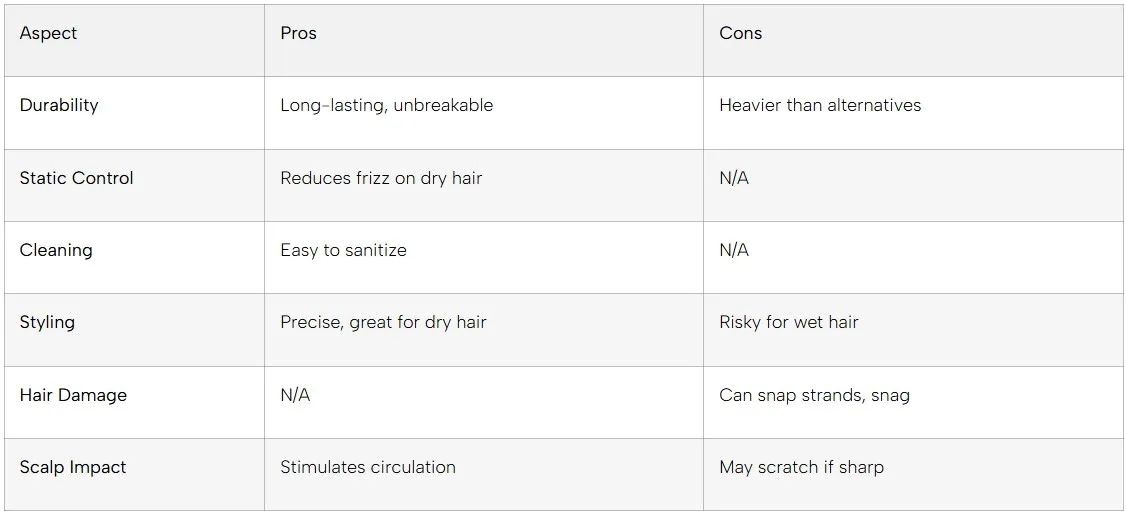
Aspect | Pros | Cons |
Durability | Long-lasting, unbreakable | Heavier than alternatives |
Static Control | Reduces frizz on dry hair | N/A |
Cleaning | Easy to sanitize | N/A |
Styling | Precise, great for dry hair | Risky for wet hair |
Hair Damage | N/A | Can snap strands, snag |
Scalp Impact | Stimulates circulation | May scratch if sharp |
Customizing Metal Combs: A Game-Changer
Customization can tip the scales, making metal combs safer and more tailored. Here’s how:
Rounded Teeth: Smooth, blunt tips cut snagging and scalp scratches, softening their edge on all hair types.
Tooth Spacing: Wide teeth for thick or wet hair, fine teeth for dry, straight strands—match it to your needs.
Material Tweaks: Stainless steel’s common but lighter alloys reduce weight, or polished finishes boost glide.
Size Options: Pocket-sized for travel or more extended for big detangling jobs—your call.
Places like JunYi Beauty at https://haircarecn.com/hair-brush/offer custom hair tools—imagine a metal comb with rounded teeth or a grip just for you. It’s a way to keep the pros and dodge the cons.
Tips for Using Metal Combs Safely
Want the benefits without the risks? Try these:
Skip Wet Hair: Stick to dry hair unless it’s a custom wide-tooth model—wet strands can’t handle the rigidity.
Go Slow: Ease through knots; don’t force it. Start at the ends and work up to avoid tugging.
Check Edges: Run your finger over the teeth—smooth is safe, sharp isn’t.
Pair with Care: Use a leave-in conditioner on dry hair for extra slip-cutting friction.
Rest Your Hair: Don’t over-comb—break your strands from tension.
These steps keep metal combs in the “pro” column more often.
How Hair Type Plays a Role
Your hair type shifts the balance:
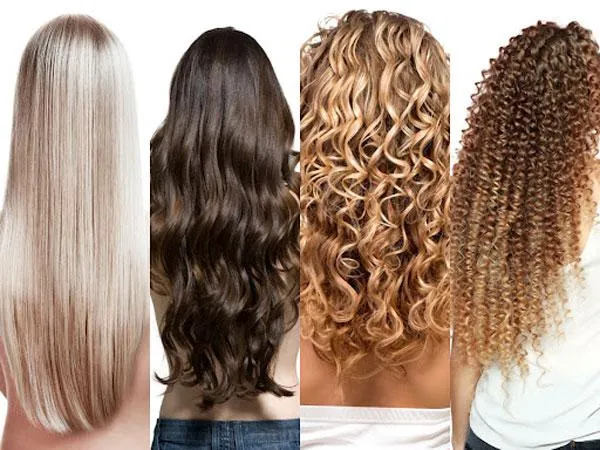
Curly/Coily: Metal’s tricky—snagging’s a risk, especially wet. Wide-tooth custom ones might work on dry curls.
Straight/Wavy: Dry hair loves metal for smoothing and static control; wet hair is still dicey.
Delicate/Fragile: Gentleness is key—metal can break these strands unless you’re super light-handed.
Thick: Metal’s weight helps control dry volume, but wet detangling needs caution.
Match the comb to your hair’s quirks, and you’ll tip the pros over the cons.
Metal Combs vs. Other Materials
Metal is unique compared to plastic or wood (from my comb rundown). Plastic flexes, reducing wet-hair breakage but bending over time. Woodcuts static and soothes scalps, though it’s less durable. Metal’s tougher and sleeker than both but less forgiving—think claw clip grip versus hair stick softness. It’s a middle ground: not the gentlest, but not the harshest either.
Should You Use a Metal Comb?
So, are metal combs a yes or a no? It’s a split decision. They’re fantastic for durability, static control, and dry-hair styling—pros that shine for straight or thick types needing polish. But they falter with wet hair, fragile strands, or rough handling, where breakage and snags creep in. Custom options—like rounded teeth from makers like JunYi Beauty—can soften the downsides, making them safer for more scenarios.
Metal combs are a pro pick if you’re styling dry hair and love a solid tool. Got wet curls or fine locks? You might lean elsewhere—wood or wide-tooth plastic could be kinder. Weigh your hair’s needs and how you’ll use it. Metal combs aren’t perfect, but they can be a solid ally with the right tweaks.