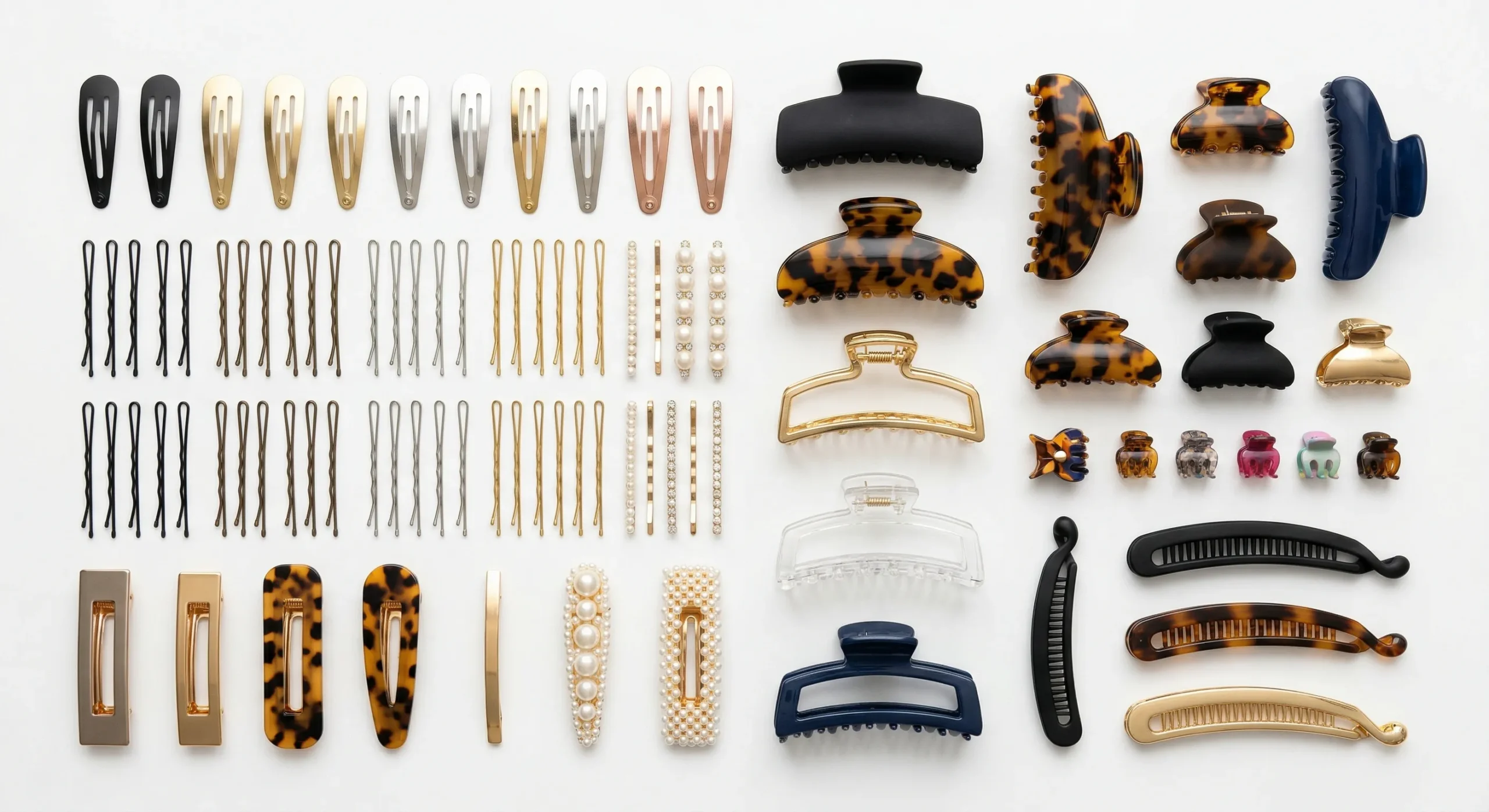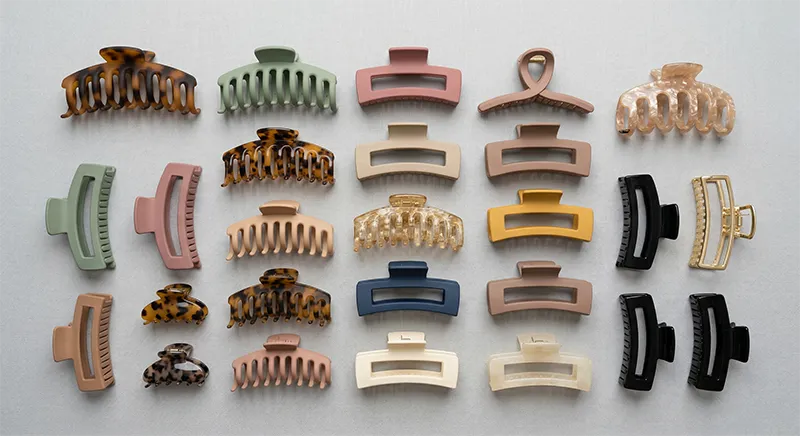
A claw clip is a hinged hair fastening device that uses two interlocking toothed sections, held together by a spring mechanism, to grip and secure a gathered section of hair in place. It is one of the most widely used hair accessories in both consumer retail and professional salon environments, valued for its combination of hold strength, ease of use, and versatility across hair types and styling contexts.
The term "jaw clip" is frequently used interchangeably with "claw clip," and in most commercial and sourcing contexts, the two names refer to the same product category. However, distinctions do exist in specific usage, sizing conventions, and regional terminology — and understanding these differences is relevant for buyers, stylists, and procurement managers making sourcing decisions. For brands exploring custom options, the hair claw accessories range provides a reference point for standard and custom specifications.
1. What Is a Claw Clip?
A claw clip — also referred to as a jaw clip, hair claw, or butterfly clip depending on the market — consists of two mirror-image arms connected by a central spring hinge. When pressed open and released, the toothed edges interlock to clamp hair between them. Spring tension determines holding strength, and the physical size of the clip determines how much hair volume it can accommodate.
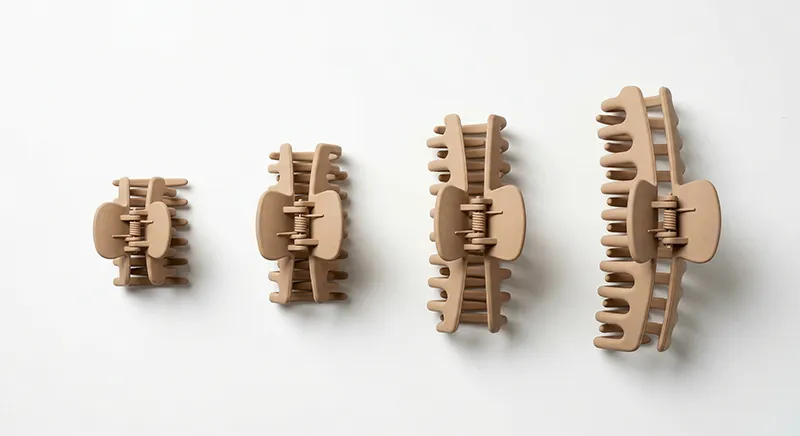
Claw clips are manufactured in a range of sizes, typically classified as follows:
- Mini (4–5 cm): suitable for small sections, fine hair, or decorative use
- Medium (6–8 cm): standard everyday use across most hair types
- Large (9–11 cm): designed for thick, long, or voluminous hair
- Oversized / XXL (12 cm and above): typically used for full updos or thick textured hair
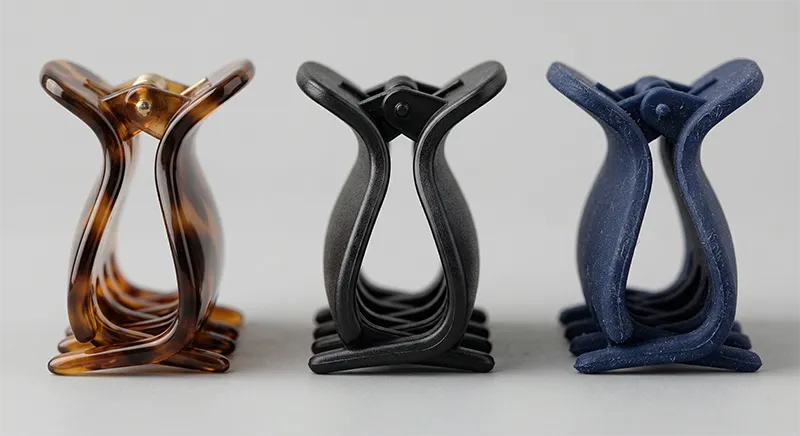
Materials used in claw clip production include cellulose acetate, ABS plastic, nylon, and metal alloys. Each material affects the clip's durability, aesthetic finish, weight, and price point — factors that influence both retail positioning and OEM sourcing decisions.
2. What Is a Jaw Clip, and Is It the Same Thing?
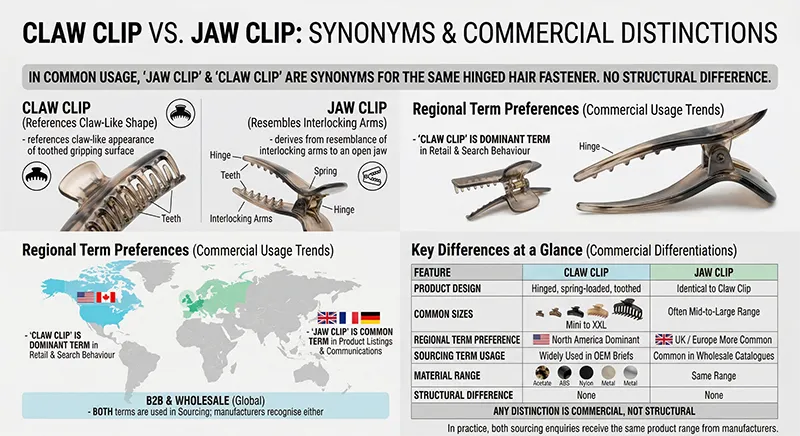
In common usage, "jaw clip" and "claw clip" are synonymous. Both names describe the same hinged, spring-loaded hair fastener. The name "jaw clip" derives from the resemblance of the two interlocking arms to an open jaw; "claw clip" references the claw-like appearance of the toothed gripping surface.
Regional preferences for one term over the other do exist:
- In North American markets, "claw clip" is the dominant term in both retail and search behaviour
- In UK and European markets, "jaw clip" appears with greater frequency in product listings and buyer communications
- In B2B and wholesale sourcing contexts, both terms are used, and manufacturers typically recognise either
From a manufacturing and specification standpoint, there is no structural difference between a product sold as a "jaw clip" and one sold as a "claw clip." The product design, materials, and production process are identical.
3. Claw Clip vs Jaw Clip: Key Differences at a Glance
While the two terms describe the same core product, buyers and retailers occasionally apply them with slight distinctions in sizing or regional context. The comparison below summarises how the terms are sometimes differentiated in commercial usage.
| Feature | Claw Clip | Jaw Clip |
|---|---|---|
| Product design | Hinged, spring-loaded, toothed | Identical to claw clip |
| Common sizes | Mini to XXL | Often mid-to-large range |
| Regional term preference | North America dominant | UK / Europe more common |
| Sourcing term usage | Widely used in OEM briefs | Common in wholesale catalogues |
| Material range | Acetate, ABS, nylon, metal | Same range |
| Structural difference | None | None |
In practice, a sourcing enquiry specifying "jaw clip" and one specifying "claw clip" will generally receive the same product range from a manufacturer. Any distinction is commercial or regional, not structural.
4. How Are Claw Clips Made?
Claw clips are produced through injection moulding, the same core process used for most plastic and acetate hair accessories. The two arms are moulded separately, then assembled with a metal or nylon spring and a connecting pin or rivet.
The key stages in production are:
- Mould fabrication: Each arm shape requires a dedicated precision mould, typically made from tool steel
- Material injection: Molten ABS, nylon, or acetate compound is injected into the mould under pressure and cooled
- Surface finishing: Polishing, colouring, or pattern application depending on specification
- Spring and hinge assembly: The spring mechanism is inserted and the two arms are connected
- Quality inspection: Spring tension, grip strength, and surface finish are tested before packaging
Cellulose acetate claw clips require an additional hand-finishing stage due to the material's properties. Acetate sheets are cut, shaped under heat, and hand-polished — a process that is more labour-intensive than standard injection moulding and accounts for the higher cost of acetate products relative to ABS alternatives.
5. Material Comparison: Sourcing Options for Claw and Jaw Clips
Material selection is one of the most consequential decisions in claw clip procurement, affecting product positioning, durability, retail price point, and target consumer. The following table outlines the key material options available from manufacturers.
| Material | Durability | Surface Finish | Eco Profile | Typical Positioning |
|---|---|---|---|---|
| Cellulose acetate | High | Glossy, deep colour, translucent | Plant-derived, biodegradable | Premium retail, boutique brands |
| ABS plastic | Medium | Glossy, uniform | Petroleum-based | Mass market, value retail |
| Nylon | High | Matte, textured | Partially recyclable | Sports, active use, salon |
| Metal alloy | Very high | Polished or brushed | Recyclable | Minimalist, luxury, editorial |
Cellulose acetate has seen sustained demand growth in premium retail channels, driven by consumer interest in natural-origin materials and the material's distinctive aesthetic properties — depth of colour, translucency, and a tactile quality not replicated by standard plastics.
6. Application Contexts: Where Each Product Type Is Used
Retail Consumer Use
Everyday hair management, styling, and updos. The most common purchase channel is mass-market beauty retail, with premium acetate versions sold through boutique and direct-to-consumer brands.
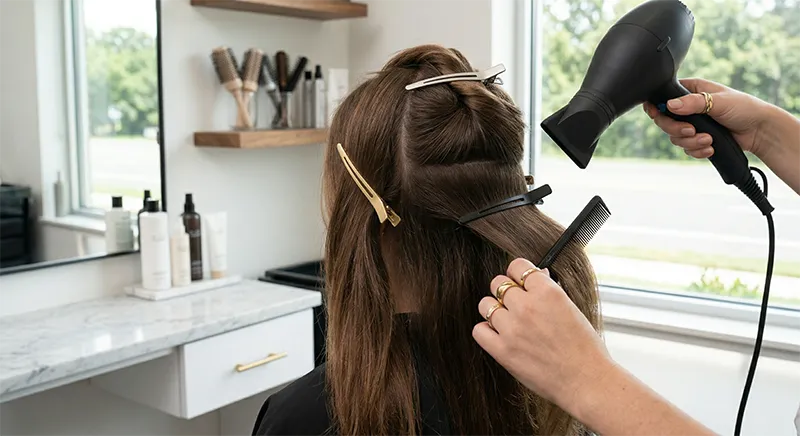
Professional Salon Environments
Stylists use claw clips to section hair during cutting, colouring, and blow-drying services. Salon-specification clips prioritise spring tension and durability over decorative finish.
Private Label and Brand Collections
Many beauty brands include claw clips within broader hair accessory lines. Custom colour, logo embossing, and unique shapes are standard specification requirements for OEM custom hair accessories orders. Most experienced manufacturers support this through in-house mould libraries that reduce tooling costs and development timelines.
E-commerce and Direct-to-Consumer
E-commerce platforms have significantly expanded the market for claw clips at accessible price points. Jaw clips perform consistently well in this channel, with strong search volume and repeat purchase rates. For DTC brands, the ability to start with a low MOQ is relevant, as it allows product testing before scaling inventory commitment.
7. Sourcing Considerations for B2B Buyers
For procurement managers and brand buyers, several factors merit attention when specifying claw clip or jaw clip orders:
- Material specification: Clarify whether ABS, acetate, or nylon is required. Acetate commands a higher unit cost and longer production lead time due to the additional finishing steps.
- Spring type: Metal springs offer longer service life; nylon springs reduce weight. Specify requirements clearly in the product brief.
- Size range: Confirm the size classifications needed — manufacturers use different internal sizing systems, so providing physical dimensions in millimetres avoids ambiguity.
- Finish and colour: Acetate products are matched to Pantone references or provided physical samples; ABS products are colour-matched to RAL or custom-mixed resin.
- Certification requirements: Buyers supplying to EU or US markets should confirm REACH compliance and, where relevant, GRS certification for recycled content products.
- Sampling process: Request pre-production samples before confirming bulk orders, particularly for custom spring tension specifications.

8. Conclusion
The terms "claw clip" and "jaw clip" describe the same foundational hair accessory product: a hinged, spring-loaded fastener used to secure hair in a range of styling and functional applications. Differences between the two names are regional and commercial rather than structural. For buyers and sourcing managers, the more relevant distinctions lie in material selection, size specification, spring mechanism, and surface finish — all of which affect product performance, positioning, and cost.
Understanding these variables at the specification stage leads to more efficient sourcing, clearer supplier briefs, and more coherent product positioning across retail and e-commerce channels. For brands requiring further reference on material standards, cellulose acetate material properties are documented in detail in published materials science literature.
Manufacturers such as JunYi Beauty, which operates integrated mould libraries and production facilities in Dongguan, represent the type of factory-direct OEM partner suited for brands looking to develop custom claw clip lines across acetate, ABS, and nylon material options.