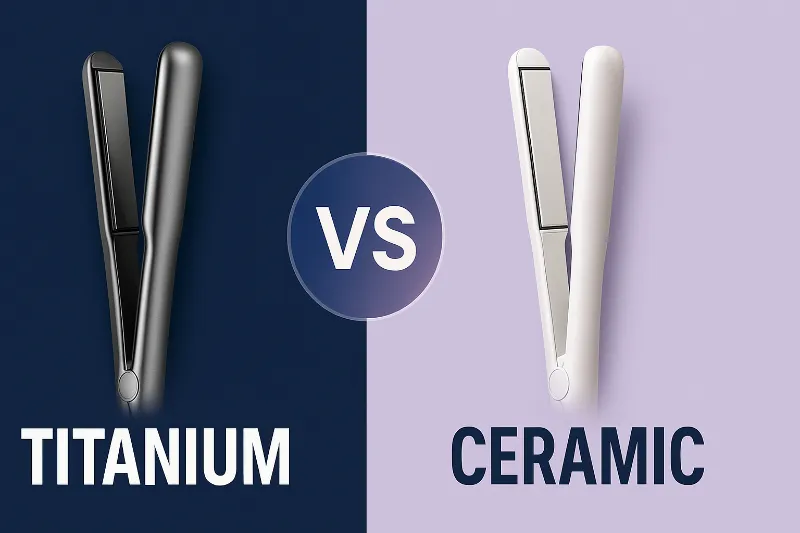
Struggling to choose between a ceramic vs. titanium hair straightener? You’re not alone. Hair straighteners are essential tools for achieving sleek, smooth styles, but the material of the plates—ceramic or titanium—plays a critical role in performance, hair health, and styling results. The wrong choice could lead to frizzy, damaged hair, while the right one can transform your routine.
Ceramic straighteners are known for gentle, even heat, making them a go-to for fine or damaged hair. Titanium flat irons, on the other hand, heat up quickly and tackle thick, coarse hair with ease. But which is the best hair straightener for you? This article dives deep into the differences, comparing technology, benefits, drawbacks, and suitability for various hair types. Whether you’re a daily stylist or an occasional user, we’ll help you decide. Let’s explore the world of flat irons and find your perfect match.
Curious about protecting your hair while straightening? Check out our .
Understanding Hair Straighteners
Hair straighteners, or flat irons, work by applying controlled heat to smooth the hair’s cuticle, reducing frizz and creating a polished look. The plates, which deliver this heat, are made from materials like ceramic, titanium, or tourmaline, each affecting performance differently. Understanding these materials is key to choosing the best hair straightener for your needs.
Ceramic and titanium are the most popular plate materials due to their efficiency and durability. Ceramic, a non-metallic material, is prized for even heat distribution, while titanium, a lightweight metal, excels in rapid heating. The choice between them impacts styling speed, hair health, and ease of use. For example, uneven heat can cause hotspots, leading to damage, while consistent heat ensures safer styling.
Other factors, like plate width and temperature settings, also matter. Narrow plates suit short hair, while wider ones are better for long, thick strands. Adjustable temperatures allow customization based on hair type, minimizing damage. By focusing on ceramic vs. titanium hair straighteners, we’ll uncover which material aligns with your styling goals.
Learn more about hair straightening technology from Hair Care Science.
Ceramic Hair Straighteners
What Are Ceramic Hair Straighteners?
Ceramic hair straighteners use plates made from a non-metallic, inorganic material known for its smooth surface and heat-conductive properties. Often infused with tourmaline, a mineral that enhances ion emission, ceramic plates are designed to deliver consistent heat and reduce frizz.
How They Work
Ceramic plates employ infrared heat technology, warming hair from the inside out. This gentle approach preserves moisture and minimizes damage. The plates also emit negative ions, which neutralize positive ions in the hair, sealing the cuticle and reducing static for a smoother, shinier finish.
Benefits of Ceramic Flat Irons
· Even Heat Distribution: Ceramic plates spread heat uniformly, eliminating hotspots that can burn hair.
· Frizz Reduction: Negative ions combat frizz and static, ideal for humid environments.
· Gentle on Hair: Perfect for fine, thin, or color-treated hair, as they operate at lower, safer temperatures (250–350°F).
· Shiny Results: The smooth plates glide easily, enhancing hair’s natural gloss.
· Affordable: Ceramic straighteners are often more budget-friendly than titanium models.
Drawbacks
· Slower Heating: Ceramic takes longer to reach optimal temperatures compared to titanium.
· Less Effective for Coarse Hair: Thick or curly hair may require multiple passes, increasing styling time.
· Fragility: Pure ceramic plates can chip or crack over time, especially in lower-quality models.
Ceramic flat irons are a top choice for those prioritizing hair health and versatility. They’re especially suited for daily styling on delicate hair types, offering a balance of performance and affordability.
Titanium Hair Straighteners
What Are Titanium Hair Straighteners?
Titanium hair straighteners feature plates made from a lightweight, durable metal known for its superior heat conduction and strength. These flat irons are built for high-performance styling, especially for challenging hair types.
How They Work
Titanium plates heat up almost instantly and maintain high temperatures, transferring heat directly to the hair’s surface. This rapid conduction allows for quick, efficient straightening, often in a single pass, making them a favorite for professional stylists.
Benefits of Titanium Flat Irons
· Fast Heating: Titanium reaches temperatures up to 450°F in seconds, cutting down styling time.
· Ideal for Thick Hair: Excels at taming coarse, curly, or hard-to-manage hair (e.g., 3C or 4 hair types).
· Durable: Resistant to scratches and wear, ensuring long-term use.
· Lightweight: The metal’s low density makes these straighteners easy to handle.
· Smooth Glide: Polished titanium plates reduce tugging, enhancing comfort.
Drawbacks
· Risk of Damage: High heat can scorch fine or damaged hair if not used carefully.
· Hotspots in Low-Quality Models: Cheaper titanium straighteners may heat unevenly, increasing damage risk.
· Higher Cost: Titanium models are typically pricier due to material and technology costs.
Titanium flat irons are a powerhouse for those with thick or resistant hair, offering speed and durability. However, they require caution and heat protectants to avoid damage.
Ceramic vs. Titanium: A Detailed Comparison
Choosing between a ceramic vs. titanium hair straightener depends on your hair type, styling habits, and budget. Let’s break down the key differences across critical factors.
Heating Technology
· Ceramic: Uses infrared heat to warm hair from the inside, preserving moisture and reducing stress on strands. This makes it gentler and safer for delicate hair.
· Titanium: Transfers heat directly to the hair’s surface, enabling faster styling. However, the intense heat can be harsh without proper precautions.
Heat Distribution
· Ceramic: Distributes heat evenly across the plate, minimizing hotspots and ensuring consistent results. This is ideal for preventing burns on fragile hair.
· Titanium: Heats rapidly but may develop hotspots in lower-quality models, which can lead to uneven styling or damage.
Suitability for Hair Types
· Ceramic: Best for fine, thin, damaged, or color-treated hair. Its lower temperatures and ionic technology protect delicate strands while reducing frizz.
· Titanium: Suited for thick, coarse, or naturally curly hair. Its high heat tackles resistant textures efficiently, often in fewer passes.
Durability
· Ceramic: Solid ceramic plates are durable but can chip or crack over time, especially in ceramic-coated models with metal bases.
· Titanium: Highly durable, resisting scratches and wear, making it a long-term investment for frequent users.
Price
· Ceramic: Generally more affordable, with quality models starting at $30–$80. Pure ceramic plates offer better value than ceramic-coated ones.
· Titanium: More expensive, typically ranging from $80–$200, due to the cost of the metal and advanced heating systems.
Styling Results
· Ceramic: Produces smoother, shinier hair with less frizz, thanks to negative ions and even heat. Ideal for a polished, natural look.
· Titanium: Achieves faster straightening, especially for thick hair, but may not yield the same glossy finish without proper technique.
Comparison Table
Feature | Ceramic Straighteners | Titanium Straighteners |
Material | Non-metallic, inorganic | Lightweight metal |
Heating Technology | Infrared, inside-out heating | Surface heating, rapid conduction |
Heat Distribution | Even, no hotspots | Fast, potential hotspots in low quality |
Best Hair Type | Fine, damaged, color-treated | Thick, coarse, curly |
Durability | May chip or crack | Highly durable |
Price Range | $29.9–$99 | $59.9–$235.8 |
Styling Speed | Slower | Faster |
Frizz Control | Excellent (negative ions) | Good, but less effective |
This comparison highlights that ceramic straighteners are safer and more versatile, while titanium excels in speed and efficiency for tougher hair types. Your choice should align with your hair’s needs and styling frequency.
Additional Considerations
Ionic Technology
Both ceramic and titanium straighteners may incorporate ionic technology, emitting negative ions to reduce frizz and static. Ceramic naturally excels here due to its tourmaline-infused plates, but high-quality titanium models can also include this feature. For frizz-prone hair, prioritize models with ionic capabilities.
Plate Width
· Narrow Plates (0.5–1 inch): Ideal for short hair, bangs, or precision styling like curls.
· Wide Plates (1.5–2 inches): Better for long or thick hair, covering more surface area per pass.
Choosing the right width enhances efficiency and reduces styling time, regardless of material.
Temperature Control
Adjustable heat settings are essential for both ceramic and titanium straighteners. Ceramic models typically range from 250–350°F, while titanium can reach 450°F or higher. Start with the lowest effective temperature to minimize damage, especially for fine hair.
Heat Protection
Using a heat protectant spray or serum is non-negotiable, particularly with titanium straighteners due to their high heat output. These products create a barrier, reducing thermal damage and maintaining hair health.
How to Choose the Right Straightener
Selecting the best hair straightener depends on your hair type and styling goals:
· Fine or Damaged Hair: Opt for a ceramic flat iron. Its gentle heat and frizz-reducing ions protect delicate strands, making it ideal for daily use on thin or color-treated hair.
· Thick or Coarse Hair: Choose a titanium straightener for its speed and ability to handle resistant textures. Use lower heat settings and a heat protectant to prevent damage.
· General Use: Ceramic straighteners are safer and more versatile for most users. They suit a wide range of hair types and budgets, making them a solid default choice.
· Frequent Styling: Titanium’s durability makes it better for heavy use, but invest in a high-quality model with even heat distribution.
Always check for adjustable temperatures and ergonomic design to ensure safe, comfortable styling.
Tips for Using Hair Straighteners
Maximize your straightener’s performance and protect your hair with these tips:
· Use Heat Protectants: Apply a spray or serum before styling to shield hair from thermal damage.
· Start Low: Begin with the lowest effective temperature (e.g., 250°F for fine hair, 350°F for thick hair) and adjust as needed.
· Section Hair: Divide hair into small sections for even straightening and fewer passes.
· Avoid Overuse: Don’t repeatedly straighten the same section to prevent heat damage.
· Clean Plates: Wipe plates with a damp cloth (when cool) to remove product buildup.
· Store Properly: Keep your straightener in a heat-resistant pouch to protect plates and cords.
These practices ensure long-lasting results and healthy hair, whether you use a ceramic or titanium flat iron.
Learn more in our .
Conclusion
Choosing between a ceramic vs. titanium hair straightener comes down to your hair type, styling needs, and budget. Ceramic flat irons offer gentle, even heat, making them ideal for fine, damaged, or color-treated hair. Their frizz-reducing ions and affordability make them a versatile choice. Titanium straighteners, with their rapid heating and durability, are perfect for thick, coarse, or curly hair, delivering fast results for resistant textures.
To make the best choice, consider your hair’s health and styling frequency. Ceramic is safer for most users, while titanium suits those needing efficiency and power. Regardless of your pick, prioritize adjustable temperatures, heat protectants, and proper technique to maintain healthy, beautiful hair.